
Das Kranzbach sits at the foot of the Zugspitze in the Bavarian Alps, combining a landmark English manor house with contemporary spa facilities and kitchen output that places it among Germany's more serious alpine retreats. The property occupies a position between destination wellness resort and countryside hotel, drawing guests who want both the restorative architecture of the mountains and the table quality that justifies a multi-night stay. Advance planning is advisable, particularly for peak alpine seasons.
Pearl is the En Primeur Club membership app — saves, bookings, and concierge access live there. Same editors, same standards.
- Address
- In Kranzbach 1, 82493 Krün, Germany
- Phone
- +49 8823 928000
- Website
- daskranzbach.de
- Directions
- Get directions
 Saves & bookings on Pearl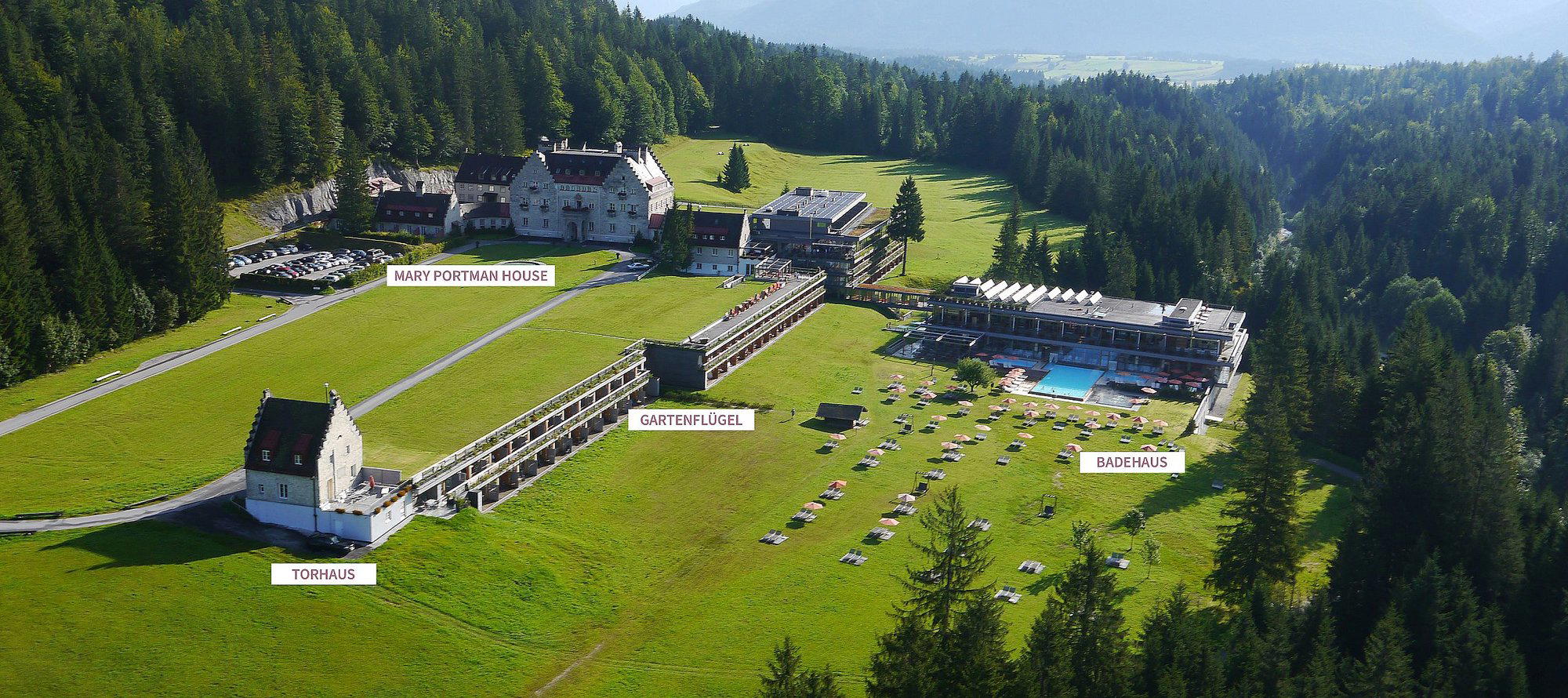
Stone, Timber, and the Weight of the Karwendel
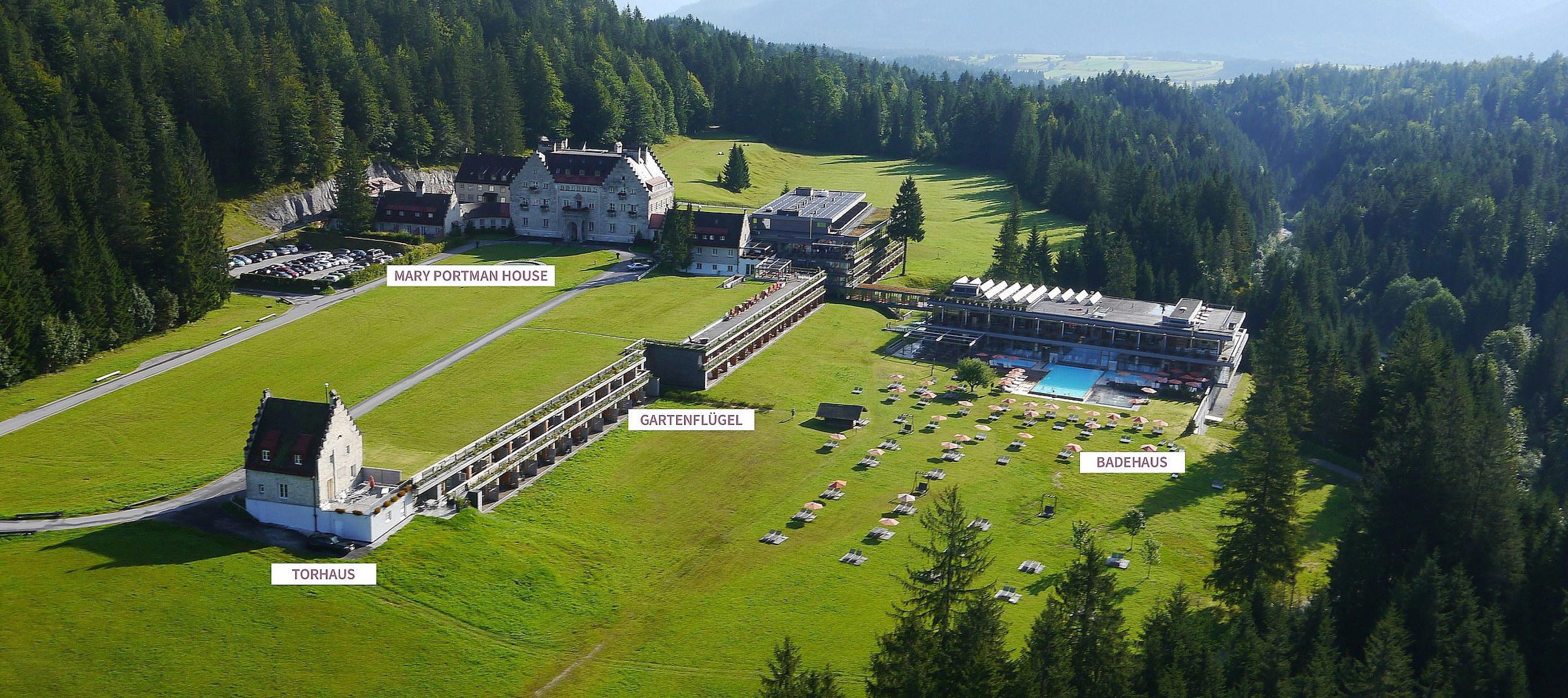
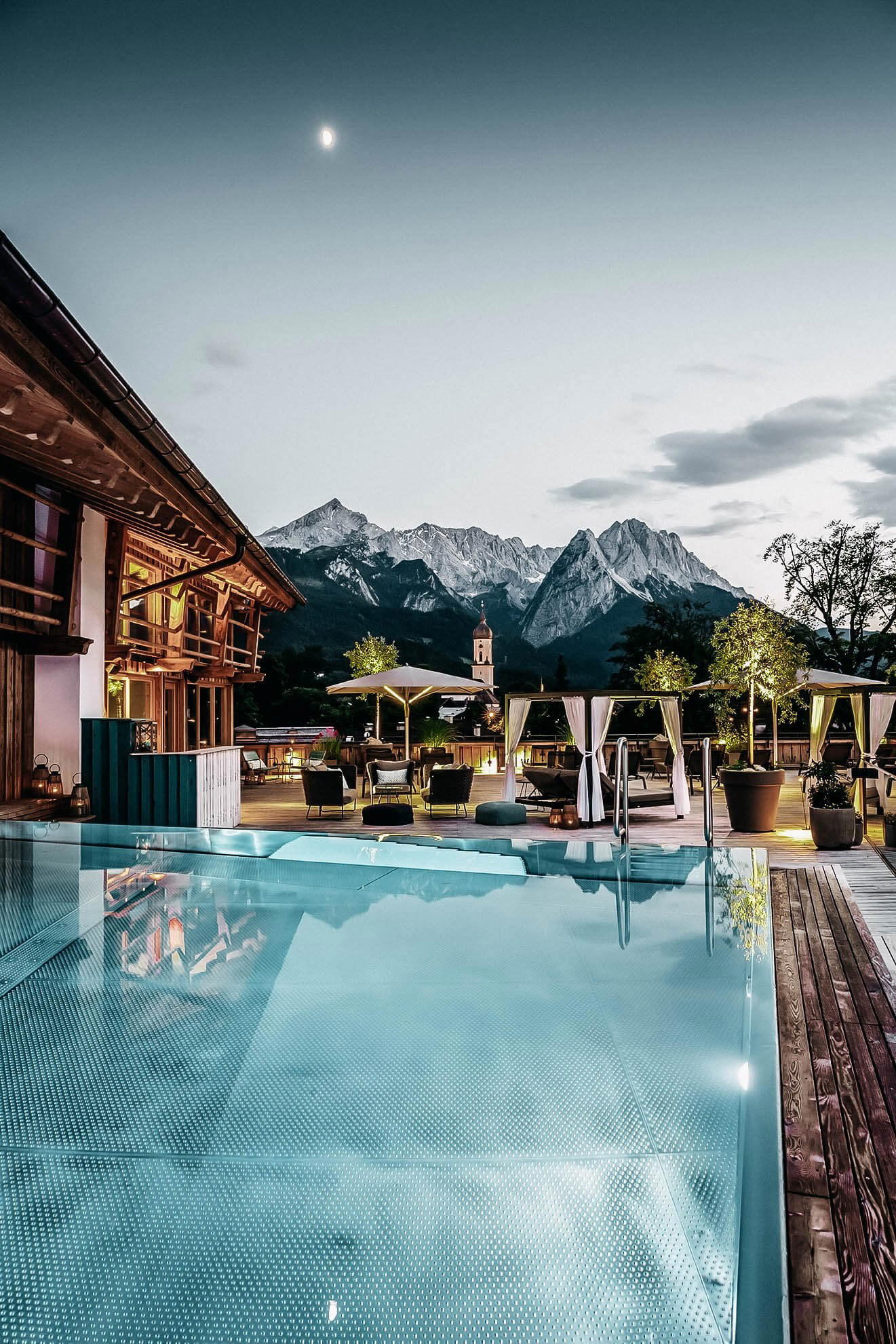
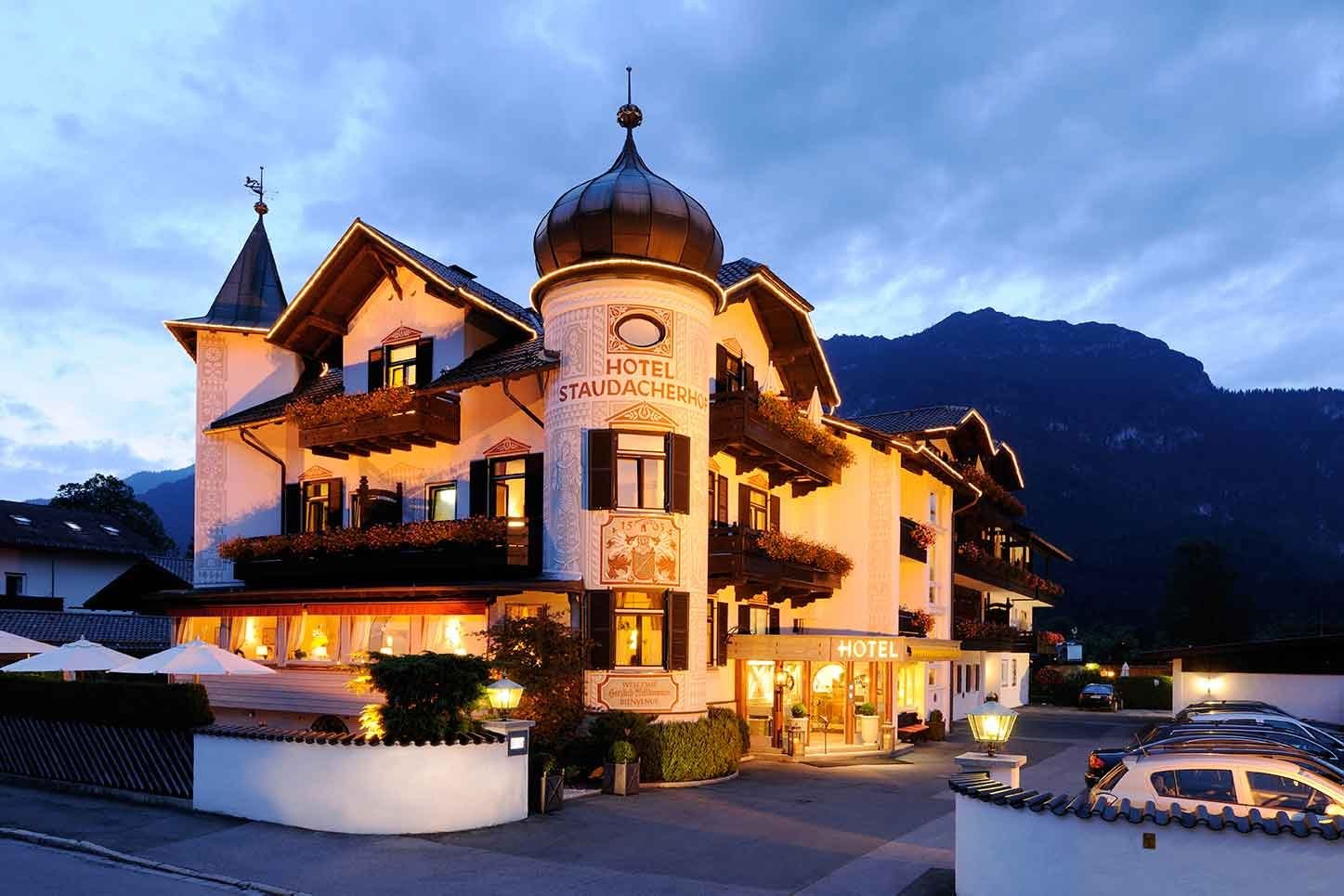
Approaching Das Kranzbach from the valley road that runs through Krün, the first thing the landscape communicates is scale. The Zugspitze, Germany's highest peak at 2,962 metres, frames the entire western horizon, and the property sits in relation to that backdrop not as a resort that competes with it but as one that understands its own position: lower, quieter, and built from materials that belong to the same geology. The main building is an Edwardian English country manor, constructed in the early twentieth century and occupying a category that has no direct equivalent in the German alpine hotel market. Most luxury retreats in this region default to either the grand Bavarian hotel idiom, pitched roofs, carved wood, regional motifs, or to the neutralised modernism of international spa brands. Das Kranzbach does neither. The manor's stone facade and formal proportions sit in deliberate contrast to the meadows and forest that surround it, creating the kind of productive tension that good architecture tends to require.
That architectural identity is significant because it determines everything downstream: the proportions of the rooms, the atmosphere of the public spaces, and the relationship between interior comfort and the alpine setting outside. Alpine wellness in this part of Bavaria has expanded considerably over the past decade. Properties like Schloss Elmau Luxury Spa Retreat & Cultural Hideaway in Elmau have redefined what a culturally serious mountain retreat can look like, while Kempinski Hotel Berchtesgaden anchors the southern Bavarian market at the branded luxury end. Das Kranzbach operates between those poles, with a design character specific enough to hold its own comparable set rather than simply following either template.
What the Interior Communicates
English manor architecture of the Edwardian period was built around a particular theory of comfort: generously proportioned rooms, high ceilings, large windows oriented to views, and a material palette of stone, plaster, and dark-stained timber that was meant to age gracefully rather than impress immediately. That logic still applies inside Das Kranzbach. The public rooms carry the weight and calm of a building that was designed before the era of hospitality consultants and trend-cycle renovations. For guests arriving from urban hotel environments calibrated to stimulate rather than restore, the shift in atmosphere is immediate and deliberate.
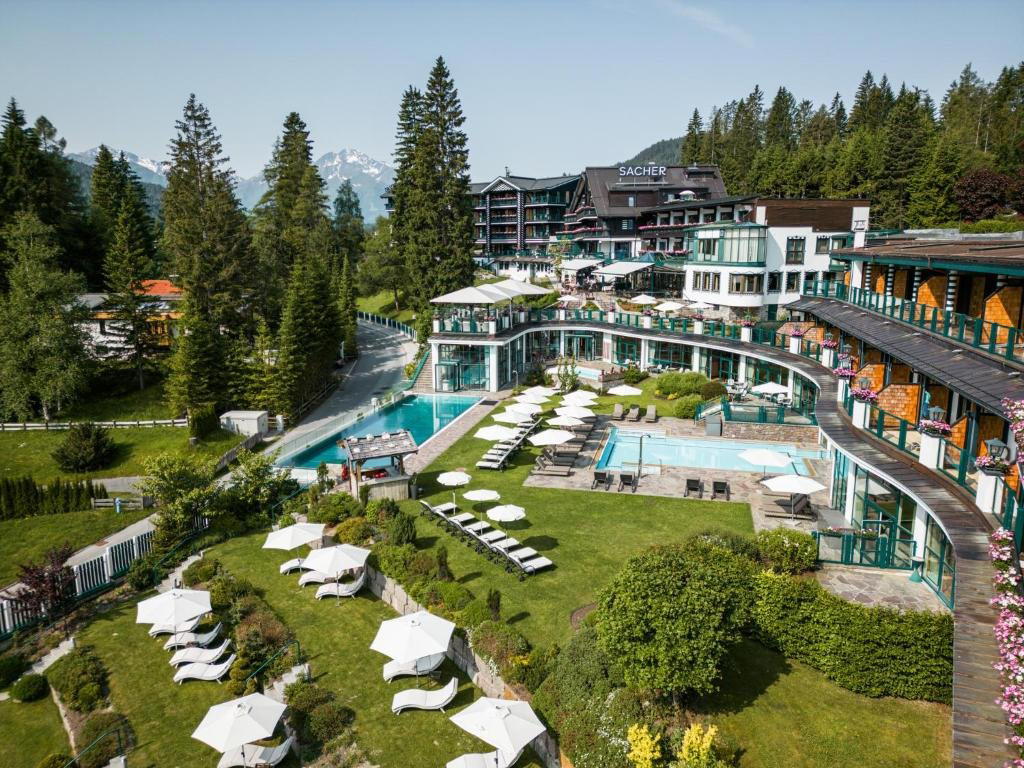
The spa facilities represent the contemporary layer added to that historic shell, and in Germany's alpine wellness market, the quality of that layer matters more than almost anything else for determining where a property sits competitively. Germany's spa hotel tradition is serious and demanding, informed by a culture that treats thermal bathing and physical restoration as ordinary parts of life rather than luxury indulgences. Properties that treat the spa as an amenity rather than a programme tend not to hold the attention of the market segment that drives this region. The hotel's positioning as a premier alpine wellness retreat, with facilities calibrated to the Zugspitze setting, places it in the tier where spa programming is a primary offering rather than a secondary one. For comparison, Gut Steinbach Hotel Chalets Spa in Reit im Winkl takes a similar approach to positioning spa quality as a core draw in the Bavarian alpine corridor.
The Table in Context
German alpine hotel dining occupies a specific and sometimes underestimated position in the broader European luxury hotel kitchen conversation. The leading examples, and Hotel Bareiss in Baiersbronn remains the reference point in the Black Forest, rather than the Alps, demonstrate that regional setting and serious kitchen ambition are not in conflict. The hotel's recognition for strong cuisine places it within a cohort of German retreat properties where the table is treated as a genuine argument for the overall experience, not merely a functional requirement. That matters for trip planning: a property where dining quality is called out as a distinguishing feature changes the calculus for how many nights justify the journey, and how much of the stay should be organised around meal times rather than activity schedules.
For guests weighing the hotel against other serious German hotel kitchens, the urban comparison set includes Mandarin Oriental Munich and Fairmont Hotel Vier Jahreszeiten in Hamburg, both of which anchor dining to different urban contexts. The Kranzbach proposition is different: the kitchen here operates in service of an immersive stay in an alpine setting, which places the food in a different frame than city hotel dining. Guests eat after a day on the mountain or after hours in the spa, and the kitchen programme should be understood through that lens.
Planning the Visit
The hotel sits in Krün, a small municipality in the Werdenfelser Land district of Upper Bavaria, roughly equidistant between Garmisch-Partenkirchen to the south and Mittenwald to the southeast. Garmisch-Partenkirchen is the regional transport hub, accessible by direct train from Munich in under 90 minutes, which makes the property more reachable from the city than its remote feel suggests. The surrounding area is a four-season destination: summer draws hikers and cyclists into the Karwendel range, while winter brings skiing in the Zugspitze area and cold-weather spa use. Autumn, when the valley trails are quieter, is often one rewarding season for an unhurried stay.
Advance booking matters here. Properties in this tier and setting, with genuine spa programming, a serious table, and a design identity that generates word-of-mouth, tend to fill their leading room categories well ahead of peak periods. Guests considering the property should treat it as a multi-night stay rather than a one-night stopover. For guests building a longer German itinerary, the hotel pairs logically with Althoff Seehotel Überfahrt in Rottach-Egern at the Tegernsee, roughly 40 kilometres to the northeast, as a continuation of the Bavarian alpine hotel circuit at a similar quality register.
Other German retreat properties that share relevant characteristics, for those building broader comparisons, include Luisenhöhe in Horben in the Black Forest wellness corridor, Weissenhaus Private Nature Luxury Resort in Weissenhaus on the Baltic coast, and BUDERSAND Hotel in Hörnum on Sylt, each occupying a different landscape but the same general tier of German retreat hospitality that prioritises setting and programme over brand recognition.
Side-by-Side Snapshot
Comparable venues nearby, for context on price, style, and recognition.
| Venue | Cuisine | Price | Awards | Notes |
|---|---|---|---|---|
| Das KranzbachThis venue — the venue you are viewing | Historic English country estate reimagined as a contemporary wellness retreat with modern extensions; blends heritage architecture with minimalist design philosophy. | $$$$ | 4-Star | Not listed |
| ATLANTIC Hotel Frankfurt am Main | Modern 4-star superior high-rise business hotel with event facilities and skyline-facing leisure spaces. | $$$$ | 4-Star | Europaviertel |
| me and all hotel düsseldorf-oberkassel | Boutique design hotel with bold, local-inspired urban aesthetics | $$$ | 4-Star | Oberkassel |
| Althoff Dom Hotel | Luxury grand hotel in a historic landmark building at the foot of Cologne Cathedral. | $$$$ | 5-Star | Altstadt |
| Thomahof | Exclusive elegant country style wellness hotel | $$$$ | 4-Star | Hinterzarten |
| Alpenhof Murnau | Traditional Alpine architecture renovated in 2022 with modern comforts | $$$$ | 5-Star | Murnau am Staffelsee |
Recognition history
Dated appearances from independent guides and award organizations, with the underlying list record or original source where available.
The Longevity Hotels Longevity Hotel Member
The Longevity Hotels
At a Glance
- Quiet
- Romantic
- Elegant
- Scenic
- Cozy
- Wellness Retreat
- Romantic Getaway
- Anniversary
- Destination Spa
- Historic Building
- Panoramic View
- Garden
- Terrace
- Design Destination
- Spa
- Pool
- Sauna
- Fitness Center
- Wi Fi
- Restaurant
- Bar
- Parking
- EV Charging
- Massage
- Outdoor Pool
- Indoor Pool
- Mountain
- Garden
- Spa
- Pool
- Sauna
- Fitness Center
- Wi Fi
- Restaurant
- Bar
- Parking
- EV Charging
- Massage
- Outdoor Pool
- Indoor Pool
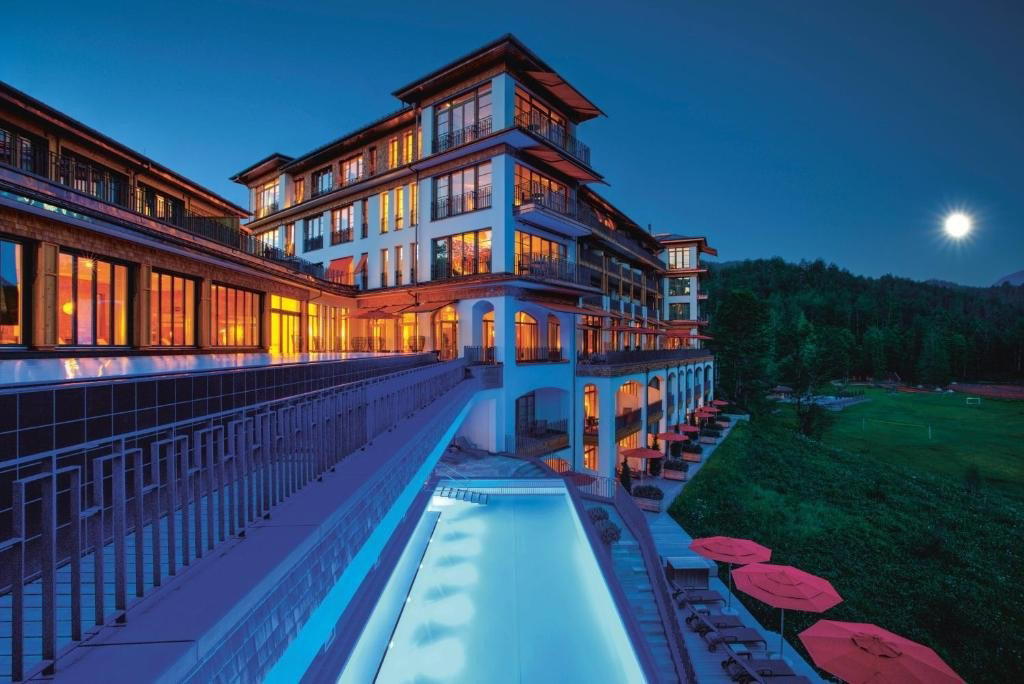
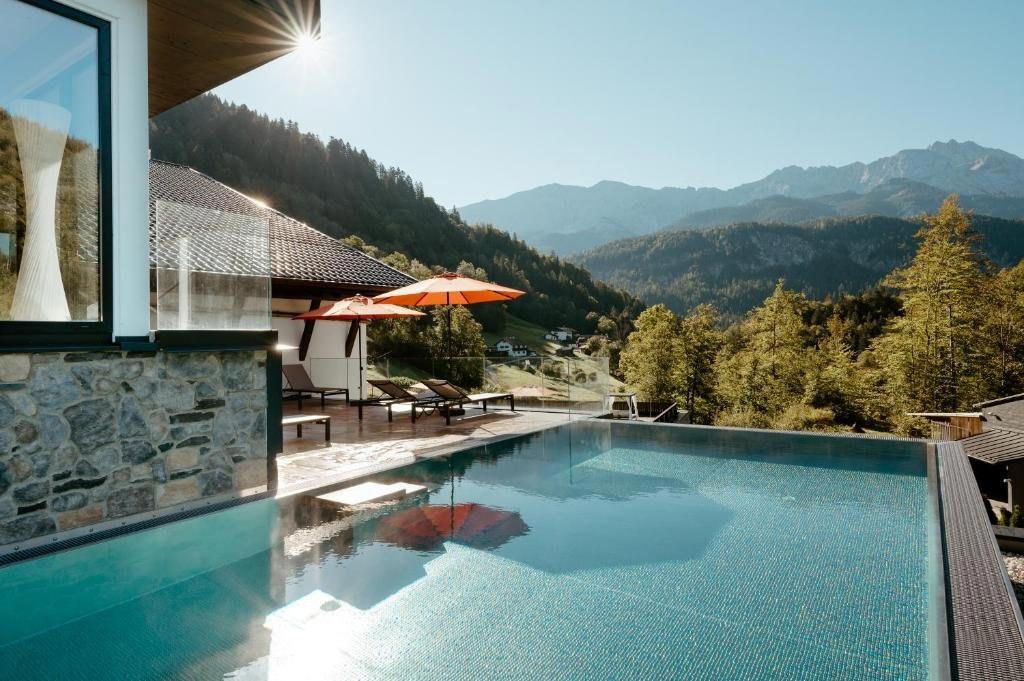
Warm, intimate, and serene with multiple open fireplaces throughout the historic Mary Portman House and modern Garden Wing; spa areas feature natural light and spectacular mountain views overlooking protected forest and meadow.