The property operates as a working farm, and that agricultural foundation shapes everything from the materials underfoot to the food on the table. For travellers positioning themselves in the highland interior, it functions as a genuine base rather than a transit stop.

Pearl is the En Primeur Club membership app, where members save venues, book tables and use the concierge.
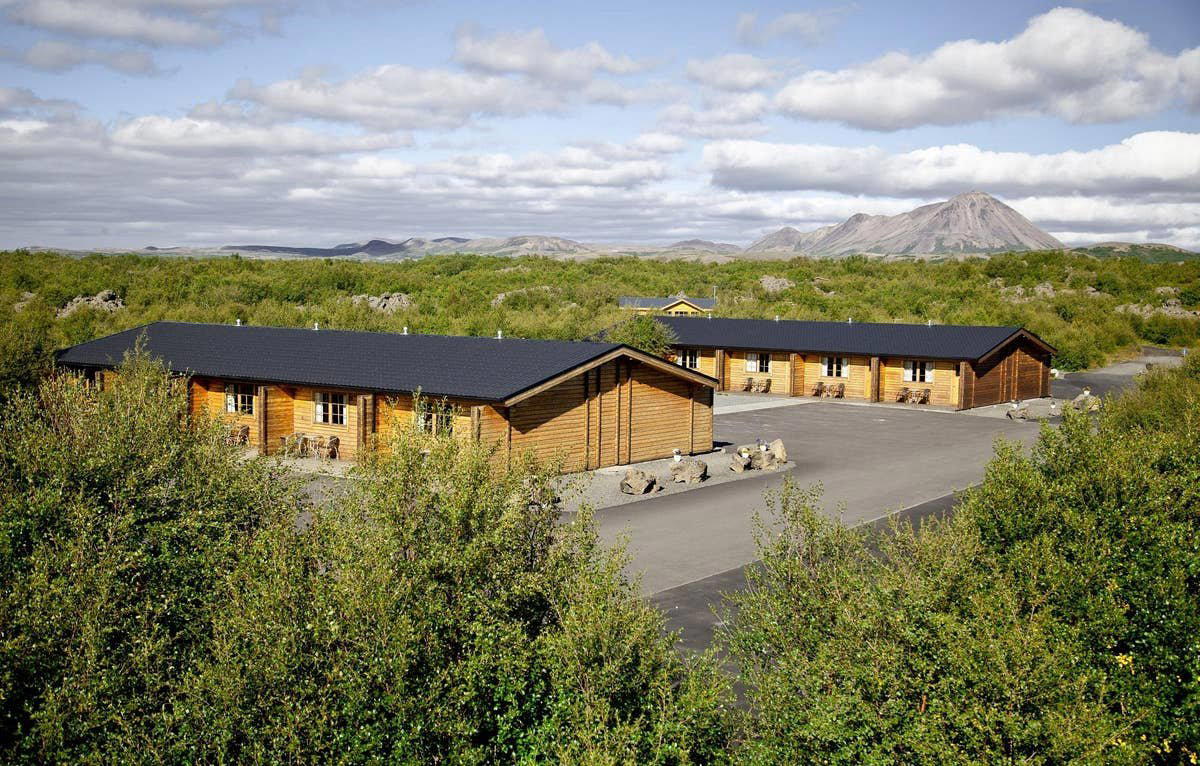
Where the Building Meets the Lava Field
There is a particular design logic that emerges when a property has to answer to its landscape rather than impose upon it. The volcanic terrain, the steam vents, the moss-covered lava formations that extend in every direction, these are not scenic backdrop. They are structural conditions that any building in this region must physically contend with. The architecture here does not try to compete with the surroundings. It defers to them, and that deference is itself a design stance. Some, like Eleven Deplar Farm in Ólafsfjörður, push into high-specification luxury while maintaining the farm framework. Others, including ION Adventure Hotel in Nesjavellir, adopt a more architecturally assertive posture. Vogafjós sits in a different register: working farm operations remain genuinely present, not curated for effect.
The Cowshed as Centrepiece
The detail most associated with Vogafjós is the glass-walled cowshed visible through the restaurant. This is not a decorative choice in the conventional sense. It is a structural transparency that makes the farm's function legible from inside the dining room, guests eat within view of the cattle that supply the dairy used in the kitchen. In terms of architectural communication, that decision compresses a great deal of information: the relationship between the land, the animal, the product, and the meal is made spatially explicit rather than implied or stated on a menu card.
This kind of farm-to-table transparency through architecture has appeared in various forms across the Nordic food scene, where the visual and conceptual connection between production and consumption carries cultural weight. What makes the Mývatn context specific is the sheer strangeness of the surrounding environment, the lake, the pseudocraters, the geothermal mud pools at Hverir nearby, which makes the domesticity of the farm interior feel all the more deliberate. You are looking at cows through glass while geothermal steam rises outside the opposite window. The contrast is not accidental. Travellers making the Ring Road circuit typically pass through the area in either direction; those staying at Mývatn rather than driving through tend to use it as a base for the Dimmuborgir lava formations, the Námaskarð geothermal fields, and lake-side birdwatching that draws significant ornithological interest from spring through summer. The summer season, roughly late May through August, brings nearly continuous daylight, which alters the experiential logic of the property considerably. The sense of time, when to eat, when to sleep, becomes genuinely uncertain in a way that few other travel environments replicate.
Within the local accommodation context, Vogafjós occupies a mid-field position. It is not the only option on the lake, Hótel Reykjahlíð provides an alternative within the Reykjahlíð village, but the farm setting gives it a physical and operational character that differentiates it from conventional hotel formats.enprimeurclub.com/hotels/skalakot-hotel-hvolsvollur-hotel">Skálakot Hotel in the south, which also uses a horse farm as its operational and experiential anchor. Winter temperatures at Mývatn drop significantly, wind is persistent, and the geothermal activity that makes the area visually dramatic also introduces real infrastructure complexity. Properties that function year-round in this region make material and structural choices driven partly by necessity. The use of timber, the pitched rooflines suited to snow load, the reliance on geothermal heating, these are not stylistic decisions so much as environmental responses that happen to carry aesthetic consequence. Properties like Hótel Búðir on the Snæfellsnes Peninsula and Black Pearl in the capital will find a stark contrast in scale and register, which is, in part, the point of making the journey north.
Planning the Visit
Access to Mývatn from Reykjavik is primarily by road, a drive of roughly five to six hours via the Ring Road, or by flying into Akureyri and driving east from there, a significantly shorter approach of under two hours. Akureyri has regular domestic flight connections from Reykjavik's domestic airport. The summer season aligns with peak demand across the region, so accommodation in and around Mývatn books ahead. Travellers extending south after Mývatn often pass through UMI Hotel in Vík, Silica Hotel in Grindavík serve as logical counterpoints in very different landscape registers.
Comparable Spots, Quickly
| Venue | Price | Awards |
|---|---|---|
| Vogafjós Farm ResortThis venue (the venue you are viewing) | Not listed | Not listed |
| The Reykjavik EDITION | Not listed | 1 Michelin Key · Forbes Recommended |
| 101 hotel Reykjavik | Not listed | Michelin Selected · Design Hotels Member |
| Eleven Deplar Farm | $2,500+ | Virtuoso Luxury Hotel Partner · Tablet Hotels Top 40 New Hotels |
| Hótel Klaustur Iceland | $100–200 | World Luxury Hotel Awards WLHA Regional Winner |
| Hotel Ranga | $300–500 | 1 Michelin Key · Small Luxury Hotels of the World Member |
Details
- Rustic
- Cozy
- Scenic
- Quiet
- Family Vacation
- Weekend Escape
- Panoramic View
- Garden
- Terrace
- Wi Fi
- Restaurant
- Free Parking
- EV Charging
- Mountain
Cozy and rustic with wood furnishings, natural light from wraparound windows overlooking lake and fields, and a warm farm atmosphere.