
Michelin Selected
Hótel Búðir occupies one of the Snæfellsnes Peninsula's most geographically charged positions, where a 19th-century black church marks the edge of an ancient lava field and the Atlantic begins. The hotel represents a category of remote Icelandic property where the building's relationship to its setting defines the entire experience, placing it alongside a small group of design-led Icelandic retreats that treat isolation as an architectural argument rather than a constraint.

Pearl is the En Primeur Club membership app, where members save venues, book tables and use the concierge.
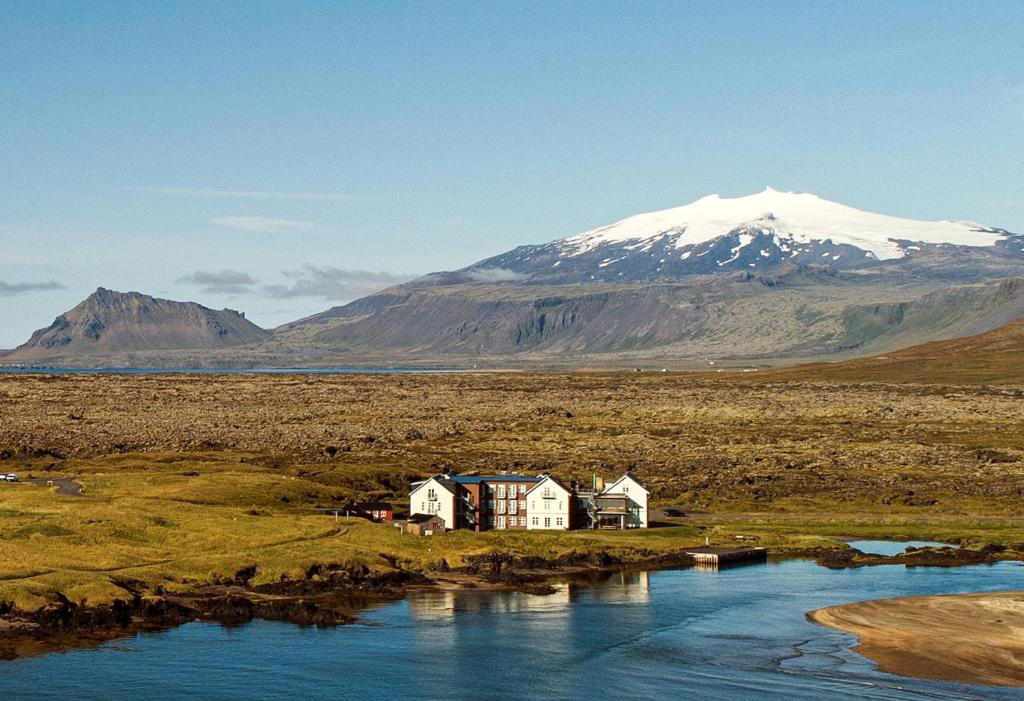
Where the Lava Field Meets the Atlantic
There is a particular kind of remoteness that Icelandic travel writers have spent decades trying to articulate, and the Snæfellsnes Peninsula concentrates it more precisely than almost anywhere else on the island. The road west from Borgarnes thins out over roughly 120 kilometres, shedding petrol stations and small towns until it arrives at Búðir, a scatter of land where a moss-covered lava field runs directly into a tidal bay. The hotel that sits here does so at the edge of that field, in a position where geography does the heavy lifting that architecture usually attempts. What the building itself contributes is a kind of formal restraint, dark timber cladding, a low profile against the headland, that refuses to compete with the view and succeeds precisely because of that refusal.
This approach to siting and scale places Hótel Búðir within a recognisable tradition of Icelandic hospitality that has emerged more clearly over the past two decades. Properties like ION Adventure Hotel in Selfoss and Eleven Deplar Farm in Ólafsfjarðar operate on a similar logic: the building is inseparable from its landscape, and the guest's experience of both is the primary product. Búðir sits in that cohort but occupies a distinctly older and quieter register within it, one where the 19th-century black church beside the property, one of Iceland's most-photographed structures, provides a historical anchor that newer design-led properties in the country cannot replicate.
The Architecture of Restraint
Remote Icelandic hotels often face a structural choice: lean into the drama of the environment with bold contemporary architecture, or subordinate the building to the ground beneath it. The ION model chose the former, cantilevering steel and glass over geothermal terrain. Búðir chose the latter, and the result reads differently at every hour of the day. In summer, when daylight lasts into the small hours and the Snæfellsjökull glacier is visible from the windows on clear evenings, the building's dark exterior seems to draw the landscape toward it rather than imposing on it. In winter, when the aurora activates above the bay and the lava field absorbs the snowfall around it, the hotel's low mass becomes almost invisible against the terrain, which is, in its own way, the point.
This kind of architectural deference is not accidental. It reflects a broader design philosophy among properties built to serve guests who have made a deliberate effort to arrive somewhere genuinely far from the main circuits. Búðir is not on the Ring Road. Getting here requires a decision and roughly two to three hours of driving from Reykjavík, which self-selects for a guest who values the act of reaching the place as part of the experience. That dynamic shapes everything from the pace of the property to the weight placed on the restaurant, which in hotels of this category carries an outsized role because leaving for dinner elsewhere is not a realistic option.
Position on the Snæfellsnes Peninsula
The peninsula itself deserves framing as a destination before any individual property within it can be properly assessed. Snæfellsnes stretches roughly 90 kilometres into the Atlantic on Iceland's west coast, terminating at the Snæfellsjökull volcano and glacier that Jules Verne used as the entry point in Journey to the Centre of the Earth. The national park at the western tip encompasses lava tubes, sea cliffs, and the glacier itself, making the peninsula one of the denser concentrations of geological and literary geography in Europe. Búðir sits approximately at the midpoint of the peninsula's south coast, which positions it well for access both to the national park and to the birdlife of Grundarfjörður bay to the north.
Within the wider map of Icelandic hotel options, this location occupies a specific niche. Properties like Hotel Ranga in Hella and UMI Hotel in Vík serve the south coast's more trafficked routes, where proximity to Seljalandsfoss and the black sand beaches at Reynisfjara brings higher visitor volumes. Búðir functions differently: it draws guests who have specifically chosen the west over the south, often as a second or third Iceland trip once the Ring Road has been covered. That demographic tends to book ahead and stay longer, which contributes to the property's reputation for a considered rather than transient atmosphere.
The Black Church as Landmark and Context
No account of Búðir as a place is complete without addressing the church. The Búðakirkja was built in 1703, demolished, and rebuilt in 1848, making it one of the older ecclesiastical structures outside Reykjavík still in regular ceremonial use. Its black painted timber exterior against the lava field and sky has made it one of the most reproduced images in Icelandic travel photography, and its proximity to the hotel means that the property operates in perpetual dialogue with a structure of documented historical weight. For hotels in the remote luxury tier, the ability to claim adjacency to a site of genuine cultural significance is not a given, it is the kind of asset that cannot be constructed or moved, and it separates Búðir from properties that must rely on landscape alone.
Compare this to Hótel Reykjahlíð in Reykjahlíð, which sits beside Lake Mývatn and draws its context from the volcanic activity of the north, or Vogafjós Farm Resort in Vogar, where the working farm provides a different kind of grounding narrative. Each of these properties anchors itself to something beyond the building: a geological feature, an agricultural history, a religious structure. In Iceland's remote hotel category, that anchoring is what separates properties with genuine character from those that amount to a comfortable room with a view.
Planning a Stay
Arriving at Hótel Búðir requires planning that most Icelandic hotels on or near the Ring Road do not demand. The drive from Reykjavík via Route 54 takes approximately two hours in clear summer conditions and longer when winter weather closes in on the peninsula road, which it does with some regularity between November and March. Guests travelling in the aurora season, roughly September through March, should account for the possibility of reduced road access and plan an extra night as buffer. The summer period, from late May through August, offers the midnight sun and the most reliable road conditions, and these months represent the highest demand window for the property. For aurora hunting specifically, the Búðir location's distance from any significant light pollution makes it one of the more effective bases on the western peninsula, a consideration that frequently influences the booking decisions of photographers and dedicated aurora travellers. Readers planning a broader Icelandic circuit might also consult international reference points for remote luxury or explore our full Búðir area guide for additional context on the region.
For those building a multi-property Icelandic itinerary, Búðir pairs naturally with Silica Hotel in Grindavík at the start or end of a trip, using the geothermal south as a decompression point before or after the more austere west. The Reykjavik EDITION serves as the obvious urban anchor for any itinerary that begins or ends in the capital. The sequence of Reykjavík to Búðir to Snæfellsjökull National Park and back represents one of the more coherent short-format Iceland itineraries available, covering geological, historical, and atmospheric variety within a range that suits a five to seven night stay.
Fast Comparison
| Venue | Price | Awards |
|---|---|---|
| Hótel BúðirThis venue (the venue you are viewing) | Not listed | Michelin Selected |
| The Reykjavik EDITION | Not listed | 1 Michelin Key · Forbes Recommended |
| 101 hotel Reykjavik | Not listed | Michelin Selected · Design Hotels Member |
| Eleven Deplar Farm | $2,500+ | Virtuoso Luxury Hotel Partner · Tablet Hotels Top 40 New Hotels |
| Hótel Klaustur Iceland | $100–200 | World Luxury Hotel Awards WLHA Regional Winner |
| Hotel Ranga | $300–500 | 1 Michelin Key · Small Luxury Hotels of the World Member |
Recognition history
Dated appearances from independent guides and award organizations, with the underlying list record or original source where available.
Michelin Selected
Michelin
Continue exploring
More in Bu Ir
Bars in Bu Ir
All bars in Bu Ir →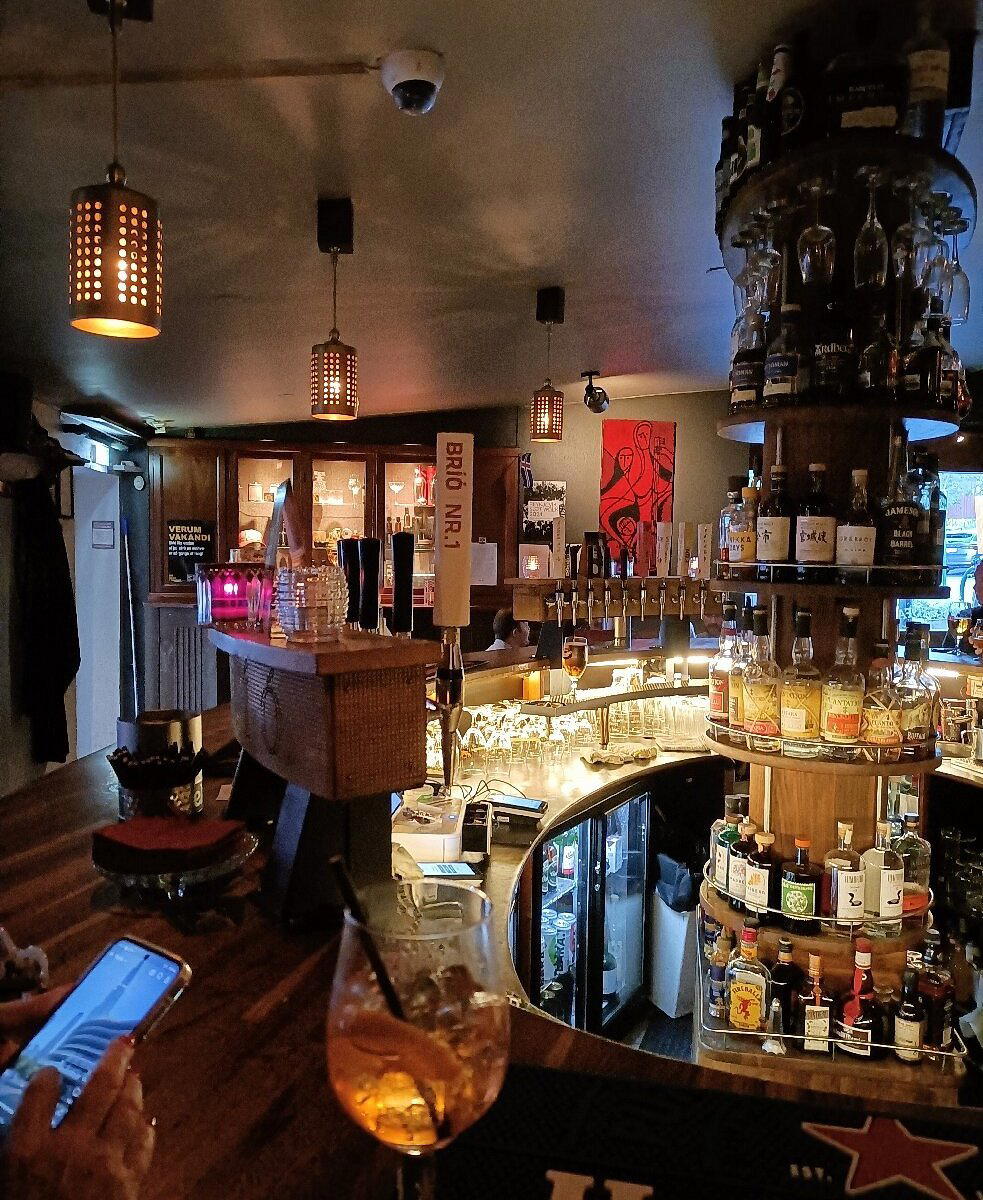
Details
- Romantic
- Quiet
- Cozy
- Scenic
- Rustic
- Intimate
- Romantic Getaway
- Honeymoon
- Weekend Escape
- Panoramic View
- Historic Building
- Wi Fi
- Restaurant
- Bar
- Mountain
- Wheelchair Accessible
Cozy Scandinavian-inspired interiors with plush sofas by roaring fires, large windows framing dramatic natural vistas, and an inviting lounge with eclectic decor.