
A Michelin Key-awarded masseria outside Otranto, Baglioni Masseria Muzza works within the established grammar of Puglia's whitewashed farmhouse hotels and executes it at a high register. Thirty-six rooms and suites hold to a palette of whites, creams, and grays; a disproportionately large spa anchors the amenity stack; and two restaurants serve Salentine cooking with the Almini Lakes nature reserve and the Adriatic coast both within reach.
Pearl is the En Primeur Club membership app — saves, bookings, and concierge access live there. Same editors, same standards.
- Address
- Contrada Fontanelle, 80, 73028 Otranto LE
- Phone
- +39 0836 237686
- Website
- puglia.baglionihotels.com
- Directions
- Get directions
 Saves & bookings on Pearl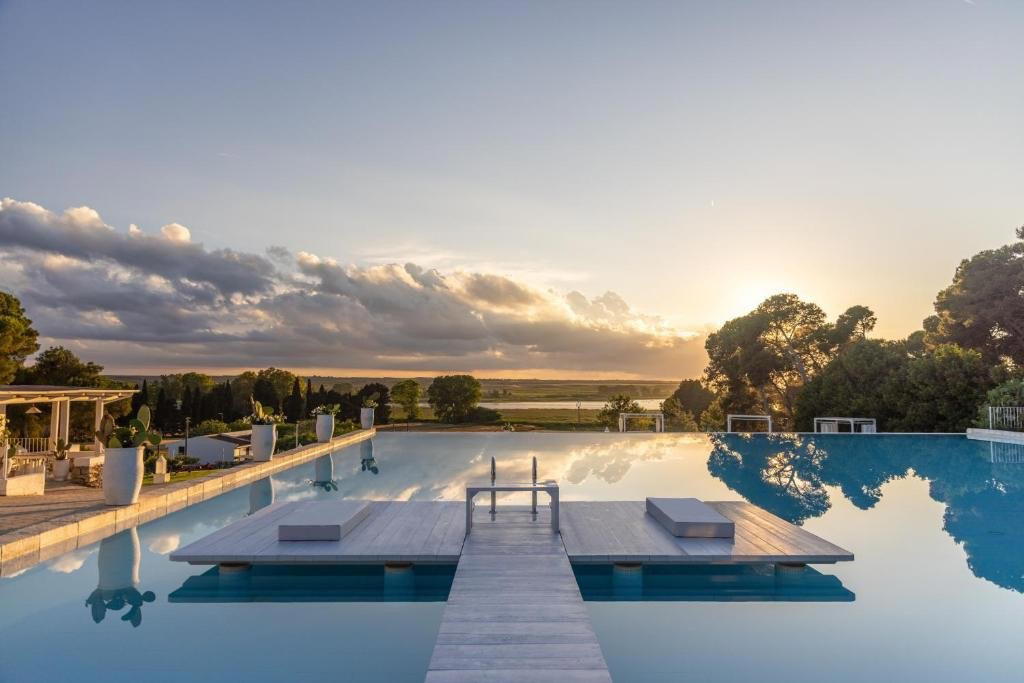
Stone, Arch, and the Salentine Hotel Form
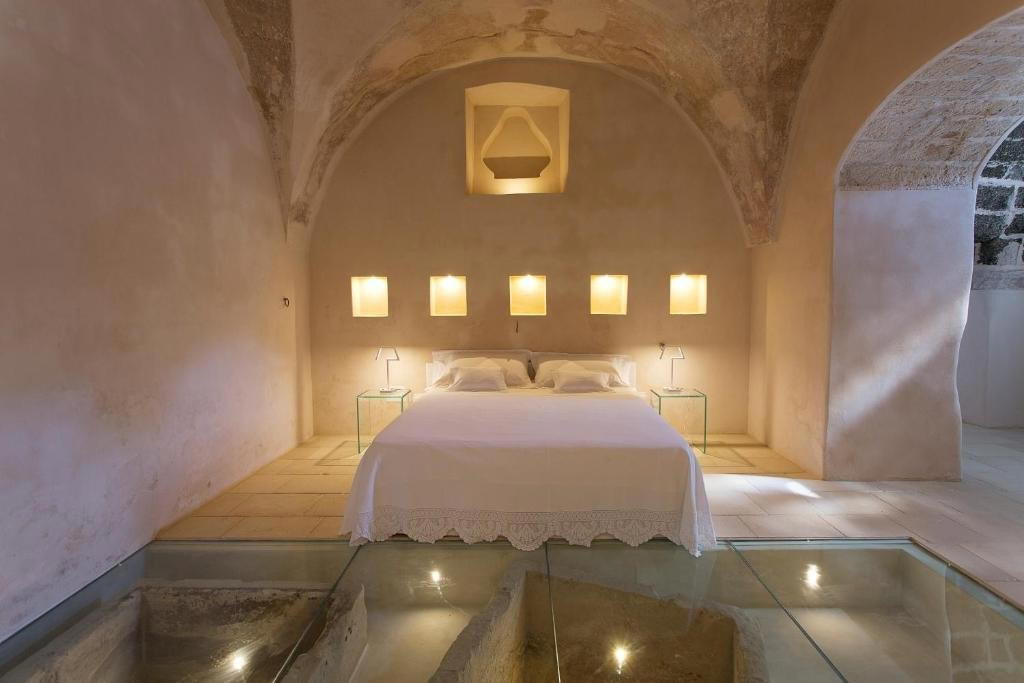
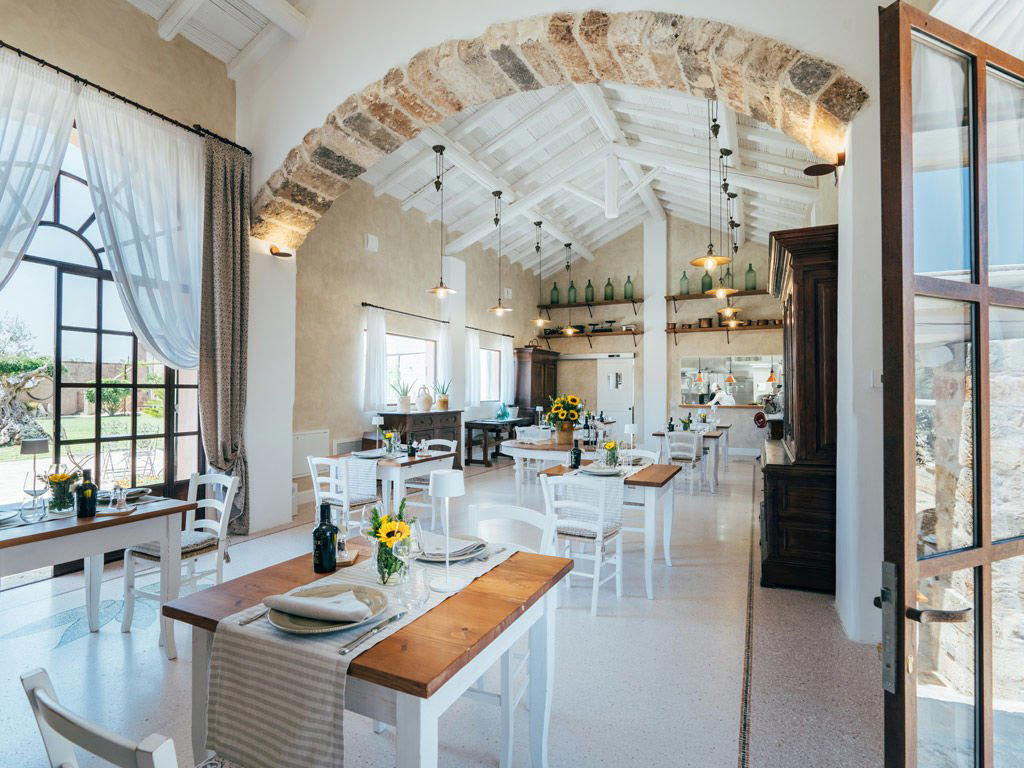
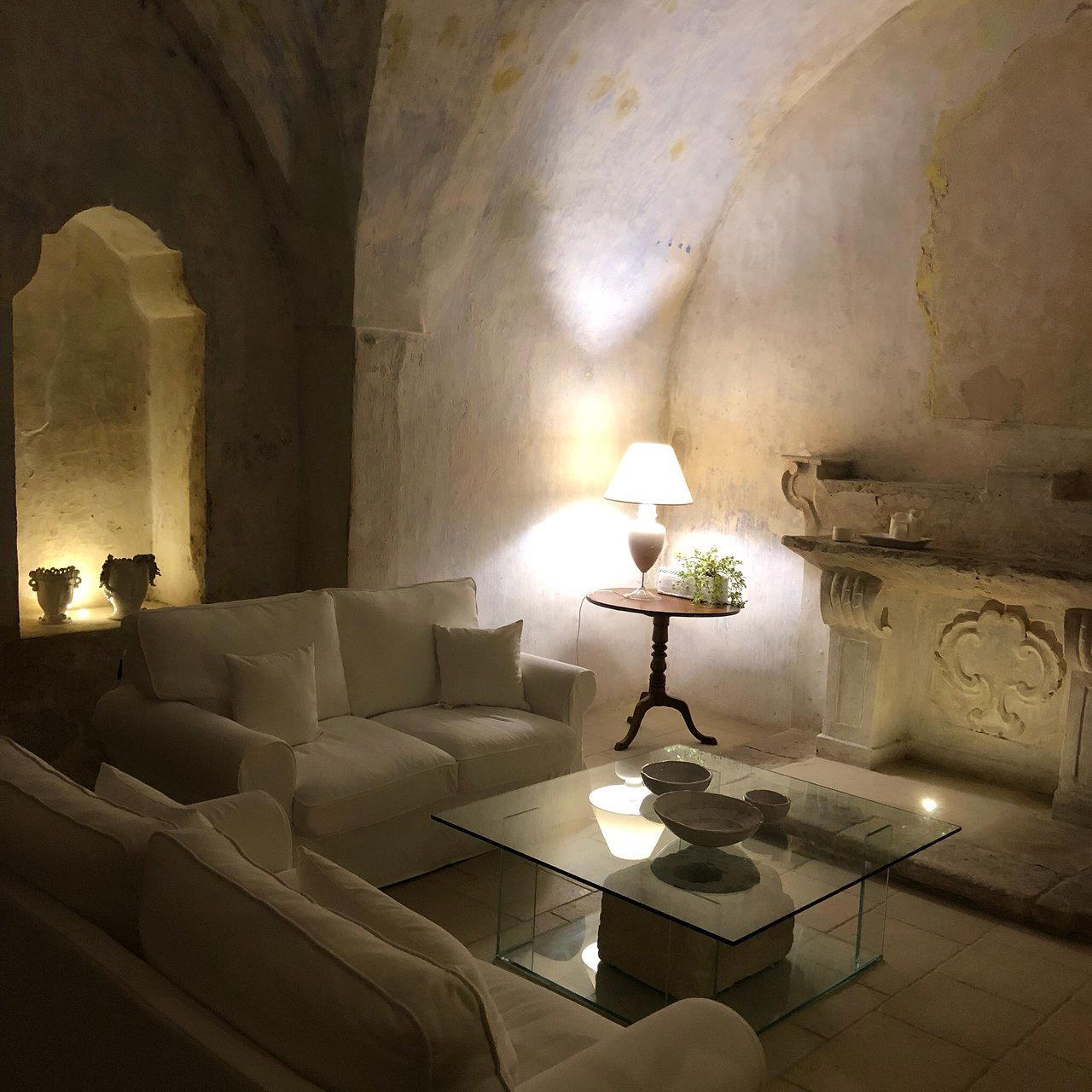
The masseria hotel is now a recognized genre of Italian hospitality, as codified in the Pugliese countryside as the agriturismo is in Tuscany. Whitewashed limestone walls, barrel-vaulted ceilings, and courtyards shaded by olive or citrus trees form the architectural vocabulary. What separates properties within this category is less the vocabulary itself than the confidence with which it is handled: the proportion of archways to open space, the weight of the stone against the lightness of the interiors, the way natural materials are finished or left deliberately rough. Baglioni Masseria Muzza, sitting just outside Otranto at the far tip of Italy's heel, belongs to the upper tier of this form. Its 41 rooms sustain a palette of whites, creams, and grays throughout, a tonal decision that lends the property a quality of sustained calm rather than decorative incident. The Michelin Guide awarded it a Key in 2024, placing it within a selective tier of Italian country properties where architecture and guest experience are judged together.
The Physical Logic of the Property
Masseria architecture was never designed for leisure. These were working farmsteads, built for agricultural productivity and defensive practicality, and the leading contemporary conversions preserve the structural logic of that origin while reconfiguring interior space for comfort. At Baglioni Masseria Muzza, the arched stone ceilings and thick external walls that once regulated temperature through thermal mass now do the same service for guests. This is passive climate control as much as it is aesthetic, and it gives the rooms a particular quality of stillness that is harder to engineer in purpose-built resort architecture. The interiors hold to an approach of restraint. The cream and gray palette does not compete with the materiality of the stone; it defers to it. This kind of discipline is a deliberate editorial choice, and it is the right one for a building whose structural character is already its primary asset.
With 41 rooms, the property sits at a scale that allows a degree of personal service without the anonymity of larger resort footprints. Comparable properties in the premium Italian masseria tier, such as Borgo Egnazia in Savelletri di Fasano, operate at significantly higher room counts, which shifts their guest experience toward a managed resort logic. Muzza's tighter key count positions it differently, closer in spirit to properties like Castello di Reschio in Lisciano Niccone or Borgo San Felice Resort in Castelnuovo Berardenga, where scale is controlled and the building itself remains the primary experience rather than a backdrop to amenities.
The Spa as Structural Counterweight
One of the more telling architectural decisions at the property is the scale of the spa relative to the room count. A spa whose footprint reads as proportionally large against 36 rooms is a statement about programming priorities: the property is offering recovery and stillness as a core proposition rather than as an add-on. This positions Muzza within a specific segment of the Italian luxury market where the wellness offer is not ancillary but structural. Properties like Forestis Dolomites in Plose or Castel Fragsburg in Merano have built their entire identity around this logic in the Alpine context; Muzza applies a version of it in the Salentine south, where the Mediterranean climate itself contributes to the same effect.
Otranto's Position and What It Means for the Stay
Location in this part of Puglia is not incidental. Otranto is the southeasternmost city of Italy's mainland, a coastal town with a Byzantine Cathedral containing Europe's largest Norman floor mosaic, a 15th-century Aragonese castle, and a historic center that retains genuine architectural texture rather than tourist-facing renovation. The Adriatic here is clean and shallow along the coastline, and the hinterland around the property includes the Almini Lakes nature reserve, a protected wetland area that sits in strong contrast to the more developed stretches of the Salentine coast. Guests who come to this corner of Puglia are generally not looking for proximity to a major city; they are choosing a location that is deliberately peripheral to Italy's main tourism corridors. That remoteness is part of the value proposition, in the same way it functions for Rosewood Castiglion Del Bosco in Montalcino or Castelfalfi in Tuscany, where distance from urban centers is framed as access to a more complete version of the Italian countryside experience.
Salentine Cooking at the Table
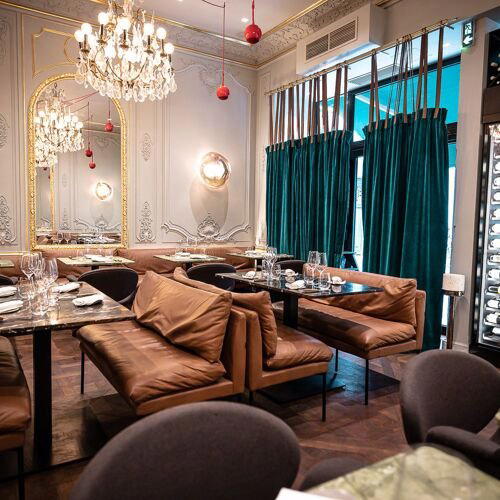
The property operates two restaurants, both focused on Salentine cooking. Salento's culinary tradition draws from a different pantry than northern Italian fine dining: orecchiette and other hand-rolled pastas, ciceri e tria, fava bean purees, sea urchin and local Adriatic seafood, and a deep vegetable-forward approach shaped by the agricultural character of the region. The cooking here is not a departure from local tradition but an expression of it, which is consistent with the Baglioni group's general positioning of their Italian properties as engaged with their immediate geography rather than offering an internationally portable luxury menu.
How Muzza Fits the Italian Country Hotel Conversation
Premium Italian country hotel market has expanded considerably over the past decade, and the masseria format in particular has seen properties at multiple quality tiers compete for similar guests. The Baglioni group's positioning of Muzza within their portfolio places it in conversation with other Italian properties that take a more design-considered, locally grounded approach: Casa Maria Luigia in Modena in the northern context, Borgo Santandrea on the Amalfi Coast in the southern coastal context. Properties like Il Pellicano in Porto Ercole and Passalacqua in Moltrasio operate at different price points and settings but share a similar conviction that the physical property itself, its architecture and material character, should carry more weight than brand machinery or amenity lists. Muzza's Michelin Key places it within a verifiable tier for guests who use award recognition as a filtering mechanism when choosing between properties in an unfamiliar region. For comparison against a contrasting register of Italian luxury, Bulgari Hotel Roma, Aman Venice, and Four Seasons Hotel Firenze each represent the urban, brand-led end of the Italian luxury spectrum, against which the masseria model defines itself as an alternative rather than a rival.
For a category like masseria hotels, where the physical environment sets expectations high and delivery needs to match them in every operational dimension, that average reflects a property where the experience holds.
Planning the Visit
Booking for Baglioni Masseria Muzza is best handled directly or through a specialist travel advisor. The property's position outside Otranto means a car or arranged transfer is practical rather than optional; the town is walkable and worth the effort, but the surrounding countryside and nature reserve are best reached with independent transport. Given the Michelin Key recognition and the limited 36-room inventory, booking well ahead of the summer peak is advisable. Guests considering this property alongside other premium Italian country stays might also look at Corte della Maestà in Civita di Bagnoregio, EALA My Lakeside Dream in Limone sul Garda, or Grand Hotel Tremezzo for a sense of how the premium Italian country property market reads across different regions and formats.
Comparable Spots, Quickly
Comparable venues nearby, for context on price, style, and recognition.
| Venue | Cuisine | Price | Awards | Notes |
|---|---|---|---|---|
| Baglioni Masseria MuzzaThis venue — the venue you are viewing | Historic masseria blending authentic Puglian heritage with modern luxury | $$$$ | Michelin 1 Key | Not listed |
| Masseria Longa Boutique Hotel | Historic masseria blending traditional Puglian architecture with modern luxury suites. | $$$$ | Not listed | Otranto |
| Patria Palace | Historic 18th-century aristocratic palace blending baroque heritage with contemporary design. | $$$$ | Michelin 1 Key | Old Town |
| Paragon 700 Boutique Hotel & SPA | Restored 18th-century palace with contemporary luxury design, blending historical architectural elements with modern comfort and curated art collections. | $$$$ | Michelin 1 Key | Historic Center of Ostuni |
| La Fiermontina Luxury Home | Contemporary luxury within a restored 17th-century palazzo, blending modern design with authentic Puglian architectural heritage. | $$$$ | Michelin 1 Key | Lecce Historic Center |
| Masseria Torre Coccaro | Historic fortified masseria blending authenticity and luxury | $$$$ | Michelin 1 Key | Savelletri di Fasano |
Recognition history
Dated appearances from independent guides and award organizations, with the underlying list record or original source where available.
Michelin 1 Key
Michelin
Michelin 1 Key
Michelin
Continue exploring
More in Otranto
Hotels in Otranto
Browse all →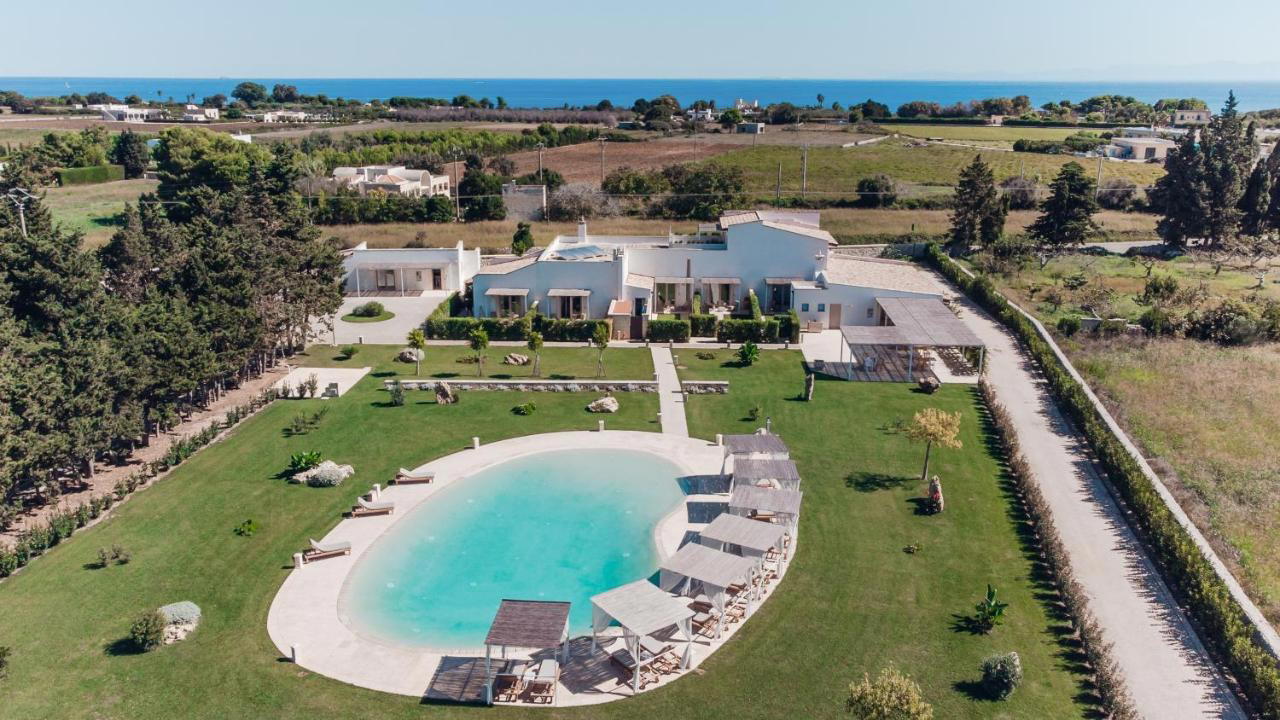
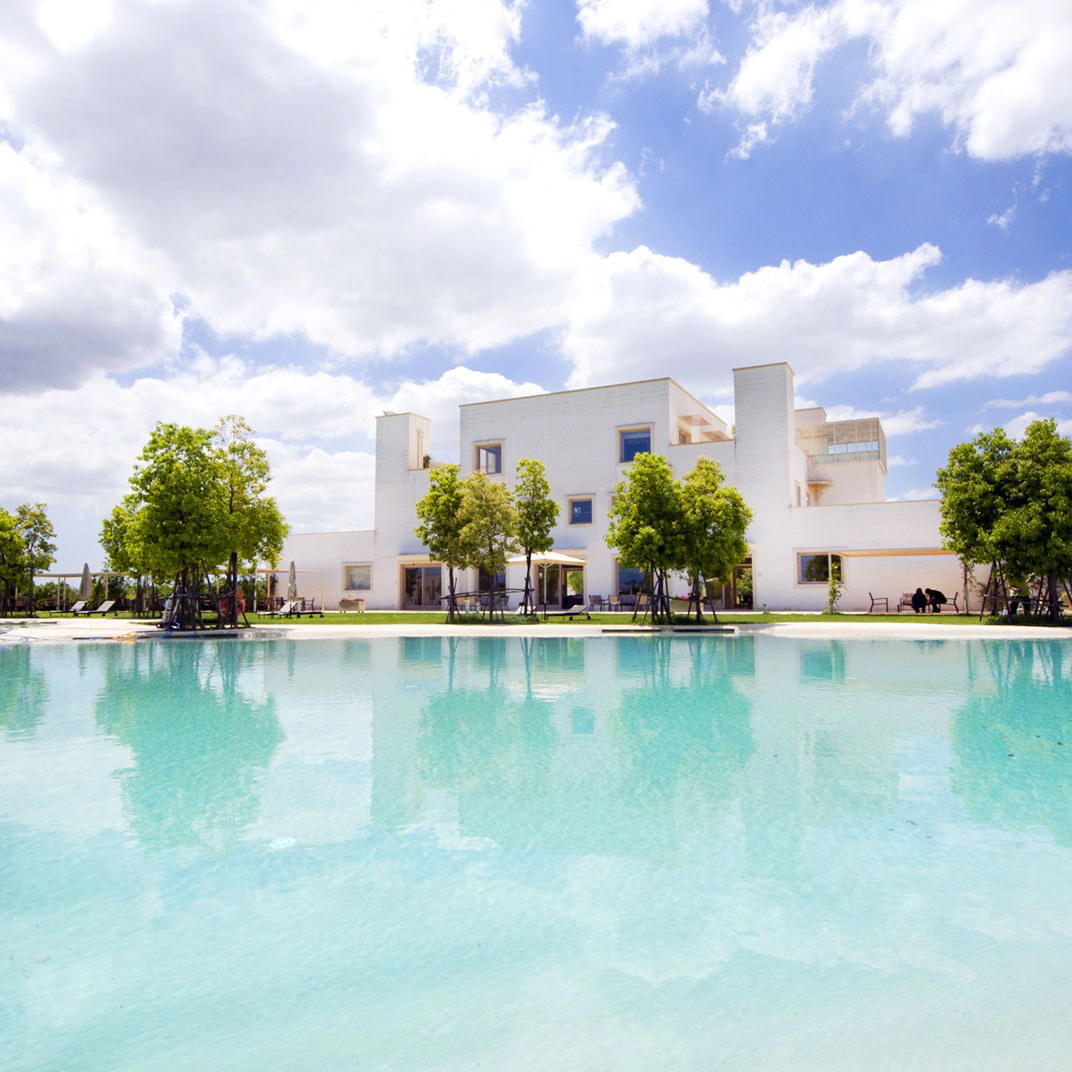
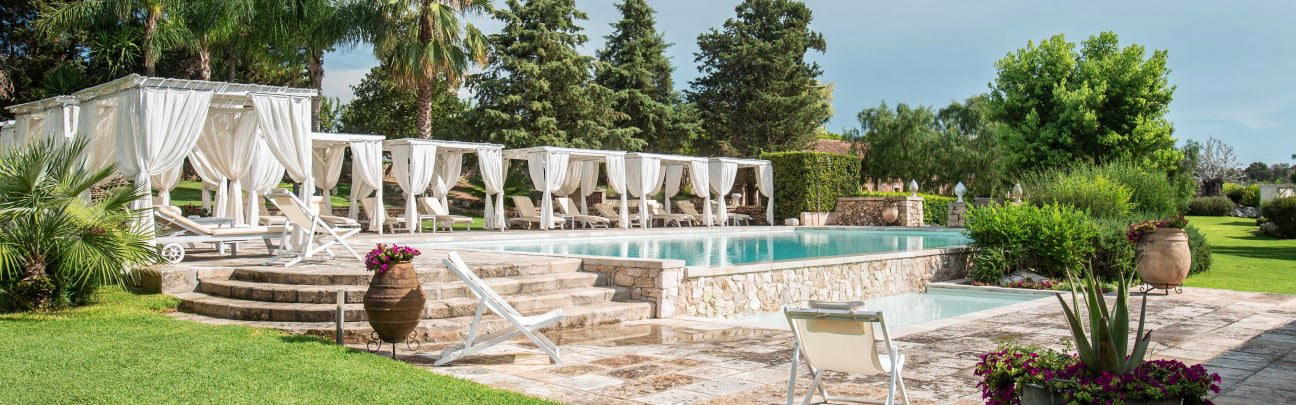
Bars in Otranto
Browse all →
Restaurants in Otranto
Browse all →

At a Glance
- Romantic
- Elegant
- Rustic
- Quiet
- Scenic
- Honeymoon
- Romantic Getaway
- Family Vacation
- Wellness Retreat
- Infinity Pool
- Garden
- Wi Fi
- Pool
- Spa
- Fitness Center
- Room Service
- Concierge
- Valet Parking
- EV Charging
- Kids Club
- Restaurant
- Garden
- Wi Fi
- Pool
- Spa
- Fitness Center
- Room Service
- Concierge
- Valet Parking
- EV Charging
- Kids Club
- Restaurant
Tranquil and elegant atmosphere with peaceful pools, soundproofed rooms, and evocative spa lighting creating refined serenity amid nature.