Westwind Orchard
Westwind Orchard sits on a working farm in Accord, New York, roughly two hours north of Manhattan in the Hudson Valley's Rondout Creek corridor. The property operates as a cider producer and gathering place, drawing visitors who want direct contact with the agricultural source of what they're drinking. It holds a distinct position in the Ulster County farm-bar scene, where the orchard itself functions as both production site and backdrop.

Pearl is the En Primeur Club membership app — saves, bookings, and concierge access live there. Same editors, same standards.
- Address
- 215 Lower Whitfield Rd, Accord, NY 12404
- Phone
- (845) 253-0234
- Hours
- Mon–Wed ClosedThu–Fri 4–8 PMSat 12–8 PMSun 12–7 PM
- Website
- westwindorchard.com
- Directions
- Get directions
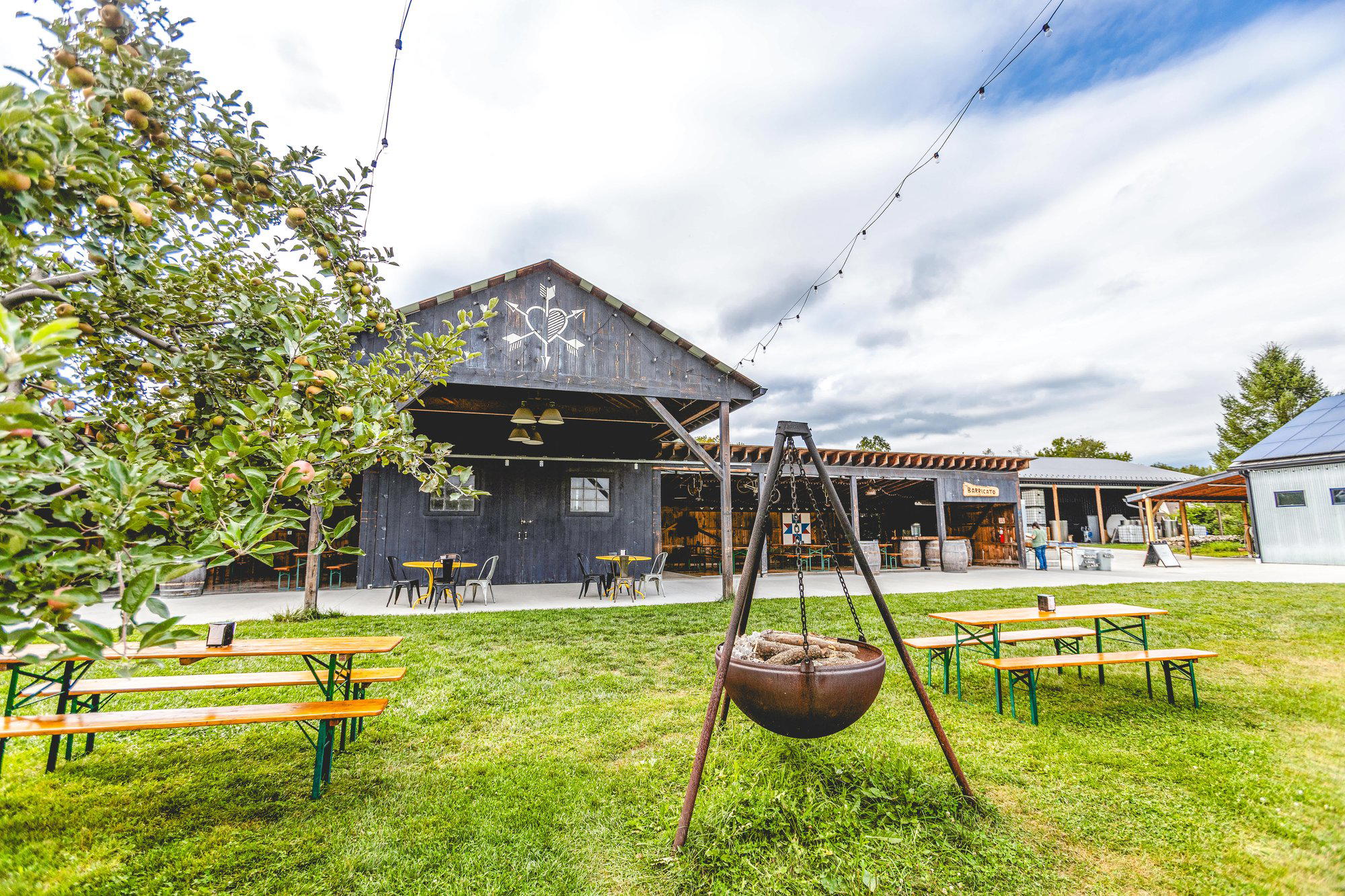
Where the Drink Begins in the Ground
The Hudson Valley has spent the last fifteen years recalibrating what a bar can be. The progression moved from craft cocktail rooms in Kingston and Rhinebeck to farm-based taprooms and, eventually, to places like Westwind Orchard in Accord, where the orchard behind you is not decorative — it is the supply chain. Located at 215 Lower Whitfield Rd, Westwind sits in Ulster County's agricultural interior, roughly two hours north of Manhattan, in a part of the valley where the terrain is hillier and less trafficked than the river-facing towns. That distance from the main tourist corridor is part of the point.
The broader trend in American farm drinking has split into two camps: venues that source regionally and tell you about it at length, and venues where the production is physically present. Westwind belongs to the second category. The apple trees are not a background element; they define the character of what ends up in the glass. That distinction matters when you're thinking about the back bar at a place like this, because cider-forward programs operate on a fundamentally different logic than spirits-forward ones. The depth comes from fruit variety, fermentation approach, and vintage variation — not bottle age or distillery lineage.
The Cider as the Collection
In a conventional bar context, the spirits collection is the measure of a program's seriousness, rare Armagnac, allocated bourbon, single-barrel Scotch. At Westwind, that editorial function is performed by the cider range itself. American cider culture has matured enough that producers like Westwind are now releasing products that behave more like wine in terms of vintage expression and orchard-specific character. A dry, tannic heritage-apple cider from a cold Hudson Valley season reads differently than one from a warmer year; the orchard's specific mix of antique varieties adds complexity that commodity apple blends cannot replicate.
For drinkers who come from a wine or spirits background, this is the framework worth carrying in. The question to ask at Westwind is not what spirits are available, but which ferments are currently pouring, what apple varieties are represented, and whether any single-variety or limited-run expressions are open. Those are the bottles that correspond to the rare-allocation tier in a traditional back bar. For comparison, programs like Kumiko in Chicago or ABV in San Francisco build their authority through curatorial depth in spirits; Westwind builds the equivalent through its own production range and whatever rotating guest ciders or fermented products appear alongside it.
Accord's Position in the Hudson Valley Drinking Map
Accord sits below the better-known Catskill towns on most tourist maps, which means the visitor volume is lower and the experience of the place feels less mediated. Ulster County's farm-bar scene includes Arrowood Farms, also in Accord, which operates a grain-to-glass beer and spirits program with a similarly agricultural footprint. The two properties occupy adjacent but distinct niches: Arrowood's program spans beer and whiskey, while Westwind's identity is built around cider and the apple orchard. Together, they make Accord a more compelling destination than its size would suggest to someone planning a day trip from the city.
That pairing also points to something broader about how the Hudson Valley has developed as a drinking region. Rather than concentrating in a single town, the serious farm-based programs are distributed across the valley's rural interior, which means the leading approach is a planned itinerary rather than a walk-around. Our full Accord restaurants guide maps the options in detail.
How Westwind Fits the Wider Farm-Bar Conversation
Nationally, farm-integrated drinking programs have become a meaningful category. Venues like Jewel of the South in New Orleans and Julep in Houston have built reputations on ingredient sourcing and regional specificity within a cocktail format. Bar Leather Apron in Honolulu and Allegory in Washington, D.C. work from the opposite direction, high-concept programs in urban settings where sourcing is one layer of a more elaborate technical approach. Westwind operates at the other end of that spectrum: the concept is essentially the orchard itself, and the program's credibility rests on how well that production is expressed.
That positioning is not simpler. It's just different. The discipline required to make compelling cider from a cold-climate orchard, year after year, with meaningful variation between expressions, is comparable in its demands to any serious back-bar curation. The difference is that the collection grows on trees and changes with the weather. Venues like Bar Kaiju in Miami, Bitter & Twisted in Phoenix, Superbueno in New York City, and The Parlour in Frankfurt on the Main each occupy their own tier in the broader international conversation about what a serious drinks program looks like. Westwind's answer is that the most serious program might be the one where you can see the source from your seat.
Planning a Visit
Accord is most accessible by car from New York City, with the drive running approximately two hours depending on traffic through the Catskill foothills. The property is seasonal in character, which means the experience shifts materially between a summer afternoon in the orchard and a fall visit during harvest. The latter is the more instructive time to go if you want to understand the cider program: harvest season is when the connection between tree and glass is most legible. Visitors planning around a weekend should factor in that farm-based properties in the Hudson Valley operate on compressed hours relative to city bars; arriving in the early afternoon gives the most time in the space before service winds down.
Price and Positioning
Comparable venues nearby, for context on price, style, and recognition.
| Venue | Price | Notes |
|---|---|---|
| Westwind OrchardThis venue — the venue you are viewing | $20–30 | Not listed |
| Arrowood Farms | $20–30 | Accord, beer_bar |
| Bar Ferdinando | Not listed | Carroll Gardens, cocktail_bar |
| Bar Heretic | $30–50 | /, wine_bar |
Continue exploring
More in Accord
Bars in Accord
Browse all →
Restaurants in Accord
Browse all →
Hotels in Accord
Browse all →

Wineries in Accord
Browse all →
Details
- Rustic
- Scenic
- Cozy
- Romantic
- Casual Hangout
- Group Outing
- Garden
- Live Music
- Outdoor Terrace
- Communal Tables
- Craft Beer
- Garden
- Mountain
Current opening hours
- Monday
- Closed
- Tuesday
- Closed
- Wednesday
- Closed
- Thursday
- 4–8 PM
- Friday
- 4–8 PM
- Saturday
- 12–8 PM
- Sunday
- 12–7 PM
Hours can change for holidays and private events. Last verified .
Romantic outdoor setting with string lights, picnic tables, and a rustic farm atmosphere.