The Jolly Butchers
A Stoke Newington fixture on the northern stretch of N16, The Jolly Butchers sits within one of London's more independently minded pub corridors. The address puts it squarely in a neighbourhood that has long resisted the homogenising pull of chain formats, where provenance-led drinking and eating carry genuine local weight. It belongs to a peer group defined by sourcing standards and a commitment to producer relationships over branded convenience.
 Discover on Pearl
Pearl is the En Primeur Club membership app — saves, bookings, and concierge access live there. Same editors, same standards.
- Address
- 204 Stoke Newington High St, London N16 7HU, United Kingdom
- Phone
- +44 20 7249 9471
- Website
- jollybutchers.co.uk
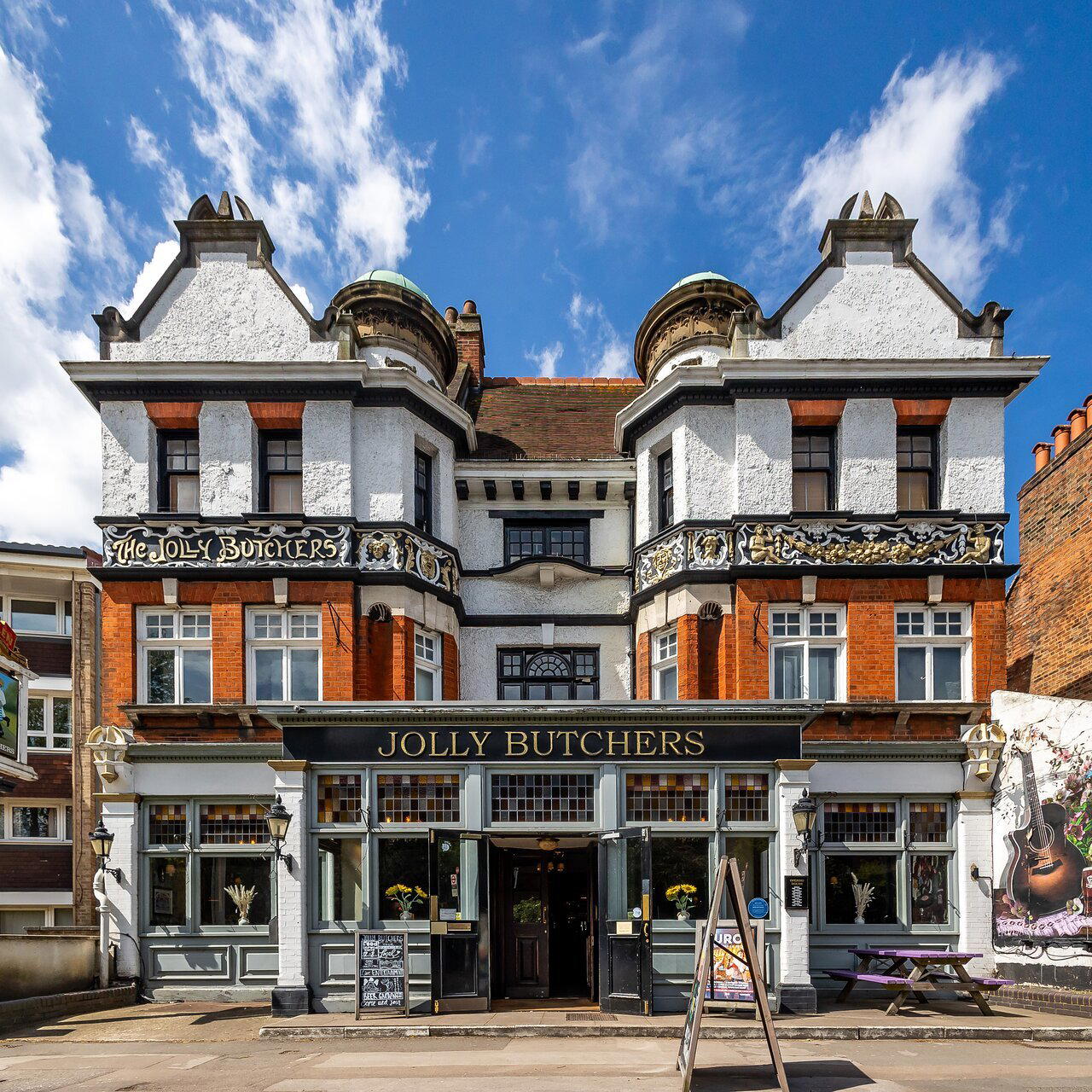
Stoke Newington and the Pub That Takes Sourcing Seriously
The upper stretch of Stoke Newington High Street reads differently from most London pub addresses. Where central neighbourhoods trend toward high-footfall concepts and brand recognition, N16 has sustained a denser-than-average concentration of independently operated venues with a working relationship with their suppliers. The Jolly Butchers, at number 204, sits within that tradition. The name itself signals something: a trade association with animal husbandry, with the chain from farm to counter, with the kind of provenance that has shaped the better end of British pub culture for the past two decades.
That shift in British pubs, away from commodity product and toward named producers, specific regions, and traceable ingredients, has been one of the more durable movements in the country's food and drink scene. Where gastropubs of the early 2000s often leaned on the concept without the rigour, a later generation of neighbourhood venues in inner London made sourcing structural rather than decorative. The Jolly Butchers occupies that later wave, in a postcode where the audience holds venues to a higher standard of consistency.
The Neighbourhood as Context
Stoke Newington's drinking and eating scene has historically tracked a different demographic than the more transient pub economies of, say, Shoreditch or Soho. The residential density here means repeat custom dominates, and repeat custom is unforgiving of drops in quality or lapses in supplier relationships. That pressure produces a particular kind of venue: one that cannot rely on tourist throughput or novelty, and must instead earn its position week by week.
The result, across the better venues in N16, is a format that prioritises depth over spectacle. The beer list at a serious Stokey pub tends toward specific British and European producers rather than the rotating-keg theatrics of more performance-oriented bar programmes. The food, where it exists, tends to reflect what the kitchen can actually do with traceable meat and seasonal produce, rather than a menu engineered for maximum margin. The Jolly Butchers fits that pattern in address and reputation, occupying a stretch of high street where the comparison set is other independently minded operations rather than national chains.
Ingredient Sourcing as Bar Philosophy
The sourcing question in London drinking venues is now less about whether a bar uses fresh juice or named spirits, and more about how deeply those choices are embedded in the programme. At the higher end of the capital's cocktail scene, venues like 69 Colebrooke Row in Islington have built reputations around technical precision and ingredient-led menus. Further along the spectrum, A Bar with Shapes For a Name and Academy represent the city's more programme-driven approach, where the drink itself is the primary editorial statement.
Neighbourhood pubs like The Jolly Butchers sit in a different register. The sourcing argument here is less about cocktail architecture and more about what flows through the taps and onto the plates: which breweries, which farms, which relationships have been sustained long enough to mean something. Amaro, also in London, demonstrates how a venue can build a coherent identity around a specific ingredient category. The Jolly Butchers makes a comparable argument through its commitment to the kind of produce and drink that a genuinely local, provenance-aware audience in Stoke Newington expects.
Where The Jolly Butchers Sits in the UK Pub Conversation
The better neighbourhood pub is a specifically British institution with few direct equivalents elsewhere. The comparison set for a venue like The Jolly Butchers is not the hotel bar programmes of Merchant Hotel in Belfast or the precision cocktail formats of Schofield's in Manchester. Nor does it align with the classic Scottish bar tradition represented by Horseshoe Bar Glasgow. The Jolly Butchers operates in the specifically London register of the serious neighbourhood pub: a format that has found its most developed expression in inner-east and inner-north postcodes, where independent operators have had the time and the audience to build something with genuine character.
Across the UK, the leading neighbourhood drinking venues share certain structural qualities: a preference for regional or independent producers, a food offer that supports rather than overwhelms the drink programme, and a relationship with the local community that sustains trade through familiarity rather than novelty. Bramble in Edinburgh and Mojo Leeds in Leeds both demonstrate how regional cities have developed their own versions of this ethos. In London's case, N16 has proven a particularly hospitable postcode for the format.
The international comparison is instructive too. Bar Leather Apron in Honolulu and L'Atelier Du Vin in Brighton and Hove both illustrate how the commitment to sourced, producer-led drink programmes has spread well beyond London's orbit. The Jolly Butchers belongs to that broader shift, even as its expression of it is distinctly local in character.
Style and Standing
Comparable venues nearby, for context on price, style, and recognition.
| Venue | Cuisine | Price | Awards | Notes |
|---|---|---|---|---|
| The Jolly ButchersThis venue — the venue you are viewing | beer_bar | $$ | , | |
| Alchemy Bar | cocktail_bar | $$ | , | City of London |
| The Drapers Arms | pub | $$ | , | Barnsbury |
| The Cocktail Club - Cocktail Bar near Old Street | cocktail_bar | $$ | , | Shoreditch |
| The Albion | pub | $$ | , | Islington |
| The Tamil Prince | pub | $$ | , | Barnsbury |
Continue exploring
More in London
Bars in London
Browse all →
Restaurants in London
Browse all →
Hotels in London
Browse all →
Wineries in London
Browse all →
At a Glance
- Cozy
- Lively
- Rustic
- After Work
- Casual Hangout
- Group Outing
- Standalone
- Seated Bar
- Craft Beer
Warm and inviting Victorian pub with original tiling, though sometimes clattery and open.