SUGARFISH by sushi nozawa
SUGARFISH by sushi nozawa on East 20th Street brings the stripped-down, trust-the-chef omakase format that built the brand's California reputation to a New York audience. The format is fixed: no customization, no à la carte, no negotiation. It sits in the accessible end of Manhattan's sushi tier, where the meal is defined by discipline rather than ceremony.
 Discover on Pearl
Pearl is the En Primeur Club membership app — saves, bookings, and concierge access live there. Same editors, same standards.
- Address
- 33 E 20th St, New York, NY 10003
- Phone
- +1 347 705 8100
- Website
- sugarfishsushi.com

The Format That Defined a Category
SUGARFISH by sushi nozawa is a casual sushi bar in New York, priced around $45 per person. One path leaned into ceremony: multi-hour counter experiences, exacting fish aging protocols, and price points that placed a single dinner above many monthly grocery budgets. The other path asked whether the same philosophical core, chef decides, guest trusts, could be delivered at a scale and price that made the format accessible without gutting its integrity. SUGARFISH by sushi nozawa represents the second path, and its East 20th Street location in Flatiron is one of the clearest illustrations of that bet playing out in Manhattan.
The brand traces its origins to Nozawa Bar's counter in Los Angeles, where the trust-the-chef principle was codified into a fixed menu structure that removed customization from the equation entirely. The New York outpost carries that same logic: guests select from set menu tiers rather than building their own order, and the kitchen executes without deviation.
Where SUGARFISH Sits in Manhattan's Sushi Tier
Manhattan's sushi market is usefully mapped in three tiers. At the leading are the omakase counters where reservations open months in advance, seat counts are often under ten, and the per-person spend routinely clears several hundred dollars before beverages. In the middle sit mid-format counter restaurants that offer composed menus at a lower price point but retain serious sourcing ambitions. At the accessible end sit volume-capable operations that prize consistency and throughput over intimacy.
SUGARFISH operates in that middle-to-accessible band. The Flatiron location on East 20th Street draws the kind of crowd that wants a structured sushi experience without the ritual overhead of a top-tier omakase. It is not competing directly with the city's Michelin-starred counters; it is competing with the broader casual-to-mid sushi segment, and within that frame its fixed-format logic is a differentiator rather than a limitation.
The Collaboration That Makes the Format Work
In a restaurant where the menu is non-negotiable, the front-of-house team carries proportionally more weight than in a conventional à la carte room. Their job is not to guide choice but to manage expectation, set pace, and ensure that the absence of menu agency doesn't register as a guest-experience deficit. This requires a particular kind of floor discipline, reading tables quickly, timing courses without appearing to rush, and answering the inevitable "can I substitute" question in a way that lands as a feature rather than a limitation.
Kitchens that run fixed menus also require a different kind of internal coordination than à la carte operations. When every table is eating the same sequence, the prep-to-service relationship is tighter, the tolerance for variation is lower, and consistency across covers matters more than creative improvisation. The collaboration between kitchen and floor at SUGARFISH is less about synchronizing complex coursework and more about maintaining a standard that repeats reliably across a high number of seats. That is its own kind of craft.
The beverage side in sushi-focused operations of this type tends to be deliberately minimal. The format doesn't require a deep wine program or a cocktail list built around seasonal ingredients. Sake and beer occupy most of the functional pairing territory, and the floor team's role is less sommelier and more guide: helping guests who aren't sake-literate make a quick, confident choice that doesn't derail the pace of the meal.
Flatiron as a Dining Neighbourhood
East 20th Street in Flatiron places SUGARFISH at one of Manhattan's denser intersections of mid-market and aspirational dining. The neighbourhood draws a working lunch crowd from the surrounding office and tech corridor, and evening trade skews toward groups who want something more considered than a casual neighbourhood spot without the lead time or price commitment of a high-end tasting menu. SUGARFISH fits that gap with reasonable precision.
Flatiron's dining character has been shaped by the volume of post-work and pre-theatre foot traffic moving through the area, and the restaurant's format, efficient, fixed, predictable in timing, suits that context well. It is not a destination for a four-hour dinner; it is a destination for a meal with a clear beginning and end, which in a neighbourhood like this is genuinely useful.
Before You Go: What to Understand About the Format
The single most important thing to absorb before walking in is that the fixed menu is not a simplified version of a real omakase, it is the point. The menu tiers are complete compositions, not abbreviated samplers. Trying to treat the experience as a conventional restaurant where modifications are expected will create friction that isn't inherent to the format. Going with the structure rather than against it is both the practical advice and the intended experience.
Booking ahead is recommended, particularly for dinner service during the week and any time on weekends. The Flatiron location draws consistent traffic from both neighbourhood regulars and visitors working through Manhattan's sushi options methodically. Walk-in availability exists but isn't reliable at peak hours.
Amor y Amargo on East 6th Street runs a focused bitters-and-amaro program with no vodka on the back bar, a principled constraint that shapes every drink. Angel's Share in the East Village continues to operate as one of the city's more composed Japanese-influenced cocktail rooms. Attaboy NYC on Eldridge Street runs a guest-driven bespoke format with no menu, which is an interesting inverse parallel to SUGARFISH's chef-driven fixed one. And Superbueno offers a completely different register if the evening calls for something more spirited in tone.
For reference across other cities with strong fixed-format or omakase-adjacent drinking culture: Kumiko in Chicago applies a Japanese precision framework to cocktails in a way that rhymes with SUGARFISH's kitchen logic. Bar Leather Apron in Honolulu, Jewel of the South in New Orleans, Julep in Houston, ABV in San Francisco, Allegory in Washington, D.C., and The Parlour in Frankfurt on the Main each represent the kind of program-led operation that rewards guests who engage on the venue's terms rather than importing their own agenda.
Cuisine Lens
| Venue | Awards |
|---|---|
| SUGARFISH by sushi nozawaThis venue — the venue you are viewing | |
| The Long Island Bar | World's 50 Best |
| Dirty French | |
| Superbueno | World's 50 Best |
| Amor y Amargo | World's 50 Best |
| Angel's Share | World's 50 Best |
Continue exploring
More in New York City
Bars in New York City
Browse all →
Restaurants in New York City
Browse all →
Hotels in New York City
Browse all →


At a Glance
- Elegant
- Intimate
- Modern
- Minimalist
- Date Night
- Casual Hangout
- Special Occasion
- Standalone
- Design Destination
- Seated Bar
- Counter Only
- Sake
- Conventional Wine
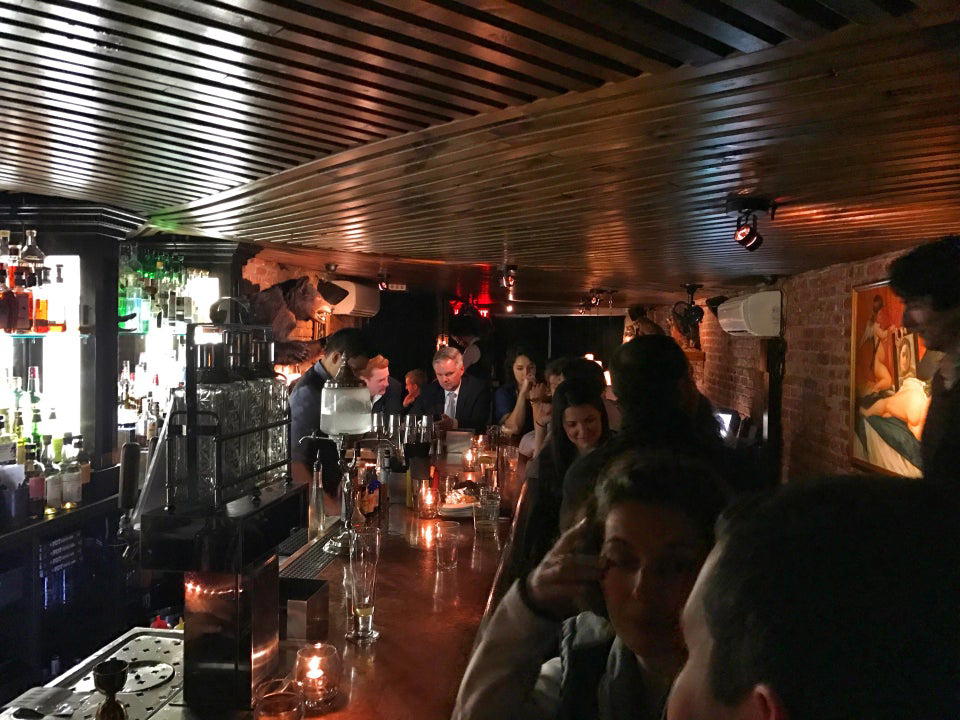
Low-lit, bistro-like space with tables placed close together, creating an intimate and sophisticated dining environment.