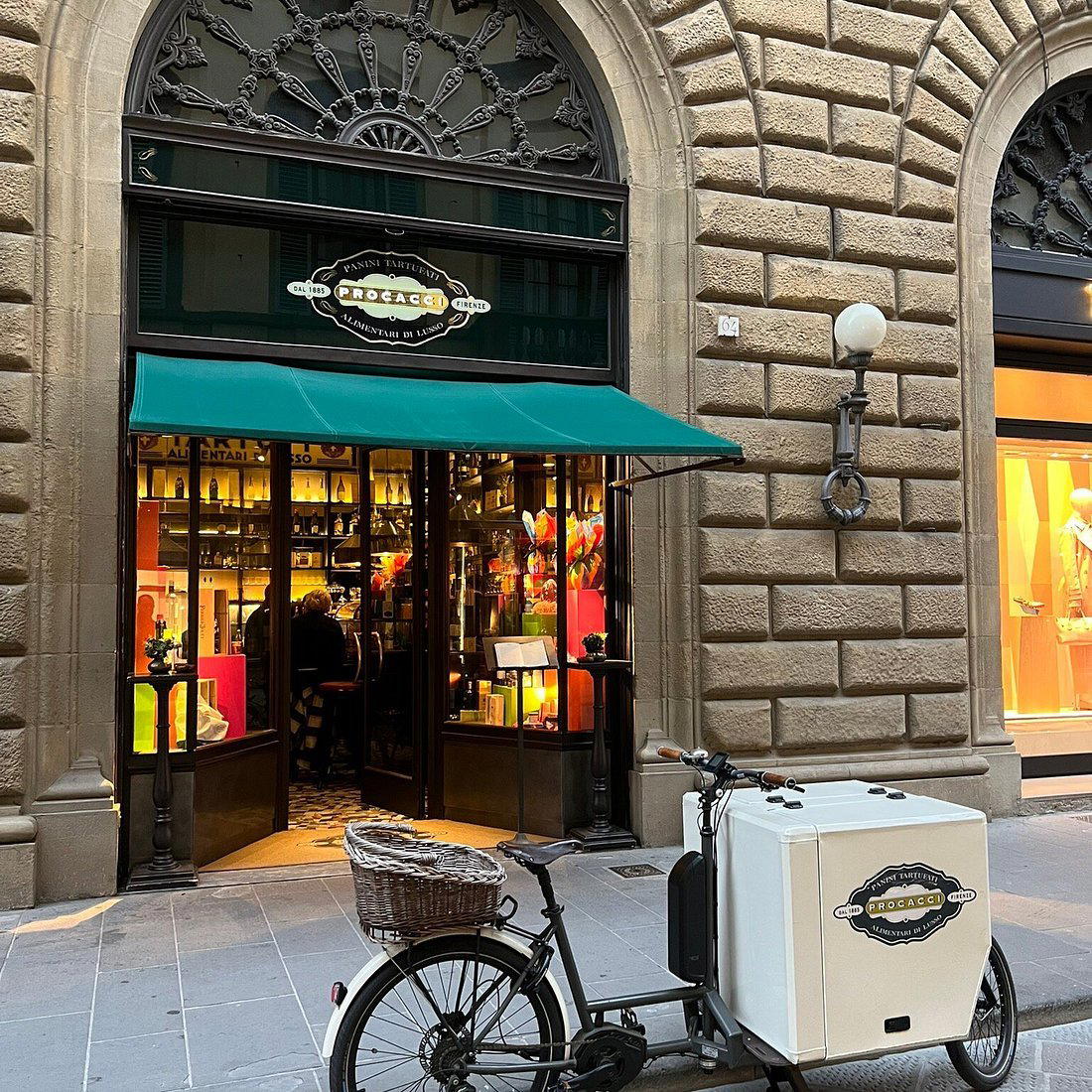
On Via de' Tornabuoni, Florence's most patrician shopping street, Procacci 1885 has operated as a bar and bottega since the nineteenth century, occupying a physical space that reads more like a private salotto than a commercial venue. Its truffle-centric pantry and standing-bar format place it in a narrow category of Florentine institutions that predate the modern aperitivo circuit by several decades.

Pearl is the En Primeur Club membership app, where members save venues, book tables and use the concierge.
A Street That Sets the Terms
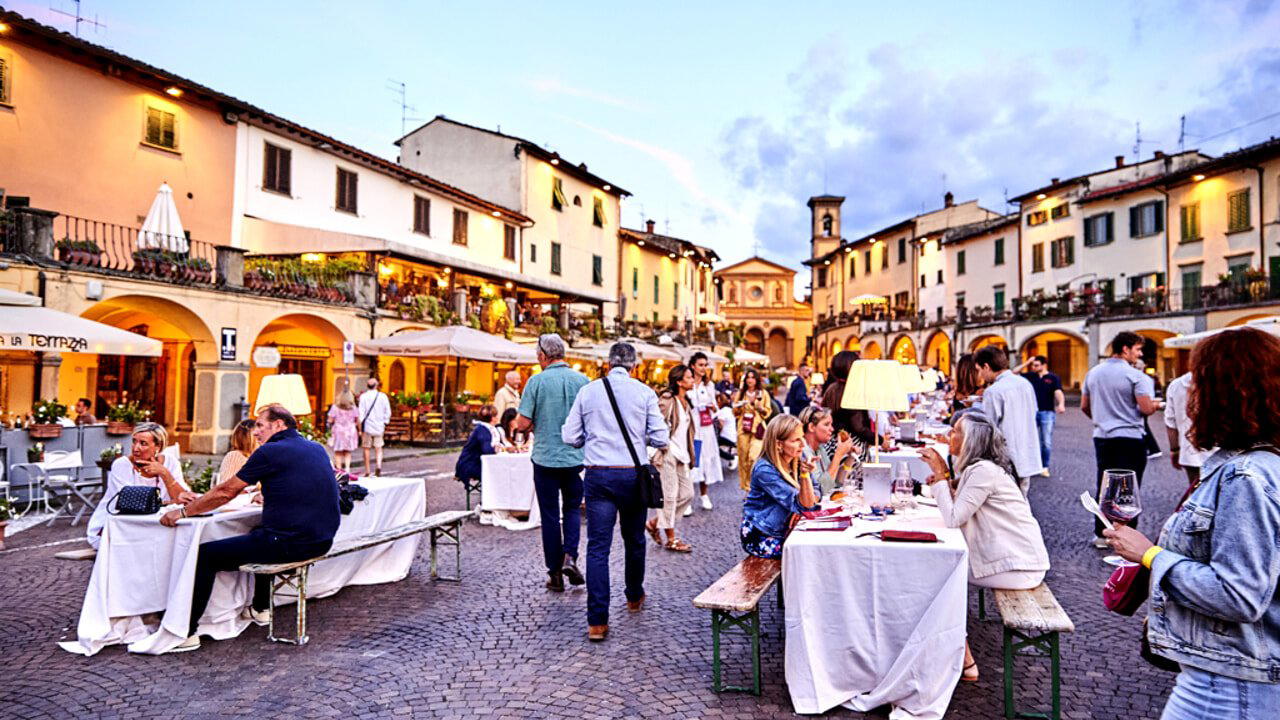
Via de' Tornabuoni has always functioned as a kind of barometer for Florentine taste. The palazzo facades, the jewellers, the Florentine wool merchants turned global fashion houses: the street curates itself, and anything on it is subject to the scrutiny that comes with that address. Procacci 1885 sits at number 64R, and the address alone signals something about its competitive position. This is not the Florence of aperitivo bars targeting students near Santa Croce, nor the experimental cocktail scene that has taken root in the Oltrarno. Procacci occupies a different tier entirely, one defined by longevity, restraint, and a particular vision of what a Florentine bar should feel like when it has had 140 years to decide.
For context, the bars that define Florence's current drinking conversation range considerably in register. Locale Firenze operates in a vaulted medieval setting with a full cocktail program aimed at the international visitor who wants both history and technique. The Atrium Bar trades on hotel-lobby formality. BABAE leans into natural wine and a more casual neighbourhood register. Procacci belongs to none of these categories. It is, in the Italian sense, a bottega with a bar function: a shop that serves, or a bar that also sells, depending on which way you approach it.
The Room as an Argument
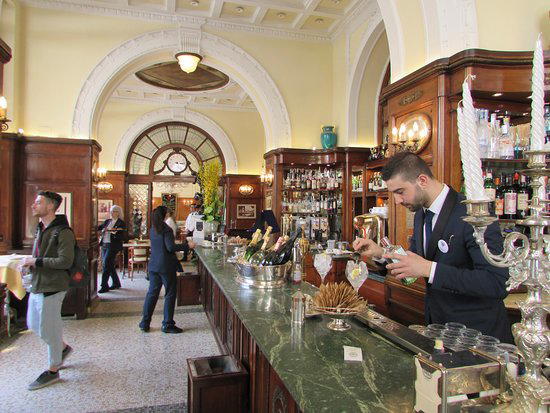
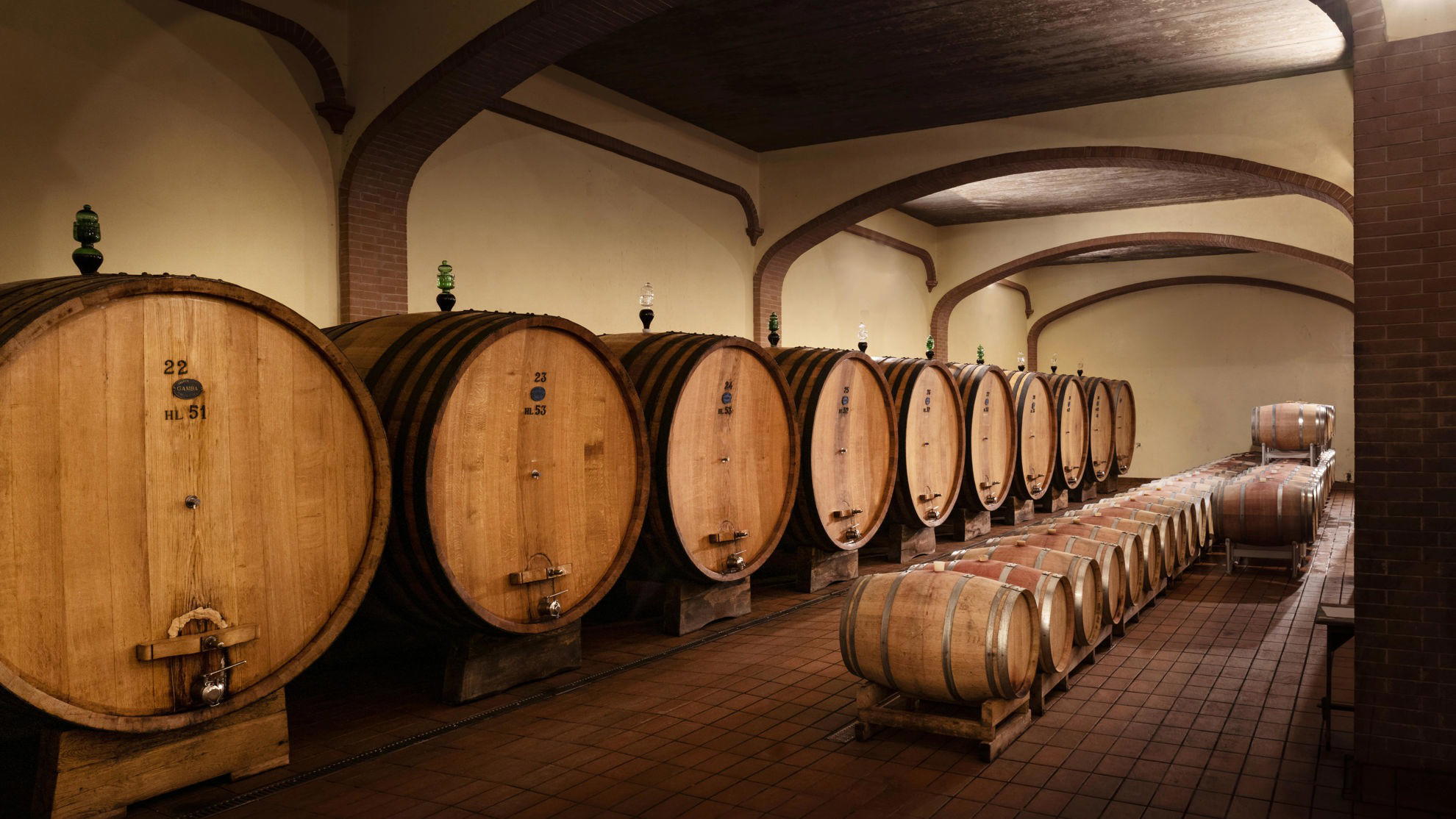
The interior at Procacci makes a case for a kind of commercial restraint that has become increasingly rare. The space is narrow and deliberately unspectacular in the way that genuinely old rooms tend to be: dark wood panelling, glass cases displaying jarred and tinned product, a bar counter that runs along one side without theatrical lighting or architectural punctuation designed to photograph well. The room was not conceived as a backdrop. It is a working space that has accumulated patina rather than been designed to simulate it.
This distinction matters in a city where heritage is regularly aestheticised into something that performs age rather than embodies it. The seating arrangement, to the extent that there is one, favours standing. Procacci is not a place to linger over a long lunch. The format is closer to a Venetian bacaro or a Milanese banco: you arrive, you order, you stand at the counter, and you leave when you are ready. This keeps the room in motion and maintains a social density that formal seating would dissipate. The physical container enforces a particular kind of interaction, one that is brief, direct, and grounded in the product rather than the experience of being served.
Across Italy, bars that have held a fixed format for this long tend to become either museums of themselves or genuinely functional neighbourhood fixtures. Procacci, on its evidence, leans toward the latter. The presence of a working pantry, with truffle-based products available for purchase, keeps the commercial logic honest. You are not paying a premium simply for atmosphere. The room and the product are inseparable, and the truffle focus gives the space a specific identity that separates it from Florentine cafes that have aged into generalism.
Truffle as a Structural Principle
The truffle pantry at Procacci is not incidental. In a city where product provenance is taken seriously, the focus on truffle, particularly in the form of truffle-spread tramezzini, the small crustless sandwiches that have become the venue's most referenced item, positions Procacci within a Tuscan food tradition that prizes funghi and tartufo as primary rather than accent flavours. Tuscany's truffle production, centred on areas like San Miniato, gives venues like this a regional credential that is both geographical and cultural.
The tramezzino format, simple, standing, eaten in two or three bites, is itself an editorial statement about what a premium snack should be. It resists the elaboration that has come to define aperitivo food in cities like Milan, where cicchetti and stuzzichini have expanded into multi-course spreads. Procacci's approach is more compressed: one product, made well, available to stand and eat. It is a format that requires confidence in the ingredient, because there is nowhere else to hide.
For visitors comparing experiences across Italian cities, the contrast is instructive. 1930 in Milan operates in the tradition of technical cocktail precision. Drink Kong in Rome is explicitly contemporary in its program and aesthetic. L'Antiquario in Naples leans into archival spirits and historical depth. Procacci's version of depth is different: it is product-led and rooted in a specific regional ingredient rather than in bartending lineage or cocktail taxonomy. It is a bar where the food product carries more of the identity than the drinks program does, which is a relatively unusual inversion even by Italian standards.
Planning Your Visit
Via de' Tornabuoni is central Florence, within comfortable walking distance of the Ponte Vecchio and Santa Maria Novella. The standing-bar format means the venue can absorb foot traffic without requiring advance booking in the way that seated restaurants demand, though the space is small and peak mid-morning and early evening periods will compress it further. The natural visit window is mid-morning, before the shopping-street crowds consolidate, or in the early afternoon when the room tends to clear. The product range, including jarred truffle preparations available for purchase, makes this a practical stop for anyone assembling a food-focused itinerary, not simply a detour for a drink.
For those building a broader Florence bar itinerary, Gucci Giardino occupies an adjacent position on the luxury-heritage axis of the same street, though with a considerably more designed and fashion-branded experience. The contrast between the two is itself instructive about what Via de' Tornabuoni now contains: one venue that wears its commercial identity as content, and one that has simply continued operating as if the century around it were someone else's concern. Our full Florence restaurants guide maps the broader picture.
Further afield, bars that share something of Procacci's archival seriousness include Al Covino in Venice, which occupies a similarly compact format with a serious wine and cichetti focus, and Enoteca Storica Faccioli in Bologna, where the natural wine program and historical register share Procacci's preference for substance over spectacle. If the standing-counter, product-first format interests you beyond Italy, Bar Leather Apron in Honolulu and Lost & Found in Nicosia represent different regional takes on the idea that a bar's identity can be carried by a single, well-chosen focus rather than by range.
At a Glance
Comparable venues nearby, for context on price, style, and recognition.
| Venue | Cuisine | Price | Awards | Notes |
|---|---|---|---|---|
| Procacci 1885This venue (the venue you are viewing) | Not listed | $20–30 | Not listed | Not listed |
| Bar Artemisia | Santo Spirito, speakeasy | $20–30 | Top 500 Bars Best Bars #371 | Not listed |
| Enoteca Pitti Gola e Cantina | Not listed | Not listed | Not listed | Santo Spirito, wine_bar |
| Cabiria Lounge Bar | Italian | Not listed | Not listed | Santo Spirito, lounge |
| Bulli & Balene - Spritz e Cicchetti | Not listed | $10–20 | Not listed | Santo Spirito, cocktail_bar |
| La Cité | San Frediano, lounge | $10–20 | Not listed | Not listed |
Continue exploring
More in Florence
Bars in Florence
All bars in Florence →
Restaurants in Florence
All restaurants in Florence →
Hotels in Florence
All hotels in Florence →

Procacci 1885
The drinks
Signature drinks: Aperol Spritz, Campari Spritz, Prosecco.
Details
- Elegant
- Classic
- Sophisticated
- Intimate
- Well Known
- Date Night
- After Work
- Casual Hangout
- Historic Building
- Seated Bar
- Outdoor Terrace
- Conventional Wine
- Street Scene
Current opening hours
- Monday
- 10 AM–9 PM
- Tuesday
- 10 AM–9 PM
- Wednesday
- 10 AM–9 PM
- Thursday
- 10 AM–9 PM
- Friday
- 10 AM–9 PM
- Saturday
- 10 AM–9 PM
- Sunday
- 10 AM–9 PM
Hours can change for holidays and private events. Hours as of .
Timeless Art Nouveau elegance with dark wood details, period mirrors, soft lighting, and old-world charm.