Me So Poke
Me So Poke sits on the north Austin corridor where fast-casual dining has grown alongside the tech-sector population shift. The spot brings the Hawaiian poke bowl format to a part of the city that runs on efficiency and fresh options. It's a practical, produce-forward stop for the Parmer Lane stretch.
- Address
- 1700 W Parmer Ln, Austin, TX 78727
- Phone
- +1 512 614 4087
- Website
- mesopoke.com
 Saves & bookings on Pearl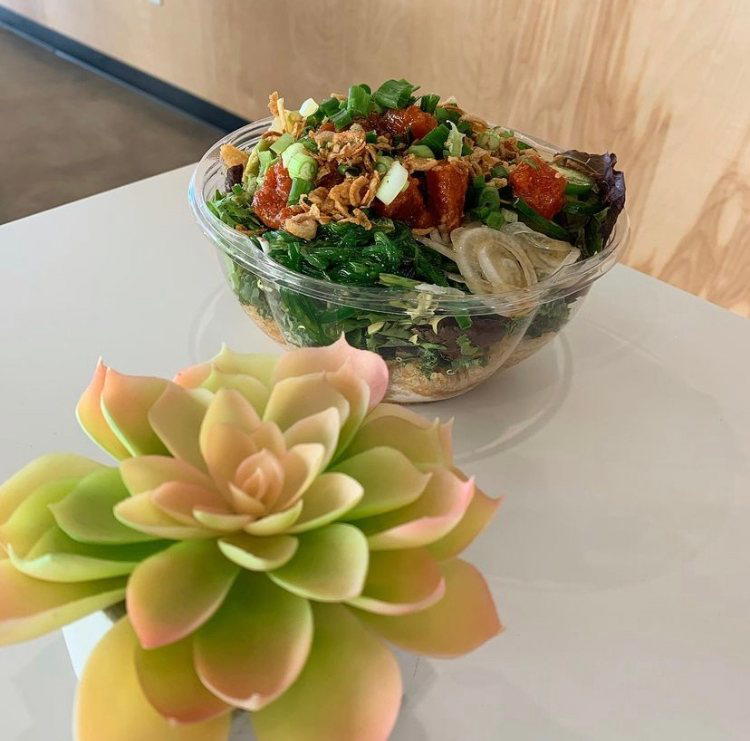
The Bowl Format in a City That Eats on the Move
North Austin's Parmer Lane corridor has changed considerably over the past decade. What was once a thin strip of strip-mall practicality is now lined with options serving the dense tech-campus population that relocated here from the Bay Area and Pacific Northwest. That demographic shift imported specific eating habits: speed, customization, and a preference for lighter protein formats. The poke bowl arrived in Austin as part of that migration, and spots along this northern corridor now serve it as readily as any Honolulu food hall. Me So Poke is a casual bar at 1700 W Parmer Ln in Austin, open for walk-in service and priced around $12 per person.
Me So Poke, at 1700 W Parmer Lane, sits squarely inside that pattern. The address puts it in the 78727 zip code, one of Austin's fastest-growing residential-commercial pockets, where lunch windows are short and the demand for anything resembling a clean, build-your-own meal is high. The poke format answers that demand practically: raw fish over rice or greens, toppings layered to order, sauces applied at the counter. It is a format that travels well from its Hawaiian roots into this kind of utilitarian context.
What Poke Actually Is, and Where It Comes From
Poke (pronounced poh-kay) began as a Hawaiian fisherman's preparation: roughly cubed raw fish, seasoned with sea salt, seaweed, and crushed kukui nut, eaten as a snack before the catch reached market. The word itself means to slice or cut crosswise in Hawaiian. Over generations it absorbed Japanese influence through Hawaii's immigrant population, particularly the seasoning logic of shoyu and sesame, and the protein discipline of sashimi-grade fish handling. What arrived on the mainland American market in the mid-2010s was already a hybrid form, several generations removed from the beach preparation that started it.
The mainland poke bowl as a category is now genuinely widespread, with the format adopted in cities from Honolulu outward to New York, Chicago, and throughout the Sun Belt. Austin's version of the category runs from counter-service chains to independent operators, and the quality gap between them is visible in the fish sourcing and sauce discipline. The Hawaiian original relied on proximity to fresh Pacific tuna and the seasoning restraint of a cuisine that trusted its ingredients. Mainland interpretations vary considerably in how closely they track that restraint.
The broader American poke market is worth tracking for what it says about how diaspora food formats travel. In Honolulu, the bowl is still a grocery-counter food as often as it is a restaurant format. Spots like Bar Leather Apron in Honolulu operate in a city where poke is daily eating, not a novelty. When the format migrated to cities like Austin, it carried the physical structure of the bowl but lost the neighborhood familiarity that made it unremarkable. That distance from origin is part of what makes the category interesting in continental American cities: you are always eating a translation.
Austin's Fast-Casual Position
Austin's dining conversation often defaults to its barbecue identity and its bar scene, which runs from deep craft programs at spots like Nickel City and 2500 E 6th St to the Mediterranean-leaning food programs at Aba Austin. The music infrastructure around venues like Antone's Nightclub shapes where late-night eating decisions get made. But the city's fast-casual market runs parallel to that scene and serves a different daily rhythm entirely.
The north Austin fast-casual pocket, in particular, operates on weekday lunch logic. The Parmer Lane office parks and tech campuses generate concentrated midday demand that evening-focused restaurant culture doesn't serve. Poke in this context competes with grain bowl chains, taco counters, and sandwich formats, all of which address the same constraint: a working person with forty minutes and a preference for something that doesn't weigh them down for the afternoon. The poke bowl format wins on that criterion by keeping protein volumes moderate and letting the rice or greens base absorb the sauce without heaviness.
Within the Texas fast-casual tier, the poke format has a comparable set that includes spots in Houston, Dallas, and San Antonio, though the category's density is thinner here than on either coast. For reference across the Gulf South fast-casual market, Houston's more developed dining scene has useful comparison points, and operators like Julep in Houston illustrate how the Texas market rewards formats with clear identity. Nationally, the category operates at a different scale in cities like Chicago and New York City, where the volume of poke-adjacent options creates a more competitive quality floor.
When to Go and What to Expect
The Parmer Lane location runs on the logic of its neighborhood: weekday traffic is higher than weekends, and the lunch window from roughly 11:30 a.m. to 1:30 p.m. is when the format is most relevant to the working population nearby. The counter-service structure means visits are fast by design, and the build-your-own format shifts control to the customer in a way that suits high-volume midday service. This is a format that rewards knowing what you want before you reach the counter.
For first-time visitors to the poke format generally: the base choice matters more than most people assume. Short-grain sushi rice carries sauce differently than mixed greens or brown rice, and the seasoning logic of the bowl depends on the base holding some of that liquid. The fish-to-topping ratio in mainland interpretations often skews toward volume over restraint; the better approach is to treat the toppings as seasoning rather than filling.
For context on how serious cocktail and dining programs operate at the higher end of the market, spots like ABV in San Francisco or The Parlour in Frankfurt on the Main and Jewel of the South in New Orleans illustrate what the upper tier of hospitality-focused programming looks like in comparable markets. Me So Poke operates in a completely different register from those, which is not a criticism: the format it represents doesn't require ceremony to be useful.
Planning Your Visit
Me So Poke is located at 1700 W Parmer Lane, Austin, TX 78727, in the northern corridor of the city. Website and phone details are not confirmed at time of writing; the most reliable approach is to check current Google listings for hours before visiting, as fast-casual operators in this part of Austin adjust hours seasonally around campus and office calendars. The address is accessible by car from the main Parmer Lane artery, with standard strip-center parking.
Comparable Venues
Comparable venues nearby, for context on price, style, and recognition.
| Venue | Cuisine | Price | Notes |
|---|---|---|---|
| Me So PokeThis venue — the venue you are viewing | Bar | $$ | |
| Mikado Ryotei | sake_bar | $$ | Northwest Austin |
| The Lucky Duck | cocktail_bar | $$ | East 6th Street |
| Moonshine Grill | lounge | $$ | Convention Center District |
| Little Brother | tiki_bar | $$ | Town Lake |
| Broken Spoke | dive_bar | $$ | South Lamar |
Continue exploring
More in Austin
Bars in Austin
Browse all →
Restaurants in Austin
Browse all →
Hotels in Austin
Browse all →
At a Glance
- Casual
- Trendy
- Casual Hangout
- Group Outing
- Standalone
- Counter Only
Casual, modern quick-service environment focused on fresh Hawaiian cuisine.