Litro occupies a small, characterful space on Via Fratelli Bonnet in Rome's Trastevere-adjacent Monteverde neighbourhood, positioning itself within the city's natural wine and enoteca circuit rather than the high-concept cocktail tier. The atmosphere leans intimate and unhurried, suited to an evening built around glass pours and conversation rather than a structured dining programme. For Rome's wine-forward bar scene, it represents a neighbourhood-scaled alternative to the more theatrical options closer to the historic centre.
- Address
- Via Fratelli Bonnet, 5, 00152 Roma RM, Italy
- Phone
- +39 06 4544 7639
- Website
- facebook.com
- Directions
- Get directions
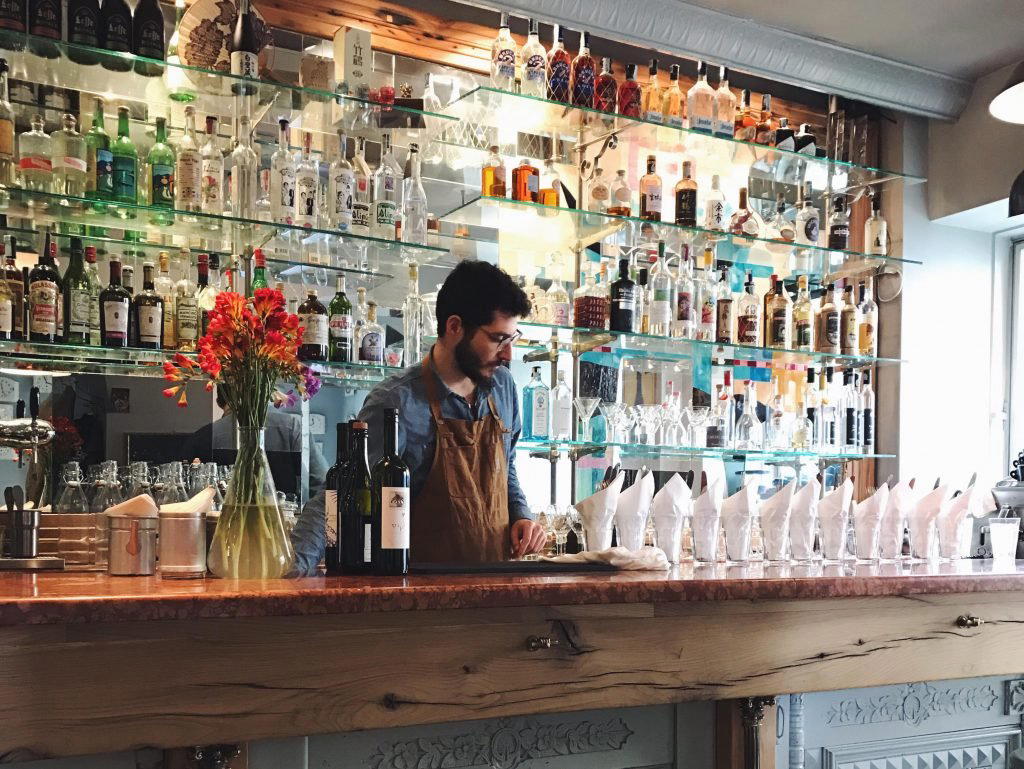
Wine Bars and the Neighbourhoods That Define Them
Rome's drinking culture has never been monolithic. The city runs on parallel tracks: the aperitivo bars near Piazza Navona drawing crowds through sheer foot traffic, the craft cocktail rooms of Pigneto and Ostiense serving a more intentional clientele, and then the enoteca circuit, smaller, quieter, and in many cases more serious about what's in the glass. Litro, on Via Fratelli Bonnet in the Monteverde district, sits squarely inside that third category. Monteverde is not a neighbourhood that relies on tourist spillover, which shapes the kind of place that survives there: one that builds its reputation through locals returning regularly, not through visibility on the main drag.
That geography matters. Bars west of the Tiber, away from the centro storico, tend to operate with less performative energy and more sustained attention to the product itself. The natural wine movement found particularly fertile ground in these quieter zones, where a longer evening conversation over low-intervention bottles carries more currency than a cocktail list engineered for Instagram. Litro operates within that tradition, functioning as a reference point on the city's natural wine circuit in a way that a Trastevere tourist bar simply cannot.
The Physical Environment: Small, Deliberate, Without Pretension
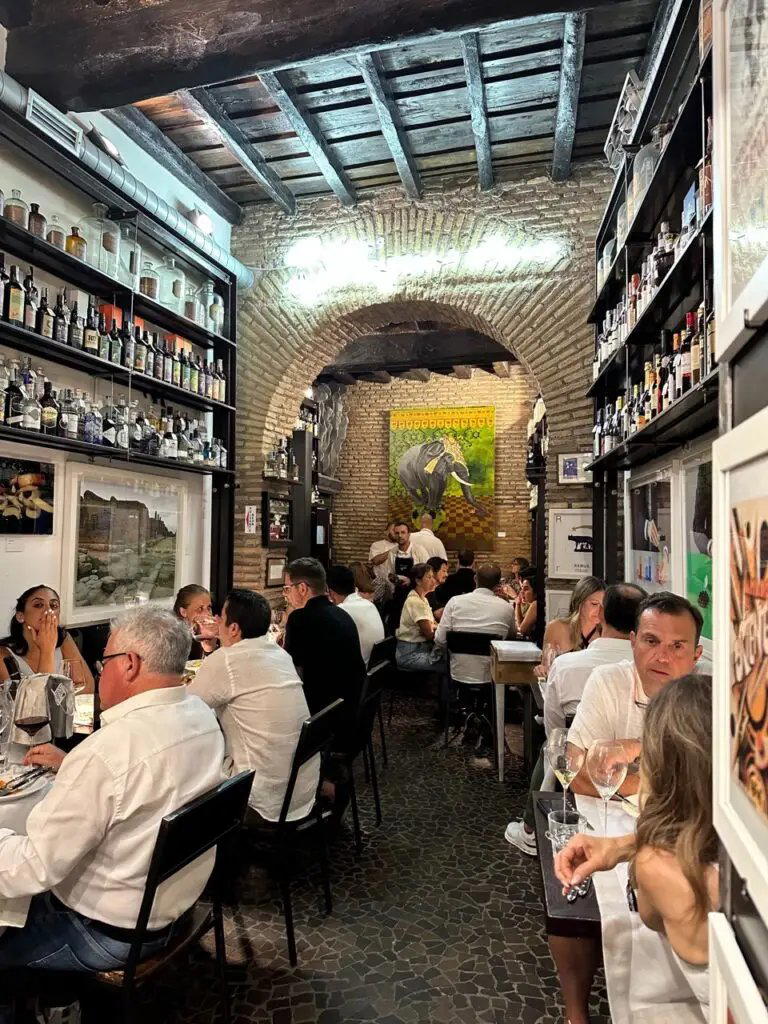
The atmosphere at Litro is easier to understand through what it does not do than through any list of design features. There is no dramatic lighting concept, no soundtrack calibrated to suggest cool. The space reads as genuinely inhabited rather than curated for effect, bottles shelved practically, furniture that prioritises density of seating over visual drama, a bar counter that functions as a place to drink rather than a stage for theatrical preparation. In Rome's current bar scene, where concept-heavy rooms like Drink Kong have raised the production value of what a bar interior can mean, the contrast is instructive. Litro's register is deliberately lower-key, and that restraint communicates its own message: the wine is the point.
This kind of space rewards a particular kind of evening. It is not designed for a single drink before dinner; it is designed for settling in. The pacing is determined by the conversation and by what's being poured, not by ambient pressure to turn tables. For visitors accustomed to London or New York wine bar formats, where service has grown increasingly formal and the room is half-designed for social media, Litro's informality reads as a stance rather than an oversight.
Where Litro Sits in Rome's Bar Hierarchy
Rome has developed a set of bars that operate at distinctly different registers of ambition and formality. At the high end of cocktail craft, Jerry Thomas Speakeasy maintains a reservation-based, low-capacity format that treats the bar as a dedicated destination. Freni e Frizioni handles volume and neighbourhood energy in Trastevere. Boeme occupies its own niche in the city's aperitivo rotation. Litro does not compete in those categories directly. Its comparable set is the enoteca: places where the selection of producers, the condition of the bottles, and the knowledge of the person pouring carry more weight than the list's length or the room's design ambition.
Across Italy, this format has proven durable. Enoteca Historical Faccioli in Bologna and Al Covino in Venice represent similar commitments in their respective cities: small-format wine spaces where the editorial point of view behind the list matters more than scale. Litro belongs to that national conversation, translated into a specifically Roman key. For context further afield, L'Antiquario in Naples and Gucci Giardino in Florence demonstrate how differently Italian cities handle the intersection of drinking culture and design ambition, Litro sits at the quieter, more product-focused end of that spectrum.
What to Drink and How to Approach It
Litro's identity is built around natural and low-intervention wines, a category that in Rome has moved from fringe positioning to a recognised sub-market over the past decade. The selection at this kind of enoteca typically rotates around small producers, often from central Italian appellations, sometimes from further afield in France or the Adriatic coast, with the emphasis on biodynamic or minimal-sulphur production. The value case for drinking natural wine at a neighbourhood enoteca versus a restaurant is structural: without the restaurant mark-up tier, bottles that might appear on a fine-dining list at significant premium are available at a fraction of the price.
The practical approach is to arrive without a fixed agenda and let the person behind the bar guide the selection. This is not a room for arriving with a specific appellation request; it is a room for describing roughly what you are in the mood for and seeing what surfaces. That conversational model of service, common to serious enoteca culture across Italy, is part of what distinguishes this register from the high-concept cocktail bar, where the menu is the map and the bartender executes it.
Planning a Visit
Via Fratelli Bonnet sits in Monteverde, reachable from the centre by tram or a short taxi from Trastevere. The neighbourhood functions as a practical evening destination rather than a daytime stop, so Litro fits naturally into a later-evening programme.
1930 in Milan operates in an entirely different register, high-concept, reservation-driven, and internationally recognised, but it illustrates how wide the spectrum runs between formal bar programming and neighbourhood wine culture. Internationally, Lost and Found in Nicosia and Bar Leather Apron in Honolulu show how the serious neighbourhood bar format translates across entirely different markets. Litro's version is deeply local, which is precisely its value.
Price and Positioning
Comparable venues nearby, for context on price, style, and recognition.
| Venue | Price | Notes |
|---|---|---|
| LitroThis venue — the venue you are viewing | $$ | Not listed |
| Birra + | $$ | Prenestino-Labicano, beer_bar |
| Banana Republic Roma | $$ | Monte Mario, cocktail_bar |
| Spin! | $$ | Ostiense, beer_bar |
| Blind Pig | $$ | Appio-Latino, cocktail_bar |
| Osteria delle Coppelle | $$$ | San Eustachio, wine_bar |
Continue exploring
More in Rome
Bars in Rome
Browse all →
Restaurants in Rome
Browse all →
Hotels in Rome
Browse all →

At a Glance
- Cozy
- Intimate
- Trendy
- After Work
- Casual Hangout
- Standalone
- Outdoor Terrace
- Seated Bar
- Natural Wine
Cozy neighborhood wine bar atmosphere ideal for aperitivo, lunch, or dinner with a focus on organic and handcrafted wines.