First Avenue
First Avenue is Minneapolis's defining live music venue, a former Greyhound bus depot on the corner of 7th Street and 1st Avenue North that has anchored the city's cultural identity since 1970. The room's black-painted walls, covered in gold and silver stars honoring artists who have sold it out, make the atmosphere as much a part of the experience as the music itself.
Pearl is the En Primeur Club membership app — saves, bookings, and concierge access live there. Same editors, same standards.
- Address
- 701 N 1st Ave, Minneapolis, MN 55403
- Phone
- +1 612 338 8388
- Website
- first-avenue.com
- Directions
- Get directions
 Saves & bookings on Pearl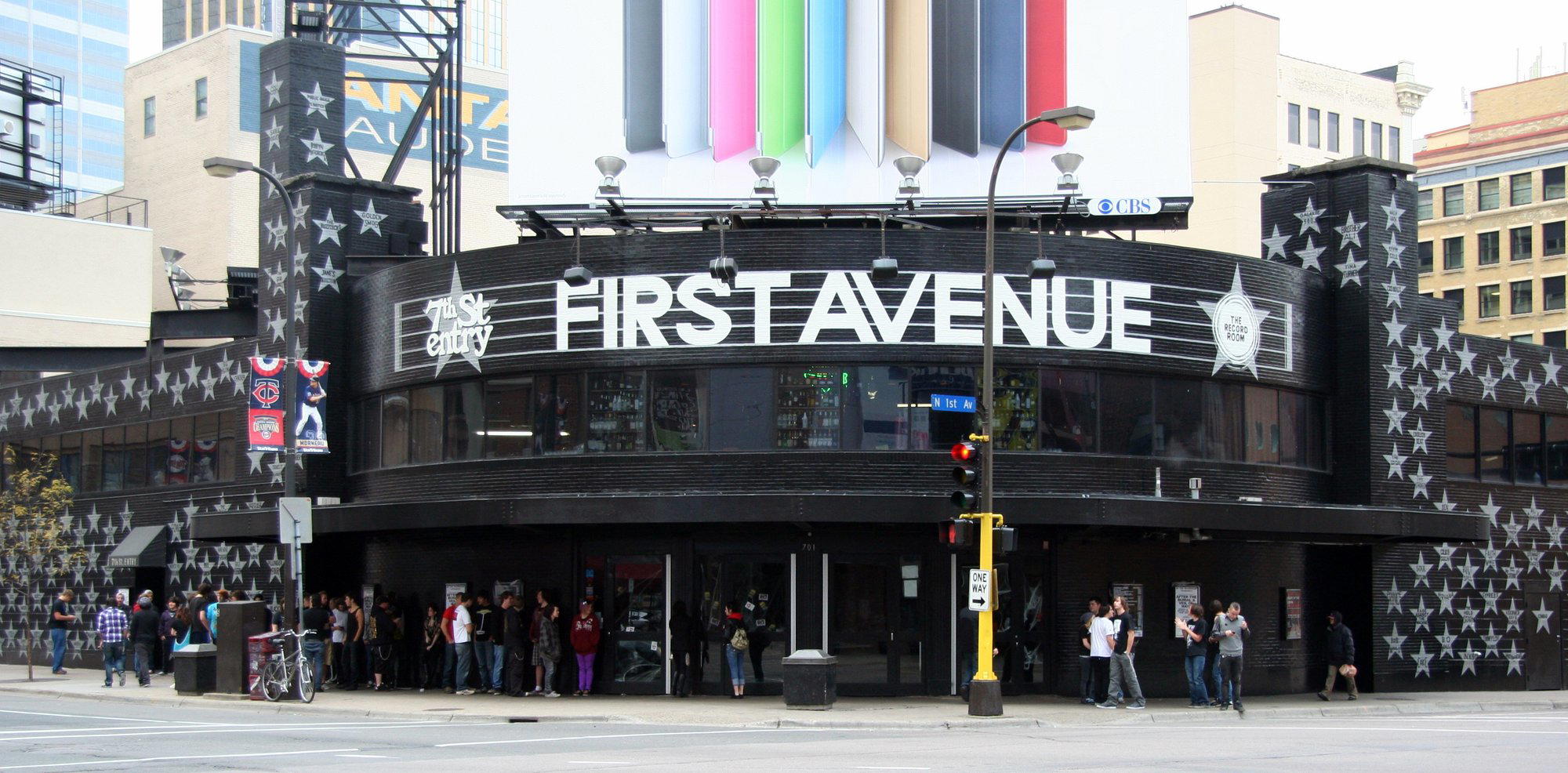
The Room That Shaped a City's Sound
There is a particular kind of cultural weight that accrues in rooms where history keeps happening. First Avenue is a bar at 701 N 1st Ave in Minneapolis,807 reviews and an essential reservation policy. The exterior is a broad block of painted black concrete, and the interior follows suit: dark walls, a low stage, a large wooden dance floor that tilts slightly toward it, and a ceiling that absorbs sound rather than bouncing it back at you. What sets the room apart aesthetically are the stars. Hundreds of silver and gold stars stud the outer wall, each one naming an artist who sold out the space. It is an archive as much as a decoration, and standing outside reading those names gives you a sharper account of American popular music since 1970 than most textbooks would.
The venue repurposed the 1937 Greyhound terminal when intercity bus travel was giving way to car culture. That industrial DNA still shows in the bones of the building: high ceilings, a wide floor plan, the sense of a space designed for movement and transit rather than sitting still. Minneapolis concert halls of the same era tended toward seated auditorium formats; First Avenue went the other direction, prioritizing the floor, keeping the stage low, and collapsing the distance between performer and crowd.
What the Atmosphere Tells You About the Space
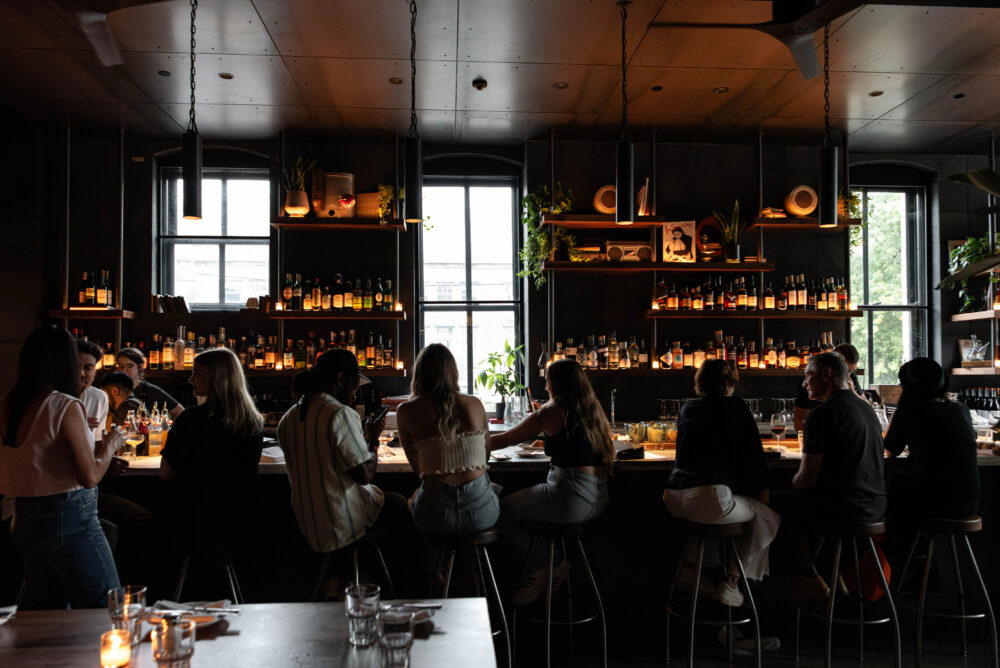
The lighting inside First Avenue operates on a logic that prioritizes the stage at the expense of everything else. The main room goes dark between acts, and the bar areas along the walls rely on red and amber practical lighting that makes the room feel contained rather than expansive. This is a deliberate acoustic and atmospheric choice. Larger venues in Minneapolis and Saint Paul have moved toward more polished production environments; the bar has stayed with the rawer format, which creates a different relationship between the crowd and the performers.
7th Street Entry, a smaller adjacent room with its own stage and entrance, handles a different tier of programming: touring acts with smaller draws, local bands building an audience, experimental formats that would feel lost in the larger room. The split-room model lets the venue function as both an established circuit stop and a genuine development space, which is relatively unusual in mid-sized American cities where venue economics tend to push everything toward one format or the other.
Sound at floor level in the main room is notably direct. For a room this age, that is a meaningful operational achievement rather than an incidental one.
Minneapolis in the National Club Circuit
Mid-sized American cities occupy a specific position in the touring economy. They sit below the arenas and amphitheaters but above the small club circuit, and the rooms that operate in this middle band vary considerably in how seriously they treat the format. The bar has consistently held a position at the more serious end of that band, drawing acts that could play larger rooms and choosing not to, partly because of the room's cultural reputation and partly because the floor-forward format suits certain kinds of performances better than a seated hall would.
The venue's most documented cultural moment remains Prince's use of it in the 1984 film Purple Rain, which mapped the bar directly onto the popular image of Minneapolis as a music city. That association has been consequential: it positioned the venue as a reference point rather than simply a stop, and artists who care about that kind of lineage have factored it into routing decisions.
Compared to equivalent rooms in other American cities, the bar operates with a degree of institutional confidence that newer venues in the same tier tend not to have.
Drinking at the Venue
The bar's bar program is functional rather than ambitious, which is entirely appropriate for the format. The drinks operation runs across multiple bar stations distributed around the main room perimeter, keeping wait times manageable on sold-out nights. The selection runs to draft beer, direct spirits, and well cocktails, priced at a level consistent with the mid-tier club format in Minneapolis. This is not a destination for the kind of technically driven cocktail program you would find at Jewel of the South in New Orleans, Julep in Houston, or Superbueno in New York City. The drinks are there to serve the room's primary function, and the bar layout is designed for throughput rather than contemplation.
112 Eatery and All Saints Restaurant both sit within reasonable proximity and provide a different register of hospitality than the venue floor. Able Seedhouse + Brewery and 5-8 Club add further options for those building a fuller evening around a show.
Planning a Visit
What It’s Closest To
Comparable venues nearby, for context on price, style, and recognition.
| Venue | Cuisine | Price | Notes |
|---|---|---|---|
| First AvenueThis venue — the venue you are viewing | lounge | $$ | Not listed |
| Mortimer's Bar and Restaurant | pub | $$ | Whittier |
| Hikari Hand Roll Bar | sake_bar | $$ | Whittier |
| Hell's Kitchen Inc. | lounge | $$ | WeDo |
| Gyu-Kaku Japanese BBQ | lounge | $$ | Lyn-Lake |
| Amazing Thailand | lounge | $$ | Uptown |
Continue exploring
More in Minneapolis
Bars in Minneapolis
Browse all →
Restaurants in Minneapolis
Browse all →
At a Glance
- Well Known
- Lively
- Energetic
- Late Night
- Group Outing
- Celebration
- Live Music
- Historic Building
- Standing Room
- Classic Cocktails
High-energy atmosphere with historic art deco elements, packed dance floor, and lively live music lighting.