
A Kurfürstendamm-adjacent bar that ranked among the world's 30 best in 2012, Lebensstern operates in the upper tier of Berlin's serious cocktail scene. Open from 8am through to 1am, it covers more hours than most of its peers, making it as plausible a morning coffee stop as an evening destination for considered drinking.
- Address
- Kurfürstenstraße 58, 10785 Berlin
- Phone
- +49 30 26391922
- Website
- lebens-stern.de
- Directions
- Get directions
Kurfürstendamm's Long Game: How Berlin's West End Built a Bar Worth Ranking
Berlin's cocktail culture has never been a single-neighbourhood story. While Mitte and Prenzlauer Berg attract most of the international attention, the western districts around Kurfürstendamm quietly sustained a bar scene with more continuity and less turnover than the trendier east. Lebensstern, at Kurfürstenstraße 58 in Schöneberg, is the clearest evidence of that durability. In 2012 the bar ranked 30th on the World's 50 Best Bars list; in 2013 it held at 36th. That two-year bracket of international recognition placed it inside a small peer group of German bars operating at that level during the early decade, a period when London, New York, and Tokyo dominated the rankings and European continental entries were relatively rare.
For context, German bars that have made the World's 50 Best list remain a short list even now. Lebensstern's presence in consecutive years signals that whatever the bar was doing between 2012 and 2013 was being read by the international judging community as technically serious and consistently executed.
The Schöneberg Setting and What It Signals
The stretch of Kurfürstenstraße where Lebensstern sits runs through a part of Schöneberg that has historically mixed residential density with commercial ground-floor activity. This is not the self-consciously designed bar district of Kreuzberg or the gallery-adjacent drinking of Mitte. Bars in this part of the city tend to earn their clientele through word-of-mouth and repeat custom rather than foot traffic from tourists following maps. That geography is a filter: the people who find the bar are usually there on purpose.
Berlin's drinking culture has also, over the past decade, split more visibly between venues that treat cocktails as a technical discipline and those that treat them as atmosphere delivery. Lebensstern's World's 50 Best credentials place it clearly in the former camp, alongside Buck & Breck, which built its reputation on a similar commitment to craft in a small, focused format. Both bars represent a strand of Berlin hospitality that values the specifics of what's in the glass over the spectacle of how it's served. Stagger Lee takes a different angle, leaning into a Americana-influenced aesthetic, while Velvet and Wax On occupy their own distinct positions in the city's bar geography. Lebensstern's Schöneberg address sets it apart from all of them physically, which may be part of what sustained its identity through a period when Berlin's bar scene was shifting rapidly eastward.
Hours and Format: A Bar That Works Harder Than Most
That span is unusual in the serious cocktail category, where most venues open in the afternoon and close by midnight or 2am on weekends. A bar running from breakfast through to last orders is operating a different kind of hospitality model, one that asks the floor team to sustain coherent service across multiple dayparts and different guest expectations.
A team running a bar from 8am to 1am needs more than good bartenders; it needs a front-of-house structure that can shift register from morning guests to early-evening professionals to late-night drinkers without the experience collapsing into inconsistency. That kind of operational depth is harder to achieve than a tight four-hour dinner service, and the fact that the bar maintained international ranking credibility while operating this format suggests the team understood how to segment the day without diluting the overall standard. Among German bars doing serious cocktail work, this places Lebensstern in a different tier of operational ambition than peers like Le Lion Bar de Paris in Hamburg, which operates a more conventional evening-only window, or Goldene Bar in Munich, whose format is tied to its gallery setting and daytime cultural programming.
Where Lebensstern Sits in the German Bar Conversation
Germany's bar culture is more regionally dispersed than France or the UK. Berlin has the density and the international profile, but Hamburg has Le Lion, Frankfurt has The Parlour, Cologne has Bar Trattoria Celentano, and Düsseldorf has the entirely different but locally significant Uerige. Even further afield, the beer-focused traditions of cities like Kiel, represented by Kieler Brauerei am Alten Markt, show how varied the German drinking landscape is when you move beyond metropolitan cocktail culture. Against that spread, Berlin's claim on international cocktail prestige rests on a handful of venues, and Lebensstern's consecutive 50 Best rankings make it one of the documented anchors of that argument.
For international comparison, the 2012-2013 period at World's 50 Best was competitive in ways the current list is not. The number of ranked entries was smaller, the voting pool was more concentrated in key markets, and European continental bars were still establishing their footing against the dominant Anglo-American cohort. A top-36 placement under those conditions carries more weight than the same number would on the expanded contemporary list. For a point of reference outside Germany, Bar Leather Apron in Honolulu demonstrates how markets far from the traditional cocktail capitals can build credibility through consistent technical execution, Lebensstern was doing something similar for Schöneberg a decade earlier.
Planning a Visit: What to Know Before You Go
Lebensstern is at Kurfürstenstraße 58, in the Schöneberg district, close to the Kurfürstenstraße U-Bahn station on lines U1 and U3, which also connect to Nollendorfplatz, a few minutes' walk away and a neighbourhood hub for bars and restaurants in the western part of the city. The bar is open from 8am to 1am, which means it can absorb a morning visit as easily as an evening one.
Cuisine and Awards Snapshot
Comparable venues nearby, for context on price, style, and recognition.
| Venue | Cuisine | Price | Awards | Notes |
|---|---|---|---|---|
| LebenssternThis venue — the venue you are viewing | cocktail_bar | $$$ | World's 50 Best #30 | Not listed |
| Stagger Lee | cocktail_bar | $$$ | World's 50 Best #48 | Schoneberg |
| Buck & Breck | speakeasy | $$$ | World's 50 Best #16 | Mitte |
| Wax On | cocktail_bar | $$ | World's 50 Best #29 | Neukolln |
| Velvet | cocktail_bar | $$$$ | World's 50 Best #77 | Neukolln |
| Verōnika by Fotografiska | cocktail_bar | $$$ | Not listed | Mitte |
Recognition history
Dated appearances from independent guides and award organizations, with the underlying list record or original source where available.
World's 50 Best Best Bars #36
World's 50 Best
World's 50 Best Best Bars #30
World's 50 Best
Continue exploring
More in Berlin
Bars in Berlin
Browse all →
Restaurants in Berlin
Browse all →
Hotels in Berlin
Browse all →

At a Glance
- Cozy
- Elegant
- Intimate
- Sophisticated
- Date Night
- Casual Hangout
- Special Occasion
- Standalone
- Lounge Seating
- Booth Seating
- Outdoor Terrace
- Craft Cocktails
- Rum
- Whiskey
- Gin
- Street Scene
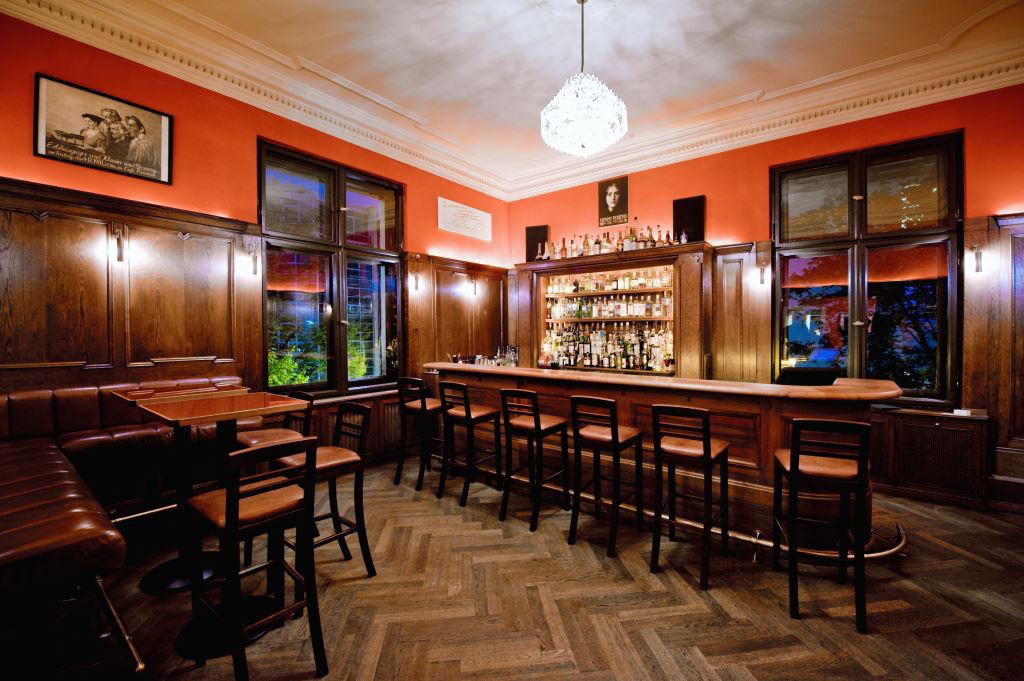
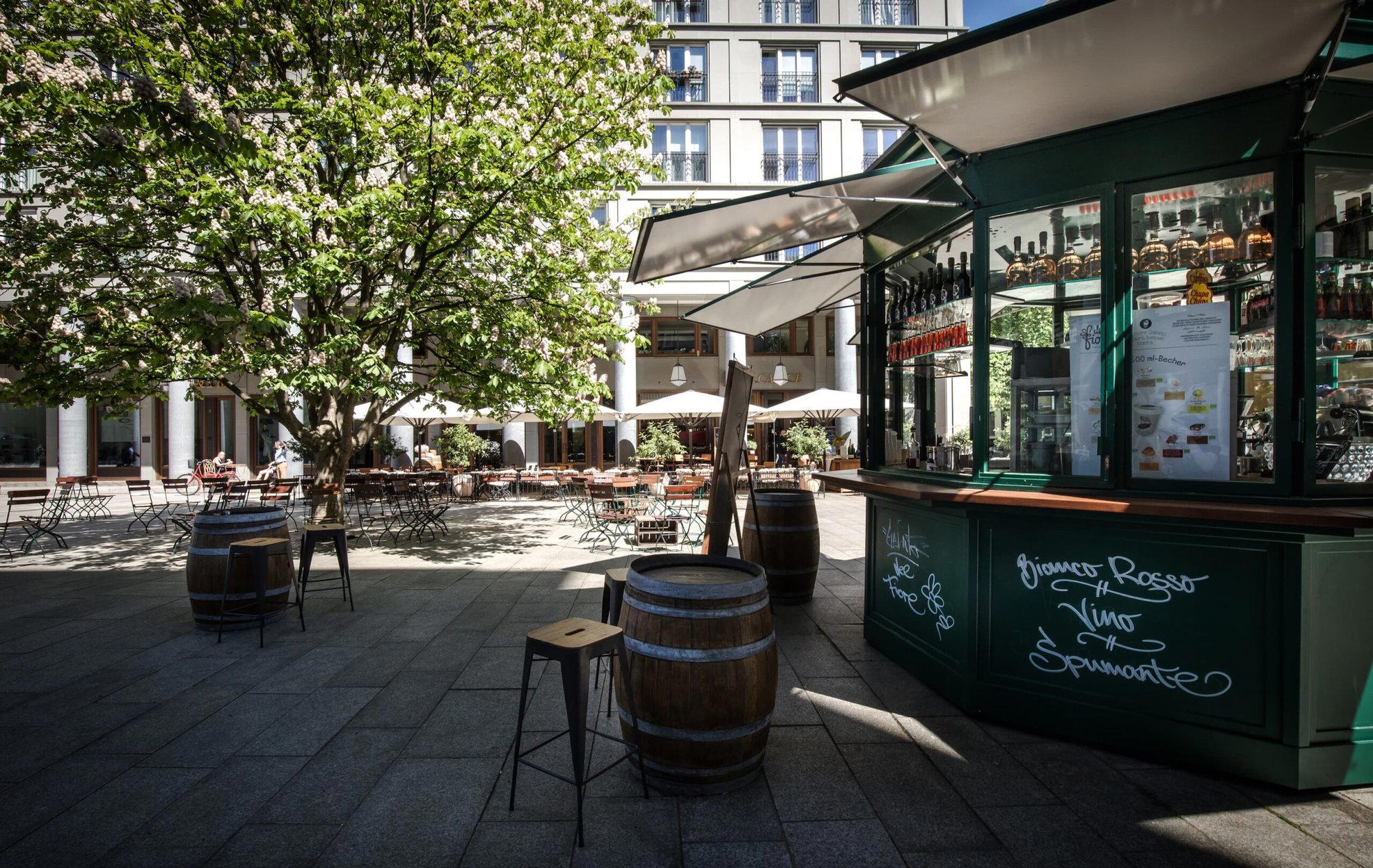
Cozy and stylish with red walls, heavy leather furniture, high ceilings in multiple rooms, calm atmosphere, and jazz music.