
One of Vienna's most historically grounded Heurigen, Weingut Mayer am Pfarrplatz operates from a house in Heiligenstadt that Beethoven once occupied, placing it in the small category of estates where provenance and viticulture carry equal weight. The property holds a Pearl 2 Star Prestige recognition for 2025, positioning it among the upper tier of Vienna's urban wine producers. For visitors seeking the Viennese wine-tavern tradition at its most considered, the address in the 19th district is the reference point.
 Discover on Pearl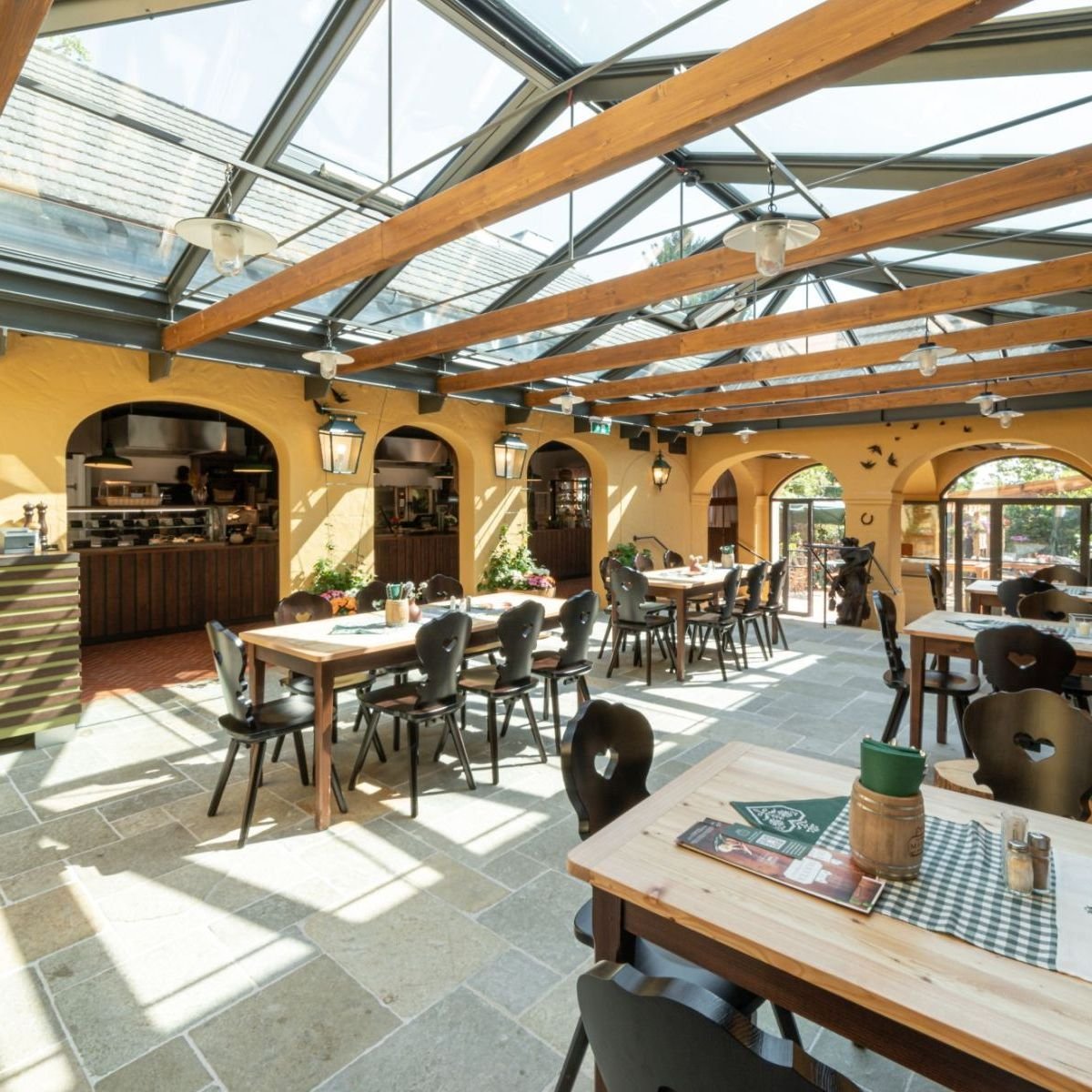
Where Heiligenstadt's Terraces Meet the Heuriger Tradition
Vienna is one of the few European capitals where working vineyards sit inside the city boundary, and the 19th district, Döbling, concentrates the highest density of that anomaly. The hills above Grinzing, Sievering, and Heiligenstadt have produced wine continuously since Roman settlement, and the Heuriger culture that grew from those slopes, formally codified under Joseph II in 1784, remains one of the most durable hospitality formats in Central Europe. Within that tradition, the estates along Pfarrplatz and its surrounding lanes occupy a particularly storied stretch of terrain, where the city drops away and the vine rows begin without any perceptible transition.
Weingut Mayer am Pfarrplatz sits at the operational and symbolic centre of that stretch. The building at Pfarrplatz 2 carries layers of Viennese history that few wine addresses anywhere can match: Ludwig van Beethoven lodged here in 1817, working during a period of intense creative pressure. That biographical footnote is real and documented, but its relevance to the current wine estate is contextual rather than decorative. It signals the kind of neighbourhood this is: a part of Vienna that attracted residents who needed both proximity to the city and relief from it. The vineyards served that function then, and the Heuriger format serves a structurally identical function now.
The Physical Argument for Döbling's Vine Terraces
The editorial case for Weingut Mayer am Pfarrplatz begins outside, before a glass is poured. The property's terraced garden and courtyard face into the hillside at an angle that captures afternoon light well into the evening during the growing season. This is not incidental. Vienna's urban vineyards occupy south- and southeast-facing slopes of the Wienerwald foothills, and the same exposure that ripens Grüner Veltliner and Riesling grapes also makes the outdoor Heuriger experience legible across three seasons rather than two.
Among Vienna's active wine estates, the combination of genuine historic fabric, functioning winery, and terrace dining at this altitude and exposure represents a specific category. Peers such as Weingut Fritz Wieninger and Weingut Fuhrgassl-Huber occupy neighbouring areas of Döbling with their own terraces and production programs, while Weingut Rainer Christ operates from Stammersdorf on the city's northern edge. Each has a distinct topographic and stylistic identity. Mayer am Pfarrplatz's position in Heiligenstadt, backed by the Pearl 2 Star Prestige recognition it holds for 2025, places it in the upper tier of that peer group on formal recognition grounds.
Pearl 2 Star Prestige and What the Rating Implies
EP Club's Pearl 2 Star Prestige award for 2025 positions Weingut Mayer am Pfarrplatz within a select band of Vienna wine addresses recognised for consistent quality across both production and experience. In the context of urban wineries, where the temptation to trade on atmosphere alone is constant, a rating that acknowledges prestige implies the wine program carries the freight independently. Vienna's DAC regulations for Wiener Gemischter Satz, the traditional field-blend white that remains the city's most distinctive appellation, require minimum standards of site complexity and variety mix; estates operating at prestige level generally exceed those minimums by a meaningful margin.
For visitors planning a broader exploration of Austrian wine country, Mayer am Pfarrplatz functions as a calibration point before venturing to the Wachau or Kamptal. Weingut Emmerich Knoll in Dürnstein and Schloss Gobelsburg in Langenlois represent the benchmark Wachau and Kamptal producers respectively. Starting with Vienna's own appellations, and specifically with an estate operating at this recognition level, gives comparative context that makes those regional visits considerably more instructive. Within the city, Weingut Walter Wien and 1516 Brewing Company Distillery represent different points on the Vienna fermentation spectrum, useful for understanding the full range of what the city produces beyond wine.
Reading the Heuriger Format at This Level
The Heuriger is not a restaurant. The distinction matters. The original format, sanctioned under imperial decree, allowed wine producers to sell their own wine by the glass at the estate, typically accompanied by cold food prepared in-house. The format survived industrialisation, two world wars, and the rise of the restaurant economy because it solved something that conventional hospitality does not: the direct connection between a specific piece of ground, the person who farms it, and the person drinking the result. That loop, compressed into a courtyard setting on a hillside, is what has made the Heuriger one of the most copied and least successfully replicated hospitality formats in Europe.
At Weingut Mayer am Pfarrplatz, the Heuriger operates within that traditional framework while reflecting the expectations of a visitor demographic that now includes serious wine drinkers from across Austria and internationally, not just local Viennese on a Sunday afternoon. The gap between what an estate at Pearl 2 Star Prestige level produces in the winery and what gets poured at the table is, at this tier, narrow. That alignment between production quality and service quality is not universal across Vienna's Heuriger scene, and it is the primary variable that separates the upper tier from the majority.
Planning a Visit to Pfarrplatz 2
The address, Pfarrplatz 2 in the 19th district, is reachable by U-Bahn to Heiligenstadt station followed by a short uphill walk or tram connection into the village centre. Döbling's Heuriger district runs on seasonal rhythms: the most active months run from April through October, when terrace dining is practical and harvest activity gives the estate a working-farm energy that indoor visits in winter cannot replicate. Visiting during harvest, typically September into early October depending on the vintage, adds a layer of observational interest that is specific to estates with active production rather than those operating purely as hospitality businesses.
Given the Pearl 2 Star Prestige recognition and the estate's position within the documented Viennese Heuriger tradition, demand is not casual. Visitors without a reservation who arrive on a warm Saturday in July should expect competition for outdoor seating. Checking current opening schedules and booking status directly through the estate's own channels before travelling from central Vienna is the practical minimum. The estate's recognition level means that travel writers, wine buyers, and international visitors now factor into the booking picture alongside local regulars.
For a complete picture of Vienna's wine and hospitality scene, our full Vienna wineries guide covers the city's active estates in full. Those building a broader trip around the city should also consult our Vienna restaurants guide, our Vienna hotels guide, our Vienna bars guide, and our Vienna experiences guide for context across the full visit. For comparative reference beyond Austria, Weingut Heinrich Hartl in Oberwaltersdorf, Abadía Retuerta in Sardón de Duero, and Aberlour in Aberlour illustrate how estate-based hospitality operates at prestige level across different wine cultures.
Frequently Asked Questions
- What wines should I try at Weingut Mayer am Pfarrplatz?
- Vienna's Wiener Gemischter Satz, the legally defined field-blend appellation, is the starting point at any serious Viennese estate. At an estate holding Pearl 2 Star Prestige recognition for 2025, the Gemischter Satz and single-variety Grüner Veltliner or Riesling from the estate's own Döbling sites are the most direct expression of what the local terroir produces. Ask specifically about any DAC-classified bottlings, which signal the wines that meet the appellation's higher-tier site criteria.
- What is Weingut Mayer am Pfarrplatz leading at?
- Among Vienna's urban wine estates, Mayer am Pfarrplatz sits at the intersection where historical provenance, terrace Heuriger format, and production quality overlap at a recognised prestige level. The Pearl 2 Star Prestige award for 2025 places it at the upper end of the Vienna peer group, making it a reference point for visitors wanting the authentic Heuriger experience backed by a wine program at the higher end of what the city's appellations produce.
- Do I need a reservation for Weingut Mayer am Pfarrplatz?
- At an estate with Pearl 2 Star Prestige recognition in a city where the traditional Heuriger format draws both local and international visitors, walk-in availability on warmer weekend evenings is not guaranteed. Döbling's Heuriger season peaks between May and September, and outdoor terrace seating at established estates fills quickly during good weather. Contacting the estate directly to confirm opening days and book a table before travelling from central Vienna is the lower-risk approach, particularly for groups or weekends.
- What is Weingut Mayer am Pfarrplatz a strong choice for?
- The estate suits visitors who want to engage with Vienna's wine culture at a level that goes beyond the generic tourist Heuriger experience. The Pearl 2 Star Prestige recognition for 2025 signals production seriousness, while the Heiligenstadt location and historic building give the visit a physical and narrative depth that most city-centre wine bars cannot replicate. It is also a practical base for exploring the broader Döbling wine village circuit on foot.
- How does Weingut Mayer am Pfarrplatz connect to Viennese musical history, and does that affect the visitor experience?
- The Beethoven connection, documented through the composer's 1817 residency at Pfarrplatz 2, is part of the estate's verified historical record and is acknowledged within the property. Rather than shaping the wine experience, it layers additional cultural context into a visit that already has strong provenance through the Heuriger tradition. For visitors combining Vienna's music heritage with its wine culture, the Pearl 2 Star Prestige-recognised estate offers a rare address where both threads converge in a single setting.
Peer Set Snapshot
These are the closest comparables we have in our database for quick context.
| Venue | Awards | Notes |
|---|---|---|
| Weingut Mayer am Pfarrplatz | Pearl 2 Star Prestige | This venue |
| 1516 Brewing Company Distillery | Pearl 2 Star Prestige | |
| Alt Wiener Schnapsmuseum | Pearl 1 Star Prestige | |
| Koskij Distillery | Pearl 1 Star Prestige | |
| Lederhaas Distillery | Pearl 1 Star Prestige: 0pts | |
| Stock Austria Distillery | Pearl 1 Star Prestige |
Access the Cellar?
Our members enjoy exclusive access to private tastings and priority allocations from the world's most sought-after producers.
Get Exclusive Access