Weingut August Kesseler

Weingut August Kesseler operates from the steep slate vineyards above Assmannshausen, where the Rheingau's narrowing valley forces Pinot Noir into a register rarely matched elsewhere in Germany. Awarded Pearl 2 Star Prestige in 2025, the estate sits among the Rheingau's serious red-wine producers at a time when international attention on German Spätburgunder is growing steadily.
 Discover on Pearl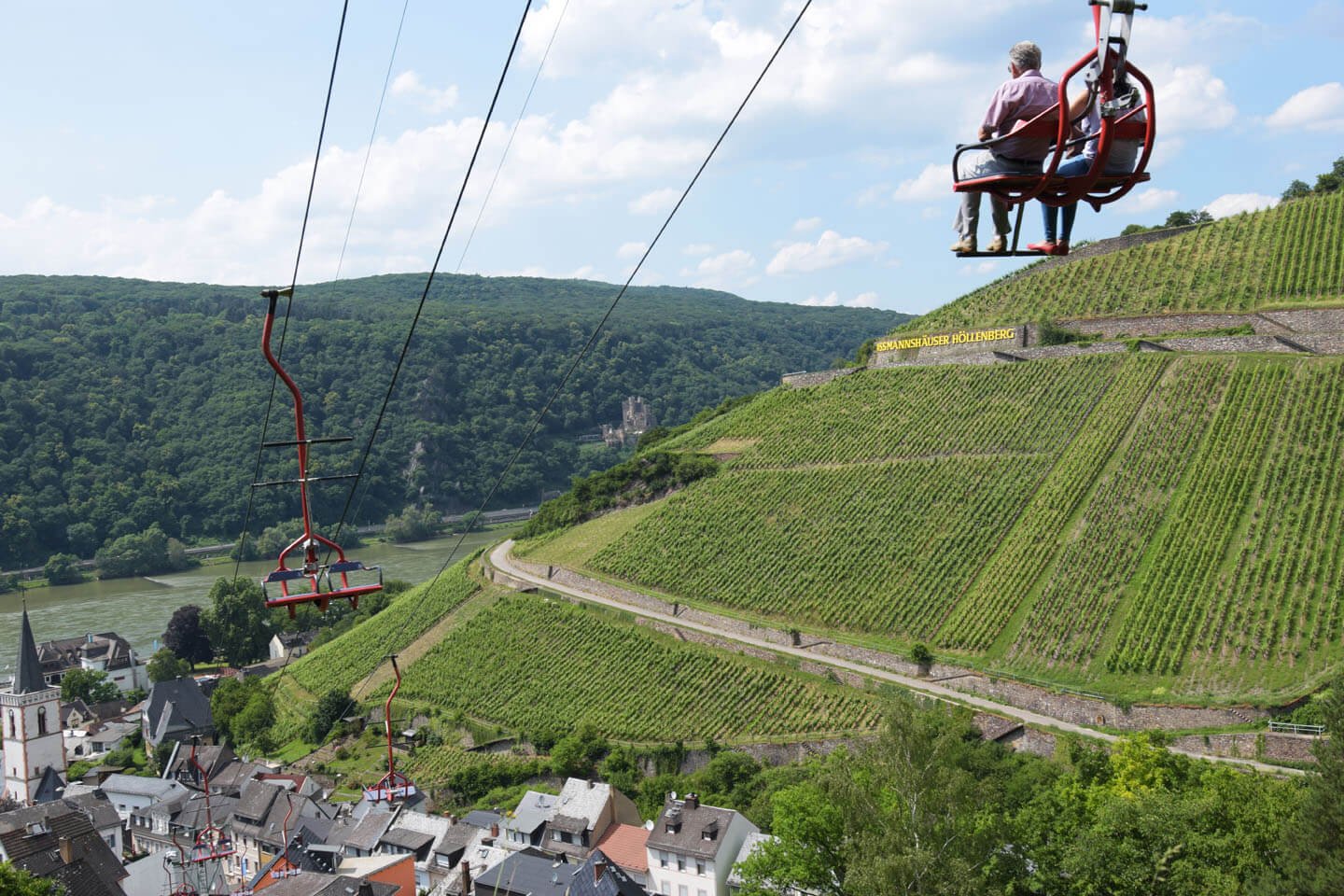
Slate, Gradient, and the Rheingau's Red-Wine Exception
The Rheingau's reputation has always been anchored in Riesling, and rightly so. But the stretch of the Rhine between Rüdesheim and Lorch carries a counter-narrative: a band of steep, south-facing slate slopes where Spätburgunder, Germany's name for Pinot Noir, finds conditions that differ sharply from the loess-and-limestone soils of the Pfalz or the volcanic basalt further south. Weingut August Kesseler sits precisely inside that geography, working vineyards above Assmannshausen where gradient, slate subsoil, and the moderating influence of the Rhine combine to produce a house style that places it in a competitive conversation with the Rheingau's most serious red-wine estates. The 2025 Pearl 2 Star Prestige award confirms what collectors who follow German Spätburgunder have been tracking for some time.
Approaching the estate along the Lorcher Strasse, the physical logic of the site becomes clear. The vineyards above Assmannshausen are among the steepest worked land in the Rheingau, with gradients that make mechanical harvesting impractical and hand-selection unavoidable. That difficulty is not incidental to the wine; it is what produces it. Slate retains heat during the day and releases it overnight, moderating the diurnal swing that would otherwise strip aromatic complexity. The Rhine valley itself channels air movement, reducing disease pressure and allowing growers to wait longer before harvest. These are not theoretical advantages. They are the physical conditions that separate Assmannshausen's leading Spätburgunder from wines produced in flatter, more forgiving terrain.
The shortlist, unlocked.
Hard-to-book tables, cellar releases, and concierge-planned trips.
Get Exclusive Access →Where Kesseler Sits in the German Pinot Conversation
German Spätburgunder has moved from a regional curiosity to a wine taken seriously by Burgundy buyers, and that shift has reorganised which estates command attention. The prestige tier now includes producers working with strict site selection, reduced yields, and cellar approaches that favour texture over extraction. Weingut August Kesseler's Pearl 2 Star Prestige recognition in 2025 places it in that upper bracket, alongside other Rheingau estates that have committed to showing what the region's red-wine potential actually is, rather than producing Pinot as an afterthought to a Riesling program.
For context, the Rheingau sits in a different competitive set from Pfalz producers like Weingut A. Christmann in Neustadt an der Weinstraße or Weingut Dr. Bürklin-Wolf in Wachenheim an der Weinstraße, whose terroir produces wines with a different structural profile. Mosel estates such as Weingut Clemens Busch in Pünderich or Weingut Fritz Haag in Brauneberg operate in an entirely distinct idiom. Even within the Rheingau, Kesseler's focus on the Assmannshausen end of the appellation distinguishes it from estates centred further east, including Weingut Georg Breuer in Rüdesheim am Rhein and Weingut Allendorf in Oestrich-Winkel, whose portfolios weight more heavily toward Riesling from the central Rheingau sites.
The broader German red-wine picture also includes Franken producers such as Weingut Bürgerspital zum Heiligen Geist in Würzburg, estates experimenting with biodynamic approaches like Weingut Battenfeld-Spanier in Hohen-Sülzen, and Mosel producers developing their own red-wine identity such as Weingut Heymann-Löwenstein in Winningen. Each operates from a distinct soil and climate base. Kesseler's claim within that field rests specifically on Assmannshausen slate, which gives its Spätburgunder a mineral tension and aromatic delicacy that other German red-wine regions struggle to replicate.
Terroir as the Point: What Assmannshausen Slate Actually Does
Slate is the dominant subsoil across the steepest Assmannshausen vineyard parcels, and its effect on Spätburgunder is more specific than the general association between slate and Riesling might suggest. Where slate enhances aromatic precision and mineral salinity in white wines, in red-wine viticulture it tends to produce lighter-coloured, finely textured wines with strong aromatic lift rather than the darker, more extracted profile associated with warmer-climate Pinot Noir. The resulting wines sit closer to the Côte de Nuits in structural type than to New World Pinot, which is why estates in this corridor attract attention from buyers who follow Burgundy but are open to German benchmarks.
The Rhine's proximity also matters. Large bodies of water moderate temperature extremes, and the Rhine at this point in its course provides enough thermal mass to reduce frost risk in spring and extend the growing season into autumn without accumulating the heat that would push Spätburgunder toward over-ripeness. This is a precise window of conditions, and Assmannshausen occupies it more completely than most Rheingau sub-zones. The historic reputation of the village for red wine is not accidental; it reflects a specific convergence of soil type, aspect, and microclimate that has been recognised since at least the eighteenth century.
Estates in this part of the Rhine valley exist in a different historical frame from young-producer stories elsewhere in Germany. Kloster Eberbach in Eltville provides a reference point for the institutional depth of Rheingau wine culture, and Kesseler's position on the Lorcher Strasse connects it to a production tradition that long predates the current international interest in German Spätburgunder.
Visiting and Planning
Rüdesheim am Rhein is reachable by train from Frankfurt in under an hour, with Assmannshausen a short distance further along the Rhine. The estate address at Lorcher Strasse 16 places it in a working-estate context rather than a tourism-infrastructure setting, which means visitor arrangements warrant direct contact before arrival. The Rhine Gorge stretch between Bingen and Koblenz is UNESCO-listed, and the combination of river landscape, hillside viticulture, and the density of serious wine producers in a compressed area makes this one of Germany's more coherent wine-travel routes. Producers such as Weingut Grans-Fassian in Leiwen and Weingut Bassermann-Jordan in Deidesheim are within reasonable driving distance for those constructing a broader German wine itinerary. For the full picture of what the immediate area offers, see our full Rüdesheim (Assmannshausen) restaurants guide.
Autumn is the period most aligned with active winery visits in the Rheingau. Harvest typically runs from late September through October for Spätburgunder, and the combination of harvest activity, post-summer light, and the changing colour of the steep slate slopes makes this the most compelling time to be in Assmannshausen specifically. Spring visits offer a quieter experience with vine growth beginning, while summer carries more tourist traffic to the broader Rüdesheim area, which is among the Rhine's most visited stretches. Serious wine travel to Kesseler will work better on either side of peak summer.
Frequently Asked Questions
- What should I expect atmosphere-wise at Weingut August Kesseler?
- The estate operates from a working-winery context in Assmannshausen, a village whose identity is built around its slate-slope Spätburgunder vineyards rather than tourist infrastructure. The setting is functional and site-focused rather than hospitality-designed, which suits visitors who come primarily to engage with the wines and their origin. The Pearl 2 Star Prestige recognition in 2025 positions this as a serious producer visit rather than a casual tasting room stop. Visitors travelling from Rüdesheim will find Assmannshausen quieter and more focused on viticulture than the larger town along the Rhine.
- What wines should I try at Weingut August Kesseler?
- The estate's reputation is built on Assmannshausen Spätburgunder, and that remains the logical starting point. The Rheingau's red-wine corner produces wines with a structural profile closer to Burgundy than to Pfalz or Baden Spätburgunder: lighter colour, aromatic lift, and mineral tension from the slate subsoil rather than weight from warm-climate extraction. Kesseler's 2025 Pearl 2 Star Prestige award signals a consistent performance at that level. Riesling is also part of the Rheingau tradition, and the estate's position between Rüdesheim and Lorch gives it access to both red and white-wine terroir.
- Why do people go to Weingut August Kesseler?
- Assmannshausen's claim as Germany's most historically important Spätburgunder village draws producers and collectors interested in German Pinot Noir at its most site-specific. Kesseler's Pearl 2 Star Prestige recognition in 2025 confirms its position within the small group of Rheingau estates whose red-wine output is taken seriously at an international level. For buyers who follow premium German wine or are building a comparative picture of Pinot Noir across European regions, the combination of steep slate viticulture, historic village context, and a documented award record makes this a purposeful destination rather than a casual stop on a Rhine river cruise.
In Context: Similar Options
These are the closest comparables we have in our database for quick context.
| Venue | Cuisine | Price | Awards | Notes |
|---|---|---|---|---|
| Weingut August Kesseler | This venue | |||
| Jacquart | ||||
| Lingua Franca | ||||
| Kloster Eberbach | ||||
| Weingut A. Christmann | ||||
| Weingut Allendorf |
Access the Cellar?
Our members enjoy exclusive access to private tastings and priority allocations from the world's most sought-after producers.
Get Exclusive AccessThe shortlist, unlocked.
Hard-to-book tables, cellar releases, and concierge-planned trips.
Get Exclusive Access →