Tank Garage Winery
Tank Garage Winery operates out of a converted roadside service station on Foothill Boulevard in Calistoga. The format sits within a growing tier of Napa producers who treat the tasting room as an extension of their wine identity rather than a separate retail exercise. For visitors working through northern Napa's winery circuit, it represents one of the more purposeful stops in the appellation.

Pearl is the En Primeur Club membership app — saves, bookings, and concierge access live there. Same editors, same standards.
- Address
- 1020 Foothill Blvd, Calistoga, CA 94515
- Phone
- (707) 942-8265
- Website
- tankgaragewinery.com
- Directions
- Get directions
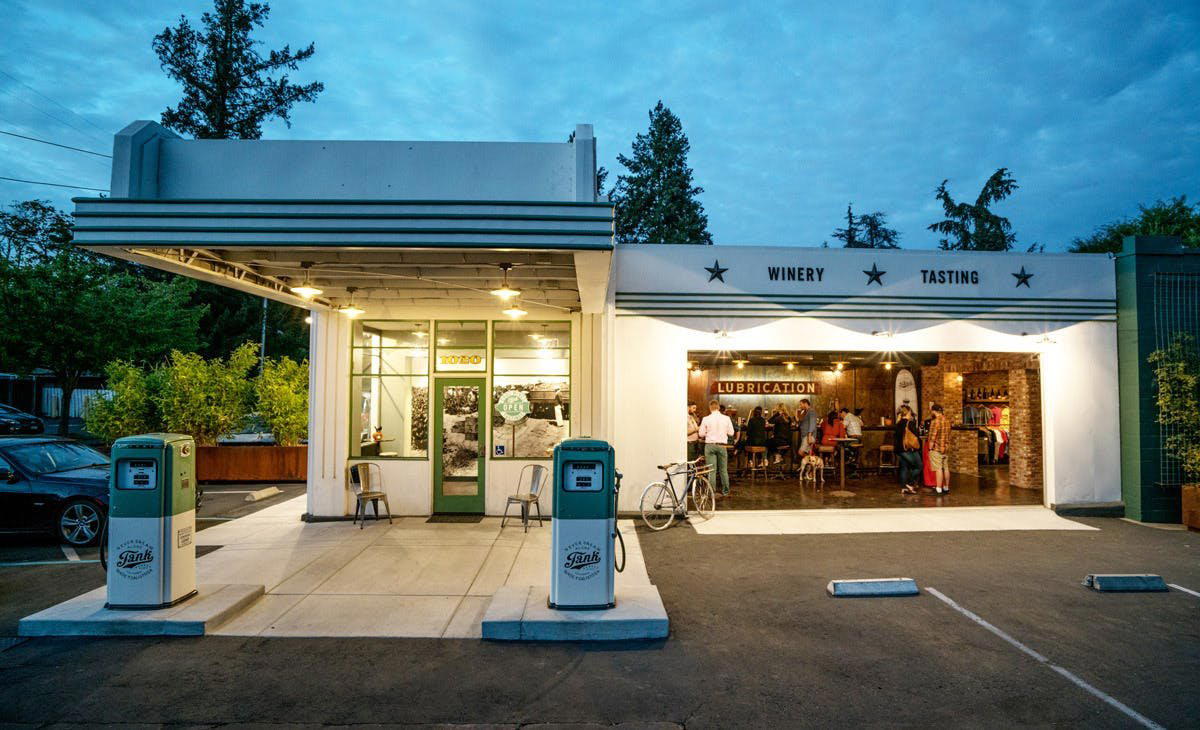
A Former Service Station and What It Says About Calistoga's Wine Identity
Calistoga has long occupied a different register from the rest of Napa Valley. Where St. Helena and Oakville carry the weight of established estate reputations, Calistoga has historically been the Valley's rougher northern edge: geothermal activity underfoot, a Main Street that still reads like a working town, and a wine community that has never entirely shed its utilitarian character. Tank Garage Winery, operating out of a converted roadside service station on Foothill Boulevard, fits that register precisely. The building's industrial bones — concrete floors, exposed structure, the proportions of a working garage — set a tone that distinguishes it from the formal estate tasting rooms that define much of the Valley further south.
That physical context matters for understanding what kind of winery this is. The conversion of functional, non-agricultural structures into wine spaces is a pattern that appears across California's newer production tier, where the priority is on the wine and the immediate social experience rather than on projecting landed prestige. That credential matters not because ratings define a winery's character, but because it places Tank Garage in a competitive set where the expectation is seriousness about the liquid, whatever the surrounding aesthetic.
Calistoga in Context: The Northern Napa Tier
To understand where Tank Garage sits in the Valley's hierarchy, it helps to map the wider Calistoga producer set. The appellation carries AVA status distinct from broader Napa Valley, and its volcanic soils and warmer diurnal patterns produce wines that tend toward concentration and structure. Established names in the area include Chateau Montelena Winery, whose 1976 Paris Tasting performance anchored the appellation's Cabernet credentials for decades, and Larkmead Vineyards, which operates at the other end of the formality spectrum with a long-established estate format. Frank Family Vineyards occupies a similarly approachable middle ground in the appellation. Tank Garage operates at a distinct remove from all of these: the garage aesthetic, allocation-based sales model, and limited-production approach place it in a smaller, more deliberately cultivated niche.
That niche has been growing across California wine country for roughly fifteen years. Producers who treat scarcity, brand identity, and a loyal mailing list as the architecture of their business have created a secondary tier alongside traditional estate wineries. Allocation models, where bottles go to list members before any broader availability, reward consistency and community over volume. It is a format that works well when the wines themselves justify the patience.
The Sustainability Thread in California's Wine Economy
The garage-and-conversion model carries an implicit sustainability argument that is worth taking seriously rather than treating as aesthetic coincidence. Building new estate facilities in Napa requires substantial land use, construction materials, and energy infrastructure. Adaptive reuse of existing structures, even modest commercial ones, reduces that footprint by definition. The carbon cost of a converted service station is structurally lower than a purpose-built château, regardless of what certification labels appear on either building's documentation.
California wine has moved toward sustainability frameworks at an institutional level over the past decade. The California Sustainable Winegrowing Alliance and Napa Green certification programs have created common language for vineyard and winery practices, and adoption rates across the appellation have risen sharply. Within Calistoga specifically, producers have had to contend with wildfire risk and water scarcity in ways that translate directly into operational decisions about irrigation, land management, and energy use. A producer operating out of a pre-existing urban structure rather than a vineyard estate is, structurally, less exposed to some of those pressures.
Napa producers working in different sustainability frameworks offer useful comparison points. Newton Vineyard has long operated with a no-irrigation philosophy across its Spring Mountain estate. Aubert Wines sources from specific certified sites in Sonoma and Napa, with vineyard health central to its production identity. These are different approaches to the same underlying question: what does responsible production look like in a high-value, high-scrutiny appellation? Tank Garage answers that question partly through its format, which keeps its physical footprint compact and its production scale limited.
Planning a Visit: Northern Napa's Practical Logic
Calistoga sits at the northern terminus of Highway 29, roughly 75 miles north of San Francisco and about 15 miles north of St. Helena. That position makes it a natural end-point for a Valley drive rather than an en-route stop, which shapes the rhythm of visits. Producers in Calistoga, including Tank Garage, tend to attract visitors who are making a deliberate trip to the northern appellation rather than dropping in opportunistically. The town itself offers accommodation, spa facilities associated with its geothermal springs, and a concentrated Main Street food and drink scene that makes overnight stays viable and, for serious wine visitors, worthwhile.
Tank Garage's address on Foothill Boulevard puts it on the main approach road into Calistoga, making it a logical first or last stop on a northern Napa circuit. Visitors coming from St. Helena pass through several significant producers along the way, including those in the Rutherford bench zone where Alpha Omega Winery operates, and up through the Napa Valley floor before reaching the volcanic soils of the Calistoga AVA. The northern drive rewards visitors who pace themselves, since the concentration of serious producers between Rutherford and Calistoga is substantial.
For those building a wider California wine itinerary, the geography branches usefully from Calistoga. Accendo Cellars in St. Helena represents the formal estate tier just south. Moving toward Sonoma and beyond, producers like Alexander Valley Vineyards in Geyserville extend the northern California red wine circuit into a different appellation character. Further afield, Adelaida Vineyards in Paso Robles and Alban Vineyards in Arroyo Grande demonstrate how California's wine geography rewards those willing to move beyond the Napa valley floor. For Oregon comparisons, Adelsheim Vineyard in Newberg and Andrew Murray Vineyards in Los Olivos show how different the production philosophy can look when the climate and grape varieties shift.
Practical booking intelligence: Tank Garage operates on an allocation and tasting-room model that rewards advance planning. Visitors who arrive in Calistoga without reservations during peak season, roughly May through October and harvest weekends in September and October, will find the most compelling producers already full.
In the context of Calistoga's producer field, it sits above the volume-oriented tasting-room operations and within a peer group that includes producers with serious critical followings and limited availability. That positioning is useful for visitors trying to calibrate where to spend limited tasting appointments: a Pearl 2 Star producer in Calistoga is making wines worth comparing to the appellation's longer-established names.
It is also worth noting what the garage format does not signal: informality of ambition. Across California, some of the most technically rigorous production happens in converted industrial and agricultural structures where the capital that might have gone into a visitor facility has gone instead into fruit sourcing, cellar equipment, and winemaking talent. The aesthetic signals a set of priorities, not a lack of them. Compared to producers at a similar prestige level elsewhere in California, from Andrew Murray Vineyards in Los Olivos to international counterparts like Achaia Clauss in Patras or Aberlour in Aberlour, Tank Garage occupies a recognizable archetype: a producer whose reputation rests entirely on what is in the bottle.
In Context: Similar Options
Comparable venues nearby, for context on price, style, and recognition.
| Venue | Cuisine | Price | Awards | Notes |
|---|---|---|---|---|
| Tank Garage WineryThis venue — the venue you are viewing | Grenache, Syrah | Not listed | Not listed | Not listed |
| Girard Winery | cabernet_sauvignon, chardonnay | Not listed | Not listed | Calistoga |
| Sterling Vineyards | Cabernet Sauvignon, Sauvignon Blanc | Not listed | Not listed | Calistoga |
| Castello di Amorosa | Cabernet Sauvignon, Sangiovese | $50–100 | Not listed | Calistoga |
| Frank Family Vineyards | Cabernet Sauvignon, Chardonnay | $50–100 | Not listed | Calistoga |
| Davies Vineyards | Pinot Noir, Cabernet Sauvignon | Not listed | Falstaff Winery - Listed | St. Helena |
Continue exploring
More in Calistoga
Wineries in Calistoga
Browse all →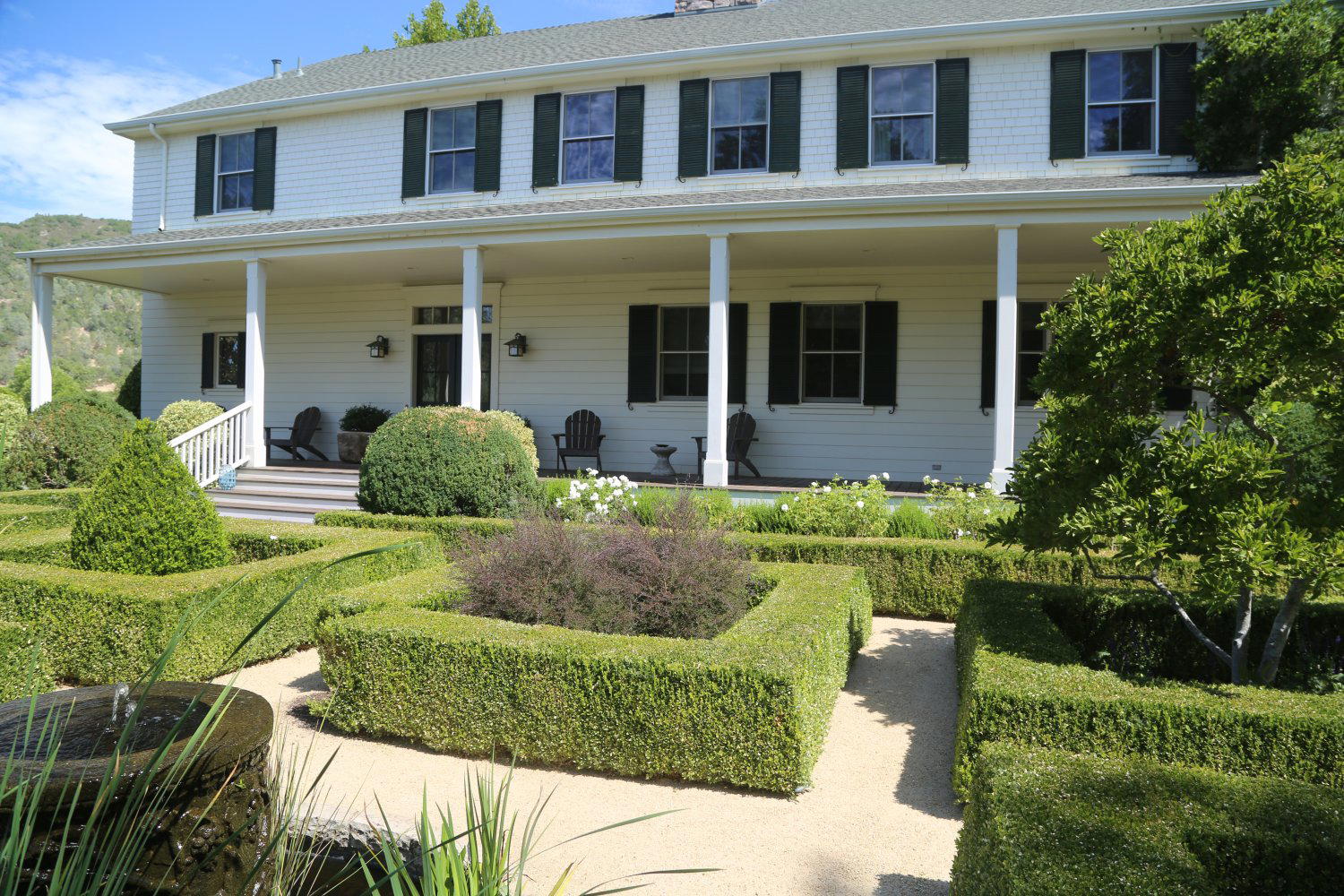
Bars in Calistoga
Browse all →
Restaurants in Calistoga
Browse all →

Details
- Retro
- Rustic
- Trendy
- Casual
- Industrial
- Solo Exploration
- Wine Education
- Special Occasion
- Historic Building
- Design Destination
- Private Tasting
- Vineyard
- Grenache
- Syrah
- Zinfandel
- Petite Sirah
- Roussanne
- Chardonnay
- Still Red
- Still White
- Still Rosé
- Orange
- Sparkling
- Pet Nat
- Private Tasting
Relaxed, intimate, and funky with vintage garage decor, neon signs, and rock & roll memorabilia in a dimly lit lounge.