Strassbauer Distillery holds a Pearl 1 Star Prestige rating (2025), placing it within Vienna's specialist spirits tier where craft process and product precision carry more weight than scale. The distillery operates in a city with an established culture of small-batch production, where the gap between a working distillery and a tasting destination has narrowed considerably over the past decade.
 Discover on Pearl
Pearl is the En Primeur Club membership app — saves, bookings, and concierge access live there. Same editors, same standards.
Vienna's Distillery Tier and Where Strassbauer Sits
Vienna occupies an unusual position in European spirits geography. The city is better known for its wine estates, producers like Weingut Fritz Wieninger, Weingut Mayer am Pfarrplatz, and Weingut Rainer Christ that cultivate grapes within city limits and sell direct, than for distilled spirits. Yet a smaller cohort of craft distilleries has taken hold, drawing on Austria's longer tradition of Obstbrand and fruit-based distillation. Strassbauer Distillery operates inside that cohort, and its Pearl 1 Star Prestige recognition in 2025 places it in a recognised craft spirits tier.
That recognition matters for context. In a city where most spirits production either sits at the commercial end or remains hyper-local with minimal formal recognition, a structured award signals a level of product and process discipline. Strassbauer is not the only serious player, 1516 Brewing Company Distillery occupies a different register within the broader Vienna drinks scene, but the 2025 recognition places Strassbauer in a peer group defined by craft credentials rather than output volume.
What the Distillery Format Reveals About the Product
Across Austria's spirits-producing regions, the distillery visit has evolved from a utilitarian farm stop into something closer to a structured tasting experience. The format itself carries information: facilities that invest in visitor engagement tend to be producers with enough confidence in their product to let it carry the encounter without heavy marketing apparatus. That shift is visible elsewhere in the Austrian drinks world. Producers in Burgenland and the Wachau, from Weingut Pittnauer in Gols to Weingut Emmerich Knoll in Dürnstein, have long understood that the space where a drink is made and explained is itself an argument for quality.
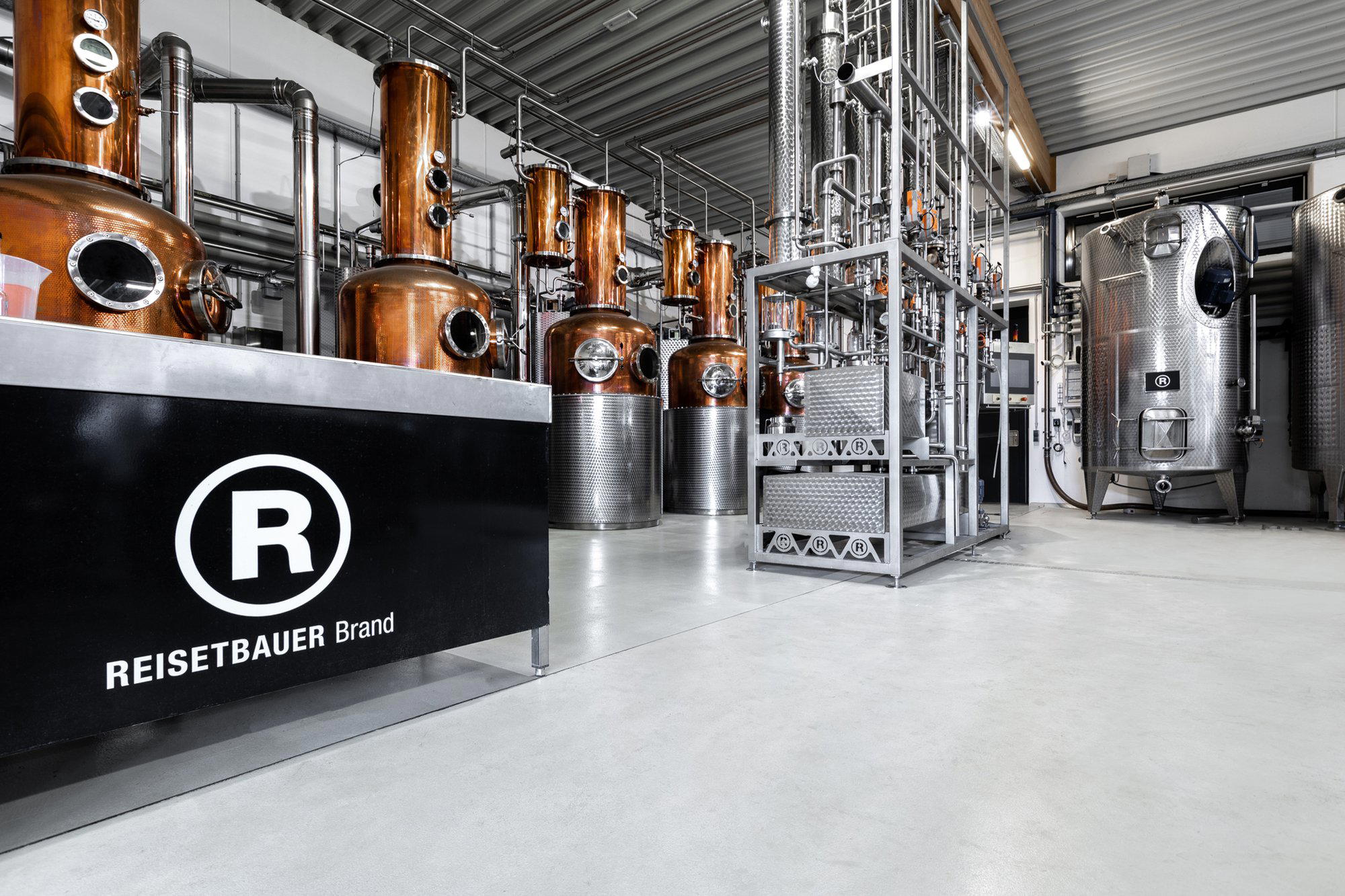
For a distillery like Strassbauer, the implication is the same. The physical environment of a working still, the smell of copper and neutral spirit, the sequence in which products are presented: these elements function as a kind of menu architecture. There is no printed tasting menu in the conventional restaurant sense, but the order and selection of what gets poured shapes the visitor's understanding of the distillery's logic as clearly as any kitchen's plating sequence. A distillery that leads with a raw new-make spirit before moving to aged expressions, for instance, is making an argument about process transparency. One that opens with a fruit distillate is signalling its raw-material philosophy before any explanation is given.
The Austrian Spirits Context
Austria's distilling tradition predates the current craft revival by several centuries. Obstbrand, fruit spirit, typically pear, apple, plum, or apricot, is the country's indigenous distillate, produced under strict geographic and compositional rules that align more closely with wine appellation logic than with the looser definitions applied to most spirits categories. Visitors arriving from Scotch whisky backgrounds will find the comparison useful: Austrian fruit spirits carry terroir arguments in much the same way, with raw material provenance and minimal intervention functioning as quality markers rather than marketing copy.
That context shapes how Strassbauer should be read. Vienna-based distilleries don't have the landscape advantages of a Wachau producer or the agricultural depth of an estate like Weingut Fuhrgassl-Huber, which draws on Viennese Gemischter Satz tradition and estate fruit. Urban distilleries compensate with sourcing precision and process control. The Pearl 1 Star Prestige rating suggests Strassbauer has done that work at a level its evaluators found credible.
For comparison at scale, Austria's most decorated spirits and wine producers sit outside Vienna: Weingut Kracher in Illmitz and Weingut Bründlmayer in Langenlois carry international recognition built over decades. The urban distillery tier is newer, with credentials still accumulating. That's part of what makes Strassbauer's 2025 award notable: it signals entry into a recognised tier at a point when the category is still establishing its hierarchy.
Visiting and Planning
Vienna's craft spirits producers generally operate on a mix of walk-in and appointment formats, with appointment visits more likely to include a structured tasting sequence. Visitors who have engaged with award-holding producers elsewhere in Austria, such as Weingut Scheiblhofer Distillery in Andau or Weingut Wohlmuth in Kitzeck, will recognise the format logic: structured, product-focused, and calibrated to the distillery's production scale rather than high-volume tourism.
Vienna's public transport network makes reaching most districts direct regardless of specific address, and the city's culture of combining a distillery or winery visit with the broader food and drink neighbourhood around it is well-established.
For visitors building a multi-stop Austrian spirits and wine itinerary, pairing a Vienna distillery visit with producers in Langenlois, the Wachau, or Burgenland gives a fuller picture of how Austrian terroir and tradition produce very different results at either end of the distillate spectrum. Scotland offers a useful international parallel: Aberlour in Aberlour operates within a deeply codified regional tradition, and Austria's own emerging fine-spirits tier is beginning to build a comparable framework of origin, process, and recognition. California's allocation-model producers, such as Accendo Cellars in St. Helena, show a different route to prestige signals, one more relevant to the wine side of what Weingut Heinrich Hartl in Oberwaltersdorf and its Burgenland peers are building.
At-a-Glance Comparison
Comparable venues nearby, for context on price, style, and recognition.
| Venue | Cuisine | Price | Awards | Notes |
|---|---|---|---|---|
| Strassbauer DistilleryThis venue — the venue you are viewing | Winery | , | 1 recognition | |
| Weingut Fritz Wieninger | Grüner Veltliner, Pinot Blanc | $$$ | 1 recognition | Bisamberg/Nussberg |
| Weingut Zahel | Grüner Veltliner, Riesling | $$ | 1 recognition | Mauer, Liesing (23rd district) |
| Weingut Fuhrgassl-Huber | Grüner Veltliner, Riesling | $$$ | 1 recognition | Neustift am Walde |
| Weingut Mayer am Pfarrplatz | Riesling, Grüner Veltliner | $$ | 1 recognition | Döbling |
| Lederhaas Distillery | Winery | , | 1 recognition | Vienna |
Continue exploring