Mastrojanni

Falstaff Winery - 4 Stars
Mastrojanni is a Brunello di Montalcino estate in the southeastern reach of Montalcino, shaped by Sangiovese, Mount Amiata’s climate influence, and a cellar built around stone, terracotta, chestnut, and clay. The appeal is not spectacle; it is a focused, appointment-led look at a producer operating since 1975, with cru Brunello bottlings carrying strong critic scores.

Pearl is the En Primeur Club membership app, where members save venues, book tables and use the concierge.
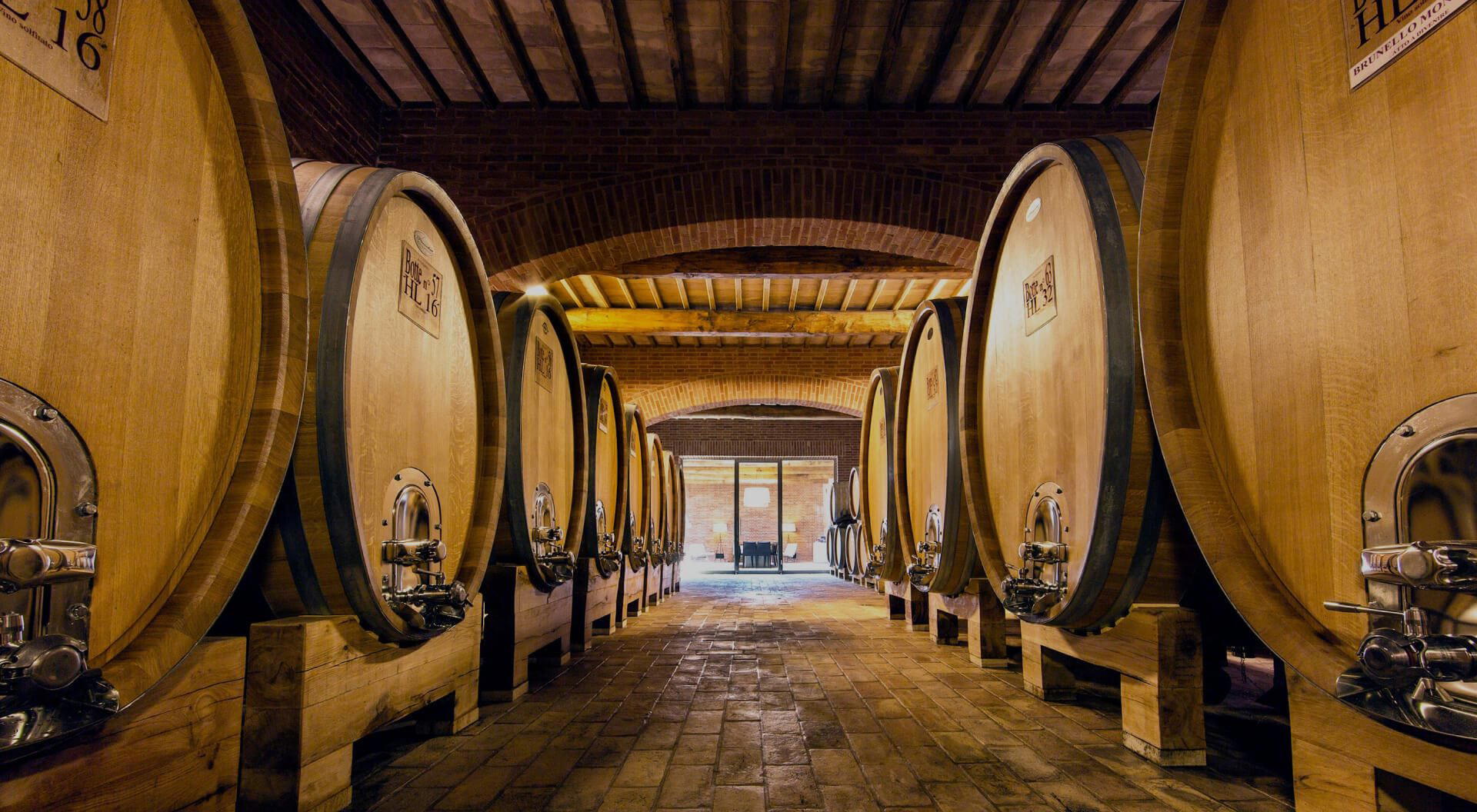
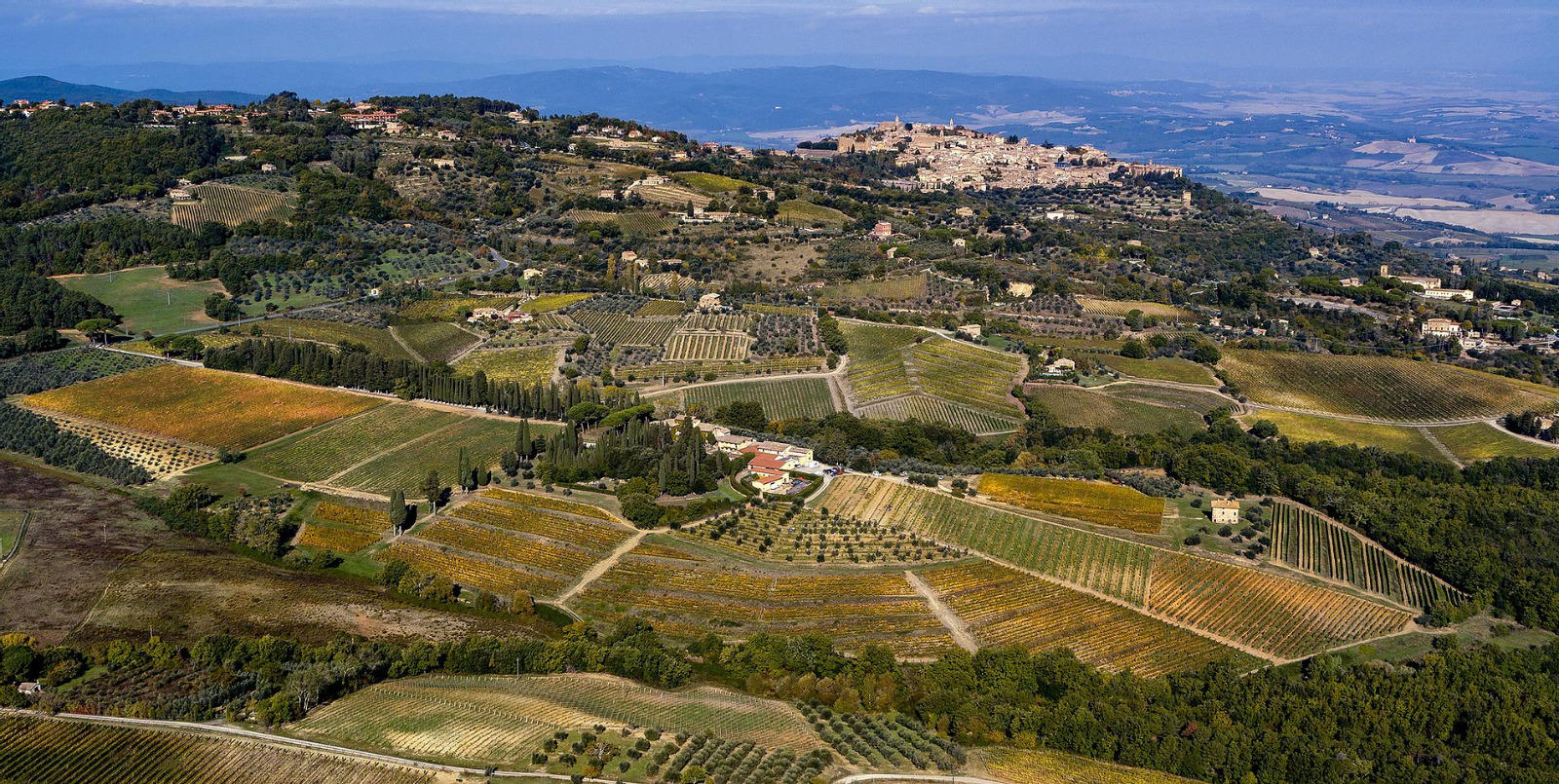
The approach to this part of Montalcino changes the register of Brunello tourism. The hills loosen, the land drops toward the Orcia, and Mount Amiata becomes part of the visual grammar rather than a distant backdrop. Mastrojanni belongs to that southeastern corner near Castelnuovo dell’Abate, where Brunello is less about polished cellar-door theater and more about slope, exposure, soil, and patience.
That distinction matters in a region crowded with producers selling the same famous appellation name. Here, the editorial question is not whether Brunello has prestige; that is already settled. The question is how a particular estate argues for its place inside the category. Mastrojanni’s answer is unusually site-led: Sangiovese at the center, vineyards spread across hillside elevations, and a cellar language that uses stone gabions, terracotta bricks, chestnut beams, and clay tiles rather than an industrial visual script.
Southeast Montalcino, read through Sangiovese
Montalcino’s reputation rests on Brunello di Montalcino DOCG, but serious drinking here depends on subzone thinking. The southeastern side has a different conversation with heat, altitude, and exposure than the northern or western slopes. Mastrojanni’s vineyards sit in the far southeast of the appellation, with vines described across elevations from 620 to 1,340 feet and southeast-facing slopes. That range gives the estate a credible claim to internal variation rather than a single broad-brush Montalcino identity.
The land is described through clays, cobblestone debris, tuffs, sandstones, and saline soils, with Mount Amiata and the Orcia River shaping the microclimate. Those are not decorative facts; they explain why the estate’s strongest argument is terroir expression rather than novelty. In Brunello, Sangiovese can turn generic when the appellation name does too much work. The more compelling producers make the site carry the sentence. Mastrojanni’s portfolio is built to do exactly that.
The core runs through Rosso di Montalcino and Brunello di Montalcino, then tightens into named cru bottlings such as Vigna Loreto and Vigna Schiena d’Asino. San Pio widens the frame with Cabernet Sauvignon and Sangiovese, while Moscadello di Montalcino late harvest Botrys adds a sweet-wine coda from Muscat, Malvasia di Candia, and Sauvignon Blanc. This is a classic Tuscan hierarchy with a few controlled departures, not a scattershot portfolio.
Why the cru wines carry the estate's reputation
Critic scores attached to the cru wines are the clearest public signal of where the estate sits in the Brunello conversation. Vigna Loreto 2020 has been listed with DC 97, WA 96, JD 95, JS 95, VM 94, and WS 93. Vigna Schiena d’Asino 2019 has been listed with JS 97, DC 97, VM 97, WA 96, and WE 95. The standard Brunello di Montalcino DOCG 2020 also sits in serious territory, with WA 94+, WS 94, JS 95, DC 94, and VM 92.
Those numbers do not make the experience meaningful by themselves, but they clarify the competitive tier. This is not a casual countryside tasting built around a view and a few pleasant pours. It is a medium-sized estate, producing around 100,000 bottles annually from vineyards within a larger 240-acre property, and its stronger wines are assessed in the same critical language used for cellar-worthy Brunello. For travelers, that shifts the visit from generic wine tourism toward appellation study.
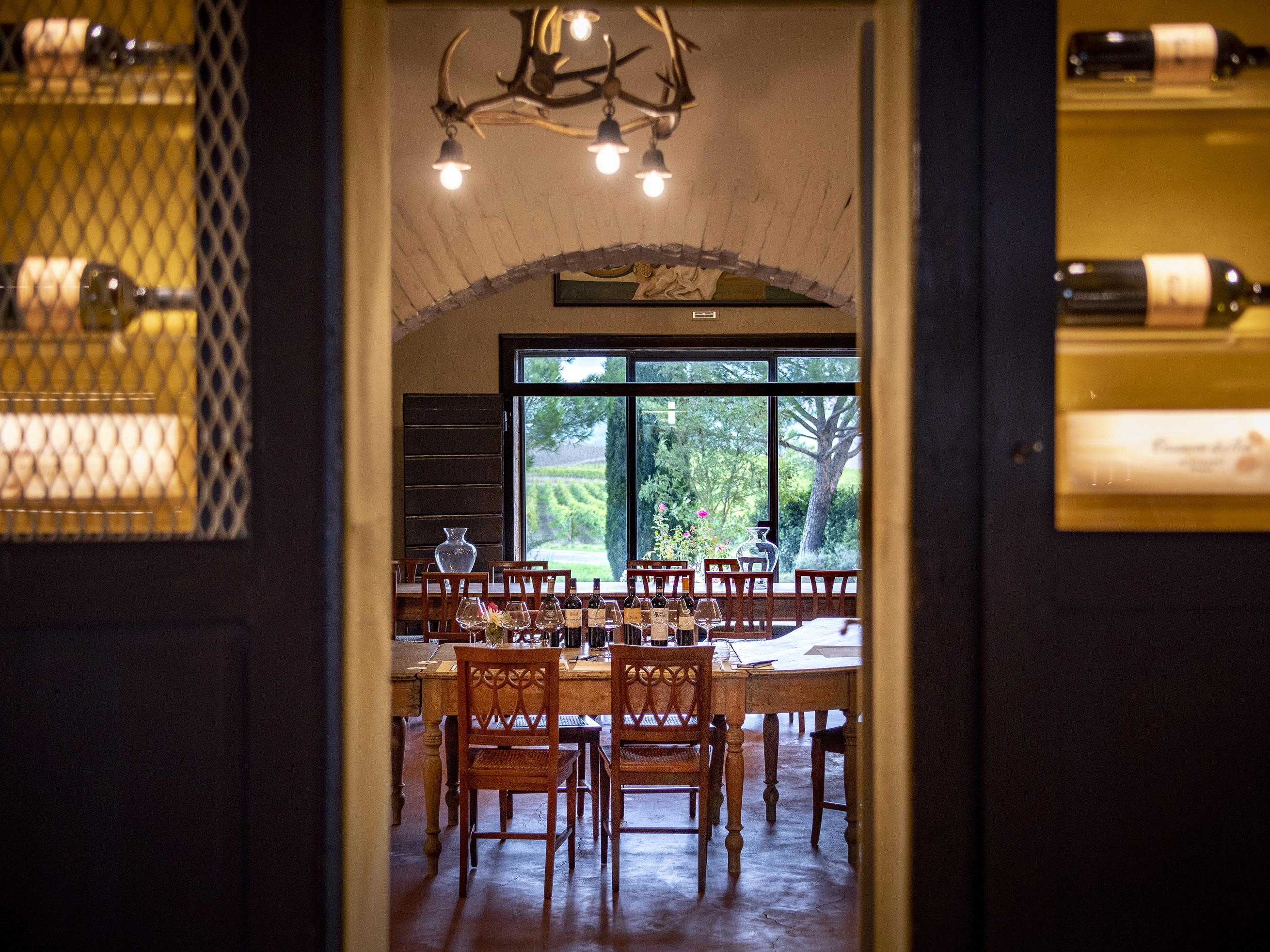
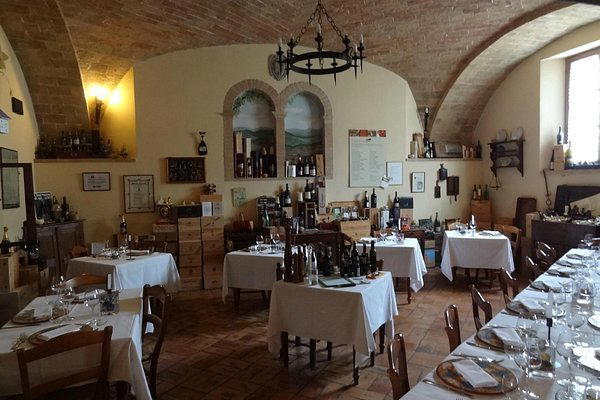
The cellar architecture reinforces the same point. A tour that moves through a building shaped by natural materials gives the production story a physical frame: hillside support, brick, chestnut, clay, and a preference for continuity over flash. No single beam makes a wine better, but the consistency between site story, cellar design, and Sangiovese-led portfolio is persuasive. In a region where hospitality can sometimes outrun the bottle, that alignment counts.
A focused tasting format, not resort-style wine tourism
The experience is built around guided tasting and cellar context, with formats that include set flights, vertical tasting, private experience, vineyard elements, barrel-room context, and estate grounds. The tour duration is listed at 1.5 hours, which is long enough to make the visit educational without turning it into a half-day production. Italian, English, Spanish, and German are listed as tour languages, useful in a region that draws both collectors and general Tuscany travelers.
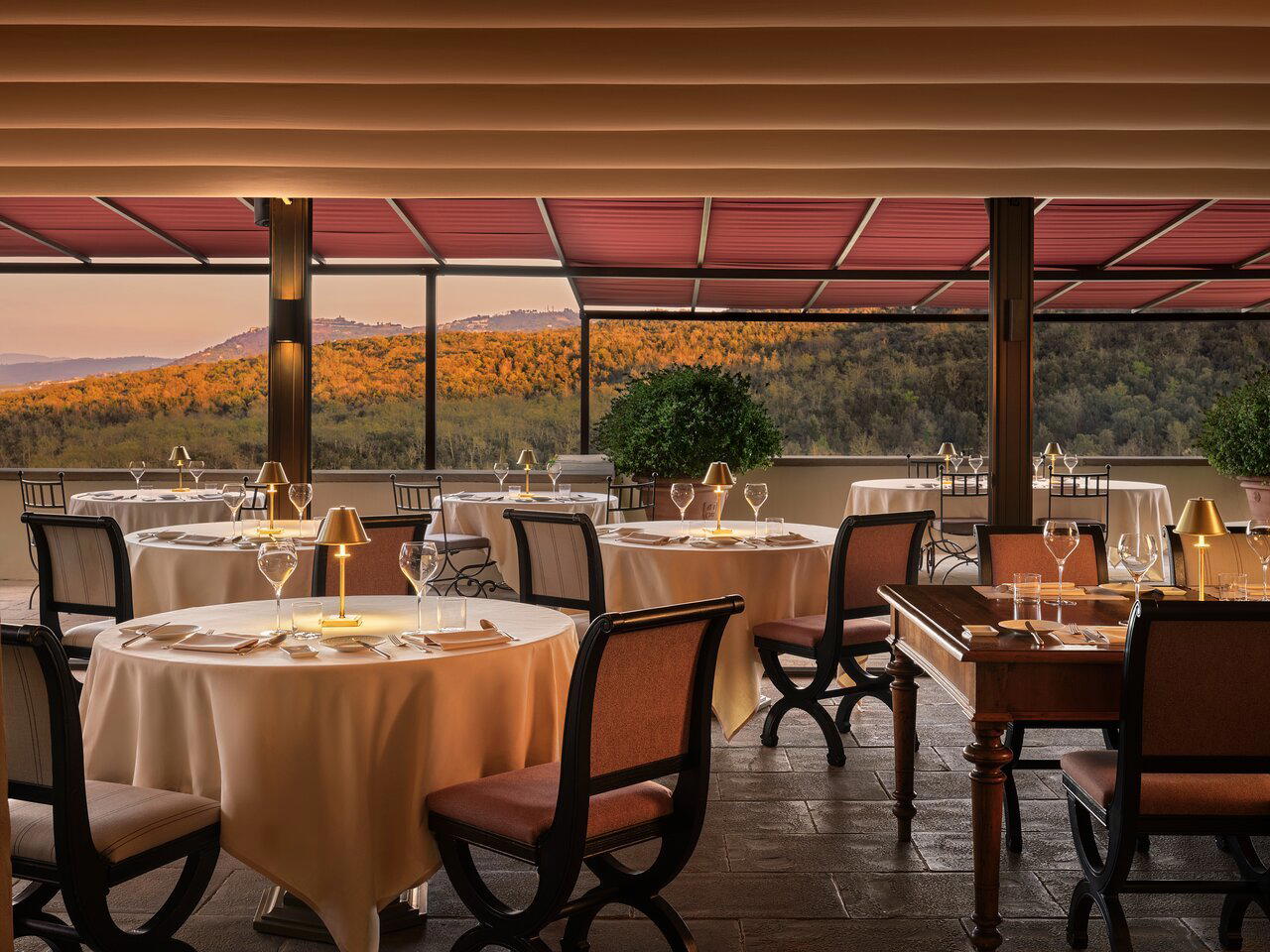
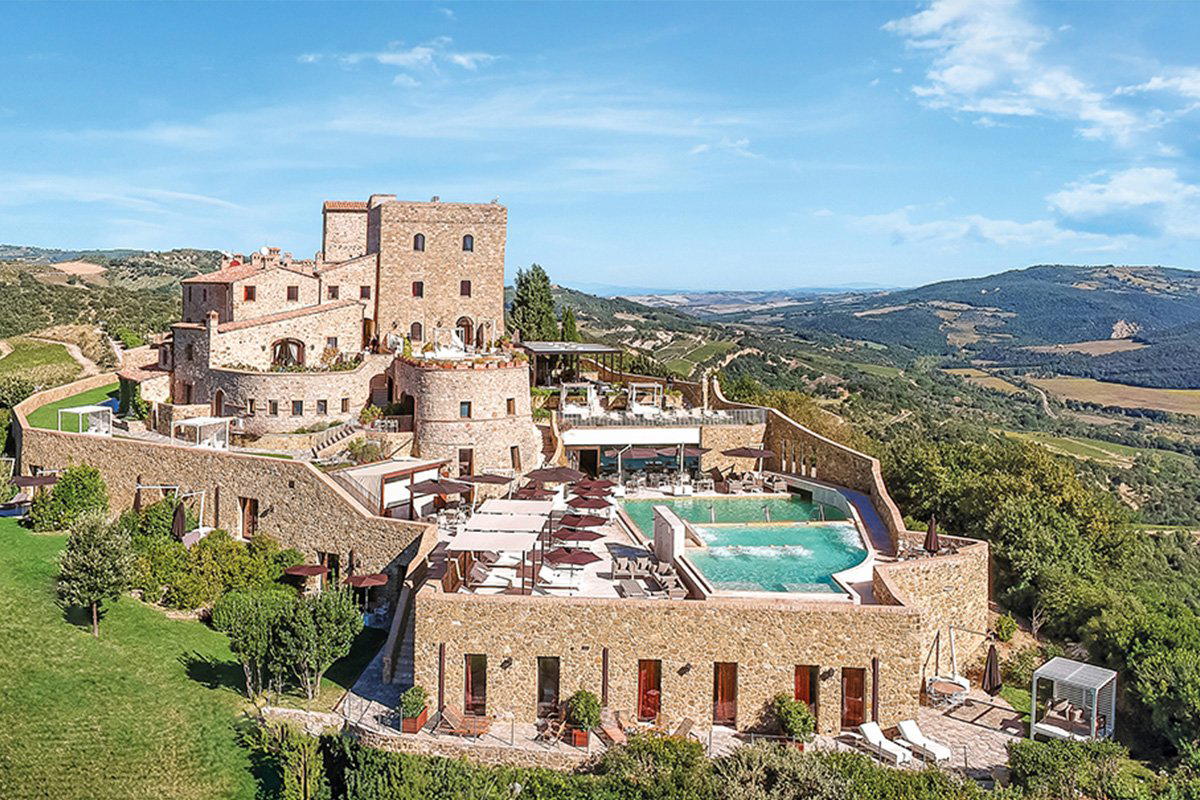
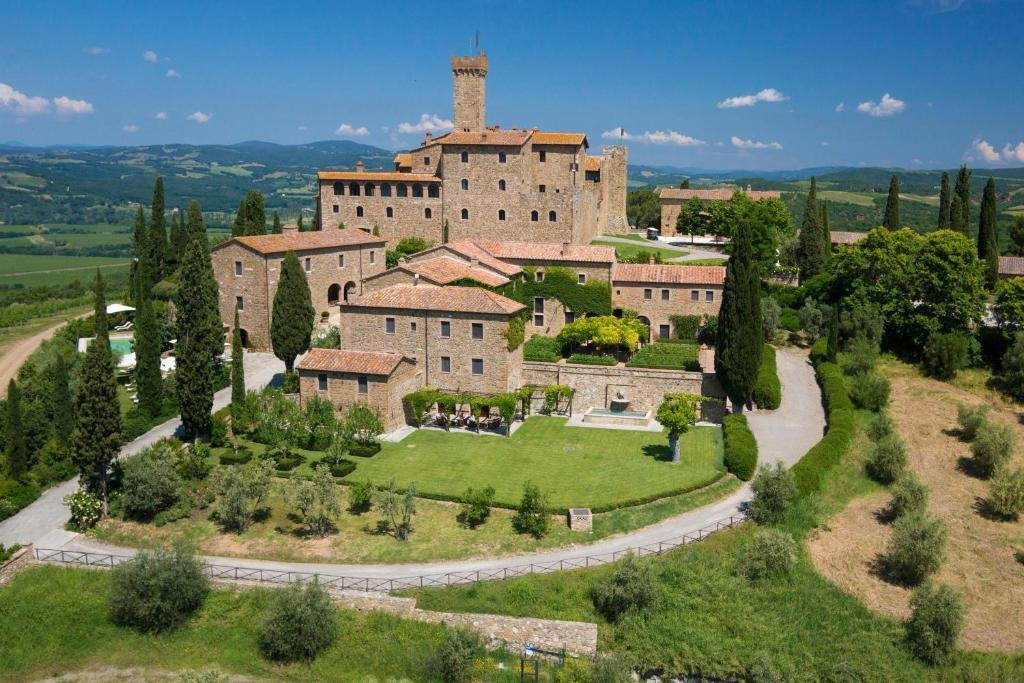
Estate works particularly well for visitors who want Brunello explained through land rather than branding. It is a strong fit for wine education, a quiet group outing, a romantic countryside stop, or a special-occasion tasting where the point is conversation rather than performance. The setting is historic and refined, with vineyard and mountain views, a quiet noise level, and outdoor seating listed as part of the experience. Food pairing is available, which helps if the visit sits between longer drives or other Montalcino appointments.
Planning should be treated with the same discipline as the tasting. The visit type is by reservation, the reservation policy is appointment only, and dress is smart casual. On-site parking is listed, which matters in rural Montalcino, where public transit is rarely the natural way to build a winery day. Payment options include credit card, debit card, and cash. The listed price is $44 per person, a moderate commitment for a Brunello estate visit with cellar access and guided structure.
For readers building a wider Montalcino itinerary, keep the winery day separate from town dining and late driving whenever possible. The broader region rewards a slower sequence: one serious estate visit, one less formal tasting, then dinner. EP Club’s city coverage can help connect the wine plan with the rest of the trip, including Our full Montalcino wineries guide, Our full Montalcino restaurants guide, Our full Montalcino hotels guide, Our full Montalcino bars guide, and Our full Montalcino experiences guide.
Nearby winery research can widen the frame without forcing direct comparison. In Montalcino, see Aglieta Roberto, Agostina Pieri, Agricola Poggio Rubino, Aisna, and Altesino. For broader Italian and European winery context, EP Club also tracks 3GP SRL in Treviso, 47 Anno Domini in Trebaseleghe, A Mano Wine in Noci, »der Steiner« Hans Steiner in Podersdorf am See, and & Handwein in Mannheim.
Recognition history
Dated appearances from independent guides and award organizations, with the underlying list record or original source where available.
Falstaff Winery - 4 Stars
Falstaff
Continue exploring
More in Montalcino
Wineries in Montalcino
All wineries in Montalcino →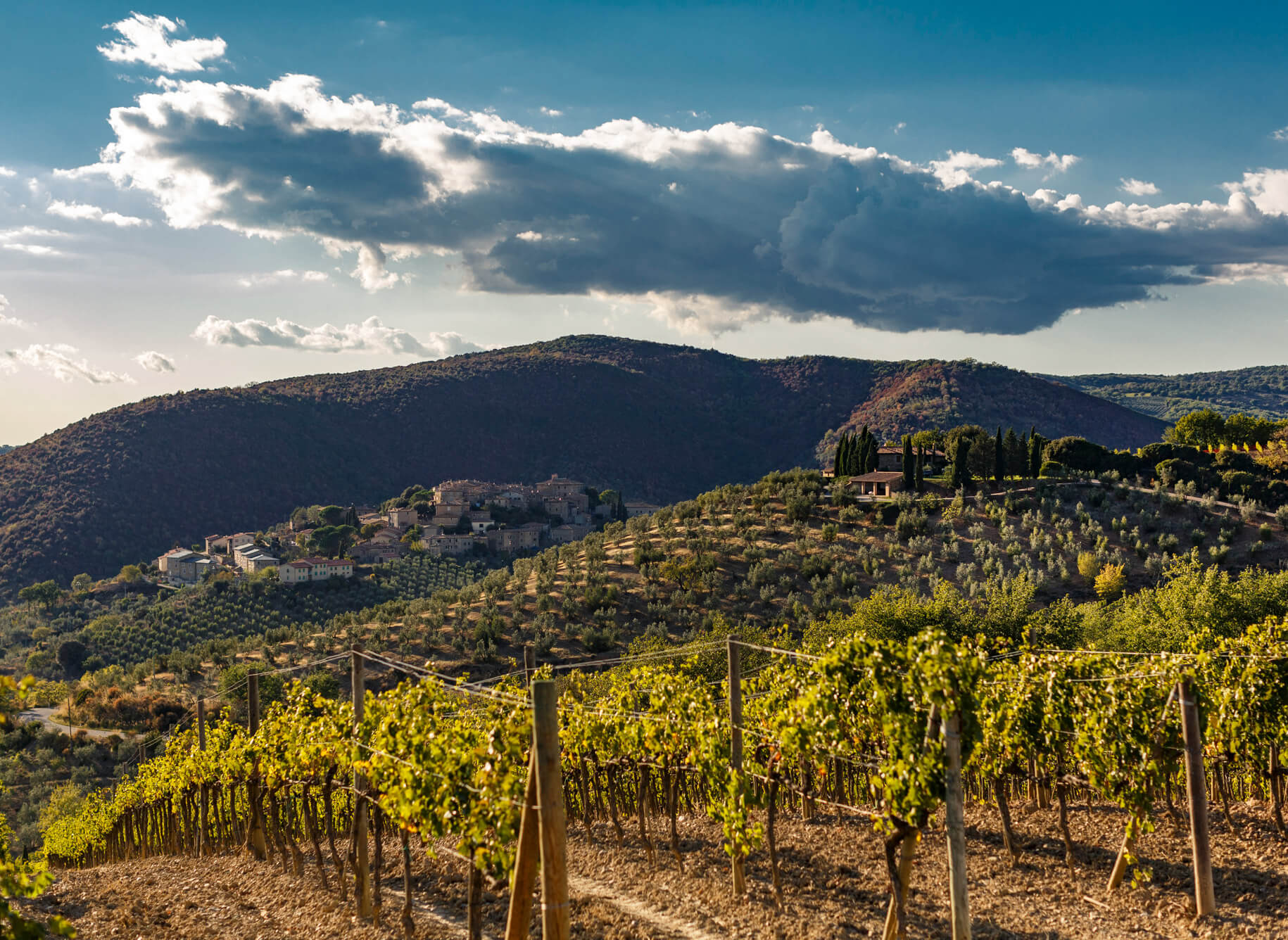
Bars in Montalcino
All bars in Montalcino →
Restaurants in Montalcino
All restaurants in Montalcino →
Details
- Scenic
- Classic
- Elegant
- Rustic
- Romantic
- Romantic Getaway
- Group Outing
- Wine Education
- Special Occasion
- Solo Exploration
- Corporate Event
- Estate Grounds
- Vineyard Tour
- Private Tasting
- Panoramic View
- Historic Building
- Barrel Room
- Sustainable
- Vineyard
- Mountain
- Sangiovese
- Cabernet Sauvignon
- Muscat
- Malvasia Di Candia
- Sauvignon Blanc
- Still Red
- Dessert
- Guided Tasting
- Set Flight
- Vertical Tasting
- Private Experience
- Italian
- English
- Spanish
- German
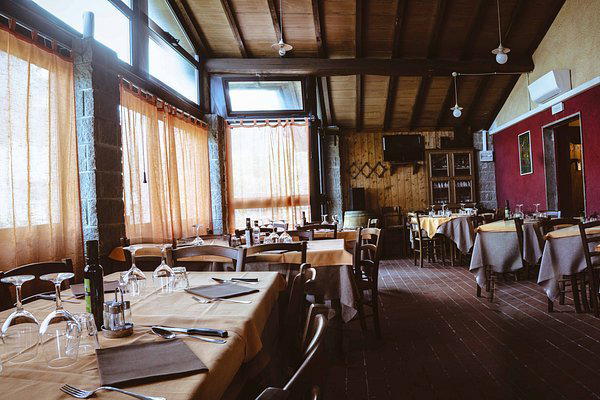
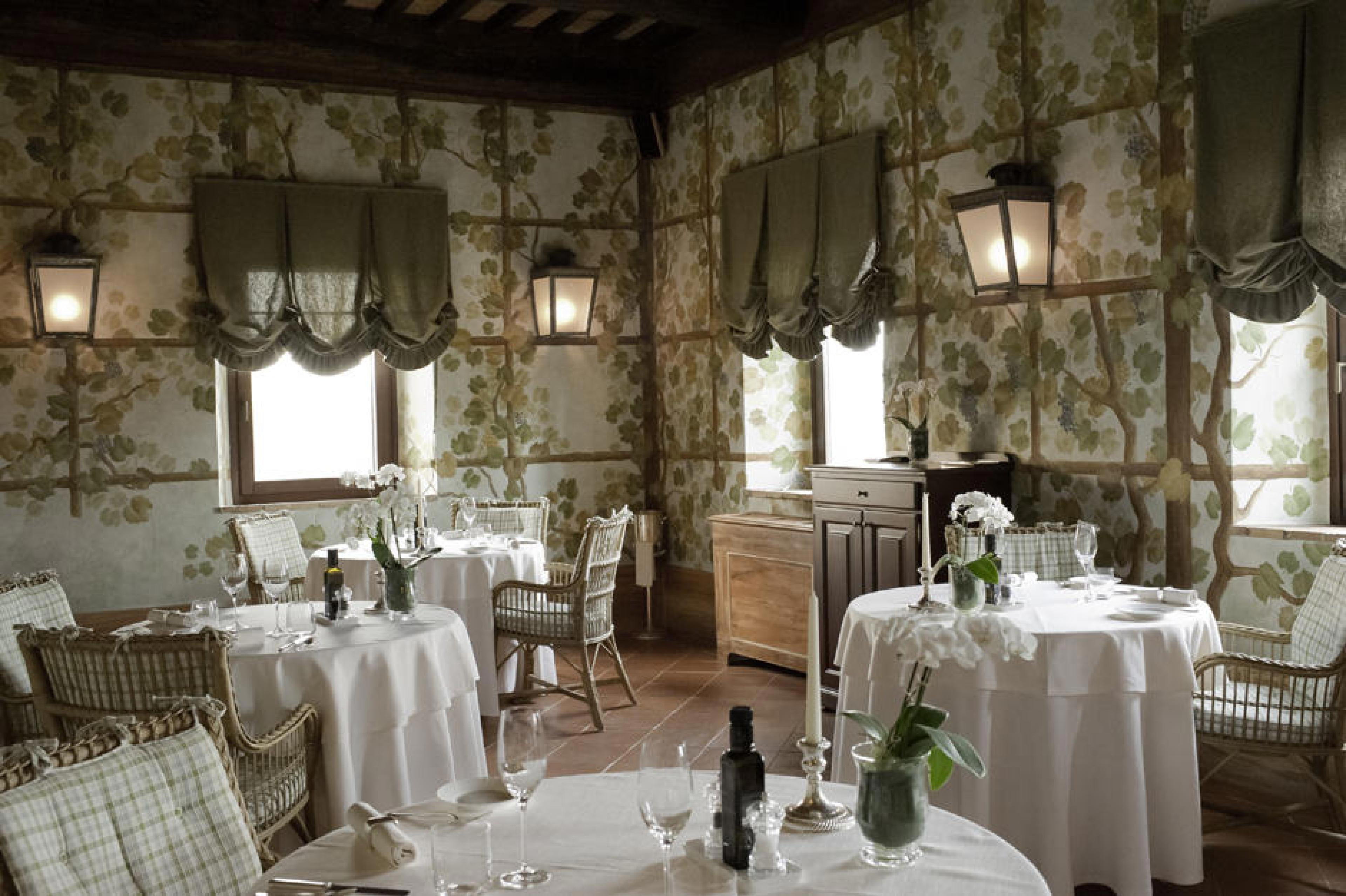
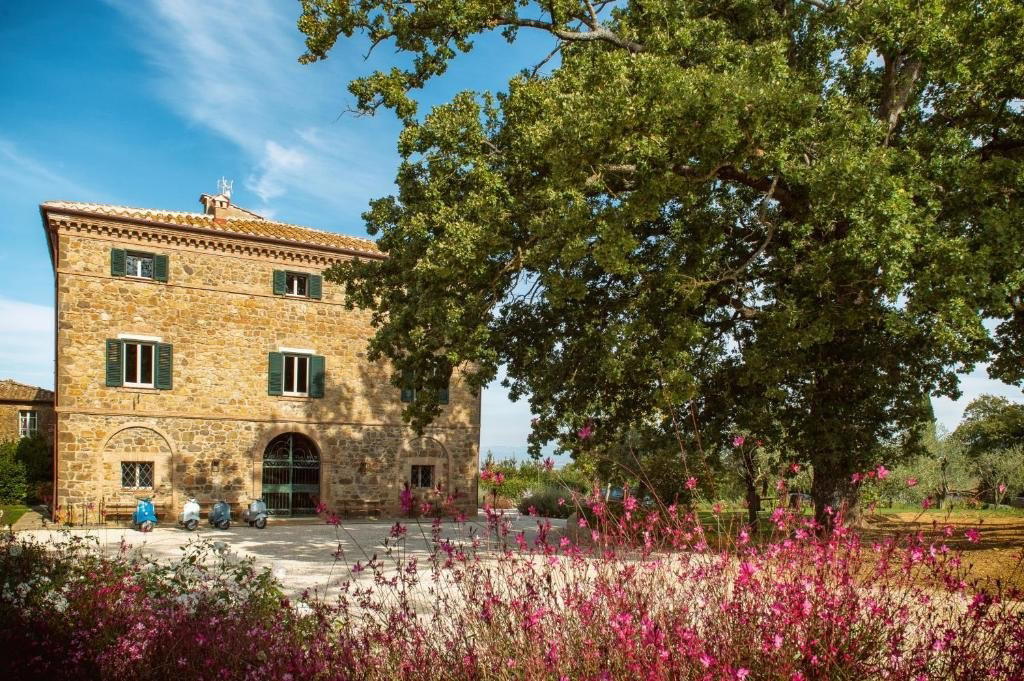
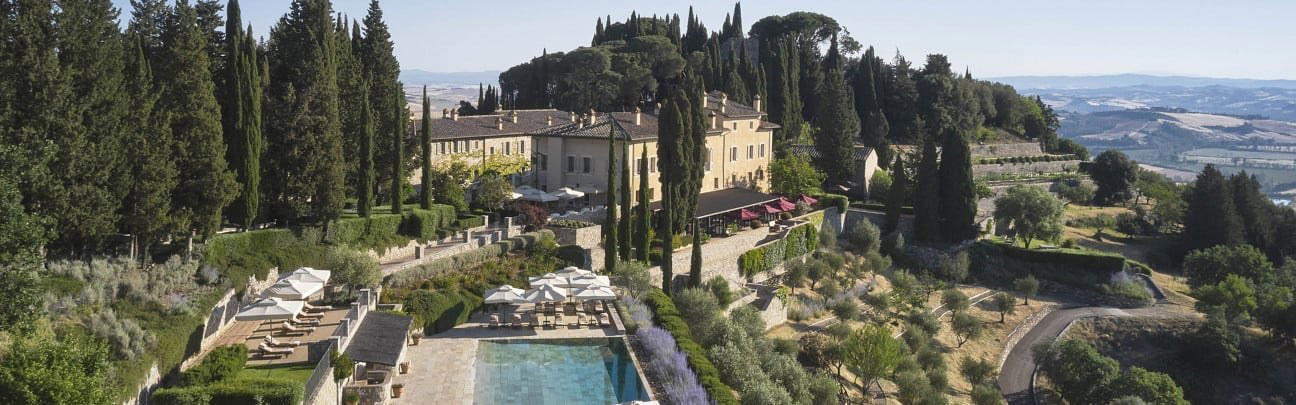
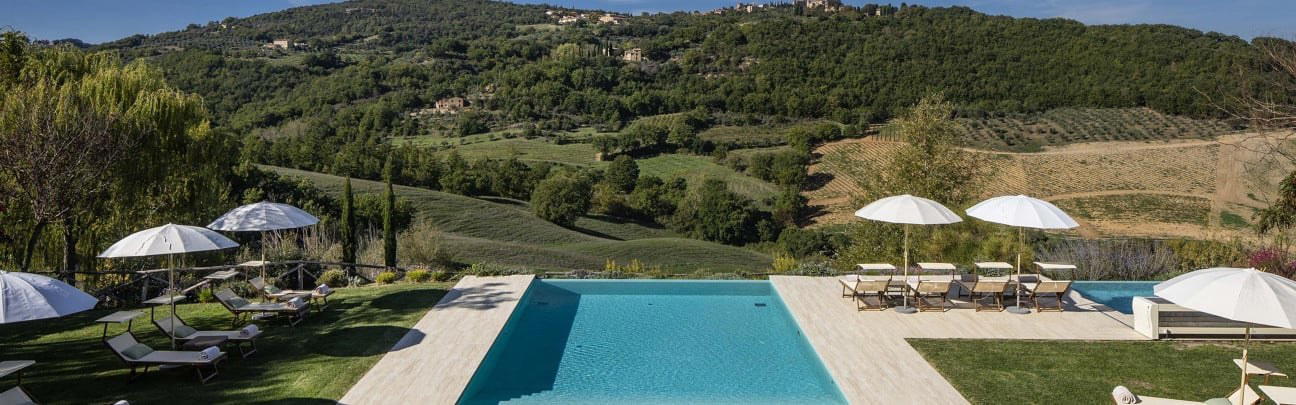
Historic yet refined estate setting in the rolling hills near Castelnuovo dell’Abate, with traditional brick arches, chestnut beams, and stone structures creating a classic, elegant atmosphere that feels quiet and scenic rather than touristy.