Castello di Velona Resort Thermal SPA & Winery


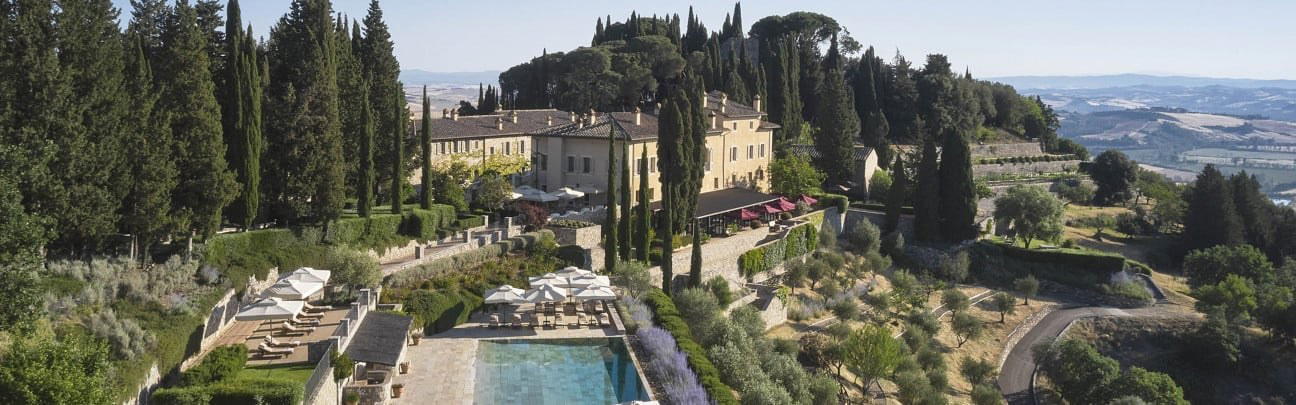
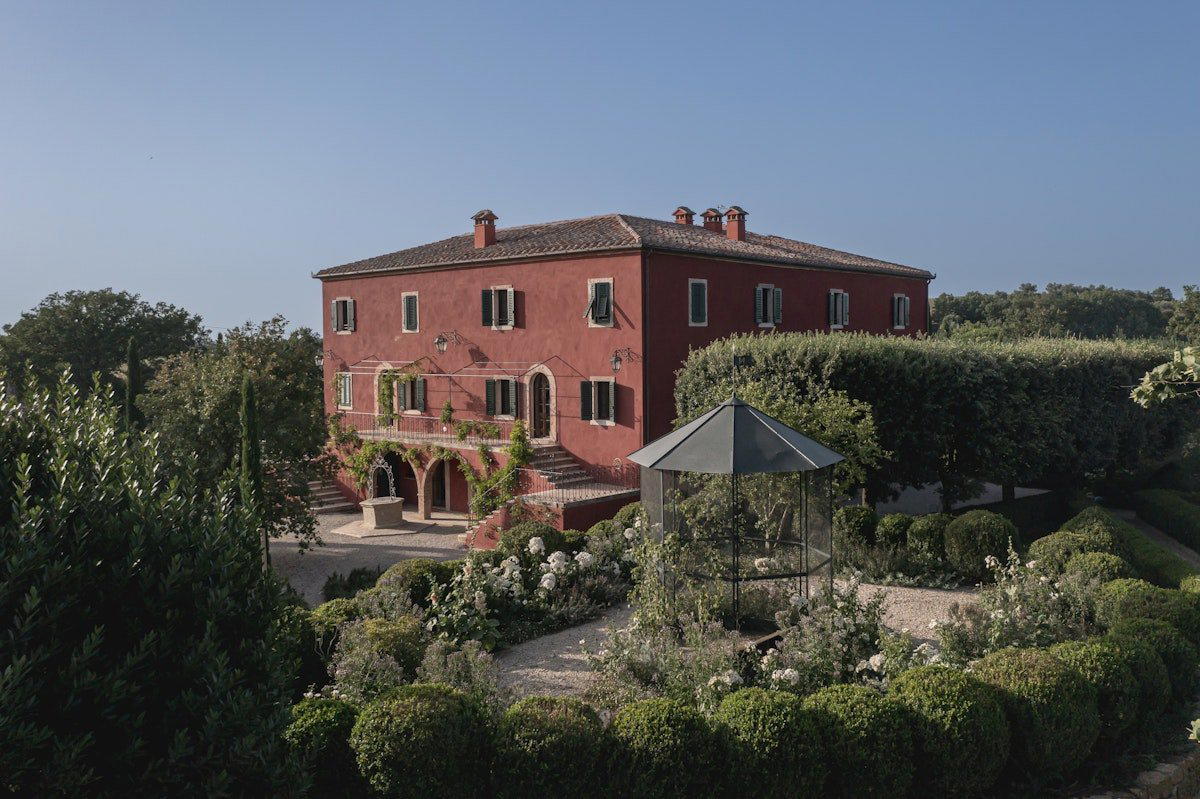
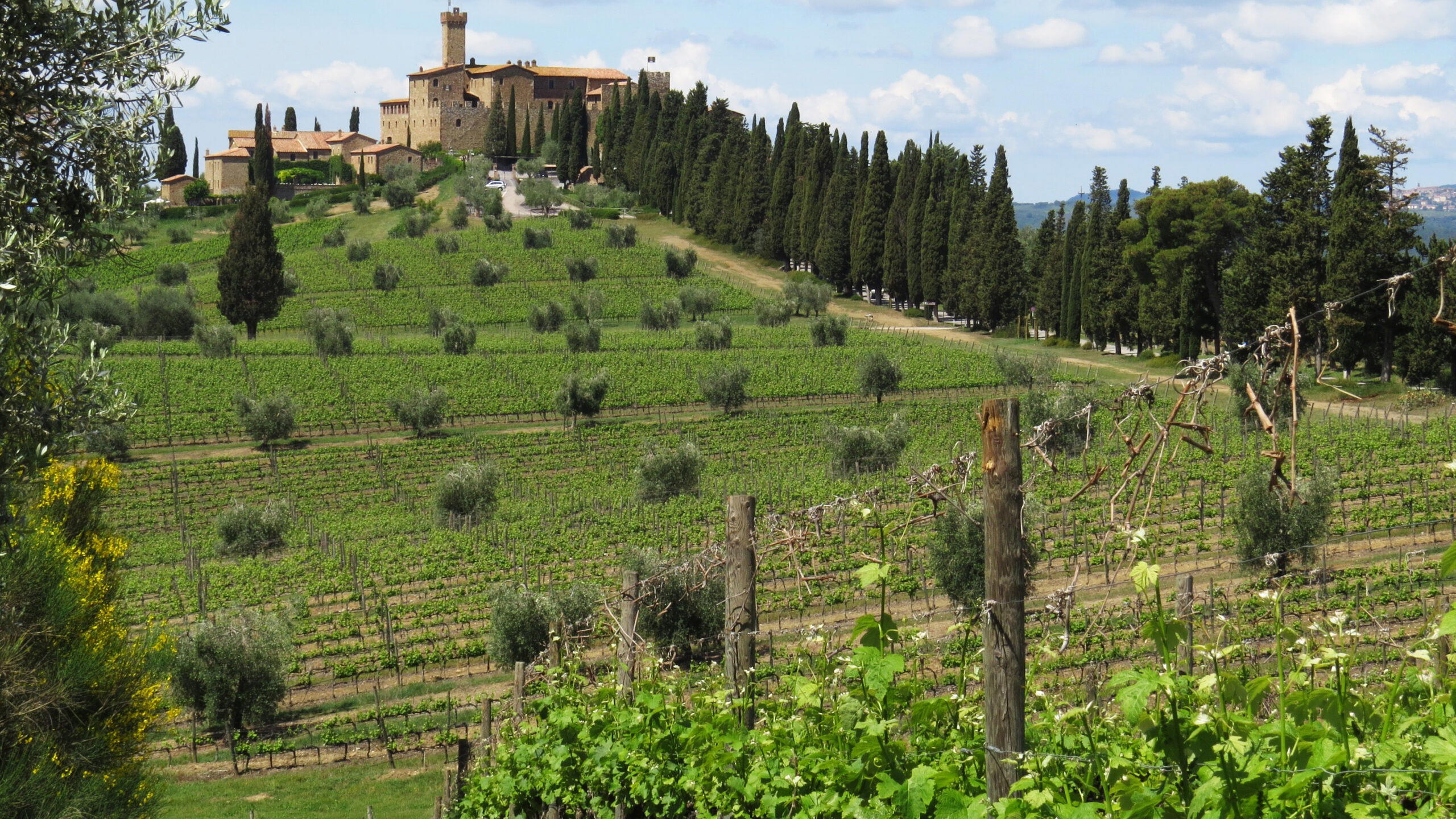
A restored 11th-century castle perched above the UNESCO-listed Val d'Orcia, Castello di Velona combines an estate winery, thermal spa fed by Mount Amiata waters, and two distinct restaurants within 45 rooms and suites. Positioned 8 km from Montalcino in Brunello di Montalcino country, it occupies a tier of Tuscan castle hotels where the wine program, thermal infrastructure, and dining format all connect directly to the surrounding land.
Pearl is the En Primeur Club membership app — saves, bookings, and concierge access live there. Same editors, same standards.
- Address
- Strada Provinciale della Badia di Sant'Antimo, Km 11+200, 53024 Castelnuovo dell'Abate SI
- Phone
- +39 0577 839002
- Website
- castellodivelona.it
- Directions
- Get directions
 Saves & bookings on Pearl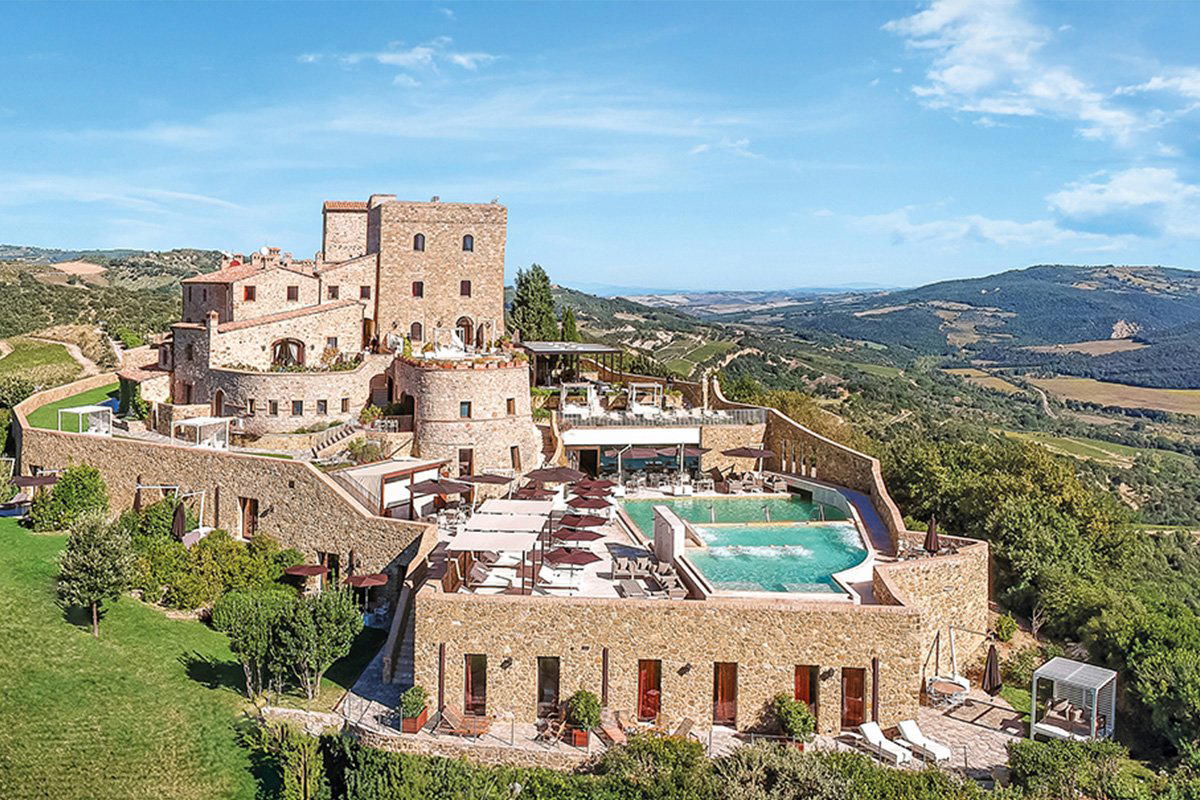
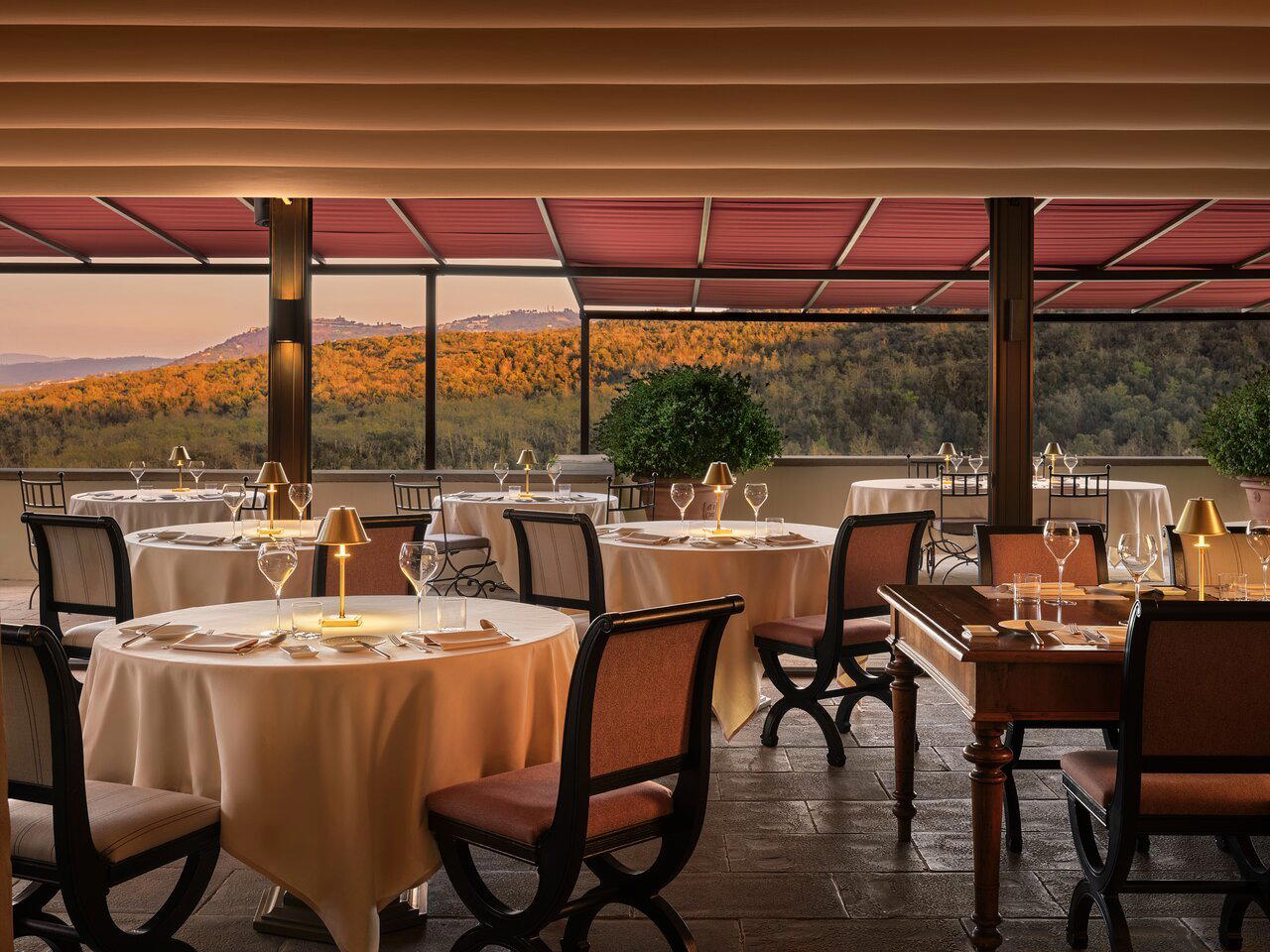
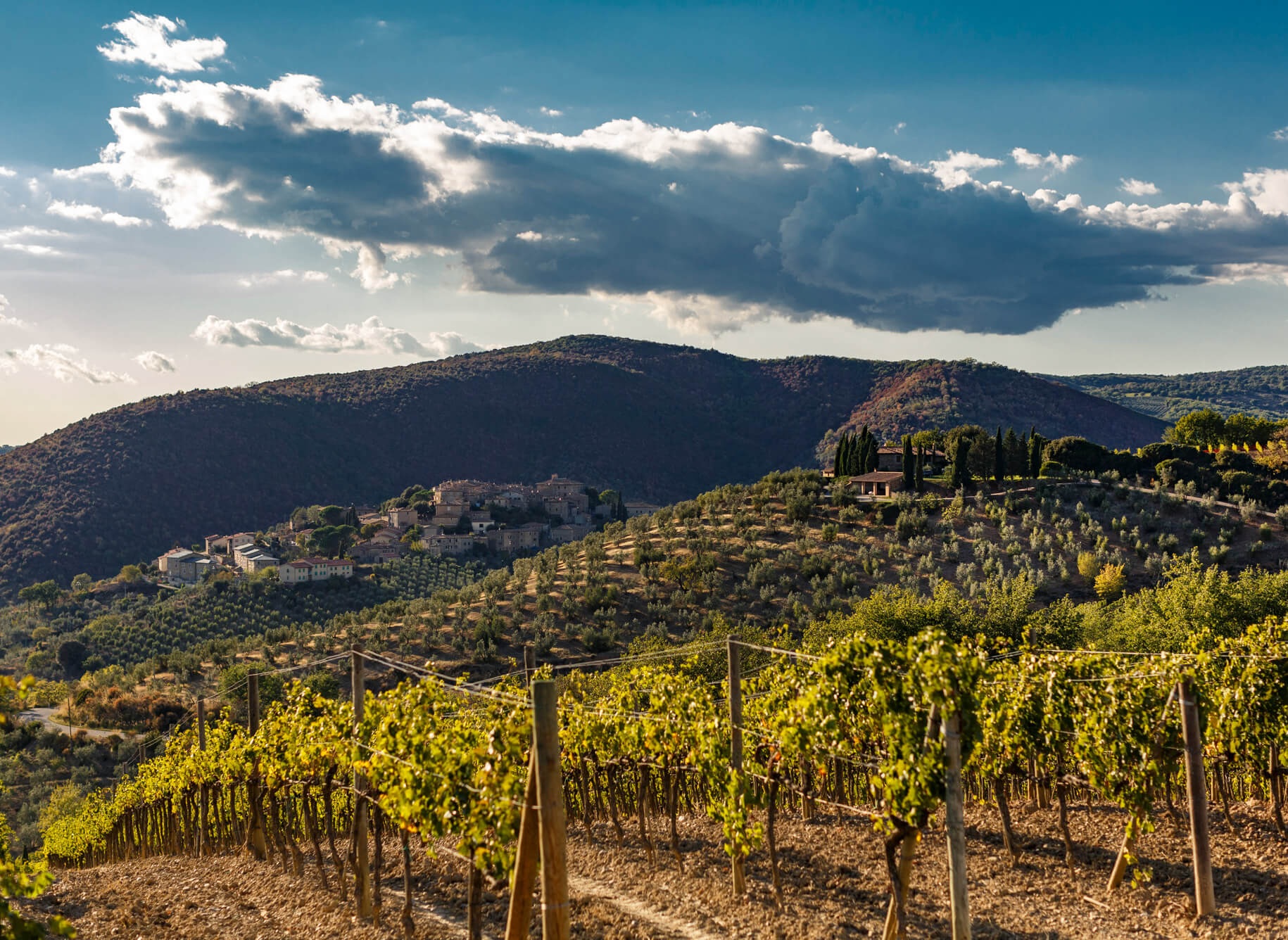
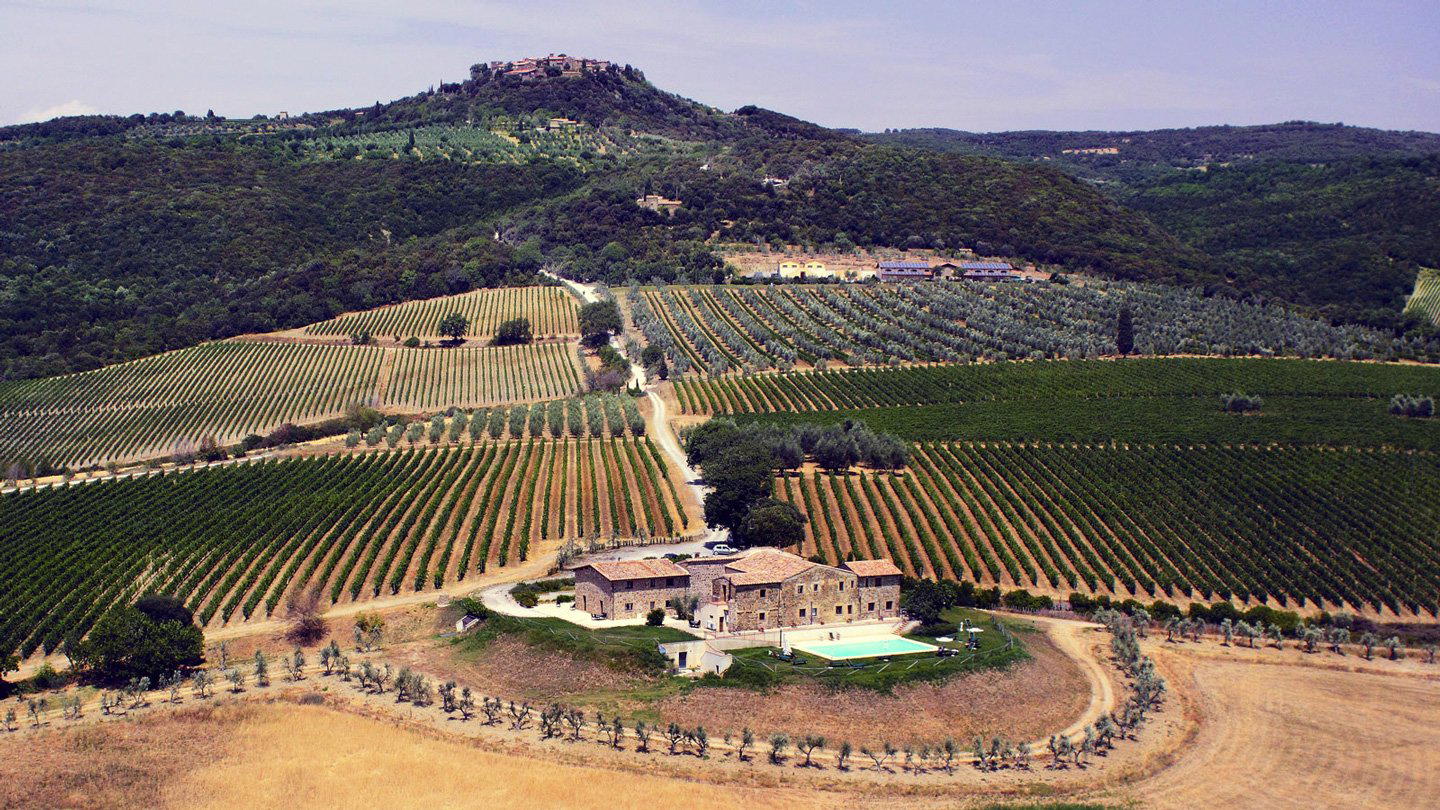
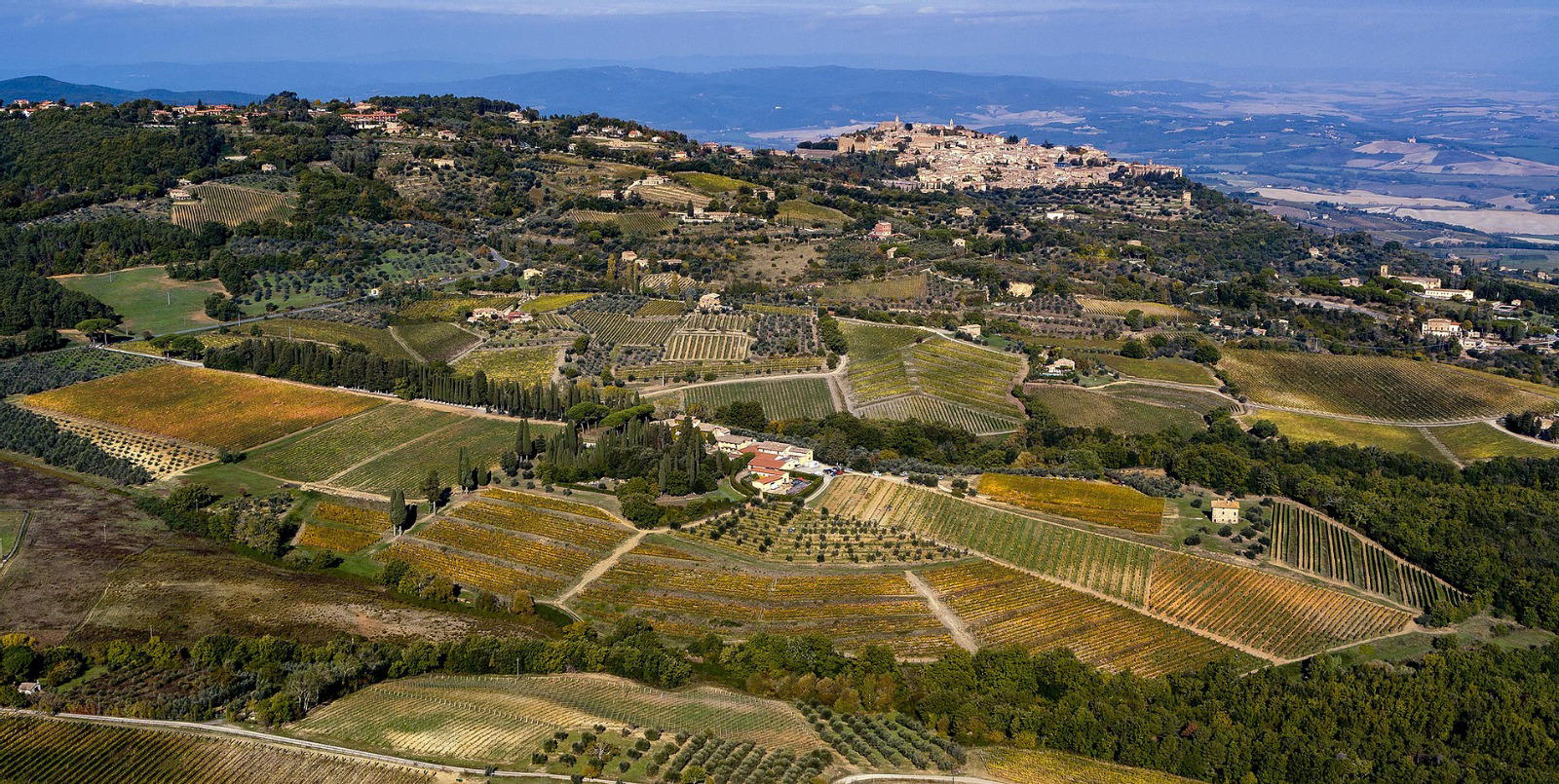
The road to Castelnuovo dell'Abate climbs through a sequence of vineyard blocks and olive groves that look unchanged from any century you care to name. At the end of that ascent, an 11th-century castle sits on a ridge with the Val d'Orcia spread across the horizon to the south and west, a UNESCO World Heritage Site visible from almost every room. The estate produces its own Brunello di Montalcino and extra virgin olive oil, the thermal spa draws water directly from the extinct volcanic mass of Mount Amiata, and the two restaurants are oriented specifically toward that western panorama to capture the evening light. The property functions as a self-contained estate rather than a hotel that happens to have a view.
Where Castello di Velona Sits in Montalcino's Accommodation Tier
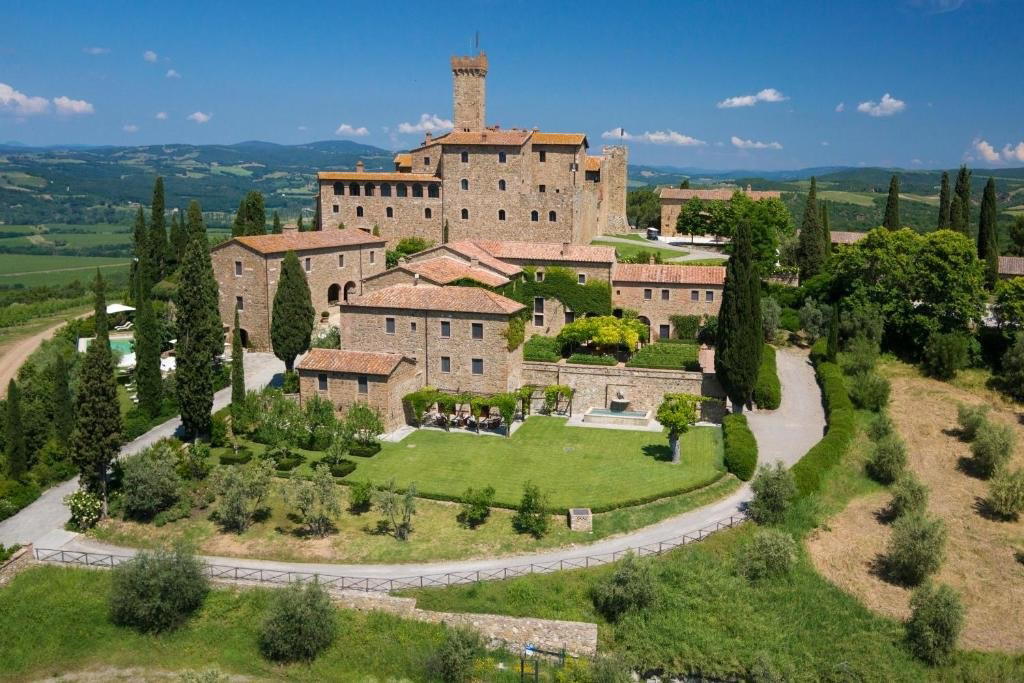
Montalcino has developed a distinct cohort of castle and estate hotels over the past two decades, each staking a claim on a different combination of wine credentials, design language, and hospitality format. Rosewood Castiglion Del Bosco operates at the international brand end of that spectrum, with a golf course and full village infrastructure. Castello Banfi, Il Borgo anchors itself to one of the appellation's most exported wine names. Villa le Prata operates at a more intimate residential scale. Castello di Velona occupies a different position in that set: 45 rooms is large enough to support a full spa and dual restaurant program, but small enough that the estate character remains the dominant register. The thermal infrastructure, a thermal pool, panoramic sauna, Turkish baths, and six treatment cabins, some configured for couples, gives it a wellness depth that most Brunello-country competitors do not attempt at the same scale. The combination of vineyards, thermal water, and UNESCO sightlines is the asset this property is building around, and it is a coherent combination rather than an assembled one.
The property sits approximately 8 km from Montalcino town and 1 hour 45 minutes from Florence by road, which places it in the category of estates where guests typically commit to at least two nights rather than treating it as a base for day trips. That self-sufficiency is reflected in the programming: dining, wine, and wellness are all available on-site at a depth that supports a stay without requiring excursions. Borgo San Felice Resort in Castelnuovo Berardenga and Castelfalfi in Montaione, both of which operate in the same estate-hotel register.
The Dining Program: Two Distinct Formats on One Estate
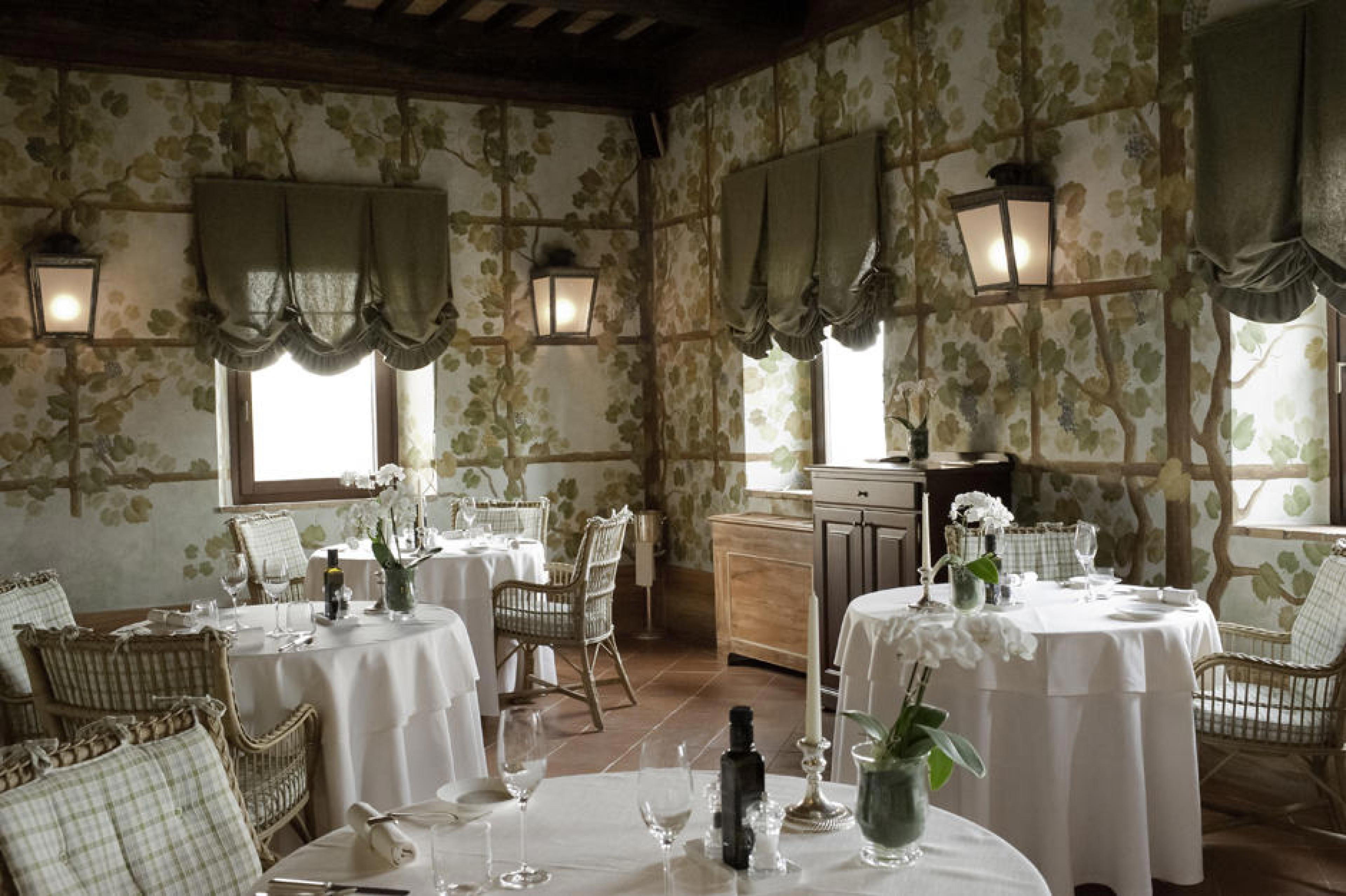
Italian castle hotels often default to a single formal restaurant and a poolside snack service. Castello di Velona runs two differentiated formats with clearly separated identities. The more formal of the two, Settimo Senso, sits on panoramic terraces oriented west to catch the Val d'Orcia sunset, and pairs the kitchen's output directly with wines and olive oil produced on the estate. This is the model that Italian agriturismo culture scaled up to full resort level: the connection between the vineyard, the press, and the plate is documentable rather than decorative. The Settimo Senso format positions the estate's own production as the central element of the experience, which gives the dining program a specific logic that distinguishes it from hotel restaurants that simply maintain a good wine list.
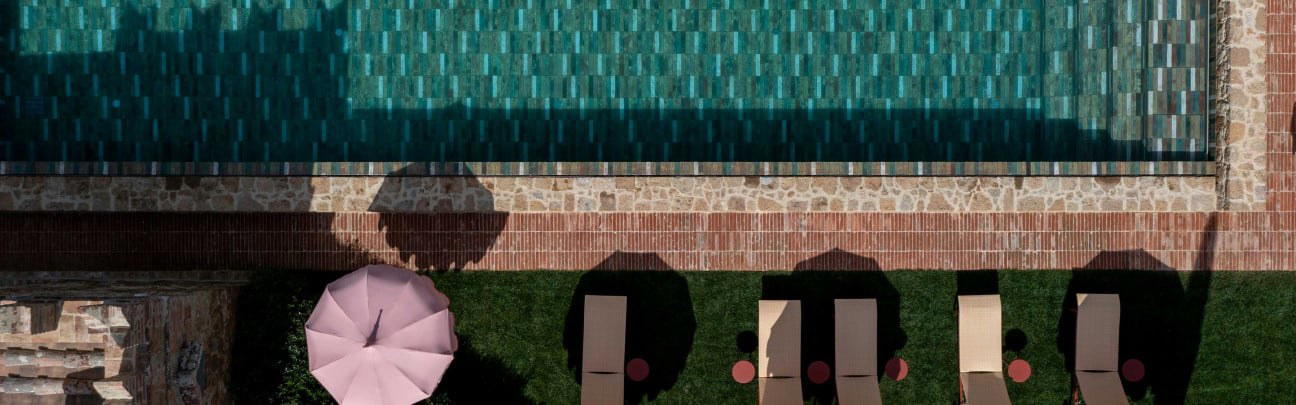
The second restaurant, Dolce Vita, operates from within the pool and wellness zone, offering an explicitly relaxed register: aperitifs, Tuscan barbecue, gourmet pizza, and seasonal fish preparations. The separation of these two formats by both location and kitchen style reflects a programming decision common to Italian resort hotels that want to hold guests across multiple meals without the formality of the main dining room becoming repetitive. The physical integration of Dolce Vita with the OLISPA wellness area also means the transition between a balneotherapy session and a late lunch requires minimal logistics. That integration is a design choice with real operational value for guests spending extended time on-site.
The OLISPA and the Mount Amiata Thermal System
Thermal water hotels in Tuscany have operated across a wide band of quality for decades. The key variable is typically the water source. The OLISPA draws its thermal water at 85 degrees from Mount Amiata, the extinct volcano whose last eruption was approximately 180,000 years ago. This is not a branded wellness concept layered onto a hotel; it is a geologically specific water source with a documented temperature and origin, fed directly into the castle and into the bathrooms of the designated UNESCO View rooms. The spa infrastructure built around it includes a circular warm pool, Jacuzzi, a panoramic sauna with two windows, two Turkish baths, emotional showers, an ice waterfall, and a relaxation room. The finishing material throughout is Travertine, a Tuscan marble, which gives the thermal area a material coherence with the region rather than the generic spa aesthetic common to international hotel brands.
The closest comparable formats in Italian castle and estate hotels would include Castello di Reschio in Lisciano Niccone and Castel Fragsburg in Merano, though neither shares the volcanic thermal water sourcing that gives Castello di Velona its specific wellness proposition.
Rooms and the Val d'Orcia Orientation
The 45 rooms and suites are divided into two categories: Castle and Sunset. The organisational logic here is spatial rather than purely hierarchical, the Sunset rooms are oriented toward the western panorama and the Val d'Orcia, while Castle rooms are embedded more deeply in the medieval structure. The UNESCO View rooms are a further sub-designation, notable for the feature of thermal water piped directly into private bathrooms from the Mount Amiata source. That specific detail, volcanic thermal water available in-room, is the kind of logistical fact that meaningfully differentiates accommodation tiers rather than simply reflecting size or décor category.
At 45 keys total, the property sits in a scale bracket comparable to other Italian design-led estate hotels such as Borgo Santandrea on the Amalfi Coast or Il Pellicano in Porto Ercole, where the room count is constrained enough that the guest-to-space ratio remains in the estate register. For comparison across Italy's broader range of high-quality small hotels, see also Passalacqua in Moltrasio, EALA My Lakeside Dream in Limone sul Garda, and Corte della Maestà in Civita di Bagnoregio. For those also looking at major city anchors before or after a Tuscan estate stay, Four Seasons Hotel Firenze in Florence and Bulgari Hotel Roma in Rome cover the urban counterpart tier.
Planning a Stay
The property sits on Strada Provinciale della Badia di Sant'Antimo at km 11+200, Castelnuovo dell'Abate, in the southern reaches of the Montalcino commune. It is 1 hour 45 minutes from Florence by road and 8 km from Montalcino town. The combination of dual restaurant formats, full thermal spa, and estate wine production means the property functions most coherently as a multi-night stay rather than a transit stop.
Budget and Context
Comparable venues nearby, for context on price, style, and recognition.
| Venue | Cuisine | Price | Awards | Notes |
|---|---|---|---|---|
| Castello di Velona Resort Thermal SPA & WineryThis venue — the venue you are viewing | Not listed | $$$$ | 5-Star | Not listed |
| Castiglion del Bosco, A Rosewood Hotel | Not listed | $$$$ | 5-Star | Montalcino, Restored 800-year-old Tuscan borgo and farmhouses harmoniously integrated with the UNESCO Val d'Orcia landscape. |
| Villa le Prata | Not listed | $$$ | Michelin 1 Key | Montalcino, Historic 1862 villa reimagined as a luxury winery retreat with contemporary comfort and rustic Tuscan charm. |
| Castello Banfi - Il Borgo | Not listed | $$$$ | Michelin 1 Key | Montalcino, Historic Tuscan borgo restored into a luxurious boutique retreat |
| Rosewood Castiglion Del Bosco | Hotel | Not listed | Michelin 3 Key | Not listed |
| Cala del Porto Punta Ala | Punta Ala, seaside luxury resort | $$$$ | 5-Star | Not listed |
Recognition history
Dated appearances from independent guides and award organizations, with the underlying list record or original source where available.
Virtuoso Luxury Hotel Partner
Virtuoso
Preferred Hotels L.V.X. Collection
Preferred Hotels
Continue exploring
More in Montalcino
Hotels in Montalcino
Browse all →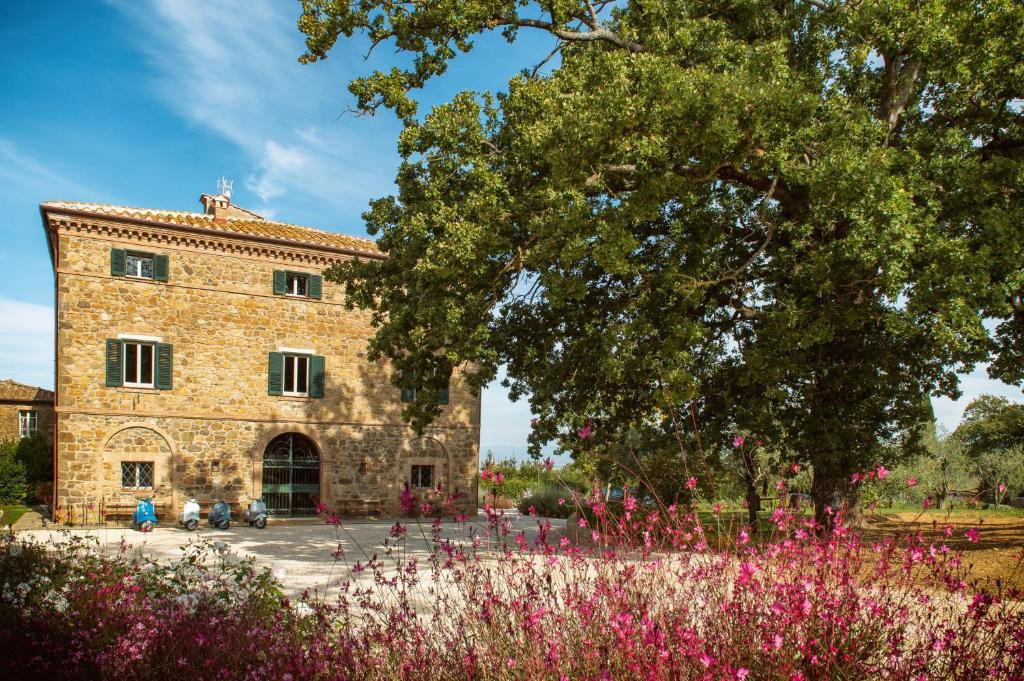
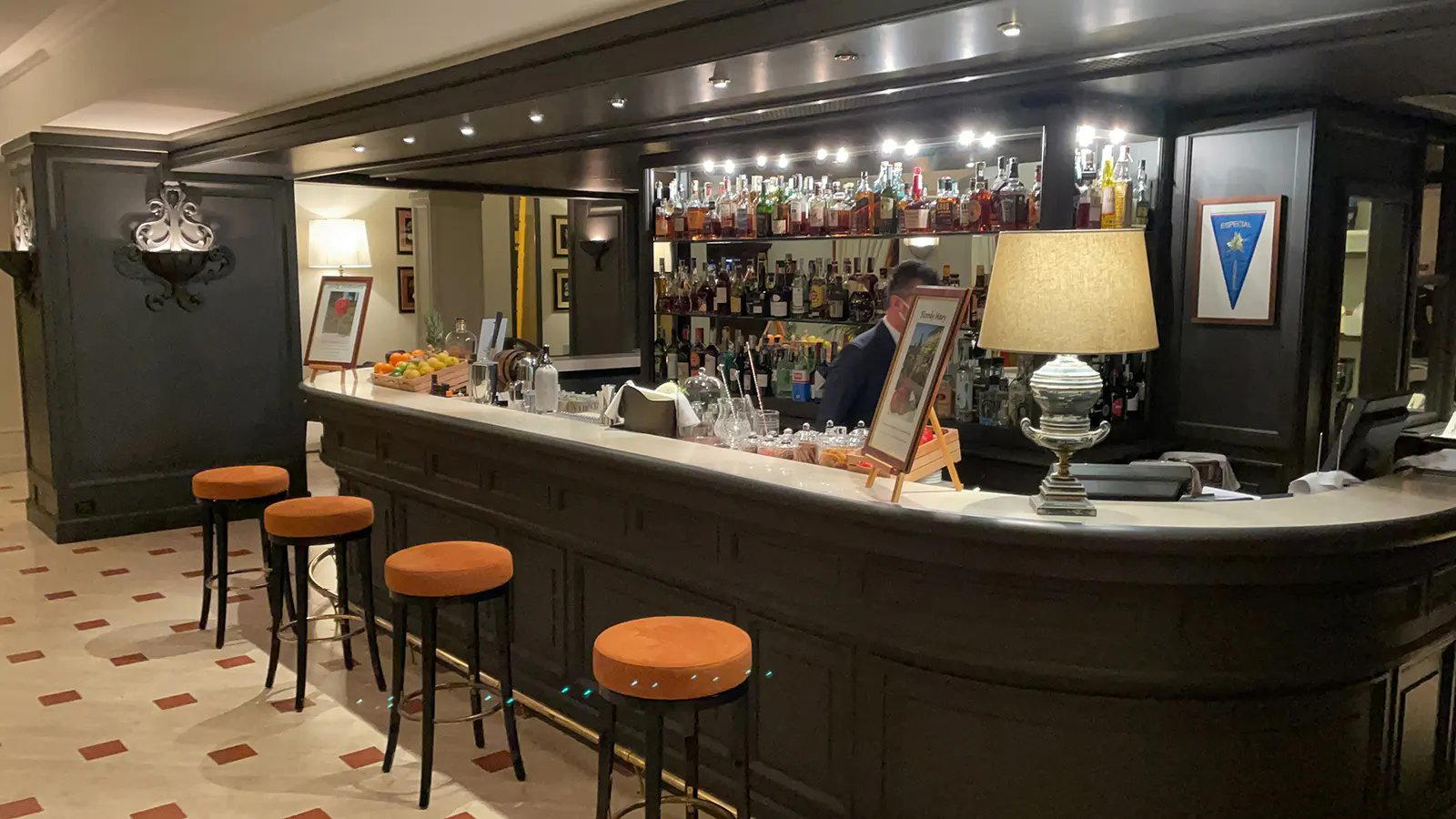
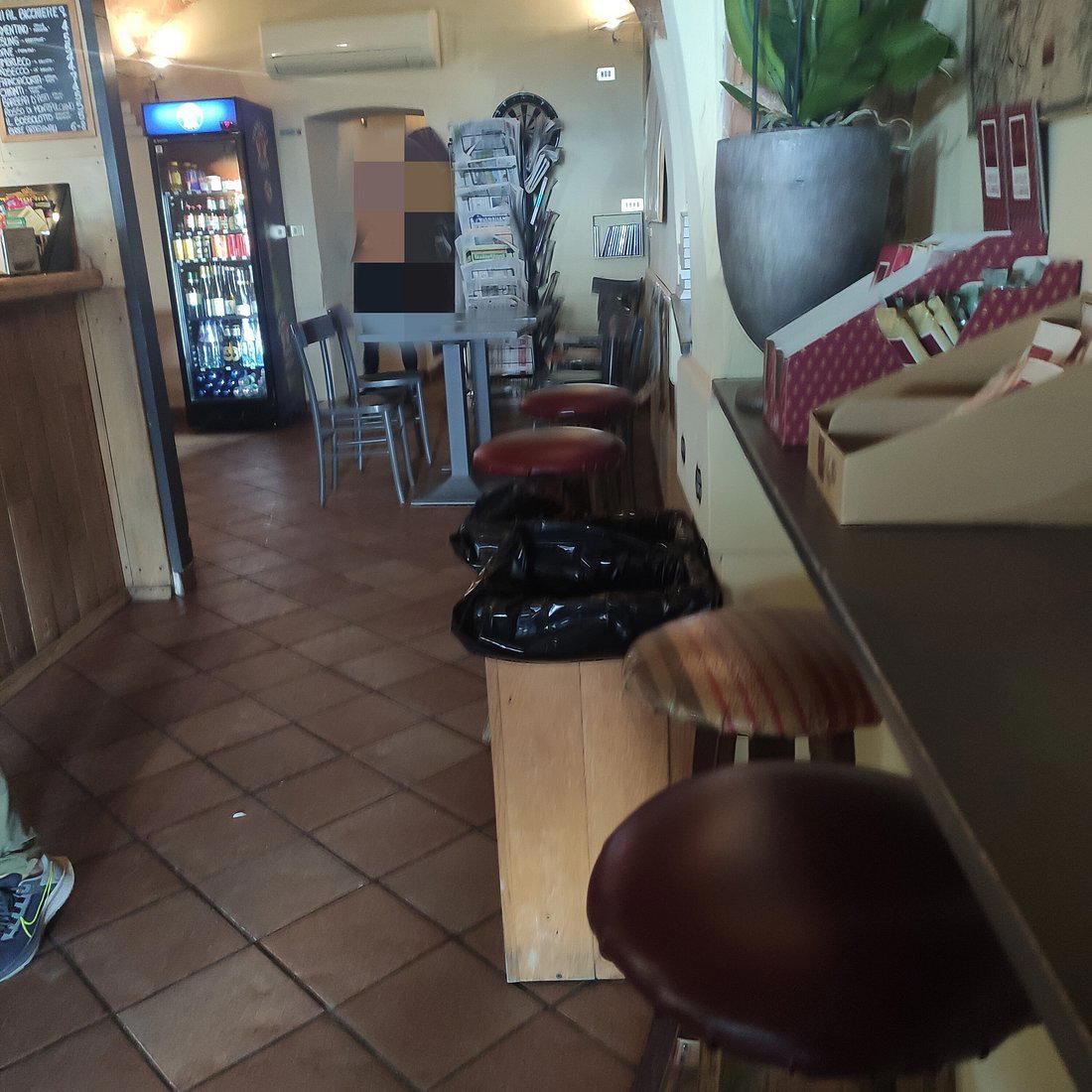
Bars in Montalcino
Browse all →
Restaurants in Montalcino
Browse all →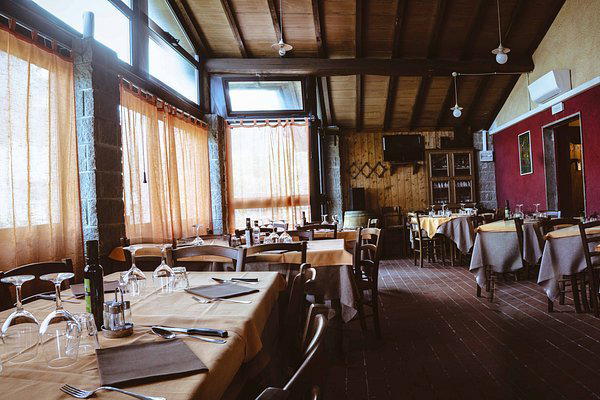
At a Glance
- Romantic
- Elegant
- Scenic
- Sophisticated
- Honeymoon
- Romantic Getaway
- Wellness Retreat
- Anniversary
- Destination Wedding
- Destination Spa
- Historic Building
- Panoramic View
- Private Dining
- Terrace
- Garden
- Spa
- Pool
- Fitness Center
- Restaurant
- Bar
- Sauna
- Concierge
- Valet Parking
- Room Service
- Bicycle Rental
- Vineyard
- Mountain
- Garden
- Spa
- Pool
- Fitness Center
- Restaurant
- Bar
- Sauna
- Concierge
- Valet Parking
- Room Service
- Bicycle Rental
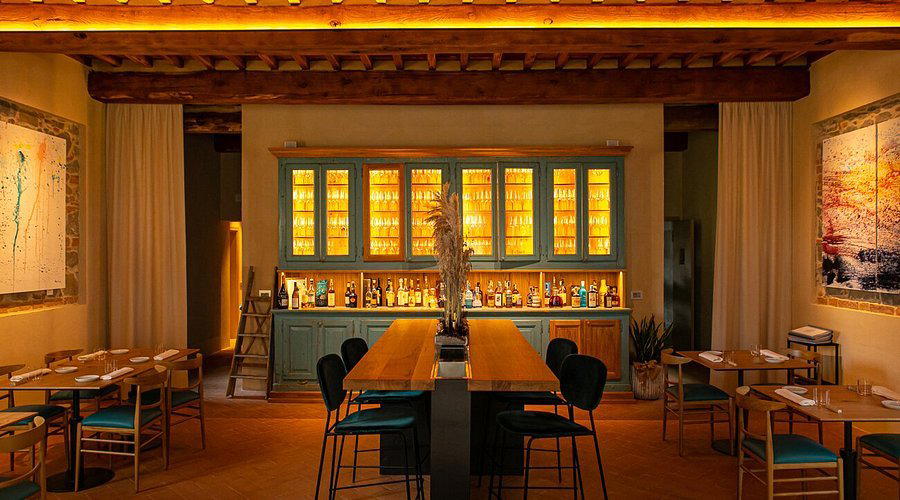
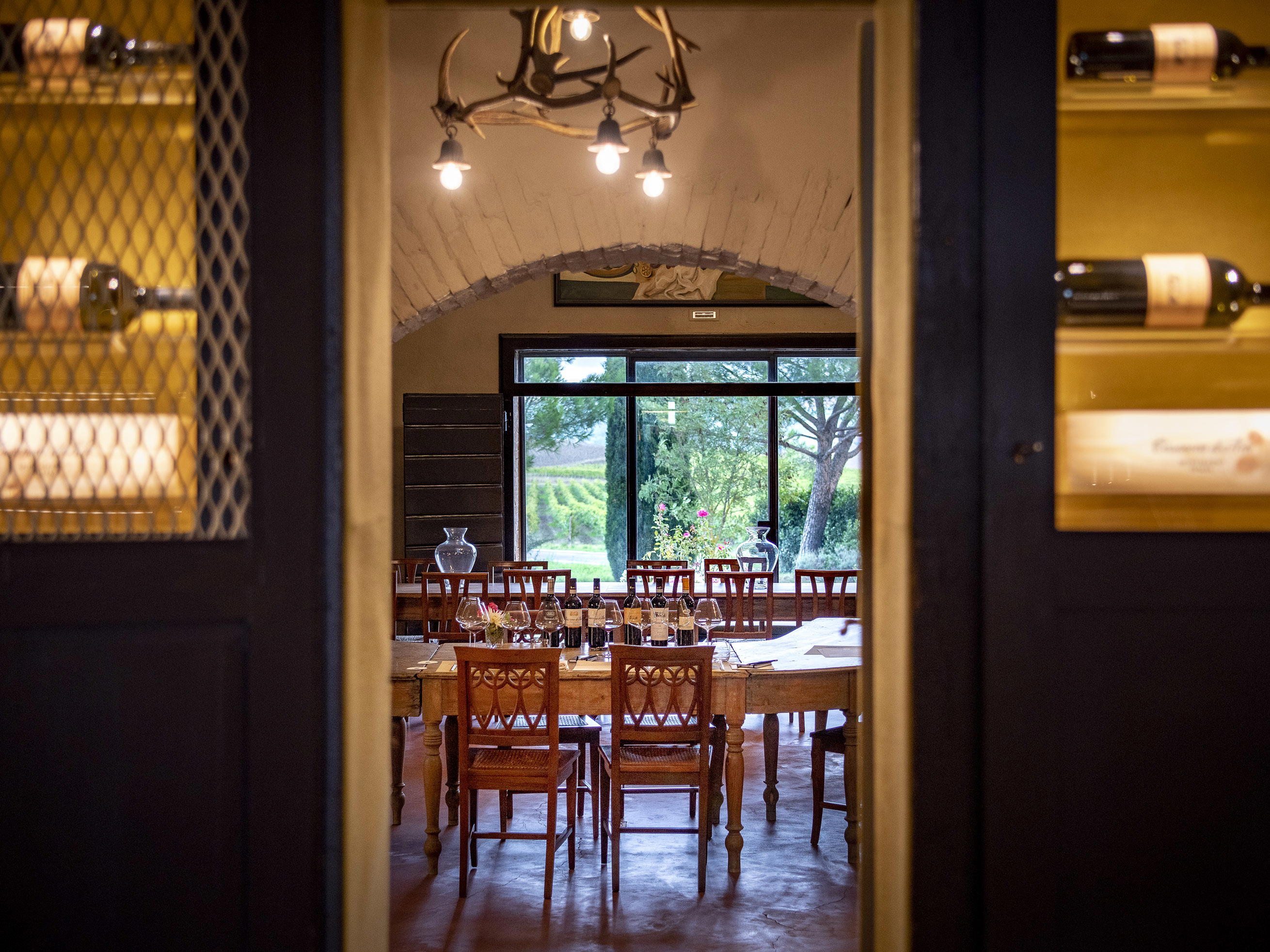
Luxurious and serene with warm Tuscan aesthetics, featuring natural light from panoramic terraces, candlelit dining, and spa areas infused with thermal waters and soft lighting.