La Sala dei Grapoli



1 Michelin Star · Relais Chateaux Award
Our verdict
Inside a medieval castello above the Brunello vineyards of Montalcino, La Sala dei Grappoli holds a Michelin star and a 2025 ranking of #182 in Opinionated About Dining's Classical Europe list. Chef Domenico Francone draws on his Puglian roots while working firmly within the Tuscan and Maremma traditions, producing a menu that earns its place among the more considered fine-dining rooms in southern Tuscany.

Pearl is the En Primeur Club membership app, where members save venues, book tables and use the concierge.
The menu
What to order
- Evolution of quail
- Variation of local rooster
- Brunello-braised veal cheek
A Castello on the Vine-Covered Hills of Montalcino
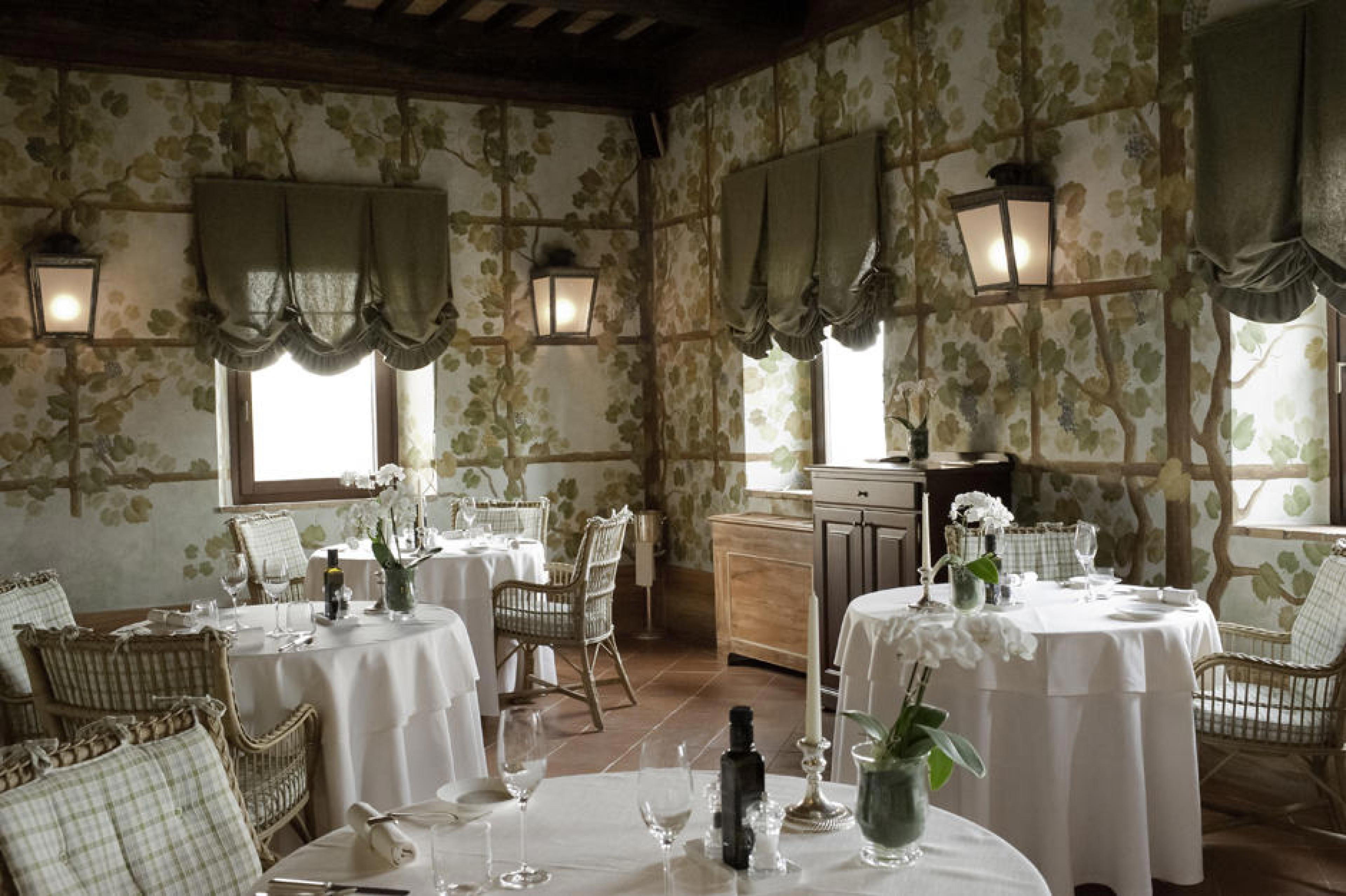
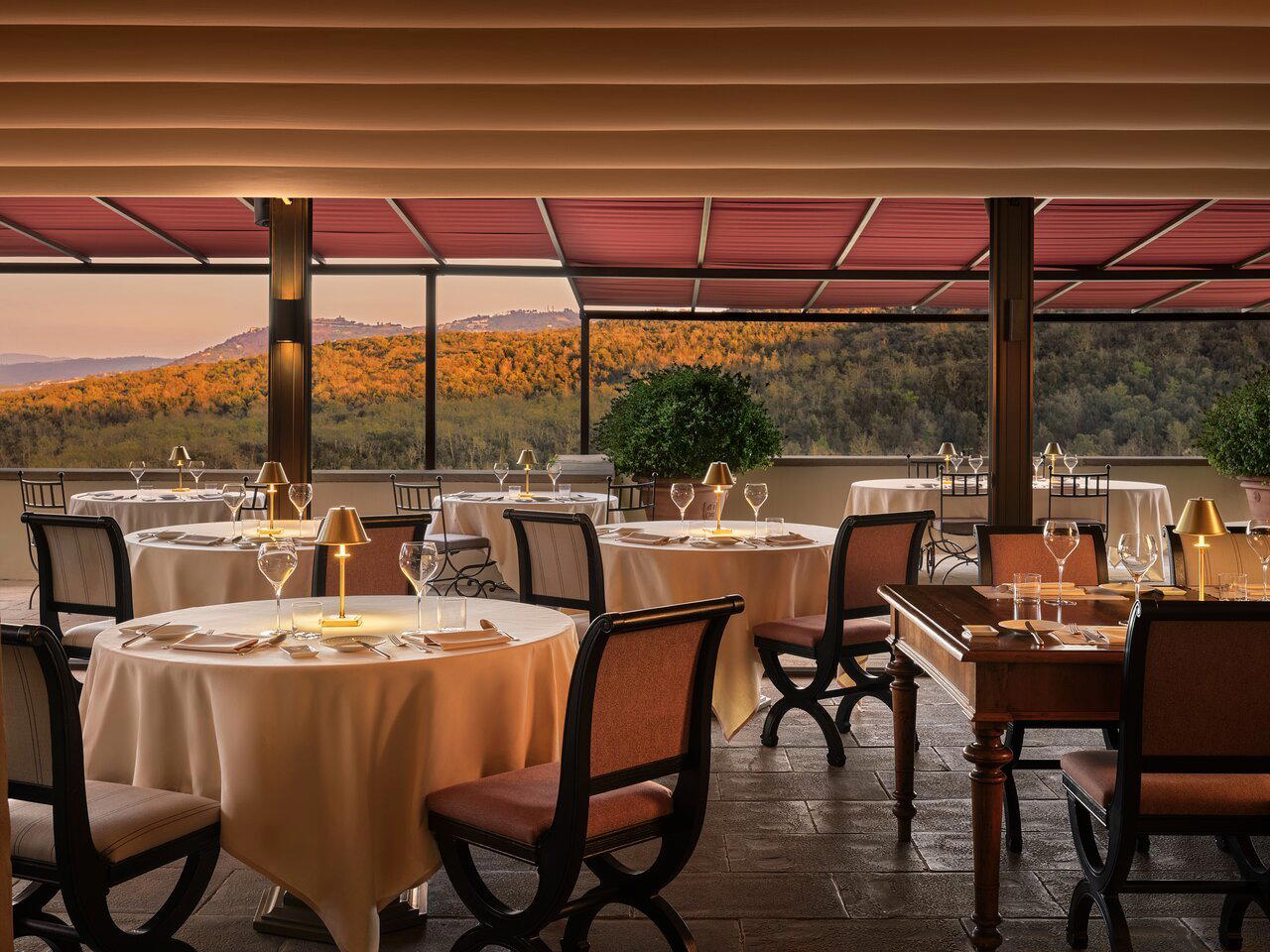
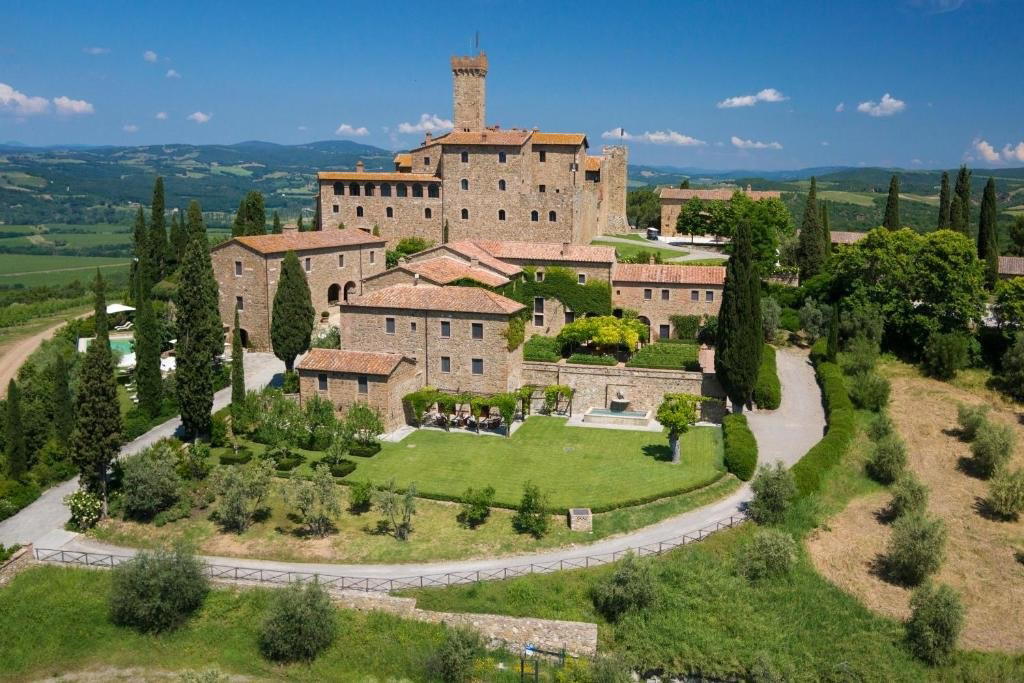
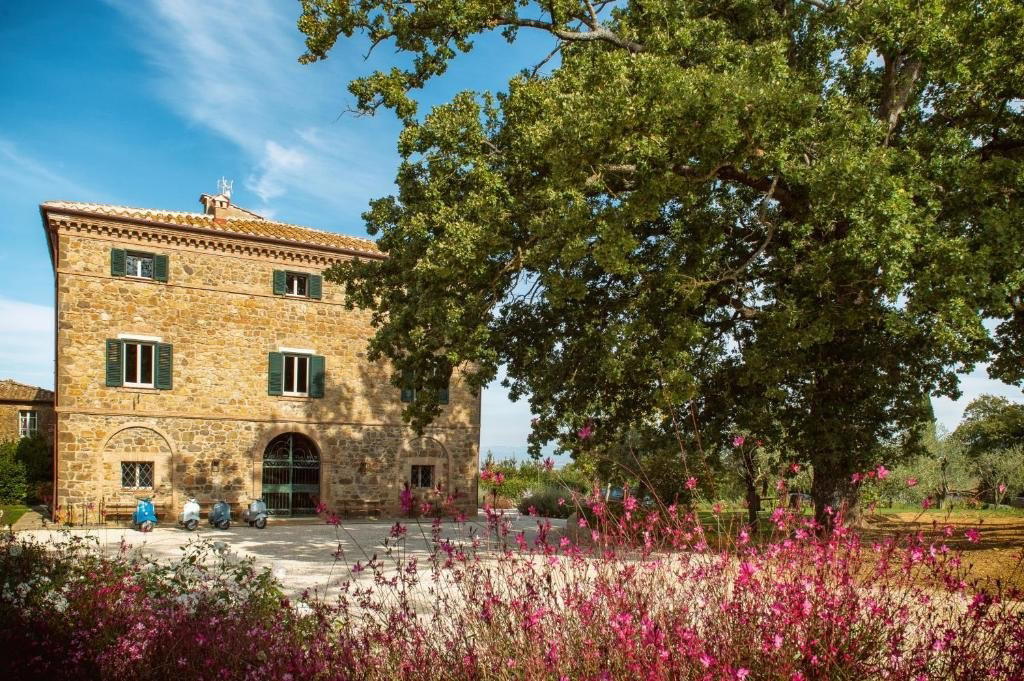
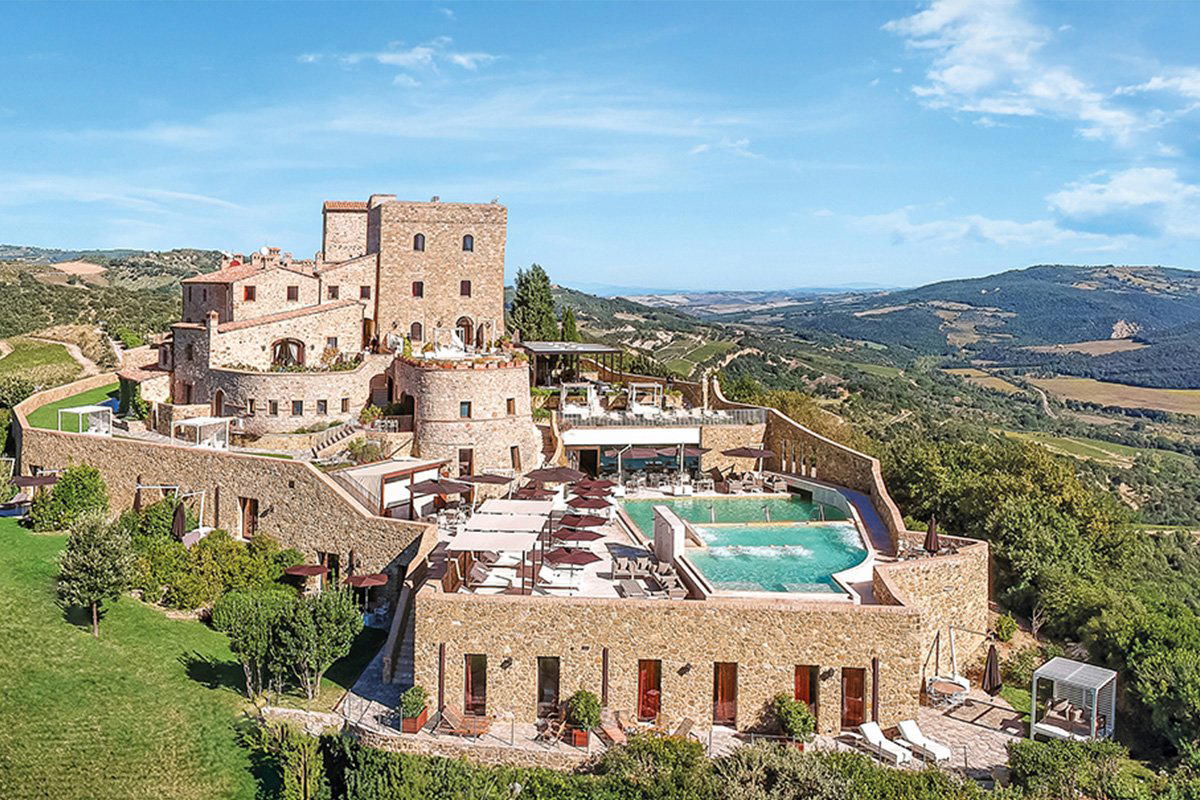
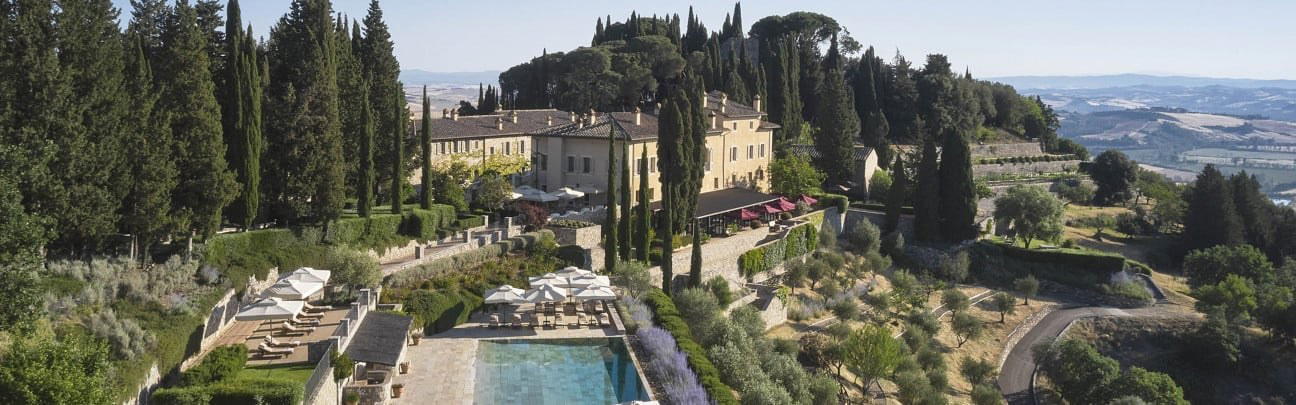
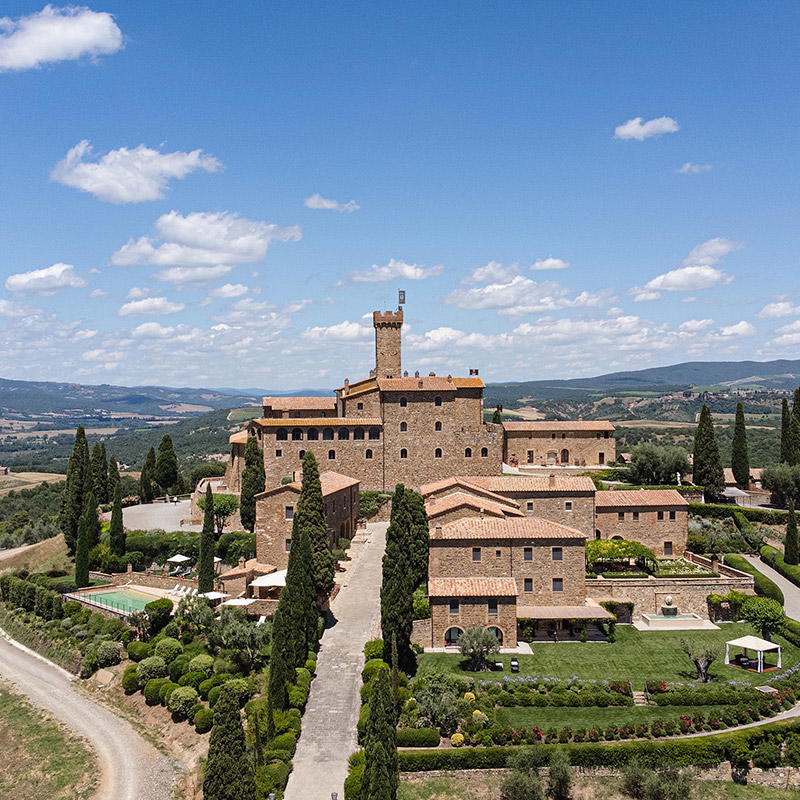
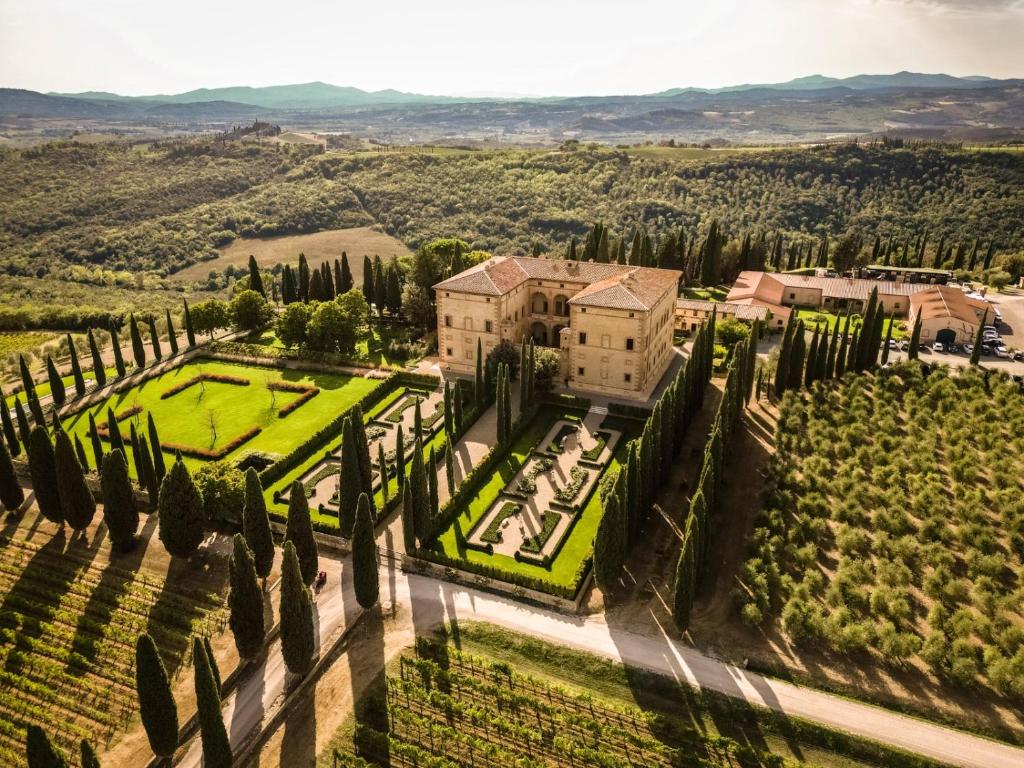
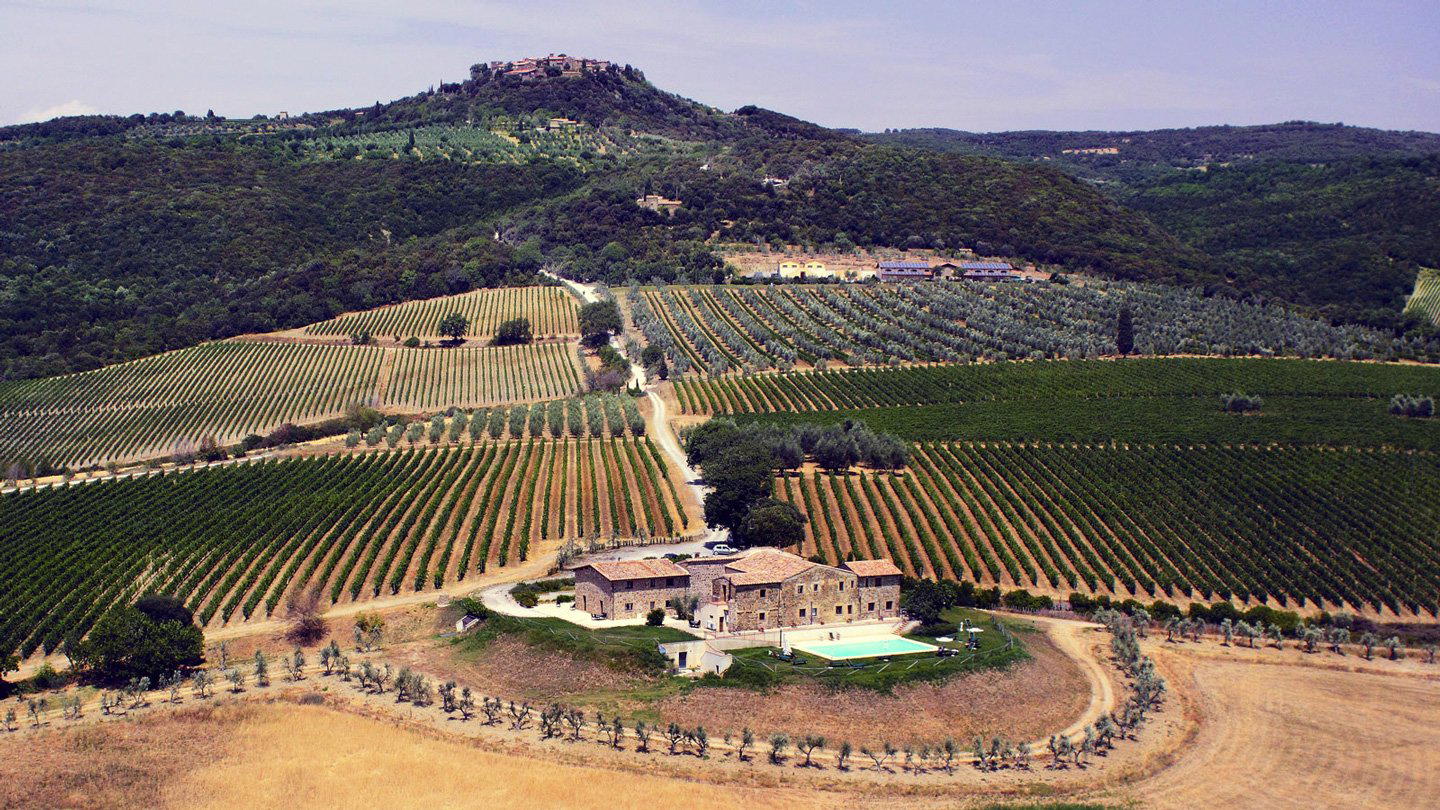
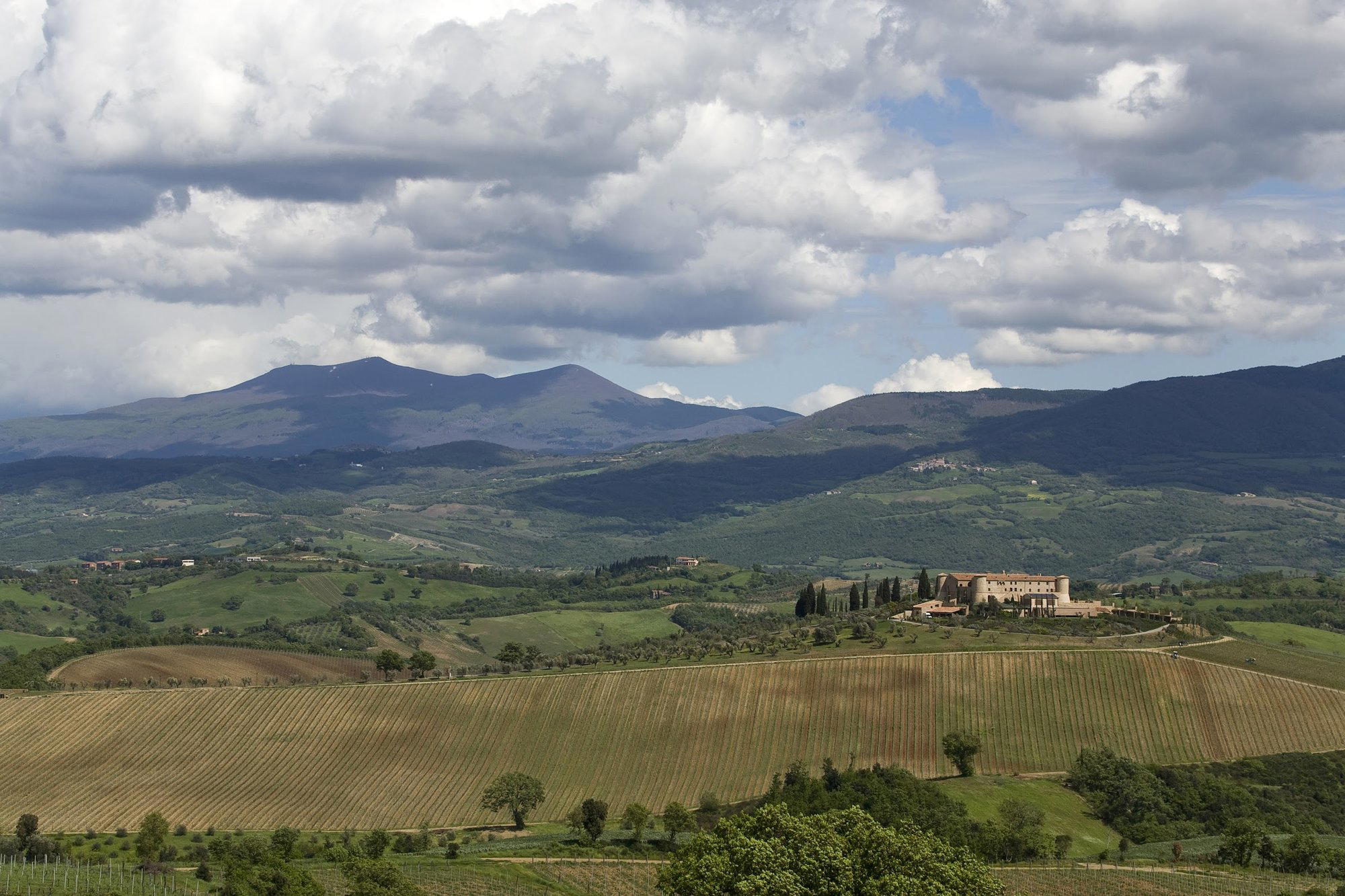
The approach to Castello Banfi sets the terms of the meal before you have touched a menu. Cypress-lined roads give way to medieval stone walls, and the restaurant sits within that structure as an extension of the estate rather than an addition to it. The dining room takes its name, La Sala dei Grappoli, from the painted grapevines on its frescoed walls, and the vine motif functions as an accurate preview: this is a room where wine, land, and cooking are understood as a single argument rather than separate attractions. When weather allows, the outdoor terrace shifts the frame entirely, with views across the estate's vineyards and the wider Val d'Orcia that give the meal a particular spatial clarity. For those planning a visit, see our full Poggio alle Mura restaurants guide for additional context on the dining options in the area.
Where the Menu Sits in the Tuscan Fine-Dining Conversation
Tuscany's upper tier of fine dining has historically been anchored by Florence, with Enoteca Pinchiorri in Florence representing the region's most decorated address at three Michelin stars. The further one moves into the countryside, the smaller and more focused the high-end offer becomes. South of Siena, toward Montalcino and the Maremma coast, the premium dining rooms tend to be attached to agricultural estates, wineries, or historic properties, where the provenance of ingredients forms part of the restaurant's implicit editorial position. La Sala dei Grappoli belongs firmly to that model. Its one Michelin star, awarded in both 2024 and 2025, places it in a cohort that earns its recognition through consistency and regional specificity rather than through the kind of avant-garde technique that drives the rankings at Osteria Francescana in Modena or the multi-starred kitchens of Le Calandre in Rubano and Enrico Bartolini in Milan.
The Opinionated About Dining ranking provides a secondary measure: #182 in Classical Europe in 2025, improving from #176 in 2024, which followed a Highly Recommended listing in 2023. That trajectory is consistent, not explosive, and aligns with what the restaurant appears to be doing, which is deepening an existing position rather than pivoting toward something more provocative. For comparison, restaurants operating at a similar price point and single-star level in comparable rural Italian settings, such as Caino in Montemerano or L'Asinello in Castelnuovo Berardenga, occupy a category that values terroir-led cooking and estate context over spectacle.
Chef Domenico Francone and the Logic of a Southern Italian in Tuscany
The editorial angle assigned to this restaurant by the major guides is creative Tuscan cooking, which is accurate but incomplete without the biographical context. Domenico Francone is from Puglia, the heel of Italy, a region whose cooking vocabulary is distinct from Tuscany in almost every respect: softer durum wheat pastas, raw vegetable preparations, taralli as the default table bread, panzerotti as a fried staple that has no equivalent in the Sienese hills. That Puglian identity does not disappear at the Castello Banfi kitchen door. Francone carries it as a reference point, including taralli and panzerotti on the menu as markers of origin, which is both a personal statement and an editorial choice that gives the meal a texture it would otherwise lack.
More significant culinary argument, though, is what happens to that Puglian sensibility when it engages with Tuscany, specifically the Maremma, the coastal and inland territory that stretches from southern Tuscany into northern Lazio. Maremma cooking is rougher-edged than the Florentine or Sienese traditions, historically associated with cattle herding, game, and a directness that suits the landscape. When a chef trained in the traditions of Puglia works with Maremma ingredients and techniques, the result tends toward a productive collision: neither region's conventions dominate, and the creative space between them becomes the menu's defining register. That interpretive approach, Tuscan classics read through a southern Italian perspective, is what the Michelin inspectors have been awarding with a star for two consecutive years, and what OAD classifies under the Creative Cooking designation in its 2025 assessment.
This cross-regional dynamic in Italian fine dining is not exclusive to Francone. Across Italy, the most interesting single-star kitchens often feature chefs who were trained or born far from the region where they now cook, at places like Quattro Passi in Marina del Cantone, Reale in Castel di Sangro, or Uliassi in Senigallia. The tension between biography and geography tends to produce something more alert than either pure regional cooking or pure technique-forward cuisine. At La Sala dei Grappoli, that tension is the engine.
The Wine Program and Its Estate Context
The wine list here is inseparable from the estate context. Castello Banfi is one of Montalcino's largest and most visible Brunello producers, and the list is weighted accordingly. Brunello di Montalcino is among Italy's most age-worthy red wines, built on Sangiovese Grosso and subject to production regulations that require years of aging before release. Dining inside the estate that produces these wines gives the wine program a directness that no independent restaurant can replicate: the sommelier's recommendations carry the authority of proximity, and the opportunity to drink Brunello at the source, with food designed to complement it, is the strongest practical argument for the restaurant's existence beyond its star. Those interested in exploring the wider wine culture of the area should consult our full Poggio alle Mura wineries guide.
At the €€€€ price point, which places La Sala dei Grappoli in the same tier as three-star rooms including Dal Pescatore in Runate, Atelier Moessmer Norbert Niederkofler in Brunico, Piazza Duomo in Alba, and Casa Perbellini 12 Apostoli in Verona, the wine program is a significant factor in the value calculation. Brunello prices at source are not cheap, but they are typically more accessible here than in Florence or through intermediaries. The sommelier's involvement, noted consistently in the restaurant's assessments, suggests the list is actively managed rather than a static estate catalogue.
Planning a Visit
La Sala dei Grappoli operates Tuesday through Saturday, with service from 7:30 PM to 9 PM; the restaurant is closed on Sundays and Mondays. The address is Castello di Poggio alle Mura, Montalcino, and the approach through the Tuscan countryside is itself part of the experience, though it presupposes a car or private transfer, as public transport to this location is not practical. The terrace is the preferred option in good weather, and given the Montalcino area's warm summers, this means a significant portion of the year from late spring through early autumn offers outdoor dining above the vineyards. Booking in advance is strongly advised given the limited operating windows each week. Those staying in the area or planning a longer visit can reference our full Poggio alle Mura hotels guide, our full Poggio alle Mura bars guide, and our full Poggio alle Mura experiences guide for complementary planning across the territory.
Frequently asked questions
Is La Sala dei Grapoli Michelin-listed?
La Sala dei Grapoli has received recognition including: A beautiful drive through typical picture-postcard Tuscan scenery of vineyards, cypress and olive trees takes you to the imposing medieval Castello Banfi, which stands proudly in front of this restaurant. La Sala dei Grappoli takes its name….
What should I budget for a meal at La Sala dei Grapoli?
Pricing at La Sala dei Grapoli is listed as €€€€.
What are the opening hours for La Sala dei Grapoli?
Hours at La Sala dei Grapoli: Monday closed Tuesday 7:30 PM-9 PM Wednesday 7:30 PM-9 PM Thursday 7:30 PM-9 PM Friday 7:30 PM-9 PM Saturday 7:30 PM-9 PM Sunday closed.
Quick Comparison
| Venue | Cuisine | Price | Awards | Notes |
|---|---|---|---|---|
| La Sala dei GrapoliThis venue (the venue you are viewing) | Modern Tuscan Fine Dining with Puglian Accents | $150–200 | 1 Michelin Star · Relais Chateaux Award | Not listed |
| Atelier Moessmer Norbert Niederkofler | Modern Alpine Fine Dining | $300–500 | 3 Michelin Stars · World's 50 Best #20 | Italian, Creative |
| Dal Pescatore | Classic Italian Fine Dining | $200–300 | 3 Michelin Stars · World's 50 Best #38 | Italian, Italian Contemporary |
| Enoteca Pinchiorri | Contemporary Italian Fine Dining | $200–300 | 3 Michelin Stars · World's 50 Best #32 | Italian - French, Italian Contemporary |
| Enrico Bartolini | Modern Italian Fine Dining | $300–500 | 3 Michelin Stars · World's 50 Best #85 | Creative |
| Osteria Francescana | Avant-Garde Italian Contemporary | $300–500 | 3 Michelin Stars · World's 50 Best #1 | Progressive Italian, Creative |
Recognition history
Dated appearances from independent guides and award organizations, with the underlying list record or original source where available.
Michelin 1 Star
Michelin
Opinionated About Dining Classical in Europe Ranked #182
Opinionated About Dining
Relais Chateaux Award
Relais Chateaux
Full recognition history (7 entries)
Michelin 1 Star
Michelin
Michelin 1 Star
Michelin
Opinionated About Dining Classical in Europe Ranked #176
Opinionated About Dining
Opinionated About Dining Classical in Europe Highly Recommended
Opinionated About Dining
Continue exploring
More in Montalcino
Restaurants in Montalcino
All restaurants in Montalcino →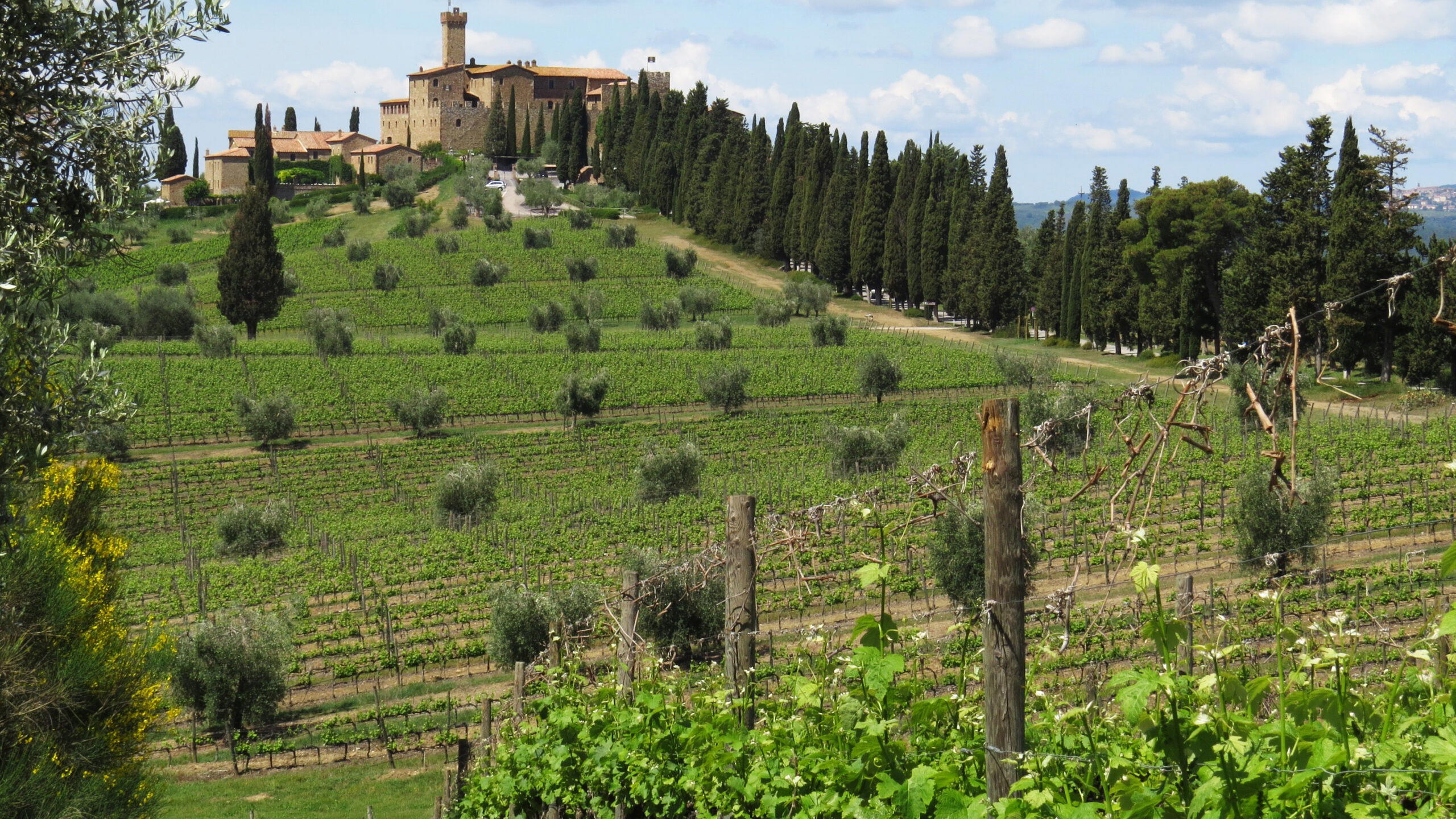
Bars in Montalcino
All bars in Montalcino →
La Sala dei Grapoli
The wine
- Wine program
- Deep wine list
- Extensive wine list
- Sommelier-led
Details
- Elegant
- Romantic
- Sophisticated
- Rustic
- Date Night
- Special Occasion
- Celebration
- Historic Building
- Terrace
- Wine Cellar
- Hotel Restaurant
- Extensive Wine List
- Sommelier Led
- Local Sourcing
- Vineyard
- Garden
- Tasting Menu
- A La Carte
- Banfi Wines
- Vegetarian Friendly
Current opening hours
- Monday
- Closed
- Tuesday
- 7:30–9 PM
- Wednesday
- 7:30–9 PM
- Thursday
- 7:30–9 PM
- Friday
- 7:30–9 PM
- Saturday
- 7:30–9 PM
- Sunday
- Closed
Hours can change for holidays and private events. Hours as of .
Elegant and refined atmosphere in frescoed rooms with a memorable terrace dining experience under historic castle shadows.