
Marqués de Cáceres sits in the heart of Cenicero, one of Rioja Alta's most storied wine communes, where the Ebro valley's clay-limestone soils and Atlantic-influenced climate have shaped Tempranillo-led winemaking for generations. The estate holds a Pearl 3 Star Prestige award (2025), placing it among a select tier of Spanish wine producers recognised for consistent quality. For visitors to La Rioja, it represents a direct encounter with the region's most expressive terroir.
 Discover on Pearl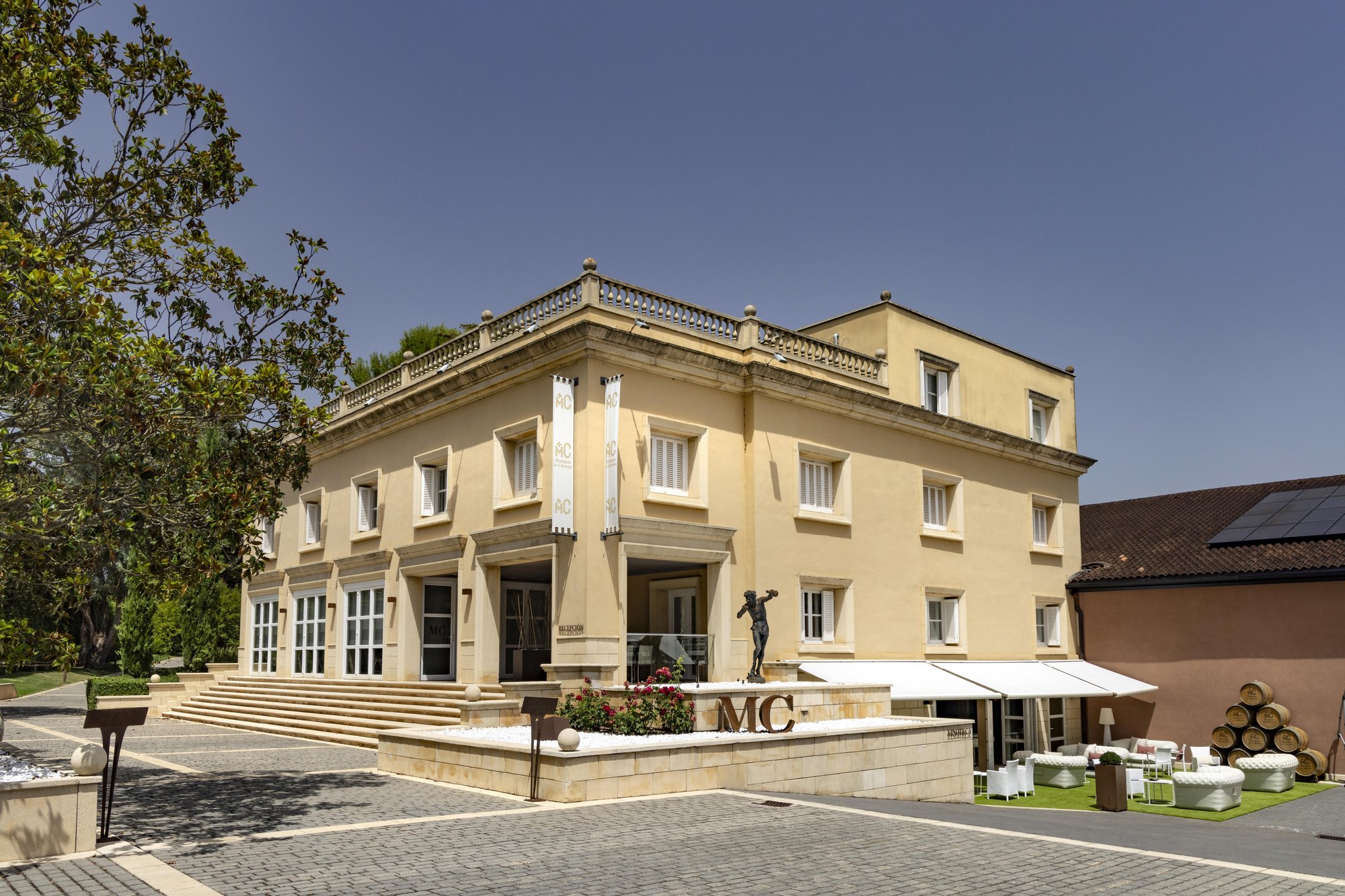
Where the Ebro Valley Speaks Through the Glass
Cenicero sits on a bend of the Ebro in the western reaches of Rioja Alta, and the approach along Avenida Fuenmayor makes the region's agricultural seriousness immediately clear: vineyards press against the town's edge, the alluvial terraces drop toward the river, and the bodegas that line the roads are working buildings, not visitor pavilions dressed up for tourism. This is a commune that has been producing wine for centuries without needing to explain itself. Marqués de Cáceres, at number 11 on that same avenue, is embedded in that tradition rather than standing apart from it.
The physical address matters here in a way it doesn't for wineries operating across scattered parcels in multiple appellations. Cenicero's position in Rioja Alta places it at the intersection of Atlantic and Mediterranean climatic influences, a balance that produces wines with more structural tension than the warmer Rioja Baja to the east. The soils shift across the commune's vineyards from alluvial river terraces to higher-altitude clay-limestone, and that variation is what gives serious Rioja Alta producers their range: fruited but taut reds capable of extended ageing, and whites with genuine freshness in a region more associated with oak-aged Tempranillo.
The Terroir Case for Rioja Alta
Understanding Marqués de Cáceres requires understanding what Cenicero and its surrounding communes contribute to the Rioja denomination at large. Rioja is not a single terroir. It is three sub-zones with meaningfully different climatic signatures, and Rioja Alta, anchored by towns like Cenicero, Haro, and Logroño, has long been treated by critics and collectors as the denomination's most age-worthy source. The Atlantic weather patterns that push in from the Cantabrian coast moderate summer temperatures and extend the growing season, giving Tempranillo the time it needs to develop complexity without losing acidity. For producers working in this western corridor, the argument for terroir expression isn't academic — it shows up in how the wines develop across a decade in bottle.
Producers working from the Rioja Alta subzone operate in a different competitive context than those in Rioja Baja or even Rioja Alavesa. The emphasis here has historically been on structured, oak-influenced reds built for medium to long-term ageing, and the classification system of Crianza, Reserva, and Gran Reserva was largely codified around what Atlantic-influenced Rioja Alta wines could achieve with time. Marqués de Cáceres sits squarely within that tradition, and its 2025 Pearl 3 Star Prestige award is a signal that positions it clearly within the upper register of recognised producers in the denomination. For context on the broader Spanish fine wine scene, comparisons with estates like Abadía Retuerta in Sardón de Duero or Arzuaga Navarro in Quintanilla de Onésimo are useful: those are Ribera del Duero estates operating at a comparable prestige tier, but working with a continental, higher-altitude terroir that produces wines with a different tannin architecture and less of Rioja Alta's characteristic suppleness.
Rioja's Oak Tradition and Where It Stands Today
No honest account of Rioja Alta winemaking can avoid the oak question. The denomination's relationship with American oak, and the gradual shift toward French oak among premium producers over the past three decades, has defined how the region's wines are perceived internationally. The classic profile of American-oak-aged Rioja Reserva — vanilla, dill, dried cherry, with a silky texture that develops over time , remains commercially powerful and critically appreciated when the underlying fruit quality supports the wood. The counter-movement toward French oak has produced wines with tighter grain, more restrained extraction, and a Burgundy-adjacent structure that travels more easily across international markets where that reference point carries weight.
This evolution within the appellation has created a more varied competitive set than existed twenty years ago. Prestige-tier producers now differentiate not just by ageing category but by wood choice, parcel selection, and the relative emphasis on fruit expression versus structural development. Marqués de Cáceres sits in this evolving landscape as a producer with a long-standing market presence and an award profile that confirms its position at the denomination's more recognised end. For reference on Rioja's architectural range, CVNE in Haro and Bodegas Ysios in Laguardia represent adjacent points on the style and quality spectrum , the former with deep Rioja Alta roots in Haro, the latter operating from Rioja Alavesa with a design-led identity that draws a different visitor profile.
Visiting Cenicero and Planning Practically
Cenicero is a working wine town rather than a polished wine tourism hub, and that distinction shapes how a visit should be planned. The town is approximately 30 kilometres west of Logroño along the N-232, making it accessible as a day trip from the regional capital or as a stop on a self-drive route through Rioja Alta's key communes. The most natural pairing is a sweep through the western Rioja Alta corridor that takes in Cenicero, then continues toward Haro, where the cluster of historic bodegas in the Barrio de la Estación represents a different scale of wine heritage. Visitors who prefer structured wine tourism with more visitor infrastructure might also consider Bodegas Protos in Peñafiel or Bodegas Vivanco in Valle de Mena, which offer museum-grade wine culture experiences alongside their production operations.
For those building a longer Iberian wine itinerary, the stylistic contrast with Catalonia's premium producers is worth building in: Clos Mogador in Gratallops offers a Priorat counterpoint to Rioja's Tempranillo-oak tradition, while Codorníu in Sant Sadurní d'Anoia anchors the Cava side of Spanish wine heritage. For a transatlantic comparison at a similar prestige tier, Accendo Cellars in St. Helena represents Napa's allocation-led upper bracket, a useful reference for collectors who move between Spanish and Californian fine wine.
Booking and hours for Marqués de Cáceres should be confirmed directly through the winery before visiting, as premium Rioja producers at this level typically require advance appointments rather than accepting walk-in visits. The most productive visits in Rioja Alta tend to fall in the spring shoulder season (April to June) or post-harvest autumn window (late October to November), when the vineyards are either preparing for or recovering from the harvest cycle and the estate staff are more available for considered tastings.
For a fuller picture of where to eat, drink, and stay while exploring this part of La Rioja, see our full Cenicero restaurants guide, our full Cenicero hotels guide, our full Cenicero bars guide, our full Cenicero wineries guide, and our full Cenicero experiences guide.
Frequently Asked Questions
Peer Set Snapshot
These are the closest comparables we have in our database for quick context.
| Venue | Awards | Notes |
|---|---|---|
| Marqués de Cáceres | Pearl 3 Star Prestige | This venue |
| Abadía Retuerta | 50 Best Vineyards #38 (2025); Pearl 3 Star Prestige | |
| Álvaro Palacios | Pearl 2 Star Prestige | |
| Arzuaga Navarro | 50 Best Vineyards #64 (2025); Pearl 3 Star Prestige | |
| Bodega El Grifo | Pearl 2 Star Prestige | |
| Bodegas Alvear | Pearl 2 Star Prestige |
Access the Cellar?
Our members enjoy exclusive access to private tastings and priority allocations from the world's most sought-after producers.
Get Exclusive Access