Álvaro Palacios

Álvaro Palacios is the Priorat producer whose Gratallops-based operation helped redefine what Spanish wine could mean on the world stage. Working from old-vine Garnacha and Cariñena on the region's distinctive llicorella slate soils, the estate earned EP Club Pearl 2 Star Prestige recognition in 2025 and sits at the upper tier of the Priorat hierarchy alongside a small cohort of allocation-level peers.
 Discover on Pearl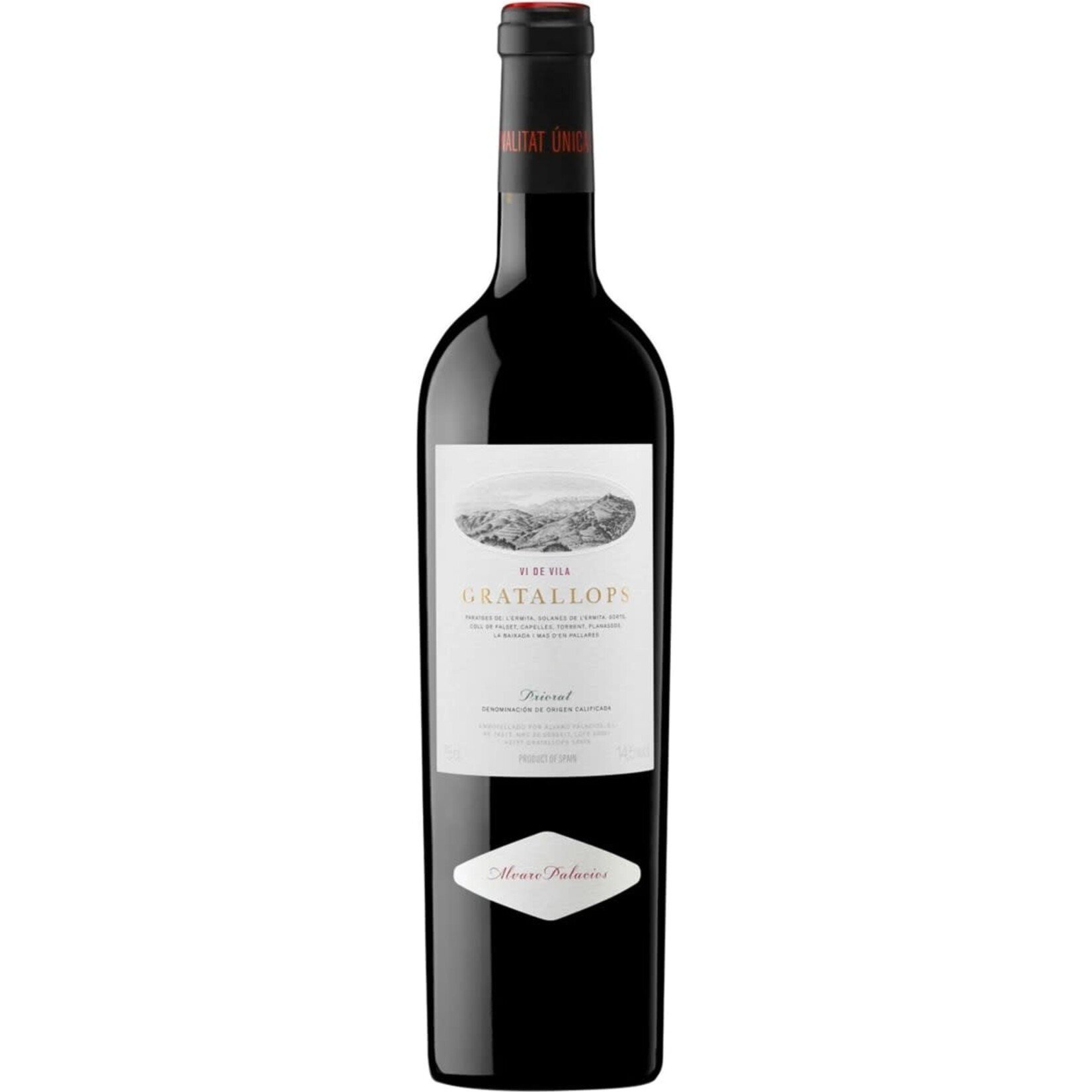
Where Slate Meets Sky: Arriving in Gratallops
The road into Gratallops descends through terraced hillsides that look as though they were carved by someone who had strong opinions about gradient. The village sits at around 400 metres in the inland Priorat comarca of Tarragona, and the first thing you notice approaching it is the colour of the ground: dark grey and fractured, glinting faintly where the light catches it. This is llicorella, the decomposed slate-and-mica schist that defines Priorat's identity more than any single grape variety or winemaking decision. The soils drain fast, force vine roots down to great depths in search of water and minerals, and yield fruit of concentrated intensity at low natural volumes. Álvaro Palacios operates from an address on the village's industrial polygon — a deliberately modest footprint for a producer whose wines occupy a different tier entirely.
Priorat's Position in Spanish Fine Wine
To understand what Álvaro Palacios represents, you need a quick map of Spanish fine wine geography. For most of the twentieth century, Rioja held the dominant position for serious red production, with scattered challengers in Ribera del Duero and a handful of other regions. Priorat was effectively dormant: a remote Catalan appellation with ancient vineyards, pre-phylloxera bush vines, and almost no commercial infrastructure. The revival that began in the late 1980s and accelerated through the 1990s was led by a small group of producers, of which Álvaro Palacios was one of the most consequential. That group's combined effort secured Priorat's DOCa classification in 2009 — one of only two regions in Spain to hold the highest designation alongside Rioja , and placed the appellation in international discussion alongside Burgundy and Napa at auction and on allocation lists.
Today, the region's top tier operates on a different logic from much of Spanish wine. Volume is constrained by the terrain itself: the steep, terraced vineyards cannot be mechanised in any meaningful way, and yields from old-vine Garnacha and Cariñena on llicorella rarely reach the levels achievable in flatter appellations. This structural scarcity, combined with sustained critical attention over three decades, has pushed premier Priorat into allocation and cellar-door models. Álvaro Palacios, holding EP Club's Pearl 2 Star Prestige rating for 2025, sits at the apex of that system.
For broader context on the Spanish winery scene, producers like Abadía Retuerta in Sardón de Duero, Arzuaga Navarro in Quintanilla de Onésimo, and Bodegas Protos in Peñafiel represent the Ribera del Duero and Castilla y León counterparts to Priorat's Catalan model , each anchored in different soil conditions, different grape varieties, and different relationships with tradition. Bodegas Ysios in Laguardia and CVNE (Cune) in Haro mark the Rioja pole of that comparison, while Bodegas Vivanco in Valle de Mena adds the dimension of heritage and museum-scale wine culture. In Catalonia itself, Codorníu in Sant Sadurní d'Anoia operates at a different scale and category entirely, anchoring the region's sparkling tradition.
The Terroir Logic Behind the Wines
Llicorella is not a background detail here. It is the argument. The decomposed slate that covers Priorat's hillsides shares a structural characteristic with soils in a small number of other celebrated wine regions: it imposes stress. Vines planted in it cannot coast. Root systems descend several metres in search of moisture, drawing in trace minerals and developing a depth of root architecture that translates, in the glass, as concentration without heaviness and aromatic complexity that resists simple description. The combination of this soil type with Priorat's continental-Mediterranean climate , hot summers, cold nights at altitude, low rainfall , produces fruit with thick skins, deep colour, and tannin structures that demand time.
Old-vine Garnacha is the primary vehicle for this terroir expression in Priorat's leading wines. Vines that survived the twentieth-century abandonment of the region are now among the most prized assets in Spanish viticulture, some exceeding eighty years in age. Old Garnacha on llicorella produces something substantially different from younger-vine versions of the same variety in warmer, easier soils: lower yields, smaller berries, greater phenolic density, and an aromatic register that shifts toward mineral, iron, and dried herb signatures rather than purely primary fruit. Álvaro Palacios draws directly on this material, and the wines reflect it.
The immediate neighbour in this comparison is Clos Mogador, also based in Gratallops and operating within the same tight peer group of Priorat's founding generation. Where Clos Mogador tends toward a more Burgundy-influenced approach to site specificity, Palacios has built a hierarchy of wines that moves from appellation-level expression up through single-vineyard parcels, each calibrated to show what a particular combination of altitude, aspect, and vine age does to the raw material. The two estates bracket the village's premium identity and collectively represent the strongest argument for Gratallops as Priorat's most consequential single commune.
Gratallops as a Wine Destination
Arriving in Gratallops with the intention of exploring its wine identity requires a different kind of planning than a visit to, say, a Napa estate with a tasting room and a gift shop. The village is small, the road access is narrow, and the serious producers operate on appointment or allocation schedules rather than open-door hospitality models. This is not a drawback: it is a structural feature of the region that reflects genuine scarcity and the realities of small-batch production in difficult terrain. The experience of tasting here, when access is secured, is proportionally different from a volume-market winery visit. The wines are the reason for the journey, not the packaging around them.
For visitors planning around a Priorat trip, practical logistics matter. The nearest major city is Reus, approximately 35 kilometres to the southeast, with rail connections to Barcelona. The drive into the Priorat interior requires confidence on mountain roads, and most serious visits are structured around a stay in or near the appellation rather than a day trip from the coast. Our full Gratallops hotels guide covers the accommodation options in and around the village, while our full Gratallops restaurants guide addresses where to eat after a day in the vineyards. For those who want to extend across the region's other categories, our full Gratallops bars guide, our full Gratallops wineries guide, and our full Gratallops experiences guide provide the full picture.
For those whose wine travel extends beyond Spain, the terroir-expression logic of Priorat finds interesting parallels in regions like Accendo Cellars in St. Helena, where Napa's mountain-site Cabernets operate on a similarly allocation-constrained, site-specific model, and in single-malt Scotch at Aberlour in Aberlour, where the argument about place and process shares structural similarities even across categories.
Planning a Visit: What to Know
Álvaro Palacios is located at Polígono Industrial 6, Parcela 26, 43737 Gratallops, Tarragona. Contact details and booking procedures are not publicly listed in available sources, and the production model is consistent with an appointment-based or allocation-priority access system that is standard at this tier of Priorat producer. The most reliable route to arranging a visit or securing wine is through specialist importers, fine wine merchants who hold the allocation, or direct contact via the physical address. The winery holds EP Club Pearl 2 Star Prestige recognition for 2025, which places it in a peer set where advance planning is not optional but structurally necessary.
Frequently Asked Questions
Peer Set Snapshot
These are the closest comparables we have in our database for quick context.
| Venue | Awards | Notes |
|---|---|---|
| Álvaro Palacios | Pearl 2 Star Prestige | This venue |
| Clos Mogador | Pearl 3 Star Prestige | |
| Abadía Retuerta | 50 Best Vineyards #38 (2025); Pearl 3 Star Prestige | |
| Arzuaga Navarro | 50 Best Vineyards #64 (2025); Pearl 3 Star Prestige | |
| Bodega El Grifo | Pearl 2 Star Prestige | |
| Bodegas Alvear | Pearl 2 Star Prestige |
Access the Cellar?
Our members enjoy exclusive access to private tastings and priority allocations from the world's most sought-after producers.
Get Exclusive Access