One of Mexico's most historically grounded tequila haciendas, Hacienda Corralejo sits in the Bajío heartland of Pénjamo, Guanajuato, where highland agave and a centuries-old production tradition converge. It rewards visitors who arrive with time to understand what the land here actually contributes to the bottle.
Pearl is the En Primeur Club membership app — saves, bookings, and concierge access live there. Same editors, same standards.
- Address
- 36927 Corralejo de Hidalgo, Gto.
- Phone
- +524696964104
- Website
- tequilacorralejo.mx
- Directions
- Get directions
 Saves & bookings on Pearl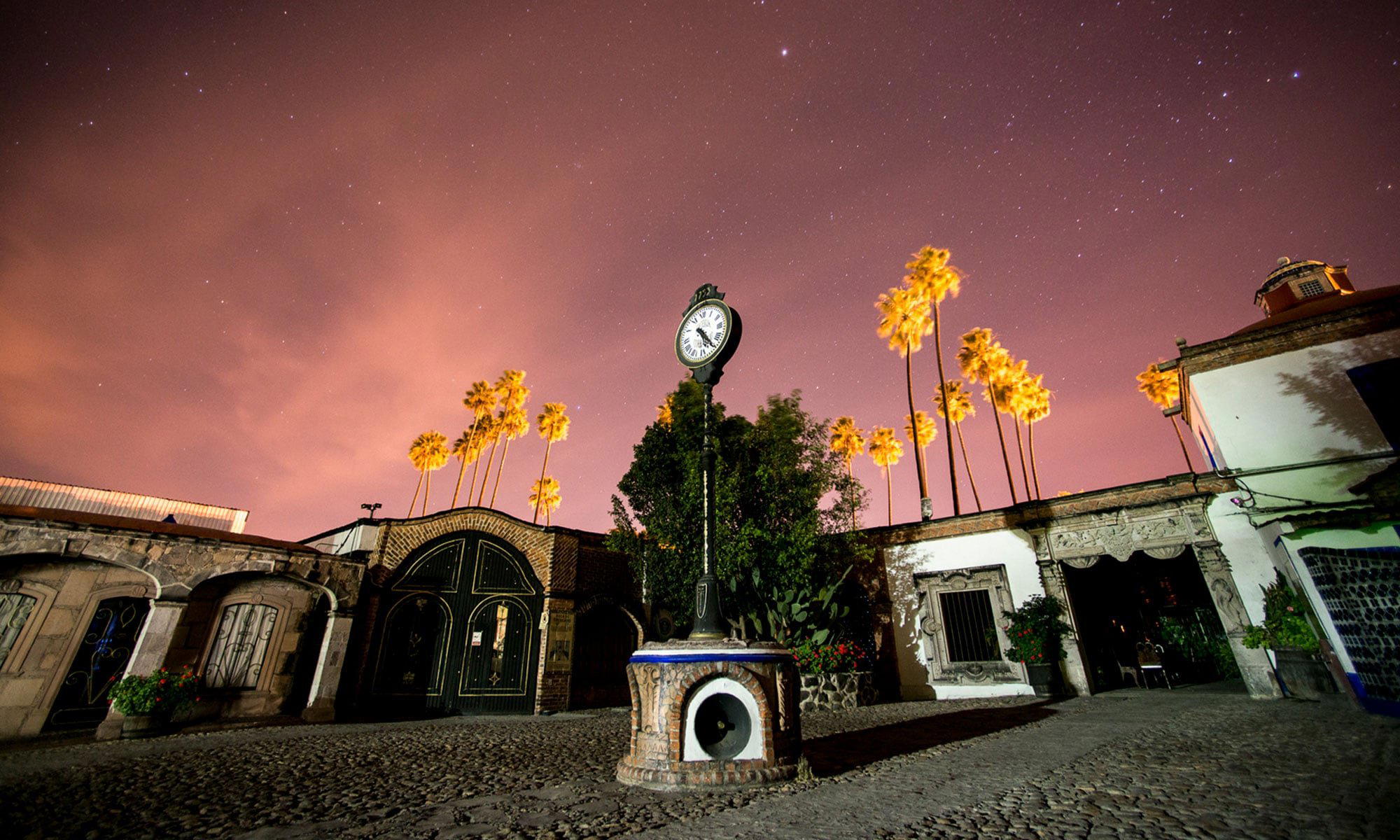
Pénjamo and the Bajío Agave Belt
The tequila conversation in Mexico defaults quickly to Jalisco, and specifically to the volcanic lowlands around the town of Tequila and the highland clay soils of Los Altos. Guanajuato rarely enters that sentence. Yet the state's southern municipalities, particularly the area around Pénjamo, share ecological continuity with the Jalisco highlands: similar elevation, comparable semi-arid conditions, and agave cultivation that predates most of the brand names visitors recognize today. Hacienda Corralejo, addressed on the old road at Corralejo de Hidalgo, is the production center most directly associated with Pénjamo's claim on that tradition.
Understanding what the Bajío contributes to a bottle requires paying attention to the local terroir argument, which is a live debate in Mexican spirits rather than a settled one. The denomination of origin for tequila permits production across a patchwork of states, Jalisco, Guanajuato, Michoacán, Nayarit, and Tamaulipas, but Guanajuato's inclusion is sometimes treated as peripheral. Hacienda Corralejo sits at the center of the counter-argument: that highland Guanajuato soils, the mineral composition and drainage characteristics of the Bajío, produce agave with a distinct aromatic signature worth tracing through to the finished spirit.
The Hacienda as Production Landscape
The physical structure at Corralejo is not incidental to the product. Hacienda-scale tequila production, where the estate encompasses agave fields, ovens, fermentation tanks, distillation columns, and aging cellars within a single architectural compound, represents a different model from the industrial consolidation that defines much of the category's volume output. The hacienda format maintains a tighter connection between raw material origin and finished bottle, and Corralejo's compound in Pénjamo is one of the more intact examples of that model operating in Guanajuato.
The approach here can be read alongside comparable Mexican spirits estates that have built their identity around place rather than scale. Casa Herradura (Hacienda San José del Refugio) in Amatitán offers the clearest parallel in Jalisco: a hacienda-format property where the architectural setting and the production tradition are inseparable from the brand's argument about quality. Both properties make the case that the land around the building is as important as anything happening inside it.
Terroir Expression: What Pénjamo Contributes
Terroir question in tequila is complicated by the fact that most consumers encounter the spirit as a cocktail component rather than a sipping product, which blunts attention to place-specific character. Among the productions that reward closer reading, the distinction between highland and lowland agave is especially documented: highland Weber blue agave tends toward more herbal and floral aromatic profiles, while lowland production runs earthier and more vegetal. Pénjamo sits at an elevation consistent with highland character, and Corralejo's production has historically occupied that aromatic register.
That positioning matters when you map it against the broader Mexican spirits category. The conversation about terroir-driven production is not limited to tequila. In Oaxaca, mezcal producers like Los Danzantes in Santiago Matatlán and Don Amado (Arellanes family) in Santa Catarina Minas have built their reputations on village-specific production and species-specific agave sourcing, making the case that address and altitude determine flavor in ways that brand identity cannot substitute. Tequila's version of that argument is less developed, but estates like Corralejo advance it by keeping the production footprint rooted in a single municipality.
For visitors oriented toward understanding what distinguishes one Mexican spirit from another at the source, the comparison with Jalisco's established names is instructive. Jose Cuervo (La Rojeña) in Tequila and La Primavera (Don Julio) in Atotonilco El Alto operate at dramatically larger scales with different sourcing philosophies. The Corralejo visit offers a different data point: a Guanajuato perspective on the same denomination.
2025 Recognition and What It Signals
The 2025 timing is also relevant context: interest in Mexican spirits tourism has accelerated in the post-pandemic period, with more visitors structuring itineraries around distillery and hacienda visits rather than treating them as secondary to urban tourism. Corralejo's recognition arrives as that category is being more formally mapped.
For visitors planning a spirits-focused Bajío itinerary, that distinction is a useful orientation: this is a property where the production methodology and the terroir argument have earned external validation, not simply a historic building open to walk-ins.
Approaching the Visit
Pénjamo is in the southwestern corner of Guanajuato state, accessible from León (the state's largest city and major air hub) and also reachable from Guadalajara for visitors building a cross-regional Mexican spirits route. The drive from León takes approximately 90 minutes on roads that cut through the flat agricultural stretches of the Bajío before the landscape shifts near the Pénjamo municipality.
The hacienda format rewards unhurried visits. Properties of this type typically involve extended walking through production facilities, aging cellars, and estate grounds, which means allocating at least a half-day is advisable. Morning arrivals generally avoid the midday heat that characterizes the Bajío in late spring and early summer, and the harvest and jimado seasons, when agave is being cut and processed, add a dimension to any visit that photographs and tasting rooms do not replicate.
For visitors extending the itinerary into other Mexican spirits regions, the network of recognized estates covers considerable geographic range. Cazadores Distillery in Arandas and El Pandillo (G4) in Jesús María represent the Los Altos highland tequila tradition in Jalisco. Further south, the Oaxacan mezcal circuit includes Banhez (UPADEC cooperative) in San Miguel Ejutla, Casa Cortés in La Compañía (Ejutla), and El Rey de Matatlán in Tlacolula de Matamoros. Those planning a broader spirits route that extends beyond Mexico can cross-reference with Lágrimas de Dolores (Hacienda Dolores) in Durango for bacanora and sotol context, or look internationally at recognized estate distillers like Aberlour in Scotland for a comparison of how hacienda-scale production maps against the estate distillery model in Scotch whisky. For those who also follow wine, Accendo Cellars in St. Helena and Origen Raíz (Vinata El Ojo) in Nombre de Dios represent the kind of small-production, place-rooted thinking that parallels what Corralejo argues in the tequila category.
Side-by-Side Snapshot
Comparable venues nearby, for context on price, style, and recognition.
| Venue | Cuisine | Price | Notes |
|---|---|---|---|
| Hacienda CorralejoThis venue — the venue you are viewing | Blue Weber Agave | $$ | Not listed |
| El Pandillo (G4) | Blue Weber | $$ | Jesús María |
| Mezcal Unión (bottled of origin) | Winery | Not listed | San Baltazar Guelavila |
| Productos Finos de Agave (NOM 1416) | blue weber agave | $$$ | Jesús María |
| La Perseverancia (Casa Sauza) | Blue Weber Agave | $$ | Tequila |
| Casa Cortés – La Soledad Palenque | Espadín | $$ | La Compañía (Ejutla) |






At a Glance
- Rustic
- Historic
- Scenic
- Group Outing
- Family
- Wine Education
- Historic Building
- Estate Grounds
- Los Altos De Jalisco
- Blue Weber Agave
- Guided Tasting
Warm and welcoming historic hacienda with aromatic cellars evoking cooked agave, surrounded by tall palm trees and colonial architecture.