Casa Cortés – La Soledad Palenque
Casa Cortés – La Soledad Palenque operates out of La Compañía in Oaxaca's Ejutla district, a mezcal-producing zone that sits outside the more-visited Santiago Matatlán corridor.

Pearl is the En Primeur Club membership app — saves, bookings, and concierge access live there. Same editors, same standards.
- Address
- La Compañía (Ejutla), Mexico
- Website
- casacortes.mx
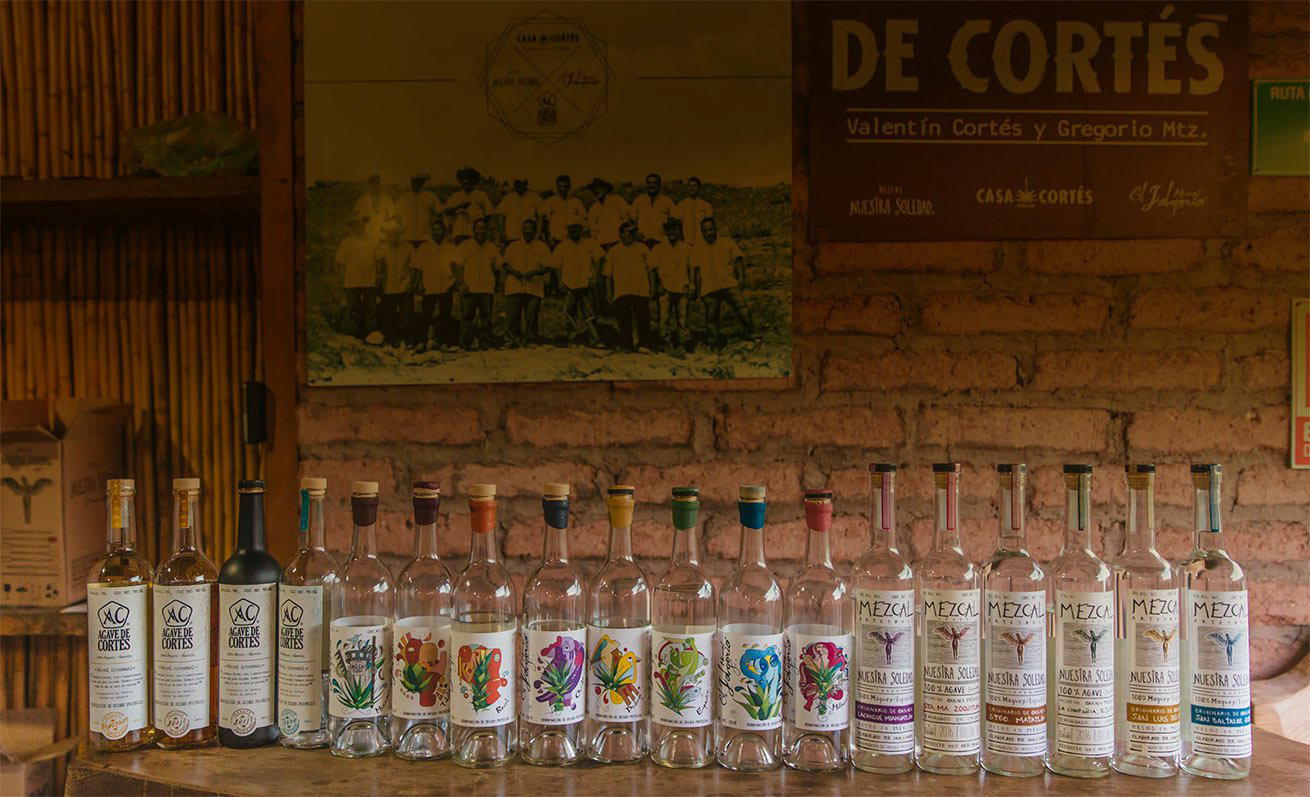
Ejutla's Quieter Valley, Where Agave Grows on Its Own Terms
The Ejutla district occupies a stretch of Oaxacan highland that most spirits tourists pass over in favour of the Matatlán highway. That oversight is partly geographic and partly habitual: the Santiago Matatlán corridor has road signage, tour infrastructure, and decades of export exposure. Ejutla's producers, including the palenques clustered around La Compañía, have developed their reputations through a more selective circuit of importers, specialists, and the kind of traveller who maps their itinerary by agave variety rather than by distillery name recognition.
The terrain around La Compañía sits at an elevation and in a soil composition that differs from the valley floor operations closer to Oaxaca City. Agave grown at these altitudes and in these drier, rockier conditions tends toward longer maturation cycles, producing piñas with concentrated sugars and a distinct mineral character that carries through fermentation and distillation. That relationship between site and spirit is not incidental to what Casa Cortés produces — it is the argument the mezcal makes in the glass.
What a Palenque in This Region Actually Means
Word palenque describes a traditional mezcal production site: an open-air or semi-enclosed operation where roasting, milling, fermentation, and distillation happen through methods with pre-industrial roots. The format contrasts sharply with the modernised distillery model that dominates tequila production in Jalisco, where operations like Jose Cuervo (La Rojeña) in Tequila or La Primavera (Don Julio) in Atotonilco El Alto process volume through industrial continuity. At a palenque, the batch size is small, the equipment is often wood and clay alongside copper, and seasonal variation is absorbed rather than engineered away. The result is mezcal that changes meaningfully across harvests, tied to the specific conditions of a single growing season in a single valley.
For producers like Los Danzantes in Santiago Matatlán, the challenge has been balancing artisanal production identity with enough volume for sustained export presence.
Terroir as the Central Argument
Mezcal's relationship with terroir is more complex than wine's, and more contested. The agave plant is not harvested annually; wild or semi-wild espadín, tobaziche, or other varieties may take eight to twenty years to reach maturation. During that time, the plant's fibre accumulates compounds from its specific microclimate: the soil mineral profile, the rainfall pattern, the temperature differential between day and night, and the bacterial ecology that governs open-air fermentation. Each stage of the palenque process either preserves or transforms those site-specific characteristics.
The roasting of the piña in underground earthen pits, the crushing by stone tahona or wooden mallet, the fermentation in open wooden vats exposed to ambient yeast populations, and the distillation through clay or copper pot stills each contribute to a flavour profile that no two operations produce identically, even when working with the same agave variety in adjacent fields. This is why Oaxacan mezcal cannot be treated as a single category: a spirit from La Compañía in Ejutla and one from El Rey de Matatlán in Tlacolula de Matamoros may share a varietal label but express meaningfully different characters shaped by elevation, water, and production habit.
Awards at this level assess consistency, production integrity, and a demonstrable relationship between origin and outcome — not just marketable packaging or brand narrative.
Oaxacan Mezcal in a Wider Mexican Spirits Context
Oaxaca accounts for the majority of certified mezcal production in Mexico, but the state's producers operate within a national spirits conversation shaped heavily by Jalisco's tequila industry. The contrasts are worth holding in mind. Operations like Casa Herradura in Amatitán or Cazadores Distillery in Arandas work within a tightly regulated appellation built around a single agave species, Weber Azul, and production methods that allow industrial scale. Mezcal's regulatory framework is broader, permitting dozens of agave varieties and a wider range of production methods, which creates space for the kind of micro-site expression that defines the Ejutla palenques.
There are producers outside Oaxaca doing comparable work. Don Amado in Santa Catarina Minas and the Banhez cooperative in San Miguel Ejutla (directly adjacent to the La Compañía zone) represent different structural models for artisanal production, from family operation to cooperative scale. Durango-based Lágrimas de Dolores and Origen Raíz in Nombre de Dios extend that argument further north, demonstrating that terroir-driven agave spirits are not Oaxaca's exclusive territory. But Oaxaca's density of recognised palenques, and the concentration of award-level producers in districts like Ejutla, gives the region a credibility cluster that still defines the category's reference tier for most international buyers.
Planning a Visit to La Compañía
Reaching La Compañía in the Ejutla district requires a deliberate approach rather than a casual detour. The town sits south of Oaxaca City, accessible by road but without the tourism infrastructure that channels visitors toward Matatlán. Most travellers combine Ejutla-area palenque visits with a broader Oaxacan spirits itinerary, allocating a full day given the distances and the time required to engage meaningfully at a small-batch operation. Booking ahead is strongly advised: palenques of this scale and recognition do not maintain walk-in visitor hours equivalent to larger export-oriented operations. Because no booking contact or website is currently listed in public records, reaching Casa Cortés – La Soledad Palenque is leading approached through a specialist Oaxacan mezcal guide or through the importers who carry their spirits, both of whom can facilitate introductions and confirm current visiting arrangements. For a broader orientation to the area before travelling, our full La Compañía (Ejutla) guide covers the regional context in detail.
How It Stacks Up
Comparable venues nearby, for context on price, style, and recognition.
| Venue | Cuisine | Price | Notes |
|---|---|---|---|
| Casa Cortés – La Soledad PalenqueThis venue — the venue you are viewing | Espadín | Not listed | Not listed |
| Macurichos | Winery | Not listed | Santiago Matatlán |
| Mezcal Benevá | Agave Espadín | Not listed | Macuilxóchitl de Artigas Carranza |
| Casa Orendain (La Mexicana) | Blue Weber Agave | Not listed | Tequila |
| Los Javis | Espadin, Arroqueño | Not listed | Santiago Matatlán |
| El Cortijo (palenque) | Espadín, Tobalá | $10–20 | Santiago Matatlán |
Details
- Rustic
- Scenic
- Wine Education
- Solo Exploration
- Vineyard Tour
- Estate Grounds
- Sustainable
- Mountain
- Vineyard
- Espadín
- Palenque Tasting
Rustic rural atmosphere in a hilly mountain setting with open-air production spaces amid dramatic vistas and agave fields.