Domaine Marcel Lapierre

Domaine Marcel Lapierre is one of Beaujolais's most consequential addresses, holding a Pearl 2 Star Prestige rating for 2025 and situated at 588 Rue Rabelais in Villié-Morgon. The domaine sits at the centre of the natural wine movement that reshaped how the world reads Gamay, and its wines remain a reference point for low-intervention winemaking across the appellation.
 Discover on Pearl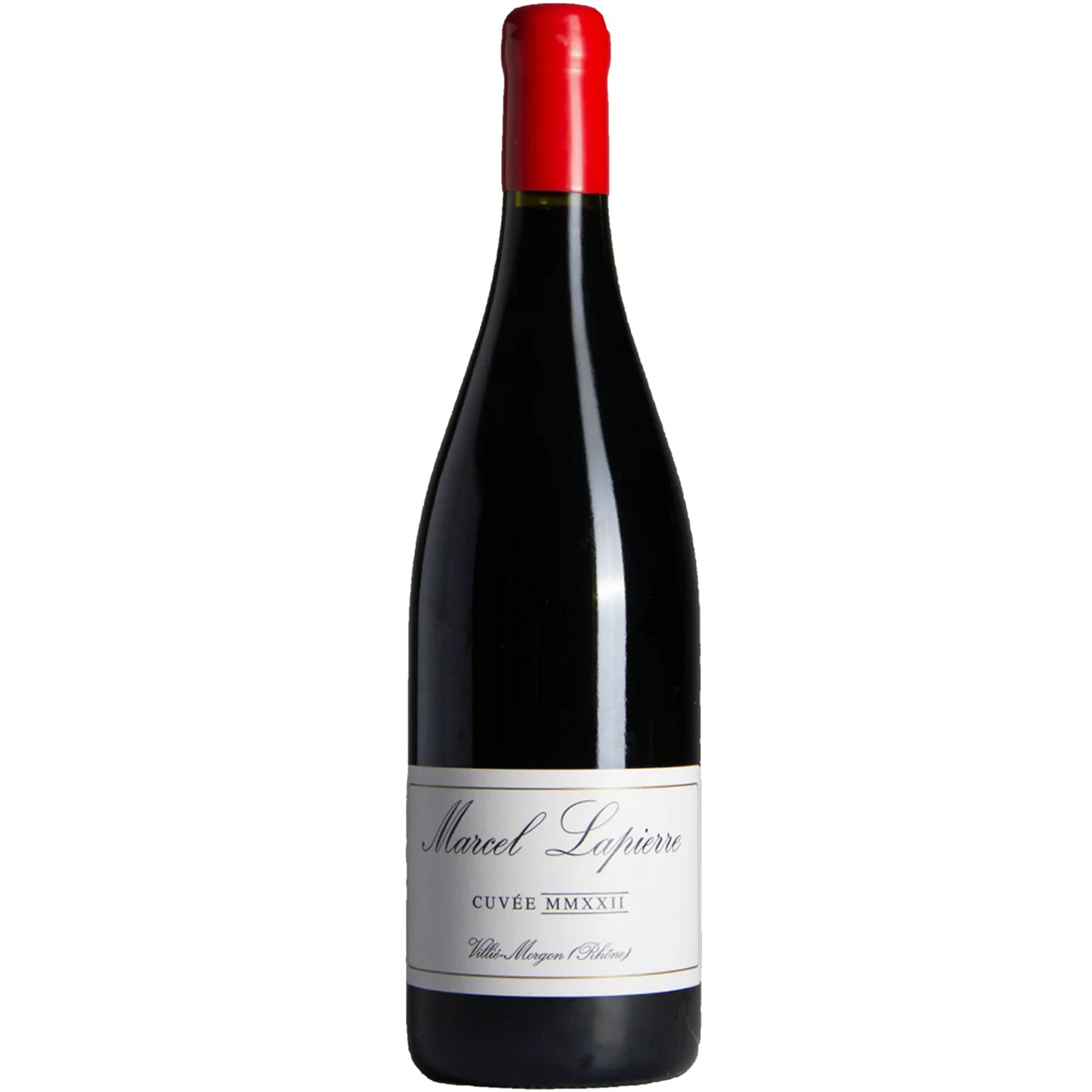
Where Beaujolais Shed Its Reputation
For much of the twentieth century, Beaujolais meant one thing outside France: Nouveau, the third-Thursday release that flooded supermarkets every November and priced the region's serious producers out of the conversation. The correction, when it came, was geological and philosophical in equal measure. Villié-Morgon sits on decomposed granite and schist that produces Gamay of genuine structure, and a small cluster of growers in and around the village decided in the 1980s to treat that terroir with the same rigour applied to the Côte d'Or. The results rewrote the category. Today, Morgon is the cru most discussed in natural wine circles, and Domaine Marcel Lapierre, at 588 Rue Rabelais, holds a Pearl 2 Star Prestige rating for 2025, placing it among the appellation's leading addresses.
The Natural Wine Pivot and What It Meant for Morgon
The shift toward minimal-intervention winemaking in Beaujolais was not a solitary act of rebellion. It grew out of a dialogue between growers, informed by the agronomist Jules Chauvet, who argued that Gamay grown on granite and farmed organically needed almost nothing added or removed in the cellar to express itself fully. Lapierre became one of the most visible practitioners of that approach, and the domaine's trajectory tracks the broader arc of the movement: early scepticism from the trade, gradual critical recognition, then a period in which allocation became the primary constraint rather than quality perception.
That arc matters for understanding where the domaine sits today. Estates working in a similar register — low or zero sulphur additions, native-yeast fermentation, whole-cluster or semi-carbonic maceration — now span multiple appellations and countries. But Villié-Morgon remains the original geography, and producers here, including Domaine Jean Foillard, operate with the accumulated credibility of four decades of documented results. The 2025 Pearl 2 Star Prestige award signals that independent critical assessment continues to confirm the domaine's position at the leading of this peer set.
Gamay on Granite: What the Terroir Does
Morgon's Côte du Py, the hill of blue-purple diorite that defines the appellation's identity, produces wines that behave unlike Gamay grown anywhere else. The mineral substrate slows ripening, retains acidity, and creates the textural density that allows Morgon to age in ways that Beaujolais Villages cannot. Low-intervention winemaking amplifies rather than smooths those characteristics: the wines tend to carry more tannin than conventionally produced Morgon, a wider aromatic register, and an evolution curve that rewards patience. Ten-year-old bottles from serious Morgon producers regularly show more complexity than many Burgundy village wines at the same age, a comparison that continues to reframe collector interest in the appellation.
For context on how this philosophy plays out across different French wine regions, the approach shares DNA with the precision work at Albert Boxler in Niedermorschwihr, where minimal intervention in Alsace expresses terroir with similar directness. The parallel is instructive: in both cases, the winemaker's role is defined more by what they choose not to do than by any elaborate cellar technique.
The Domaine in Its Competitive Set
Villié-Morgon's leading producers compete in a different market from the broader Beaujolais trade. Allocation lists, not retail availability, govern access to the most sought-after bottlings. Prices have moved significantly upward over the past decade, driven by demand from natural wine retailers in Paris, London, New York, and Tokyo, as well as from collectors who track cru Beaujolais alongside premier cru Burgundy. The Pearl 2 Star Prestige rating positions Lapierre in the upper tier of this peer set, alongside a small number of domaines that consistently attract international press and trade attention.
Comparing across categories, the pricing dynamic at this level resembles what happens at prestige-tier addresses in other French regions: Château Branaire Ducru in St-Julien and Château Batailley in Pauillac operate in comparable award tiers where reputation has compressed available inventory relative to demand. The mechanics differ, but the allocation pressure is structurally similar.
Visiting Villié-Morgon
The village sits in the southern Beaujolais, roughly fifty kilometres north of Lyon, accessible by road through a range of low hills and vine-covered slopes. The region rewards a slower approach: the cluster of serious producers within a short drive of each other makes Villié-Morgon a logical base for a focused two or three-day visit during harvest season, typically late September into October, when the cellars are active and the countryside is at its most legible as a wine-producing place.
Accommodation in the village itself is limited, though options expand in surrounding communes. Our full Villié-Morgon hotels guide covers the current available options at different price points. For eating and drinking around the visit, our full Villié-Morgon restaurants guide and our full Villié-Morgon bars guide map the local options. Those planning a broader regional itinerary can build out the trip using our full Villié-Morgon wineries guide and our full Villié-Morgon experiences guide.
The domaine's address is 588 Rue Rabelais. No website or phone contact appears in current records, and visit arrangements are leading pursued through specialist wine retailers or négociants who maintain a relationship with the estate. Arriving without prior contact is unlikely to result in a formal tasting. This is not unusual for Morgon's leading producers: demand has made informal walk-in visits uncommon at addresses of this calibre.
The Wider Context of Prestige-Tier Natural Wine
The category of prestige natural wine has grown complex enough that simply referencing low-intervention practices no longer signals much. What distinguishes the upper tier is documented consistency across vintages, including difficult years, combined with a terroir base that generates wines capable of ageing and developing. Lapierre's Pearl 2 Star Prestige recognition reflects that accumulated track record. The most instructive comparison is not with other natural wine producers per se, but with prestige-tier addresses in other regions where terroir specificity and minimal intervention combine to produce wines that age well: Château Bélair-Monange in Saint-Emilion operates at a similar award tier from a structurally different tradition, while Château Boyd-Cantenac in Cantenac and Château Bastor-Lamontagne in Preignac represent the Bordeaux end of that prestige spectrum. Further afield, Abadía Retuerta in Sardón de Duero and Aberlour in Aberlour show how 2025 Pearl-level recognition spans categories and geographies, reinforcing the award's cross-category credibility.
What Morgon adds to that conversation is the specific argument that Gamay, properly farmed and minimally processed, belongs in the same bracket as the classic appellations. Lapierre has been making that argument in bottle for four decades. The 2025 award suggests the argument has been settled.
Planning Your Visit
The domaine operates at 588 Rue Rabelais, Villié-Morgon, 69910. Visit enquiries are leading directed through specialist importers or established wine retailers with direct importer relationships, as no public booking channel is currently listed. Timing the visit to late September or October aligns with harvest activity across the appellation and gives the clearest picture of how the region works as a producing area. Those travelling from Lyon should allow approximately one hour by road. Villié-Morgon's other leading producers are within a few kilometres, making single-day multi-domaine visits direct if arranged in advance.
Frequently Asked Questions
- What is the signature bottle at Domaine Marcel Lapierre?
- The domaine's reference wine is its Morgon, produced from Gamay grown on the volcanic granite and schist soils of the Villié-Morgon appellation. The wine is made with native yeasts and minimal sulphur additions, following the approach associated with the natural wine movement in Beaujolais. The 2025 Pearl 2 Star Prestige recognition reflects the track record of this bottling across multiple vintages. Access is primarily through allocation lists maintained by specialist importers rather than general retail.
- What is Domaine Marcel Lapierre leading at?
- The domaine's core strength is terroir-expressive Gamay from Morgon, the Beaujolais cru with the most documented ageing potential among the ten. The Pearl 2 Star Prestige award for 2025 positions it at the upper end of Villié-Morgon's competitive set. The wines are particularly well regarded in the context of natural wine collecting, where Lapierre is considered a foundational reference rather than a recent entrant.
- Is Domaine Marcel Lapierre reservation-only?
- No public website or phone number is listed for the domaine, which is consistent with how many of Villié-Morgon's leading producers operate at this level. If a visit is important to your itinerary, approach through a specialist wine retailer or importer with a confirmed relationship with the estate. Walk-in visits are unlikely to result in a formal tasting at a Pearl 2 Star Prestige address of this profile.
- What is Domaine Marcel Lapierre a good pick for?
- The domaine is a strong reference point for anyone focused on Beaujolais cru at prestige level, particularly collectors building a natural wine portfolio or those interested in how Gamay performs with age. Its location in Villié-Morgon makes it a logical anchor for a Morgon-focused visit, especially combined with nearby peers such as Domaine Jean Foillard. The 2025 Pearl 2 Star Prestige award provides independent confirmation of the domaine's position in its peer set.
- How does Domaine Marcel Lapierre relate to the broader history of natural wine in France?
- The domaine is widely cited as one of the estates that gave practical form to Jules Chauvet's theories on low-intervention winemaking in the 1980s, making it a historically significant address in the natural wine movement rather than a later adopter. That early positioning explains why it appears regularly in critical histories of the movement alongside producers from other French regions. The Pearl 2 Star Prestige recognition for 2025 reflects not just current quality but four decades of accumulated track record in Villié-Morgon, one of Beaujolais's most geologically specific crus.
Peer Set Snapshot
These are the closest comparables we have in our database for quick context.
| Venue | Awards | Notes |
|---|---|---|
| Domaine Marcel Lapierre | Pearl 2 Star Prestige | This venue |
| Domaine Jean Foillard | Pearl 2 Star Prestige | |
| Château Smith Haut Lafitte | 50 Best Vineyards #5 (2025); Pearl 4 Star Prestige | Fabien Teitgen, Est. 1365, 8,000 cases, Cru Classes de Graves |
| Ruinart | 50 Best Vineyards #8 (2025); Pearl 4 Star Prestige | Frédéric Panaïotis, Est. 1729, 1.7 million bottles, Premier Cru |
| Château d'Yquem | 50 Best Vineyards #9 (2025); Pearl 5 Star Prestige | Sandrine Garbay, 5,000 cases, Premier Cru |
| Château Pape Clement | 50 Best Vineyards #27 (2025); Pearl 4 Star Prestige | Jean-Philippe Fort (consultant), 7,500 cases, Cru Classes de Graves |
Access the Cellar?
Our members enjoy exclusive access to private tastings and priority allocations from the world's most sought-after producers.
Get Exclusive Access