
Château d'Arche holds a Second Growth classification within Sauternes and carries EP Club's Pearl 3 Star Prestige rating for 2025. The estate sits in one of Bordeaux's most precisely defined sweet-wine appellations, where morning mists off the Ciron river create the conditions for botrytis cinerea to work its slow, selective transformation on Sémillon and Sauvignon Blanc. For those tracing the terroir of classic Sauternes, it belongs firmly on the itinerary.
 Discover on Pearl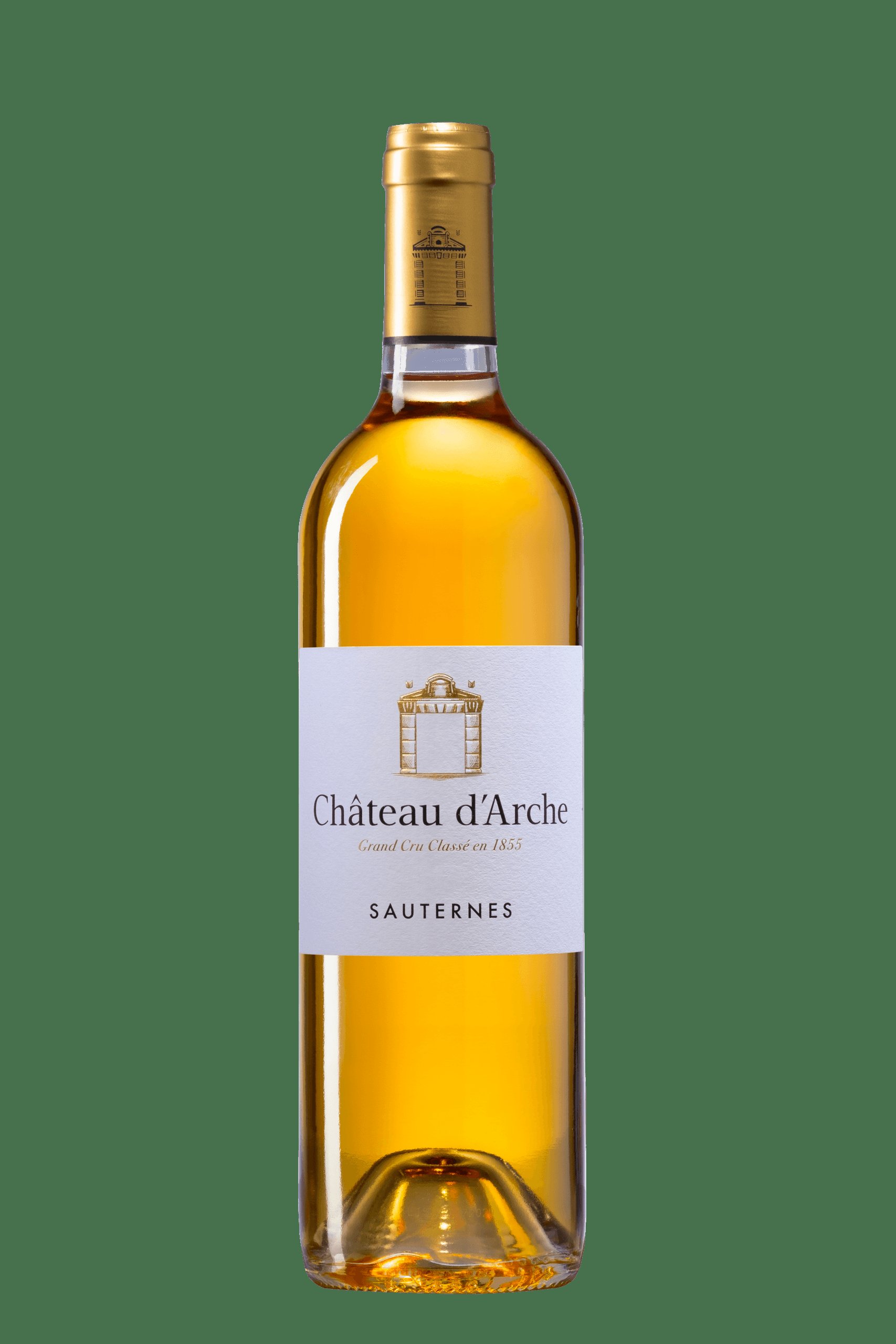
What Sauternes Actually Means Before You Arrive
The village of Sauternes sits roughly 40 kilometres southeast of Bordeaux, in a pocket of Graves where a small tributary called the Ciron meets the Garonne. That confluence matters more than any winery building or classified label: when the cooler Ciron water meets the warmer Garonne in autumn, morning fog rolls reliably across the vineyards, retreating by afternoon to leave warm, dry conditions. The cycle creates the humidity needed for Botrytis cinerea, the noble rot that concentrates sugars, acids, and glycerol inside individual grapes. Without it, there is no Sauternes of consequence. Every serious estate in the appellation, including Château d'Arche, is fundamentally a bet on the reliability of that fog. In poor years, the fog fails to appear, the botrytis does not develop, and the wine suffers accordingly. The appellation's character is inseparable from that meteorological dependence.
Understanding this before visiting changes how you read the wines. A Sauternes that shows deep amber colour, viscous texture, and layered sweetness balanced by bright acidity is not a winemaker's invention. It is the product of soil, climate, and the patience required to harvest in successive tries, picking only the botrytised berries and returning through the vineyard multiple times across weeks. Most Sauternes estates will produce between one and four passes per vintage, and in difficult years the number of tries can contract dramatically.
Château d'Arche Within the 1855 Hierarchy
The 1855 Classification of Sauternes and Barsac divided the appellation into three tiers: Château d'Yquem at the apex as Premier Cru Supérieur, eleven Premier Crus, and fifteen Deuxièmes Crus. Château d'Arche holds a Second Growth classification, placing it in the third tier by name but in the upper portion of the appellation by historical standing. The classification has remained unchanged since its original establishment, which means it reflects nineteenth-century reputation rather than current performance, a caveat worth keeping in mind when comparing estates across vintages.
The Second Growth tier in Sauternes is more competitive than it might appear on paper. Estates like Château Filhot and Château Guiraud (the latter a Premier Cru) operate in adjacent price and quality ranges, and serious tasters regularly reassess the relative standing of estates through blind comparison. Château d'Arche's EP Club Pearl 3 Star Prestige rating for 2025 positions it among the top tier of recognised estates in the EP Club framework, a signal that current production quality is being taken seriously beyond its classified rank.
For context outside Sauternes, the question of classification versus current quality plays out similarly at estates in Pauillac. Château Duhart-Milon occupies a Fourth Growth position on the Médoc classification, yet its proximity to Lafite Rothschild and the quality of its recent releases means it is evaluated against a peer set that the 1855 numbering does not quite capture. Château d'Arche faces an analogous situation in Sauternes: its Second Growth designation sets the baseline, but the wine itself earns the comparison.
The Terroir at Work in the Vineyard
Sauternes soils are not uniform. The appellation covers five communes, each with slightly different subsoil compositions ranging from clay-gravel mixes to sandy, well-drained ground over limestone. Sémillon dominates plantings across all estates, typically comprising between 70 and 85 percent of blends, because it is particularly susceptible to botrytis and carries the fat texture that defines the style. Sauvignon Blanc is retained in smaller proportions for its acidity and aromatic lift. Muscadelle, where it appears, adds a distinctive floral note but rarely constitutes more than a few percent of any blend.
The botrytis transformation itself is chemically precise: the fungus perforates grape skins, causing water to evaporate and concentrating sugars, tartaric and gluconic acids, and aromatic compounds that do not exist in the same form in unaffected fruit. The resulting must is high in residual sugar but also carries the high acidity that prevents the wine from tasting merely sweet. Wines like those from Château d'Arche aim to hold that balance, where the sweetness and the acid are roughly matched in weight so neither overwhelms the other. Vintages where the botrytis develops unevenly, producing patches of over-rotted or under-affected grapes, tend to yield wines that lack that equilibrium.
For those interested in how similar terroir-driven precision operates in other French appellations, Albert Boxler in Niedermorschwihr provides an instructive Alsatian parallel, where soil parcels within a single village produce wines of notably different character. The principle that soil variation within a small geographic zone produces legible differences in wine is as applicable in Sauternes as in Alsace.
Approaching the Estate and Planning a Visit
Sauternes is compact. The village itself and the cluster of classified estates around it can be covered in a single day from Bordeaux, though the depth of tasting and the pace of the appellation reward at least an overnight stay. Our full Sauternes hotels guide covers lodging options in and around the village. For dining, our full Sauternes restaurants guide maps the options within the appellation, including tables where Sauternes by the glass receives the attention it deserves alongside food pairing rooted in local produce. The historic pairing of Sauternes with foie gras and Roquefort remains the reference point, though kitchens in the region have broadened the conversation considerably.
Visiting the broader Sauternes winery circuit makes sense given the concentration of classified estates in a small area. Our full Sauternes wineries guide provides a structured overview. Nearby Château Bastor-Lamontagne in Preignac is another reference point for the style of the appellation's outer communes. For those extending a trip south or east, Abadía Retuerta in Sardón de Duero offers an instructive contrast in how estate-scale viticulture translates in a completely different climate and tradition.
Autumn is the logical season to visit. The harvest period, which runs from September through October and sometimes into November, is when the estate is most active and when the fog patterns that define the vintage are most visible. Spring visits are quieter, with the previous vintage already in barrel and the new growing cycle beginning. If you are building a longer itinerary around the vineyards of southwest France, our full Sauternes experiences guide and our full Sauternes bars guide round out the picture beyond the tasting room. For contrast with Bordeaux's red wine strongholds, Château Batailley in Pauillac represents the appellation's Cabernet-dominant identity, a useful reminder of how different the two traditions are even within the same regional classification system.
Further afield, those drawn to the idea of place-specific production from heritage estates may find the contrast with Chartreuse in Voiron or Aberlour in Aberlour useful. Both are expressions of how geography and process can be inseparable from a product's identity, which is the same argument Sauternes makes on its own terms.
What the Pearl 3 Star Prestige Rating Signals
EP Club's Pearl 3 Star Prestige award for 2025 places Château d'Arche among the estates within the EP Club framework that have demonstrated consistent quality at a level meriting active recommendation. In a small appellation where the gap between a strong vintage and a weak one can be considerable, sustained recognition across assessments is a more reliable signal than performance in any single year. The rating invites comparison with peer estates in the appellation and beyond, placing Château d'Arche in a tier where quality expectation is high and where a visit or a purchase carries a reasonable basis for confidence.
Frequently Asked Questions
Peer Set Snapshot
These are the closest comparables we have in our database for quick context.
| Venue | Awards | Notes |
|---|---|---|
| Château d’Arche | Pearl 3 Star Prestige | This venue |
| Château d'Yquem | 50 Best Vineyards #9 (2025); Pearl 5 Star Prestige | Sandrine Garbay, 5,000 cases, Premier Cru |
| Château Duhart-Milon | Pearl 3 Star Prestige | Oenologist Eric Kohler, Est. 1776 |
| Château Filhot | Pearl 4 Star Prestige | Gabriel de Vaucelles, Est. 1779 |
| Château Guiraud | Pearl 4 Star Prestige | Luc Planty, Est. 1771 |
| Château Smith Haut Lafitte | 50 Best Vineyards #5 (2025); Pearl 4 Star Prestige | Fabien Teitgen, Est. 1365, 8,000 cases, Cru Classes de Graves |
Access the Cellar?
Our members enjoy exclusive access to private tastings and priority allocations from the world's most sought-after producers.
Get Exclusive Access