
Château Trotanoy is among Pomerol's most respected addresses, carrying a 2025 Pearl 3 Star Prestige award and a winemaking lineage shaped by Jean-Claude Berrouet during his long tenure at the estate. Sitting on the plateau's iron-rich clay soils, it represents the appellation's gravitational pull toward concentration, structure, and age-worthiness in a glass that rarely announces itself early.
 Discover on Pearl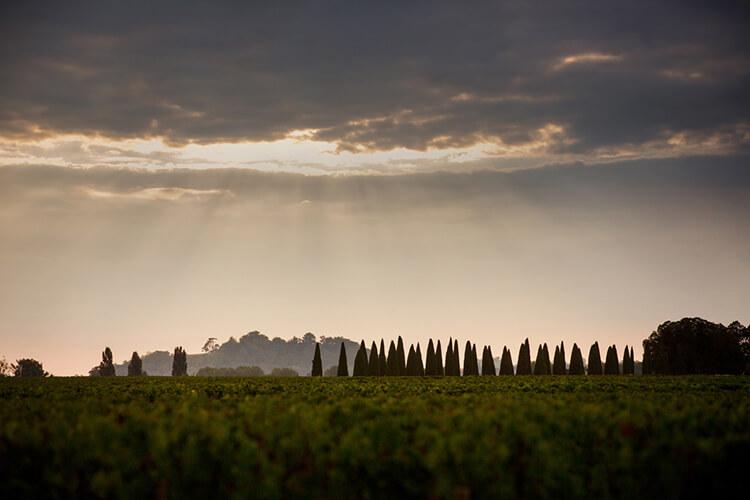
Pomerol's Quiet Plateau and What It Produces
The road into Pomerol offers little ceremony. There are no grand gates, no château silhouette visible from a distance, no visitor infrastructure to signal that you are approaching one of Bordeaux's most tightly held appellations. What the plateau does have is soil: a specific band of clay mixed with iron-rich gravel, locally called crasse de fer, that sits beneath a thin topsoil and drains unevenly, creating pockets of stress and concentration in the vine roots that push down into it. This is the physical fact that organises the entire appellation's hierarchy, and Château Trotanoy sits on a particularly privileged section of that clay band, on the western part of the plateau where the drainage is slower and the vine age is high. The wine that results is not built for immediate pleasure. It is built for the cellar, and understanding that shapes every decision about how and when you engage with it.
Where Trotanoy Sits in the Pomerol Hierarchy
Pomerol has no official classification. Unlike the Médoc's 1855 hierarchy or Saint-Émilion's periodically revised system, the appellation has always ranked itself through reputation and price, which means the tier in which a wine sits is determined entirely by secondary market behaviour and critical consensus over decades. Château Trotanoy occupies the second rank in that informal structure: below Château Pétrus, which operates in a category largely of its own given its price and allocation model, but clearly above the appellation's broader mid-tier. It competes for attention and cellar space with estates like Château L'Eglise Clinet and Château Clinet, both of which draw from similarly serious terroir and carry comparable critical standing. Château Gazin and Château Le Gay round out the broader conversation around plateau-positioned estates with established track records.
The shortlist, unlocked.
Hard-to-book tables, cellar releases, and concierge-planned trips.
Get Exclusive Access →Trotanoy's 2025 Pearl 3 Star Prestige award from EP Club places it in the platform's uppermost recognition tier, a designation that reflects both terroir quality and the estate's documented history of producing wines that develop compelling complexity over a decade or more in bottle. That award functions as a verifiable anchor in any peer-set comparison: the estate is not merely respected within Pomerol but rated against international reference points.
The Ritual of Drinking Trotanoy: Patience as Method
There is a specific discipline involved in drinking wines from this part of Pomerol's plateau, and Trotanoy illustrates it clearly. The estate's wines are built on Merlot, as the appellation dictates, but the clay component in the soil produces a density and tannic grip that separates plateau wines from their sandier neighbours to the south. A young Trotanoy from a structured vintage will often close in on itself in the first five to eight years, offering little of what it will eventually become. This is not a flaw; it is the wine communicating its timeline.
The ritual of engaging with a bottle like this begins well before the cork is pulled. The decision of when to open it matters as much as what you pour it with. Serious collectors working with plateau Pomerol tend to double-decant bottles from strong vintages, pouring the wine into a carafe and then back into the original bottle, aerating without over-exposing. For older vintages, a standing period of twenty-four to forty-eight hours may serve better than aggressive decanting. These are the habits that distinguish the culture around this type of wine from more accessible Bordeaux formats, and they speak to a broader truth about the appellation: drinking it well requires knowledge and preparation that the wine itself rewards.
Winemaking at Trotanoy was shaped for many years by Jean-Claude Berrouet, whose emeritus status at the estate reflects a career that tracked the modern history of serious Pomerol winemaking. His approach, documented across decades of critical observation, was notable for restraint in extraction and a preference for allowing the plateau terroir to express itself without heavy intervention. That philosophical orientation is consistent with a wider movement visible across comparable estates: the recognition that Pomerol's clay soils do not require muscular winemaking to produce concentrated wine, and that overworking them produces a sameness that the leading estates avoid.
Accessing Trotanoy: The En Primeur Route and Allocation Reality
Château Trotanoy is not a wine you walk in and purchase. The estate produces a limited volume from its relatively small Pomerol holding, and distribution follows the Bordeaux négociant system, meaning allocation moves through the Place de Bordeaux to merchants worldwide. The primary route for acquiring current vintages at release price is the en primeur campaign, where futures are offered in the spring following harvest. Releases at this level attract attention quickly, and the gap between release allocation and secondary market pricing for strong vintages can be significant.
For those planning a visit to the region, Pomerol offers no formal appellation visitor route of the kind found in more tourism-oriented parts of Bordeaux. Visits to estates at Trotanoy's level are arranged through négociants and are not walk-in affairs. For broader regional orientation while in the area, our full Pomerol wineries guide maps the appellation's key addresses and the practical logistics of accessing them. Those planning a longer stay should also consult our full Pomerol restaurants guide, our full Pomerol hotels guide, and our full Pomerol bars guide for the surrounding area. For curated activities in the region, our full Pomerol experiences guide covers the options worth considering.
Trotanoy in Broader Wine Context
Comparing Pomerol's plateau estates to wine culture elsewhere points up how singular the appellation is. The intense soil specificity that defines Trotanoy's position has more in common with Burgundy's premier cru and grand cru site-mapping than with most of Bordeaux's château-centred classification logic. Estates elsewhere that share something of this terroir-first identity include Albert Boxler in Niedermorschwihr, where Alsatian grand cru parcels define the house hierarchy, and Château Bastor-Lamontagne in Preignac, which demonstrates how Bordeaux terroir logic applies across different appellations and styles. For contrast with non-French wine traditions, Abadía Retuerta in Sardón de Duero illustrates how a single estate can build a quality reputation through a comparable focus on site and restraint, while Aberlour in Aberlour and Chartreuse in Voiron represent altogether different traditions of time and patience in production that collectors with broad interests tend to appreciate alongside aged Bordeaux.
Planning Your Engagement with Trotanoy
Whether you are acquiring through en primeur, sourcing from a merchant's back catalogue, or simply building knowledge ahead of a tasting, the practical frame for Trotanoy is the same: this is a wine that rewards research, patience, and access to reliable allocation channels. The estate does not maintain a public-facing booking or visitor infrastructure; engagement happens through the trade. For those building a broader trip around Pomerol and the surrounding Right Bank, the appellation sits within easy reach of Libourne, which serves as the practical logistics hub for the area. Timing a visit around the en primeur week in spring, typically April, is the most efficient way to combine vineyard access with merchant tastings, though even then, direct access to estates at Trotanoy's level requires prior arrangement through the Bordeaux trade.
Frequently Asked Questions
- What is the signature bottle at Château Trotanoy?
- Château Trotanoy's principal wine is simply labelled under the château name and is drawn from the estate's clay-rich plateau soils in Pomerol. It is a Merlot-dominant blend in line with appellation norms, shaped during much of its modern history by Jean-Claude Berrouet (emeritus), and carries a 2025 Pearl 3 Star Prestige rating from EP Club. The estate does not, as a general rule, produce a widely distributed second wine, meaning the main label represents the full expression of the terroir in any given vintage.
- What is the main draw of Château Trotanoy?
- The draw is the combination of plateau terroir and a decades-long track record of producing structured, age-worthy Pomerol at a tier below Pétrus but firmly above the appellation's mid-range. Its 2025 Pearl 3 Star Prestige award reflects that sustained standing. For collectors, the wine represents an entry into serious Right Bank Bordeaux with a documented cellar trajectory, available through the en primeur system at release.
- Should I book Château Trotanoy in advance?
- If your goal is a visit to the estate, advance arrangement through the Bordeaux trade is the only realistic route, as Pomerol does not operate public cellar-door infrastructure at this tier. If your goal is acquiring wine, en primeur allocation through a licensed merchant is the standard path for current vintages; waiting for secondary market availability on strong vintages typically means paying a significant premium over release price. The estate does not publish a public phone number or website for direct consumer contact.
- How does Château Trotanoy's age-worthiness compare to other leading Pomerol estates?
- Trotanoy's position on the iron-rich clay band of the plateau produces wines that typically require a minimum of eight to twelve years from vintage before they show full complexity, with well-stored bottles from structured years capable of developing for two to three decades. This places it in the same long-term cellaring bracket as peers such as Château L'Eglise Clinet and Château Clinet, all of which draw from similar clay-dominant soils. Its Pearl 3 Star Prestige recognition in 2025 affirms that the estate's track record in this regard remains current rather than historical.
Peer Set Snapshot
These are the closest comparables we have in our database for quick context.
| Venue | Awards | Notes |
|---|---|---|
| Château Trotanoy | Pearl 3 Star Prestige | This venue |
| Château Clinet | Pearl 3 Star Prestige | Ronan Laborde, 3,000 cases, AOC |
| Château Gazin | Pearl 3 Star Prestige | Nicolas de Bailliencourt dit Courcol, 8,000 cases |
| Château L'Eglise Clinet | Pearl 3 Star Prestige | Denis Durantou (deceased), 1,500 cases, AOC |
| Château L'Évangile | Pearl 4 Star Prestige | Jean Pascal Vazart, Est. 1741, 2-3,000 cases, AOC |
| Château La Fleur Petrus | Pearl 4 Star Prestige | Edouard Moueix, 45,000 cases, AOC |
Access the Cellar?
Our members enjoy exclusive access to private tastings and priority allocations from the world's most sought-after producers.
Get Exclusive AccessThe shortlist, unlocked.
Hard-to-book tables, cellar releases, and concierge-planned trips.
Get Exclusive Access →