
Château La Mission Haut-Brion is a Pessac-Léognan estate in the southern Graves, holding a Pearl 5 Star Prestige award (2025) and operating under the direction of winemaker Jean-Philippe Delmas. It occupies a position among the appellation's most closely watched addresses, where the Haut-Brion family of properties shapes the benchmark against which Pessac-Léognan reds and whites are measured.
 Discover on Pearl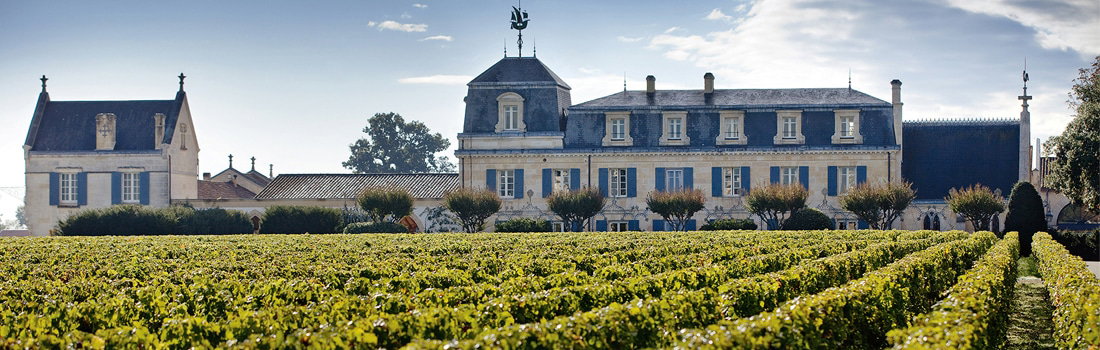
Pessac-Léognan and the Weight of Proximity
There is a specific kind of pressure that comes with adjacency to greatness, and few estates in Bordeaux feel it more acutely than those operating within the Haut-Brion orbit. The Graves appellation, and Pessac-Léognan within it, has long occupied an unusual position in the Bordeaux hierarchy: its leading addresses are classified under a separate 1959 system that named only a handful of properties, and La Mission Haut-Brion sits at the very leading of that group. To arrive at 67 Rue de Peybouquey in Talence is to arrive at one of the city of Bordeaux's immediate southern edges, where suburban streets give way suddenly to working vines — a startling juxtaposition that has defined this estate for centuries and continues to shape how its wines are made and discussed.
The Graves appellation produces both red and dry white wines of serious standing, placing it in a different category from the Médoc communes to the north or the sweet-wine estates of Sauternes and Barsac to the south. In Pessac-Léognan, Cabernet Sauvignon and Merlot share the blend with the kind of gravelly, mineral terroir that draws direct comparisons to left-bank Médoc — though experienced tasters consistently describe a smokier, more tobacco-inflected character in mature Graves reds that distinguishes them from Pauillac or Saint-Julien equivalents. This regional character is neither better nor worse than Médoc; it is simply different, and it is the ground on which La Mission has built its reputation.
Jean-Philippe Delmas and the Continuity Argument
In a region where winemaking lineage is treated as a form of institutional capital, the Delmas family name carries particular weight. Jean-Philippe Delmas represents a continuation of winemaking direction at La Mission that stretches back through his father Jean-Bernard and grandfather André, giving the estate an unusual degree of stylistic consistency across decades. That kind of multi-generational stewardship at a single address is rarer than the marketing language of Bordeaux would suggest , most châteaux have seen significant changes in winemaking personnel and ownership across the same period.
The editorial angle on Delmas is less about personal philosophy as biography and more about what sustained family-led winemaking produces at the technical level. Properties under this model tend to develop deep institutional knowledge of their specific plots, their vine responses to particular vintages, and the subtle adjustments required to maintain a house style across radically different growing seasons. The 2021 and 2022 vintages alone presented near-opposite challenges: a cool, rain-affected year followed by one of the hottest and driest on record. How a winemaker responds to that compression of extremes is a more meaningful measure of craft than any single celebrated vintage.
La Mission's whites , produced from Sauvignon Blanc and Sémillon under a separate label , are among the more closely scrutinised dry whites in the appellation, a category where Pessac-Léognan has no real parallel in the rest of Bordeaux. The region's leading white producers, including La Mission, occupy a position in the fine wine market that other French white wine regions rarely acknowledge as a direct competitor but which serious collectors increasingly track alongside white Burgundy on price and ageing curves.
The Pearl 5 Star Prestige Standard
The 2025 Pearl 5 Star Prestige award places La Mission Haut-Brion in a recognition tier that sits above standard five-star assessment and operates on a scale weighted toward provenance, consistency, and appellation standing rather than single-vintage performance. This distinction matters in the context of Pessac-Léognan because the appellation contains a relatively small number of estates , unlike the Médoc, where classified growth properties number in the dozens , and differentiation at the leading end depends on exactly this kind of multi-dimensional evaluation rather than one strong release.
For the Bommes area, which sits at the southern tip of Sauternes territory, La Mission's Pessac-Léognan address places it in an adjacent but distinct production zone. Visitors exploring the sweet wine estates of the Sauternes communes , Château de Myrat, Château Rabaud-Promis, Château Rayne-Vigneau, Clos Haut-Peyraguey, and Château La Tour Blanche , frequently use La Mission as an anchor point in a broader Bordeaux itinerary, pairing the estate's dry reds and whites against the botrytised Sémillon of the Ciron valley. The contrast is one of the most instructive exercises in French viticulture.
Positioning Within the Graves Peer Set
The Crus Classés de Graves, as a classification, names only thirteen red wine properties and nine white wine properties, making the peer set considerably more exclusive than the 1855 Médoc classification. La Mission Haut-Brion is one of only two estates in the classification positioned literally adjacent to Château Haut-Brion, a geographic and competitive coincidence with few equivalents anywhere in France. This proximity means that comparative tasting between the two estates , sharing similar terroir but under different ownership since 1983, when the Dillon family acquired La Mission , is a fixture of serious Bordeaux study.
Beyond the immediate Graves peer group, La Mission occupies a position in the broader French fine wine universe alongside estates making very different styles in very different regions. Properties like Albert Boxler in Niedermorschwihr represent a different axis of French winemaking excellence, where Alsace Riesling and Gewurztraminer benchmark against Germany and Austria rather than Bordeaux. The comparison is less about style than about what long-term family stewardship produces: a coherent house identity that outlasts individual vintage variation. Similarly, Château Bastor-Lamontagne in Preignac sits in the same broader Sauternes geography as many Bommes producers and offers a useful contrast in how different appellation hierarchies shape access and pricing within the same region.
For collectors looking further afield, the question of what a prestige-tier estate offers versus category alternatives is worth examining carefully. Abadía Retuerta in Sardón de Duero works outside any Spanish DO classification entirely, which places it in an analogous position to Pessac-Léognan estates that trade on appellation reputation rather than grand cru nomenclature. These structural parallels across regions tell you more about how elite wine markets function than any single tasting note.
Planning a Visit to This Corner of Bordeaux
The practical geography of a Bordeaux visit anchored around La Mission Haut-Brion involves some planning. The estate's Talence address puts it within the urban Bordeaux agglomeration, making it accessible from the city centre in under thirty minutes by car. Sauternes and Barsac, where much of the surrounding sweet wine production occurs, add roughly forty-five minutes to the south. Building an itinerary around both zones in a single day is feasible, though serious cellar visits to either area benefit from advance booking windows of several weeks to two months, particularly for harvest-period visits in September and October when demand from trade buyers compresses appointment availability.
For those building a full Bordeaux south itinerary, the Bommes wineries guide covers the principal Sauternes-adjacent estates in detail, while the Bommes restaurants guide, Bommes hotels guide, Bommes bars guide, and Bommes experiences guide address the practical infrastructure around any extended stay in the region. The area does not have the hospitality density of Saint-Émilion, so accommodation choices require more forward planning than the right-bank appellations. Alternatives in the same fine wine register, such as Aberlour in Aberlour or Chartreuse in Voiron, sit in entirely different production categories but share the same premium institutional character that serious collectors tend to gravitate toward across all beverage categories.
Frequently Asked Questions
- What should I taste at Château La Mission Haut-Brion?
- La Mission Haut-Brion produces both red and dry white wine in Pessac-Léognan, and both deserve attention. The reds, built primarily on Cabernet Sauvignon and Merlot from gravelly urban terroir, are the reference point for the estate's reputation under winemaker Jean-Philippe Delmas. The dry whites, produced from Sauvignon Blanc and Sémillon, are among the most age-worthy dry whites in Bordeaux and worth seeking out in mature vintages. The estate holds its 2025 Pearl 5 Star Prestige award across the portfolio.
- What is the main draw of Château La Mission Haut-Brion?
- The primary draw is the estate's position within the 1959 Crus Classés de Graves classification and its proximity to Château Haut-Brion, which creates one of the most discussed comparative tasting pairs in Bordeaux. The Pearl 5 Star Prestige recognition (2025) reflects sustained performance and provenance rather than a single-vintage reputation. For visitors based in the broader Bommes and Sauternes area, it anchors a Graves versus Sauternes itinerary across contrasting wine styles.
- How far ahead should I plan for Château La Mission Haut-Brion?
- Château visits in Pessac-Léognan at this level typically require advance appointments, and harvest-period windows from September through October compress quickly due to trade demand. Planning two to four weeks ahead for off-peak visits and six to eight weeks for autumn appointments is a practical baseline. The estate's Talence address is accessible from central Bordeaux, which simplifies logistics compared to more remote appellation properties.
- Who tends to like Château La Mission Haut-Brion most?
- Collectors already engaged with left-bank Bordeaux who want to understand the Graves appellation distinct from the Médoc find La Mission a necessary reference point. The estate also draws visitors building a comparative Bordeaux itinerary that spans Pessac-Léognan and the Sauternes communes around Bommes. Given the Pearl 5 Star Prestige standing (2025) and the price tier that implies, the audience skews toward committed collectors rather than casual wine tourism.
- How does Jean-Philippe Delmas's stewardship shape La Mission Haut-Brion's wines differently from other leading Pessac-Léognan estates?
- The Delmas family has maintained winemaking direction at La Mission across three generations, a continuity that is rare even by Bordeaux standards. This institutional depth means the winemaking approach reflects accumulated vintage data specific to La Mission's parcels rather than a style transplanted from elsewhere. Within the Crus Classés de Graves peer group, that kind of unbroken site knowledge represents a measurable advantage in navigating the increasingly volatile vintage conditions that have characterised the appellation since 2017.
Peer Set Snapshot
These are the closest comparables we have in our database for quick context.
| Venue | Awards | Notes |
|---|---|---|
| Château La Mission Haut-Brion | Pearl 5 Star Prestige | This venue |
| Château de Myrat | Pearl 3 Star Prestige | Slhane de Pontac, Est. 1826 |
| Château La Tour Blanche | Pearl 4 Star Prestige | Frédéric Nivelle |
| Château Lafaurie-Peyraguey | Pearl 4 Star Prestige | Gabriel Vialard, Est. 1824 |
| Château Rabaud-Promis | Pearl 3 Star Prestige | |
| Château Rayne-Vigneau | Pearl 3 Star Prestige |
Access the Cellar?
Our members enjoy exclusive access to private tastings and priority allocations from the world's most sought-after producers.
Get Exclusive Access