Château de Pibarnon

Château de Pibarnon sits above La Cadière-d'Azur in the Bandol appellation, where extreme elevation and a limestone-clay amphitheatre shape wines of uncommon structure for the southern Rhône coast. Under winemaker Eric de Saint-Victor, the estate has produced continuously since its first vintage in 1978. In 2025, EP Club awarded it a Pearl 3 Star Prestige rating, placing it among the most closely watched addresses in Provence.
 Discover on Pearl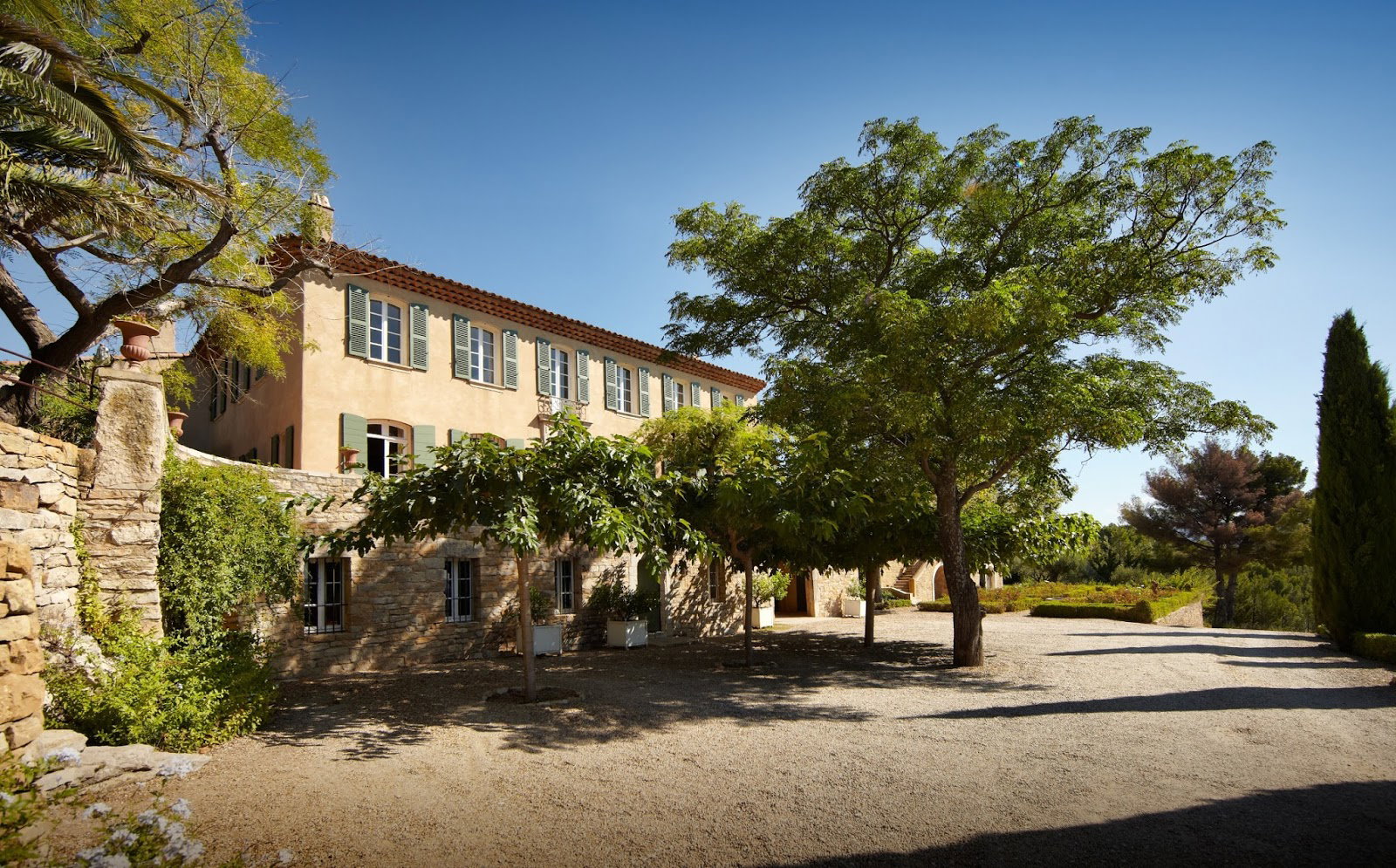
Stone, Altitude, and the Case for Bandol's Upper Reaches
The road to Château de Pibarnon climbs steeply above the village of La Cadière-d'Azur, and the altitude shift is not merely scenic. At roughly 300 metres above sea level, the domaine sits well above the coastal floor where most Bandol production clusters. That elevation gap matters: cooler nights, slower phenolic ripening, and a limestone-clay subsoil that drains efficiently and forces vine roots downward. The combination produces wines with more structural tension than the appellation's sun-warmed average, and it is that tension — rather than any particular stylistic intervention — that defines what ends up in the glass.
Bandol is one of the few French appellations where Mourvèdre dominates legally required minimums, and Pibarnon has worked within that constraint since Eric de Saint-Victor produced the estate's first vintage in 1978. Nearly five decades of continuous production from a single site is meaningful data in any appellation; here, it translates into an unusually precise understanding of how this specific terroir behaves across warm years, drought cycles, and cooler Atlantic-influenced seasons. For context on how single-estate focus shapes wine character across French regions, the long-form work at estates like Albert Boxler in Niedermorschwihr and Château Bastor-Lamontagne in Preignac offers useful comparative context.
What Bandol Terroir Actually Means at This Elevation
Provence's wine identity in international markets has, for the past decade, been almost entirely captured by rosé. That commercial dominance obscures a more interesting story: Bandol's red wines, built on Mourvèdre, occupy a structurally distinct category from anything else produced on the Mediterranean coast between Marseille and the Italian border. Mourvèdre ripens late and demands heat to complete its cycle, but it also requires the cooling mechanism of altitude or coastal wind to preserve aromatic complexity rather than collapsing into over-ripe density. Pibarnon's amphitheatre-shaped vineyard, oriented to catch both sunlight and the mistral-adjacent breezes that funnel through the Var valley, provides exactly that balance.
The limestone-clay geology at this elevation behaves differently from the sandy, alluvial soils closer to the coast. Limestone retains moisture during dry summers, moderating vine stress without eliminating the mild water deficit that concentrates flavour. Clay adds structural weight to the fruit profile, contributing to the grippy tannin signature that Bandol reds from this zone are known for requiring extended cellaring to resolve. Wines from the estate's earlier vintages in the 1980s and 1990s demonstrated that patient ageing is rewarded: the tannic architecture softens over ten to fifteen years without the wine losing its core freshness , a pattern that places Pibarnon in a different conversation from the drink-early positioning of most southern French reds.
For comparison across French appellations where geology and elevation similarly define character over winemaking intervention, Château Bélair-Monange in Saint-Emilion and Château Batailley in Pauillac sit in peer conversations about terroir-driven structure, even as their appellations operate under entirely different regulatory and stylistic norms.
The 2025 Pearl 3 Star Prestige Recognition
EP Club's 2025 Pearl 3 Star Prestige award positions Château de Pibarnon at the upper tier of the estates reviewed across the platform. In the context of Bandol specifically, that recognition reflects the estate's consistent production record since 1978 and the coherence between its site characteristics and the wines it produces. Awards at this level in the EP Club framework are not based on a single standout vintage but on demonstrated editorial quality across the estate's approach to winemaking and terroir expression.
Within Provence's broader recognition landscape, Bandol reds have historically been underweighted relative to the region's rosé output in international critical attention. The Prestige designation at this level signals that Pibarnon's reds merit consideration alongside structurally comparable estates from appellations with higher global name recognition. For readers already familiar with how awards stratify estate quality in other French regions, comparing this to estates like Château Branaire Ducru in St-Julien or Château Cantemerle in Haut-Médoc illustrates where the estate sits in relative terms across French fine wine.
Planning a Visit: Approach, Logistics, and Context
The estate address , 410 Chemin de la Croix des Signaux, La Cadière-d'Azur , is the practical starting point for any visit. La Cadière-d'Azur is a hill village in the Var department, approximately midway between Bandol town on the coast and the A50 motorway that connects Marseille to Toulon. The approach by car is the realistic option; the lanes ascending toward the domaine are narrow and the gradient is significant. The nearest rail access is Bandol station, roughly eight kilometres south on the coast, but onward transport to the estate requires a vehicle.
The Bandol appellation calendar follows Provence's general rhythm: harvest typically runs from mid-September through early October, depending on the vintage. The summer months from June through August bring the heaviest visitor traffic to the region, though the estate's elevation gives it slightly more bearable temperatures than the coastal resorts immediately below. Late spring and early autumn visits avoid both peak-season congestion on the coastal roads and the heat plateau of July and August, making September an effective window if the harvest schedule permits.
For those building a wider itinerary around this part of Provence, the full Roquefort-la-Bédoule wineries guide maps additional estate options in the area. Accommodation context appears in our Roquefort-la-Bédoule hotels guide, while dining options are covered in the restaurants guide. Readers interested in the broader food and drink scene can also reference our bars guide and experiences guide for the area.
Given that the estate holds no publicly listed phone number or website in EP Club's current database, direct outreach requires locating current contact details through French wine trade directories or the appellation syndicate. This is not unusual for smaller Provençal domaines that sell primarily through allocation and négociant relationships; visiting without confirmed appointment is inadvisable. For comparable planning considerations at other allocation-model estates across France, our coverage of Château Boyd-Cantenac in Cantenac and Chartreuse in Voiron addresses how to approach estates with limited public-facing booking infrastructure.
Those with a broader interest in European terroir-driven estates beyond France will find useful comparative reading in EP Club's profiles of Abadía Retuerta in Sardón de Duero and Aberlour in Aberlour, both of which operate under similar single-site philosophies in regions where geography shapes character more than winemaking technique.
Frequently Asked Questions
- How would you describe the overall feel of Château de Pibarnon?
- The estate sits in a quiet agricultural zone well above the tourist infrastructure of the Bandol coastline. The atmosphere is working-domaine rather than visitor-centre: the focus is on the vineyard and cellar rather than hospitality programming. That character aligns with its production profile , a Pearl 3 Star Prestige-rated estate whose wines are distributed through trade channels rather than built around cellar-door retail volume. If you are travelling from the La Cadière-d'Azur area specifically to visit, the experience is closer to a serious estate appointment than a Provençal wine tourism excursion.
- What should I taste at Château de Pibarnon?
- The red wines are the primary reason to seek out this address. Bandol Mourvèdre-dominant reds require patience, and the estate's production since 1978 under winemaker Eric de Saint-Victor has consistently demonstrated that the limestone-clay terroir here produces wines built for a decade or more in bottle. The Pearl 3 Star Prestige recognition from EP Club in 2025 reflects the estate's sustained performance across its red program. Whether the estate pours current-release or older vintages during visits depends on arrangements confirmed directly with the domaine.
- What's the standout thing about Château de Pibarnon?
- The elevation is the most concrete differentiator. At approximately 300 metres above sea level, Pibarnon sits significantly higher than the bulk of Bandol production, and the cooler microclimate combined with limestone-clay soils creates a structural profile in the wines that is measurably distinct from lower-altitude Bandol estates. The Pearl 3 Star Prestige rating from EP Club in 2025 places this in formal recognition rather than subjective opinion.
- Should I book Château de Pibarnon in advance?
- Yes. No phone number or website is listed in EP Club's current database, which suggests the estate operates without a standard public booking portal. This is consistent with allocation-model domaines in Provence that manage visitor appointments through personal or trade relationships. Plan well ahead, source current contact details through the Bandol appellation syndicate or a specialist French wine merchant, and confirm the visit explicitly before travelling to La Cadière-d'Azur, as the estate is not accessible as a walk-in destination.
- How does Château de Pibarnon's first vintage in 1978 affect how you should approach the estate's back catalogue?
- An estate producing continuously from a single site since 1978 generates a track record across multiple weather extremes, which is meaningful when assessing cellaring potential. Pibarnon's Mourvèdre-based reds from mature vintages in the 1980s and 1990s have historically shown that the tannic structure built at this elevation resolves with ten to fifteen years of ageing. For collectors or serious visitors, the depth of the back catalogue , combined with the 2025 Pearl 3 Star Prestige recognition , makes older-vintage tastings the most informative way to understand what the terroir produces at full expression.
Peer Set Snapshot
These are the closest comparables we have in our database for quick context.
| Venue | Awards | Notes |
|---|---|---|
| Château de Pibarnon | Pearl 3 Star Prestige | This venue |
| A. Margaine | Pearl 2 Star Prestige | |
| Agrapart & Fils | Pearl 4 Star Prestige | Pascal Agrapart, Est. 1986 |
| Albert Boxler | Pearl 3 Star Prestige | |
| Alfred Gratien | Pearl 4 Star Prestige | Nicolas Jaeger, Est. 1864 |
| Augier | Pearl 2 Star Prestige |
Access the Cellar?
Our members enjoy exclusive access to private tastings and priority allocations from the world's most sought-after producers.
Get Exclusive Access