
A Deuxième Grand Cru Classé from the 1855 Classification, Château Brane Cantenac has produced Margaux-appellation Cabernet Sauvignon-led wines from its Cantenac estate since 1850. Under winemaker Henri Lurton, the property holds a Pearl 4 Star Prestige rating for 2025 and sits among the commune's most historically consistent estates, alongside peers such as Château d'Issan and Château Kirwan.
 Discover on Pearl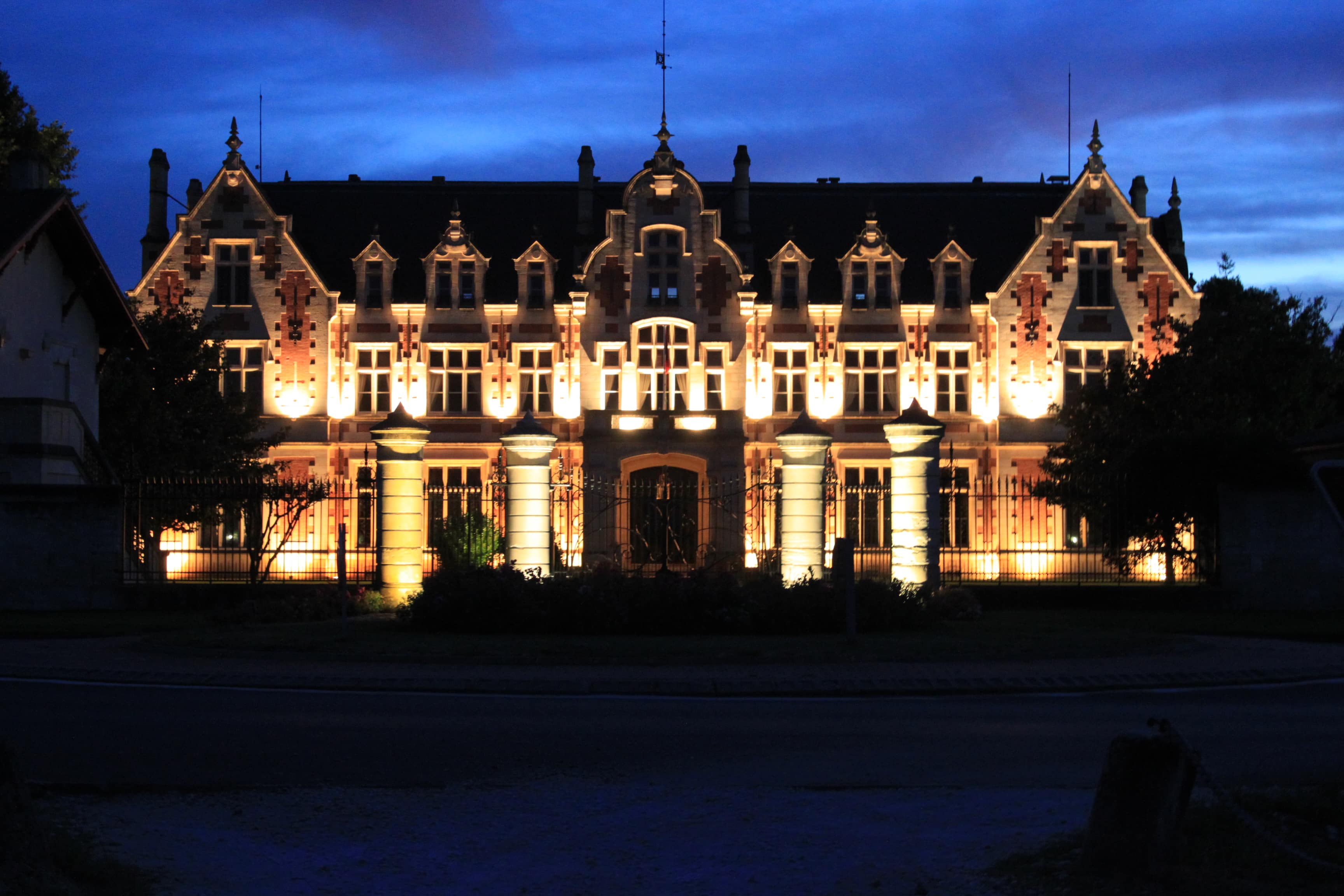
Margaux's Second Growth Tier: What Cantenac Actually Means
The gravel banks of Cantenac sit at the southern edge of the Margaux appellation, close enough to the town of Margaux to share its alluvial soils but distinct enough to carry their own communal identity. The plateau here produces Cabernet Sauvignon that tends toward structure over immediacy, tannins that require time to resolve, and a profile that rewards cellaring rather than early drinking. Château Brane Cantenac sits in this corridor alongside a cluster of Classified Growths, including Château d'Issan, Château Kirwan, Château Boyd-Cantenac, Château Pouget, and Château Prieuré-Lichine. That density of Classified estates along a single commune is unusual even by Médoc standards, and it means the competitive reference points here are entirely within the 1855 framework.
Brane Cantenac's place in that framework is Deuxième Grand Cru Classé, a rank it earned in the original 1855 Classification and has held through more than 170 harvests. First vintage records date to 1850, making it one of the longer-documented production histories in the appellation. The 2025 Pearl 4 Star Prestige award confirms continued recognition at the premium tier, placing it in a peer group of Bordeaux estates that hold both historical classification and current critical standing.
Henri Lurton and the Argument for Restraint
In Bordeaux's second-growth tier, winemaking philosophy tends to express itself through extraction decisions: how much color and tannin to pull from the skins, how aggressively to use new oak, when to prioritize longevity over early accessibility. The houses that attract sustained attention from serious collectors and sommeliers are increasingly those that resist the heavier extraction style that dominated the region from the 1990s into the 2000s. Henri Lurton, winemaker at Brane Cantenac, operates within a tradition of precision rather than power, a stance that aligns the property more closely with the classical Margaux profile than with the denser, more extracted style associated with certain Left Bank appellations further north.
That orientation matters in the context of how Margaux is now understood internationally. The appellation's reputation rests on aromatic complexity and textural elegance rather than sheer concentration, and estates that have drifted toward the latter often read as outliers when assessed against classic Margaux benchmarks. Brane Cantenac's sustained classification standing and its continued award recognition suggest that the approach here has tracked the appellation's core character rather than chased scores through over-extraction. For collectors building Margaux verticals, that consistency across vintages is a meaningful signal.
Comparison is instructive. Across the wider region of France, producers committed to site-driven, restraint-oriented winemaking operate in very different categories: Albert Boxler in Niedermorschwihr represents that ethos in Alsace, while Château Bastor-Lamontagne in Preignac takes a comparable long-view approach in Sauternes. Outside France entirely, Abadía Retuerta in Sardón de Duero demonstrates how old-vine precision translates across Iberian terroir. The connecting thread across these properties is that winemaking decisions defer to the land rather than override it.
A Property With 175 Years of Production Evidence
Few categories in wine offer the kind of longitudinal evidence that Bordeaux's Classified Growths provide. When first vintage records begin in 1850, as they do at Brane Cantenac, the estate becomes a kind of archive for Margaux's climatic and stylistic shifts over nearly two centuries. That depth of record is part of why collectors treat Classified Growths differently from newer producers with equally strong current releases: the track record across good vintages, difficult vintages, ownership transitions, and winemaking generations provides a confidence interval that newer estates simply cannot match.
For the en primeur buyer, this history functions as a risk-reduction signal. Purchasing a Brane Cantenac futures contract in a year like 2020 or 2022, both highly regarded Bordeaux vintages, carries a different calculus than buying a first-release wine from a younger estate. The long record of production through variable conditions means the vintage variation is well-documented, the style parameters are known, and the aging curve is reasonably predictable. That predictability commands a premium in the secondary market, which is part of why Deuxième Cru estates from Margaux retain value across market cycles in ways that more speculative buys do not.
Cantenac in the Wider Médoc
Visitors approaching Cantenac from Bordeaux pass through a corridor of estates that does not feel like the tourist-facing wine country of Napa or Tuscany. The Médoc is agricultural and purposeful, with châteaux that face inward toward their vineyards rather than outward toward roads. The approach to Brane Cantenac on Chemin de Benqueyre follows the pattern: gravel lanes, vine rows measured in hectares rather than boutique parcels, and an understated architectural presence that signals the building's age rather than recent renovation. This is not a region that performs for the casual visitor. The experience is for those who have done the reading first.
Planning a visit to the Médoc's Cantenac communes requires working through the estates' own scheduling, since most Classified Growth properties operate by appointment only. The commune offers a concentrated itinerary: five Classified Growth properties within close proximity makes it possible to cover meaningful comparative ground in a single day, moving from Brane Cantenac through neighboring estates and gaining a direct sensory comparison of how the same communal soils express differently under different hands. For broader planning across accommodation and dining, see our full Cantenac hotels guide and our full Cantenac restaurants guide. Those planning a longer Médoc circuit can reference our full Cantenac wineries guide, our full Cantenac bars guide, and our full Cantenac experiences guide for a complete itinerary framework.
Farther afield, the Médoc sits within a day's reach of producers working in entirely different traditions. Chartreuse in Voiron and Aberlour in Aberlour represent the other end of the European producers' spectrum, aged spirits rather than aged wine, but they share the same underlying premise: that time in production is itself a form of value creation.
Planning Your Visit
Château Brane Cantenac is located at Chemin de Benqueyre, 33460 Cantenac, in the Médoc's Margaux appellation, approximately 25 kilometers northwest of central Bordeaux along the D2 wine road. Visits to Classified Growth estates in this part of the Médoc are conducted by appointment, and serious visitors should arrange access in advance through the estate's direct channels. The optimal visiting window for the Médoc broadly falls between late spring and early autumn, with harvest season in September and October offering the additional context of seeing the estate in active production, though access during that period may be more restricted. The spring months, after the en primeur campaign opens but before summer tourist pressure builds, offer a measured pace that suits comparative tasting across multiple estates in a single day.
Frequently Asked Questions
Peer Set Snapshot
These are the closest comparables we have in our database for quick context.
| Venue | Awards | Notes |
|---|---|---|
| Château Brane Cantenac | Pearl 4 Star Prestige | This venue |
| Château Boyd-Cantenac | Pearl 3 Star Prestige | |
| Château d’Issan | Pearl 3 Star Prestige | |
| Château Kirwan | Pearl 3 Star Prestige | |
| Château Pouget | Pearl 3 Star Prestige | |
| Château Prieuré-Lichine | Pearl 3 Star Prestige |
Access the Cellar?
Our members enjoy exclusive access to private tastings and priority allocations from the world's most sought-after producers.
Get Exclusive Access