
A Fourth Growth Margaux estate on the northern edge of Cantenac, Château Prieuré-Lichine earned EP Club Pearl 3 Star Prestige recognition in 2025. The property sits among a cluster of classified growths along the D2, where the Médoc's gravel-rich soils produce the appellation's characteristic Cabernet Sauvignon-led blends. Visitors engaging with the estate encounter a cellar programme shaped by the particular demands of left-bank aging and barrel selection.
 Discover on Pearl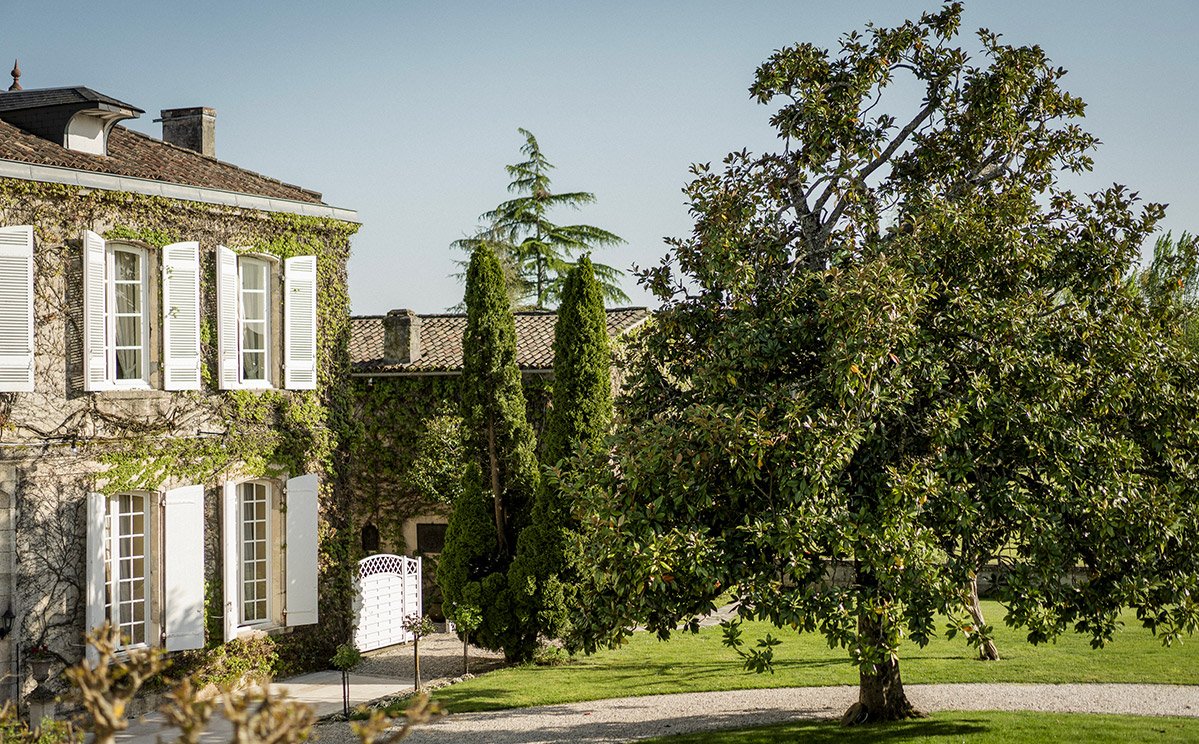
Where the Médoc's Gravel Speaks Through the Barrel
The D2, the wine road threading through the Médoc from Bordeaux north toward the Gironde estuary, passes through a sequence of classified communes where the roadside architecture is largely château façade and vine. Cantenac sits at the southern end of the Margaux appellation, and approaching Château Prieuré-Lichine along the Avenue de la Ve République, you are already inside one of the most studied terroirs in French viticulture. The flat horizon, the pale gravel ridges rising just enough to drain the clay beneath, and the ordered rows of Cabernet Sauvignon and Merlot stretching toward the treeline — the physical environment here is not incidental to what ends up in the glass. It is the argument the wine makes before it is even poured.
Cantenac is home to a dense concentration of classified growths. Château Boyd-Cantenac, Château d'Issan, Château Kirwan, Château Pouget, and Château Brane Cantenac all operate within a few kilometres of one another, each drawing from subtly differentiated soils that the 1855 Classification attempted to rank but could not fully articulate. Prieuré-Lichine's Fourth Growth status places it in the middle tier of that hierarchy, in a bracket that has historically represented some of the most interesting price-to-pedigree territory in Bordeaux — the wines carry the Margaux appellation's weight without the First and Second Growth premium that makes neighbouring estates harder to access.
The Cellar as Decision Engine
In Margaux, what happens after harvest is where a château's character is actually set. The appellation's wines are built for time , Cabernet Sauvignon dominant, structured by tannin, with the fruit concentration and acidity to absorb years in barrel before bottle aging adds the final layer of complexity. The cellar decisions at any classified Margaux estate involve a cascade of choices: which parcels go into the grand vin, how long the wine remains in new oak versus neutral barrels, at what percentage new wood is introduced, and when the final blend is assembled. These are not aesthetic preferences. They are technical commitments with decade-long consequences.
At Prieuré-Lichine, the Fourth Growth classification signals a cellar programme calibrated for structured, age-worthy red Bordeaux within the Margaux commune. The estate earned EP Club Pearl 3 Star Prestige recognition in 2025, which within EP Club's rating framework places it in the higher tier of assessed estates , a signal of consistent production quality across vintages rather than a single exceptional year. For a property operating in a commune as competitive as Cantenac, that consistency is the more meaningful credential. Margaux releases are hostage to vintage variation; an estate's ability to hold quality across the difficult years is what separates classified growth producers from their peers.
Barrel selection in left-bank Bordeaux typically involves relationships with cooperages in the Allier, Nièvre, or Vosges forests, with the tightness of grain in the oak determining how the wood interacts with the wine's tannin and fruit. The aging period for a Fourth Growth Margaux in a quality vintage generally runs 18 to 24 months in barrel, with the assemblage of grand vin and second label allowing the cellar team to allocate younger vine material or lighter parcels downward, concentrating the leading wine. This tiered production model is standard across the Médoc, but the quality of the second label has become an increasingly useful indicator of an estate's overall ambition , when the second wine is compelling, it suggests the grand vin has been genuinely selected rather than merely assembled.
Cantenac in Context: A Commune Worth Understanding
The Margaux appellation spreads across five communes , Margaux itself, Cantenac, Soussans, Labarde, and Arsac , and Cantenac accounts for a disproportionate share of the classified estate count. This concentration means that the wine tourism experience in this part of the Médoc is unusually rich in direct comparison opportunities. A visitor spending a day along this stretch of the D2 can move between properties classified in 1855 and cross-reference house styles, aging philosophies, and price points in a way that is almost impossible to replicate in any other wine region. The Médoc's flatness and the close proximity of estates make this one of the few fine wine regions where walking or cycling between producers is physically practical.
For an exploration of the full range of what Cantenac offers beyond wine, our full Cantenac experiences guide covers the range of visit formats available. Accommodation options along this stretch of the appellation are documented in our full Cantenac hotels guide, and eating and drinking options around the commune appear in our full Cantenac restaurants guide, our full Cantenac bars guide, and our full Cantenac wineries guide.
Comparing Across France and Beyond
Prieuré-Lichine's position in the Margaux classification invites comparison not just within its immediate commune but across the broader world of estate-produced, barrel-aged fine wine. The aging programme logic at a Médoc château , long barrel time, new oak percentages, tiered selection , shares structural DNA with approaches seen at very different properties in other regions. Albert Boxler in Niedermorschwihr ages Alsatian whites in large foudres for extended periods, using time rather than oak flavour as the primary tool. Abadía Retuerta in Sardón de Duero applies Bordeaux-influenced barrel aging to Spanish varietals with a similar grand vin/second label discipline. Further afield, the patience required for Aberlour in Aberlour's whisky maturation, or the structural complexity built over years in Chartreuse in Voiron's liqueur cellars, reflects how many of France's most serious producers treat time in vessel as an ingredient rather than an administrative necessity. Château Bastor-Lamontagne in Preignac demonstrates how this patience applies equally to Sauternes, where Sémillon-based wines spend extended barrel time developing the oxidative complexity that defines the appellation.
Planning a Visit
Château Prieuré-Lichine is located at 34 Avenue de la Ve République, 33460 Margaux-Cantenac. The estate sits on the main D2 wine road, accessible from Bordeaux by car in under 45 minutes , the journey north through the Médoc, passing through Margaux-Cantenac, is itself a reasonable introduction to the scale and sequence of the appellation. Specific visit formats, tasting room hours, and booking requirements are leading confirmed directly with the estate in advance of any trip. The spring and autumn months attract higher visitor volumes to Margaux, partly due to en primeur week in April when the trade descends on the region; those seeking a less pressured visit typically find the summer months and early winter quieter. The 2025 EP Club Pearl 3 Star Prestige award provides a concrete reference point for quality when assessing the estate alongside peers along the same road.
Frequently Asked Questions
- What kind of setting is Château Prieuré-Lichine?
- Château Prieuré-Lichine is a classified Bordeaux estate in Cantenac, within the Margaux appellation, sitting along the D2 wine road that connects a dense cluster of 1855 classified growths. As a Fourth Growth Margaux, it occupies the middle tier of the historic classification, and its 2025 EP Club Pearl 3 Star Prestige award places it among the higher-assessed estates in the commune. The physical setting is characteristic of the left-bank Médoc: flat gravel terraces, ordered vine rows, and a château architecture that signals the estate's classification-era heritage.
- What is the signature bottle at Château Prieuré-Lichine?
- The estate's grand vin is a Margaux appellation red built on the Cabernet Sauvignon-dominant blend typical of the commune, with Merlot and smaller proportions of other permitted varieties contributing to the final assemblage. Margaux's gravel soils produce wines with the appellation's characteristic aromatic finesse and tannic structure. The 2025 EP Club Pearl 3 Star Prestige recognition signals consistent production quality across recent vintages.
- Why do people go to Château Prieuré-Lichine?
- Visitors come primarily to engage directly with a classified Margaux growth in its home setting, tasting wines from one of the appellation's more historically rooted estates. Cantenac's concentration of classified properties means a visit to Prieuré-Lichine fits naturally into a broader itinerary covering the commune's other Fourth and Third Growth estates. The 2025 EP Club Pearl 3 Star Prestige award provides external confirmation of the estate's current standing within its peer group.
- What is the leading way to book Château Prieuré-Lichine?
- Direct contact with the estate is the standard approach for arranging visits at Margaux classified growths, as tasting formats, availability, and group sizes vary by season. Booking well in advance is advisable, particularly around Bordeaux's en primeur period in April and during the harvest window in autumn. The estate's address , 34 Avenue de la Ve République, 33460 Margaux-Cantenac , provides the entry point for initial planning.
- How does Château Prieuré-Lichine's Fourth Growth status affect the wines it produces?
- Fourth Growth classification in the 1855 Médoc hierarchy places Prieuré-Lichine in a bracket that historically balances the quality expectations of a classified estate with a price point more accessible than the First and Second Growths in the same appellation. In practical cellar terms, the classification shapes the estate's production philosophy: the grand vin is subject to rigorous parcel selection, with a second label absorbing material from younger vines or lighter plots. The 2025 EP Club Pearl 3 Star Prestige award suggests the estate is performing at the higher end of its classification tier across recent vintages.
Peer Set Snapshot
These are the closest comparables we have in our database for quick context.
| Venue | Awards | Notes |
|---|---|---|
| Château Prieuré-Lichine | Pearl 3 Star Prestige | This venue |
| Château Boyd-Cantenac | Pearl 3 Star Prestige | |
| Château Brane Cantenac | Pearl 4 Star Prestige | Henri Lurton, Est. 1850, 15-20,000 cases, Second Growth |
| Château d’Issan | Pearl 3 Star Prestige | |
| Château Kirwan | Pearl 3 Star Prestige | |
| Château Pouget | Pearl 3 Star Prestige |
Access the Cellar?
Our members enjoy exclusive access to private tastings and priority allocations from the world's most sought-after producers.
Get Exclusive Access