
Michelin Selected
A medieval castle on a granite promontory above the Galician ría, Parador de Baiona translates Spain's historic parador network into one of its most architecturally compelling settings. Michelin Selected for 2025, it sits where the old town of Baiona meets the Atlantic, drawing guests who come as much for the fortified walls and sea-facing ramparts as for the coast itself.

Pearl is the En Primeur Club membership app — saves, bookings, and concierge access live there. Same editors, same standards.
- Address
- Arquitecto Valverde, s/n, Baiona, Spain
- Phone
- +34 986 35 50 00
- Directions
- Get directions
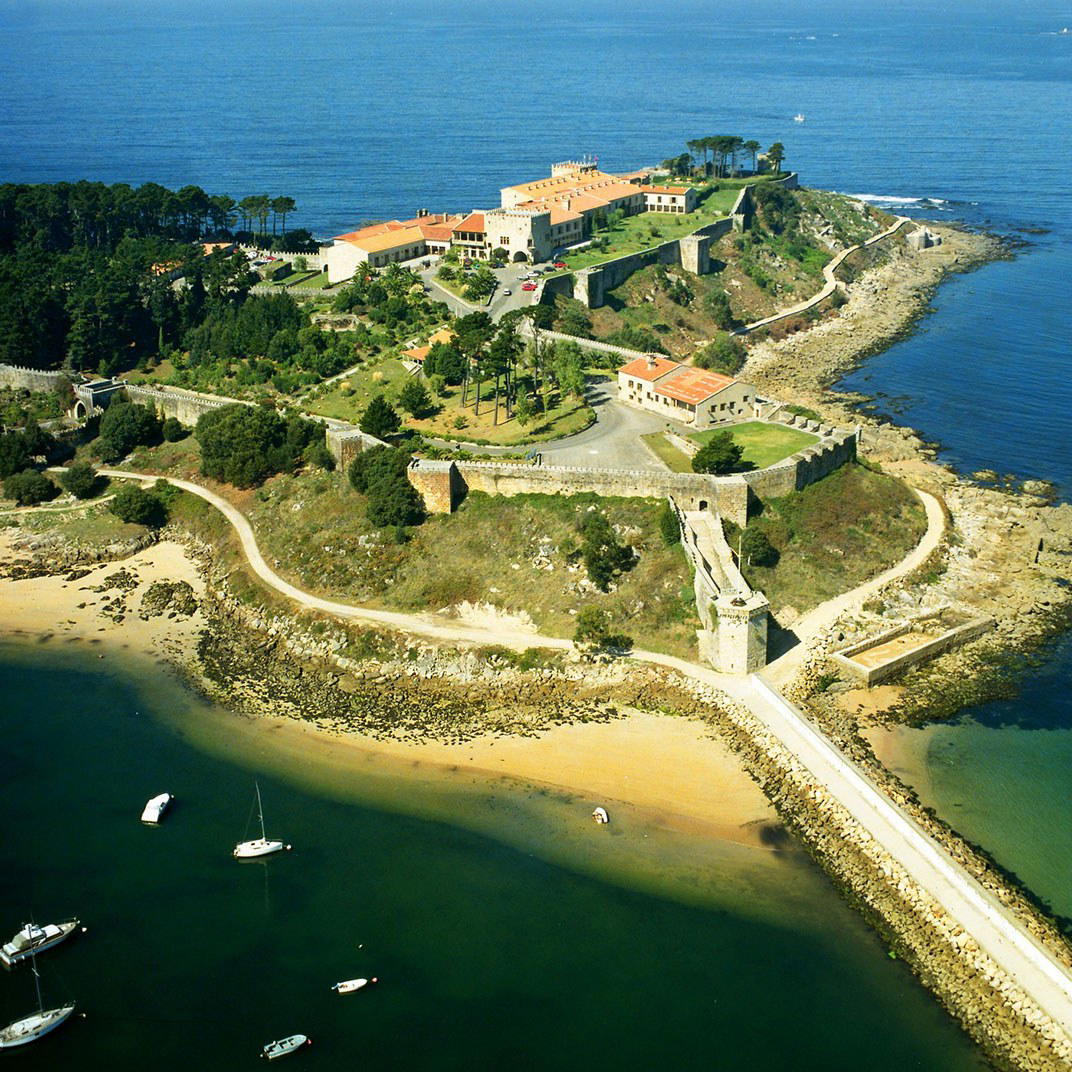
A Fortress at the Edge of the Atlantic
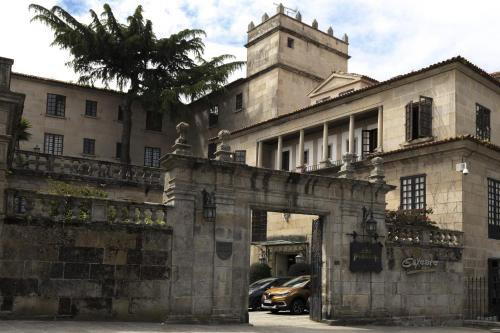
The approach to the Parador de Baiona prepares you for something other than a conventional hotel check-in. The road traces the edge of a 14th-century granite promontory, the walls of the Monterreal fortress rising on three sides above the ría that separates the Galician coast from the open Atlantic. Before you reach a reception desk, you have walked through a working medieval fortification, one that enclosed an entire cape rather than simply a building. That physical experience is the defining fact of a stay here, and it sits at the heart of why the Michelin hotel guide selected the property for its 2025 list.
The Paradores network has always operated on a distinct premise within Spanish hospitality: convert historically significant buildings into accessible state-managed accommodation, preserving architectural heritage while generating the revenue to maintain it. Baiona is one of the most architecturally legible examples in the system. Unlike paradores housed in convents or palaces where the original structure is partially absorbed by later additions, the Monterreal fortress retains its essential medieval character. The curtain walls, the towers, the exposed granite throughout the interiors and the 3-kilometre walk around the ramparts that guests can take at will — these are not decorative references to history but the actual fabric of the building.
Architecture as the Experience
Within Spain's wider premium hotel tier, the architectural conversation usually runs between two poles: urban properties that convert historic palaces into contemporary luxury (the approach taken by Mandarin Oriental Ritz, Madrid and Caro Hotel in València) and rural properties where the building's age is more mood than structure. Baiona occupies a different category. The fortress here is not a container for contemporary design interventions; it is the design, and the hotel operates in service of that fact.
Among Michelin Selected properties on the Iberian coast, very few are housed in working fortifications rather than manor houses or purpose-built resort structures. Cap Rocat in Cala Blava, built within a 19th-century military fortress on Mallorca, is perhaps the closest structural analogue, though the two properties occupy entirely different price positions and operational scales. What they share is the particular atmosphere that comes from living inside a defensive perimeter: the thickness of walls, the narrowness of certain passages, the way sound behaves differently when it bounces off three metres of granite rather than plasterboard.
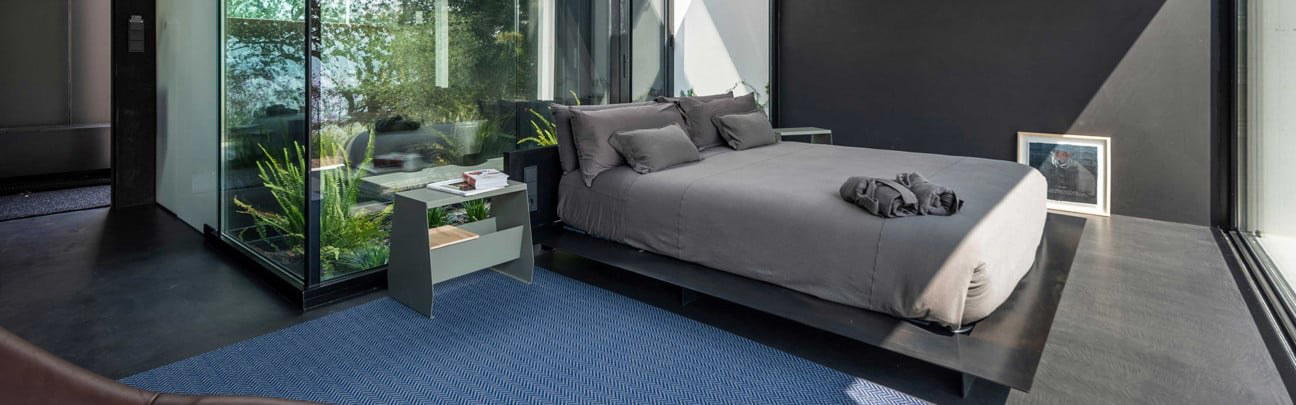
The rooms at Baiona vary considerably in character depending on their location within the complex. Some face the ría and the Cíes Islands; others look inward toward the gardens that occupy the cape's interior. The variation is a direct consequence of building within a historic structure rather than designing from scratch, and it means that room selection carries more significance here than at a purpose-built property. Guests who have not stayed before should factor this into booking, since the Atlantic-facing positions offer a materially different spatial experience from garden-side rooms.
Galician Coast Context
Baiona's position in the Rías Baixas places it at the southern edge of one of Spain's most distinctive coastal stretches. The town itself has a specific place in Atlantic history: it was the first European port to receive news of Columbus's return from the Americas in 1493, when the Pinta made landfall here before continuing to Lisbon. That historical weight is not incidental to the experience of staying at the parador. The fortress was already a century old when that ship arrived, and the relationship between the promontory and the sea that surrounds it on three sides is something the architecture was explicitly designed around.
For guests combining the parador with broader Galician exploration, the Rías Baixas wine region sits directly to the north, and the combination of Albariño-focused tastings with the coastal fortress setting is a logical pairing. The wider Galician coast is also home to Casa Beatnik Hotel in A Coruña and Pepe Vieira Restaurant and Hotel in Poio, the latter a Michelin-starred property that anchors the gastronomic end of the region's hospitality offer. For those treating the parador as part of a longer northern Spain circuit, Akelarre in San Sebastián sits roughly four hours east and represents the Basque coast's answer to architecturally ambitious hotel-restaurant combinations.
The broader Spanish parador network also extends to comparably significant architectural properties, including Atrio Restaurante Hotel in Cáceres, which occupies a very different historic typology in the medieval city of Extremadura. Comparing the two gives a useful measure of how much the specific building type shapes the stay: a convent conversion and a coastal fortress produce entirely different living rhythms despite sharing the same network.
Planning a Stay
The parador's position on the Monterreal promontory means access is by the single road that crosses the fortified entrance, which concentrates arrival and departure into a specific sequence that feels deliberately ceremonial rather than convenient. This is worth knowing in advance: the logistics of arrival are part of the experience rather than separate from it.
Baiona is reachable from Vigo airport, which receives domestic connections from Madrid and Barcelona as well as some international routes, in under 40 minutes by road. The town itself is small enough that almost everything worth seeing is within walking distance of the fortress walls, making a car largely unnecessary once checked in. Peak season on the Galician coast runs from July through early September, when Atlantic weather is at its most reliable and the ría fills with sailing traffic. Spring and early autumn offer the trade-off of shorter visitor queues and cooler temperatures, which suit the fortress setting rather well. For comparable Michelin Selected properties on Spain's Atlantic and northern coasts, see our full Baiona restaurants and hotels guide.
Those building a wider Iberian itinerary around architecturally significant Michelin Selected properties will find relevant reference points in Abadía Retuerta LeDomaine, Terra Dominicata in Escaladei, and Hotel Mercer Sevilla, each of which anchors a historic structure within a contemporary hospitality offer, though none replicates the specific experience of sleeping inside a working medieval fortress above the open Atlantic.
At-a-Glance Comparison
Comparable venues nearby, for context on price, style, and recognition.
| Venue | Cuisine | Price | Awards | Notes |
|---|---|---|---|---|
| Parador de BaionaThis venue — the venue you are viewing | Historic fortress-palace hybrid combining medieval fortification with 19th-century Neo-Gothic architecture, operated by Spain's prestigious Paradores chain. | $100–200 | Michelin Selected | Not listed |
| Hotel Nafarrola Gastronomy & Wine | Converted historic Basque farmhouse with Nordic elegance and modern minimalist design | $200–300 | Michelin Selected | Artike |
| Margot House | Contemporary boutique hotel with Wes Anderson-inspired design philosophy, operating as a private residence experience. | $300–500 | Michelin Selected · Mr & Mrs Smith Seal of Approval | la Dreta de l'Eixample |
| Hotel Boutique V | Luxury boutique manor house with contemporary-classic design philosophy emphasizing personalized service and intimate scale. | Not listed | Michelin Selected | Old Town Vejer de la Frontera |
| Eurostars Pamplona | contemporary urban retreat with spa facilities | $100–200 | Michelin Selected | Segundo Ensanche |
| H10 Villa de la Reina | charming boutique in majestic early 20th-century building | $100–200 | Preferred Hotels Member | Chueca |
Recognition history
Dated appearances from independent guides and award organizations, with the underlying list record or original source where available.
Michelin Selected
Michelin

Details
- Romantic
- Elegant
- Classic
- Scenic
- Romantic Getaway
- Family Vacation
- Anniversary
- Celebration
- Beachfront
- Historic Building
- Panoramic View
- Garden
- Terrace
- Waterfront
- Wi Fi
- Pool
- Spa
- Fitness Center
- Room Service
- Concierge
- Restaurant
- Sauna
- Tennis Court
- EV Charging
- Waterfront
- Garden
- Elevator
- Accessible Restroom
Regal and elegant with historic charm, featuring majestic stone staircases, well-kept gardens, and tranquil settings that evoke another era while maintaining modern comforts.