

Set beneath a 154-pane glass dome on the sixth floor of Real Club Celta de Vigo's headquarters, Silabario holds a Michelin star and represents the more ambitious end of Vigo's contemporary dining scene. Chef Alberto González frames Galician tradition through a modern lens, offering everything from an accessibly priced weekday market menu to three distinct tasting menus built around seasonal, regional ingredients.
Pearl is the En Primeur Club membership app — saves, bookings, and concierge access live there. Same editors, same standards.
- Address
- Rúa do Príncipe, 44, Santiago de Vigo, 36202 Vigo, Pontevedra, Spain
- Phone
- +34 986 07 73 63
- Website
- silabario.gal
- Directions
- Get directions
 Saves & bookings on Pearl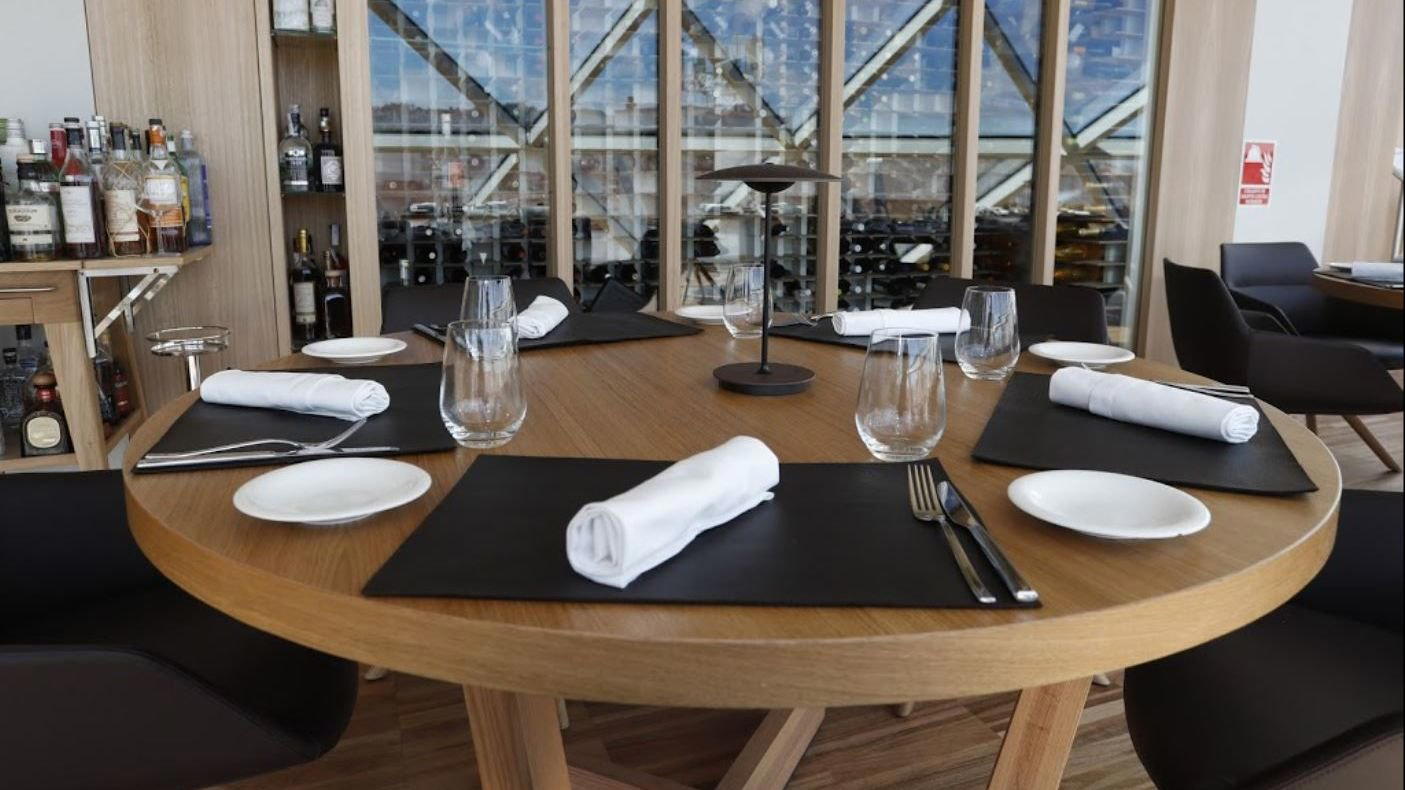
Dining Beneath the Dome: Vigo's Contemporary Galician Benchmark
The approach to Silabario is not like arriving at most Michelin-starred restaurants. There is no discreet townhouse entrance, no ground-floor threshold managing expectations. You ascend to the sixth floor of the Real Club Celta de Vigo's headquarters on Rúa do Príncipe, and what meets you is architecture with genuine ambition: a steel-framed dome built from 154 triangular panes of glass, the kind of structure that announces intention before a single dish arrives. In a city where the dining scene has historically deferred to the raw quality of its Atlantic seafood rather than theatre or spectacle, Silabario occupies a different register. The setting is not incidental to the cooking; it frames a broader argument about what Galician gastronomy can look like when it steps forward rather than retreating into folklore.
Where Silabario Sits in Vigo's Contemporary Dining Tier
Vigo's contemporary restaurant tier is smaller than its food reputation might suggest. The city has deep credentials in seafood and traditional Galician fare, but the number of kitchens operating at a structured, tasting-menu level with consistent critical recognition remains compact. Within that tier, Silabario occupies the more formally ambitious position. Maruja Limón shares the €€€ price range and a contemporary approach, making it the closest peer in format and ambition. Enxebre operates at €€ with a contemporary sensibility, sitting a bracket below in price point. Further down the formality scale, Detapaencepa and Alberte serve distinct purposes: the former in the tapas register, the latter focused on grills at the €€€ tier. La Mesa de Conus rounds out a scene that, when read collectively, shows a city with genuine range rather than a single dominant dining identity.
Within Spain's broader contemporary restaurant conversation, Silabario is a Galician outlier: regionally anchored in a way that kitchens like DiverXO in Madrid or Arzak in San Sebastián are not, drawing on the specific larder of the Rías Baixas rather than international technique for its own sake. That regional specificity is also what distinguishes it from globally-positioned contemporaries like Jungsik in Seoul or César in New York City, where the reference point is cosmopolitan rather than rooted. Among Spain's starred houses, the closest structural parallel might be Aponiente in El Puerto de Santa María, which similarly builds its identity around a specific coastal ecosystem, though the cooking approaches and price tiers differ.
The Menu Architecture: Three Tasting Menus and an Unusually Accessible Set Lunch
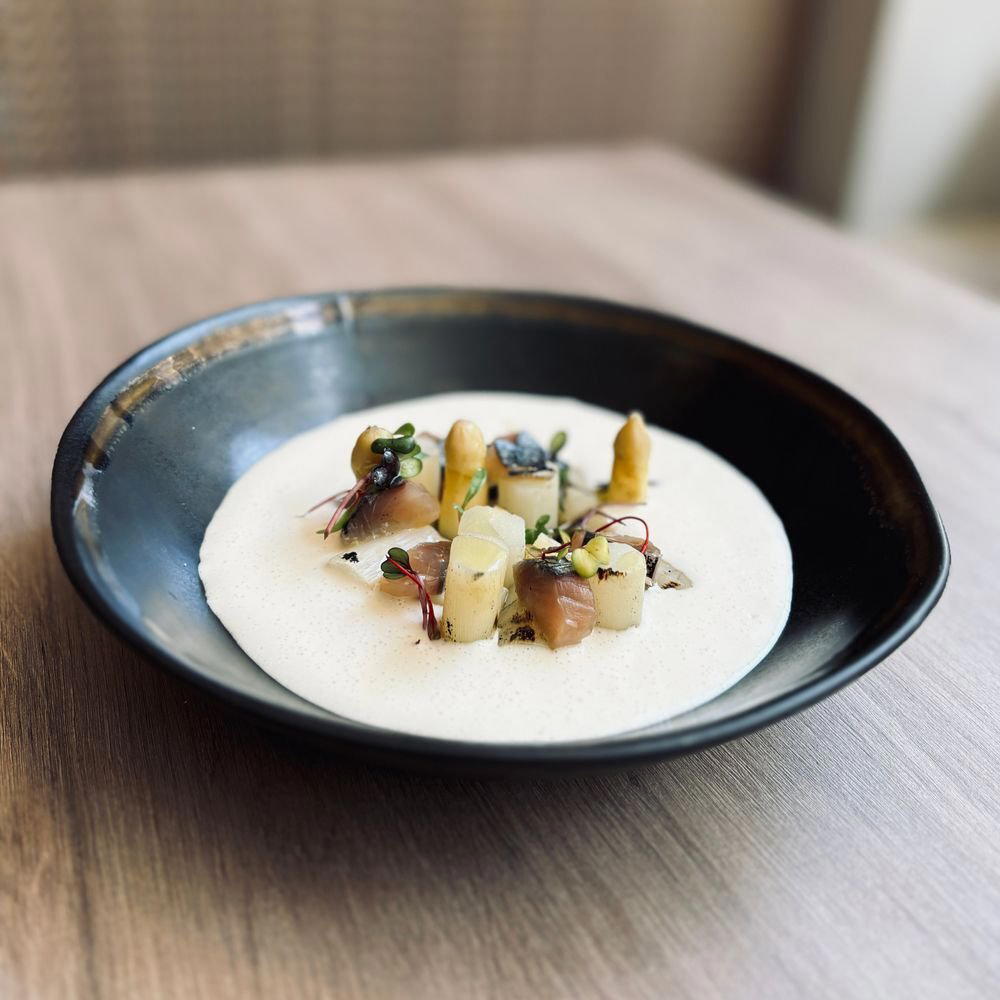
Contemporary Galician cooking at the starred level typically presents a single tasting menu, occasionally two. Silabario's decision to run three distinct menus alongside an à la carte is itself an editorial statement about audience and access. The Tempo menu frames Galician ingredients through seasonal cycles. The Raíces menu draws directly from traditional Galician recipes, functioning as a kind of critical archaeology: familiar dishes read through a contemporary preparation sensibility. The Solaina menu takes its name from the sun-facing galleries common in Galician architecture and works with ingredients specifically associated with the Rías Baixas coastline, including seafood, lamprey, and eel.
The à la carte operates with media ración options, a format that allows the kitchen to reach guests who prefer to compose their own meal rather than surrender to a fixed sequence. That flexibility is relatively unusual at this price point, where most kitchens have moved away from à la carte entirely in favour of full tasting menu control.
The weekday Berbés market menu is where Silabario makes a pointed argument about value. Michelin notes it as one of the least expensive set menus available in a starred restaurant in Europe. The Berbés name references the historic fishermen's quarter of Vigo, connecting the lunch offering to the city's maritime identity. For anyone building a multi-day Vigo itinerary, this lunch is one efficient way to engage with the kitchen's technique and ingredient sourcing at a fraction of the tasting menu investment.
The Team Dynamic Behind a Starred Kitchen
Particular character of any starred restaurant is rarely reducible to a single person in the kitchen, and Silabario's story involves geography as much as personnel. Chef Alberto González earned his first Michelin star at an earlier incarnation of Silabario in Tui, a smaller Pontevedra town on the Portuguese border, before relocating to Vigo. That transition matters: it signals a deliberate move toward a larger stage, a more ambitious physical setting, and a broader dining audience, while carrying forward the same foundational approach to Galician cooking.
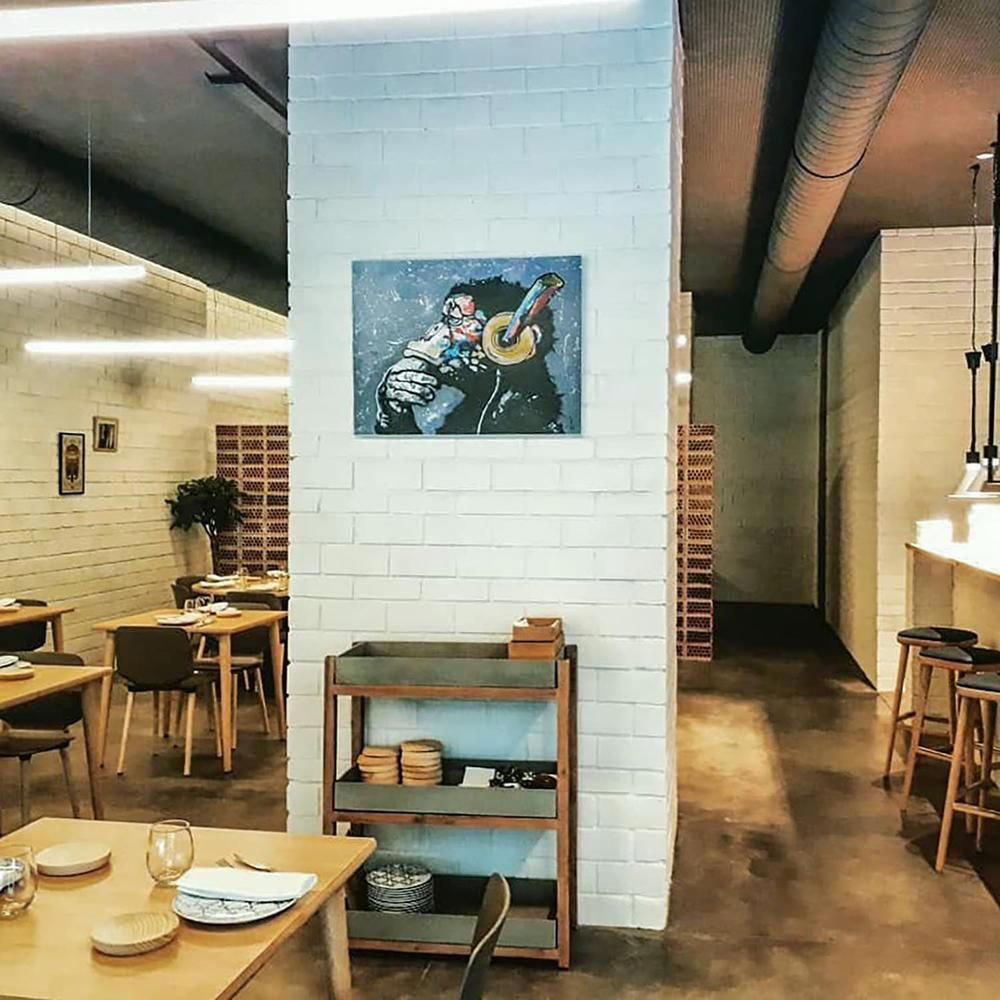
What the front-of-house and service team contribute at this level is the translation of that kitchen ambition into a legible dining experience. The dome setting creates an unusual service environment: a large, architecturally dramatic space that needs to feel composed rather than cavernous. Starred kitchens that manage this well, where service and setting work together rather than against each other, tend to create the kind of dining experience where the meal is contextualised by everything around it. How Silabario's team performs that translation on any given evening is, like most service questions, leading assessed at the table rather than in print.
The kitchen's sourcing relationships sit at the base of the menu structure. At €€€ pricing, with three tasting menus drawing on specific coastal ingredients including lamprey and eel (two products with narrow, seasonal availability), the procurement side of the operation demands the same discipline as the cooking. Spanish starred kitchens operating in this mode, from Azurmendi in Larrabetzu to Quique Dacosta in Dénia and El Celler de Can Roca in Girona, have made supply chain integrity a visible part of their identity. Silabario operates within that tradition, with Galicia's Atlantic coastline providing a larder that requires relatively little embellishment to be compelling.
What the Michelin Recognition Confirms
Silabario's 2024 Michelin star is a credential that places it in a specific peer conversation, not just locally but nationally. One star in Spain's Michelin universe indicates a kitchen producing cooking that justifies a dedicated visit; it does not imply the experimental ambition of a two or three-star house, but it does signal consistent technical command and a coherent culinary point of view. In Galicia, where the region's raw ingredient quality has sometimes substituted for kitchen ambition, a star attached to a kitchen explicitly working in the new style of Galician cooking suggests a more considered operation.
A volume of public reviews at that score, across a format that includes both à la carte and tasting menus at €€€ pricing, indicates consistent delivery across different dining modes and guest expectations.
Planning Your Visit
Silabario operates Tuesday through Saturday, with lunch service from 1:30 PM to 3:00 PM and dinner from 9:00 PM to 11:30 PM on Wednesday through Saturday. The restaurant is closed Sunday and Monday. The weekday lunch is the entry point for first-time visitors or those testing the kitchen before committing to a full tasting menu dinner; the Berbés market menu, available at lunch Tuesday through Friday, represents the clearest value proposition at this starred tier. For dinner on weekends, advance booking is advisable. Silabario sits at Rúa do Príncipe, 44, in central Vigo, accessible on foot from the city's main hotel and transport corridors.
Just the Basics
Comparable venues nearby, for context on price, style, and recognition.
| Venue | Cuisine | Price | Notes |
|---|---|---|---|
| SilabarioThis venue — the venue you are viewing | Spanish | $$$ | Not listed |
| Morrofino | Modern Spanish Tapas | $$$ | Not listed |
| Kero | downtown, Peruvian-Galician Fusion | $$$ | Not listed |
| Kita | Not listed | $$$ | residential district (Freixeiro), Modern Japanese Omakase with Galician Influences |
| Maruja Limón | Not listed | $$$$ | Montero Ríos, Modern Galician Fine Dining |
| Enxebre | Modern Galician | $$ | Not listed |
Recognition history
Dated appearances from independent guides and award organizations, with the underlying list record or original source where available.
Guía Repsol 1 Sol
Guía Repsol
Michelin 1 Star
Michelin
Michelin 1 Star
Michelin
Michelin 1 Star
Michelin
At a Glance
- Elegant
- Sophisticated
- Modern
- Special Occasion
- Date Night
- Business Dinner
- Celebration
- Standalone
- Local Sourcing
Current opening hours
- Monday
- Closed
- Tuesday
- 1:30–3 PM
- Wednesday
- 1:30–3 PM, 9–11:30 PM
- Thursday
- 1:30–3 PM, 9–11:30 PM
- Friday
- 1:30–3 PM, 9–11:30 PM
- Saturday
- 1:30–3 PM, 9–11:30 PM
- Sunday
- Closed
Hours can change for holidays and private events. Last verified .
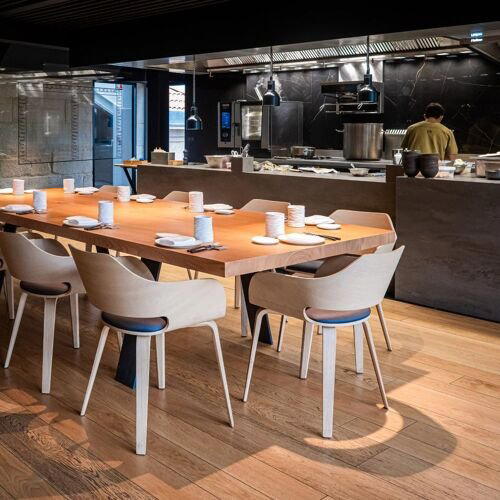
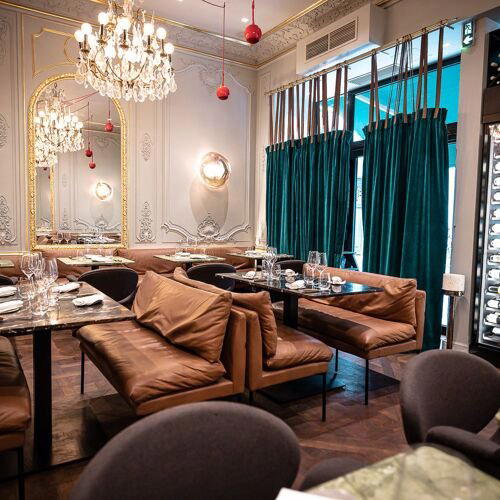
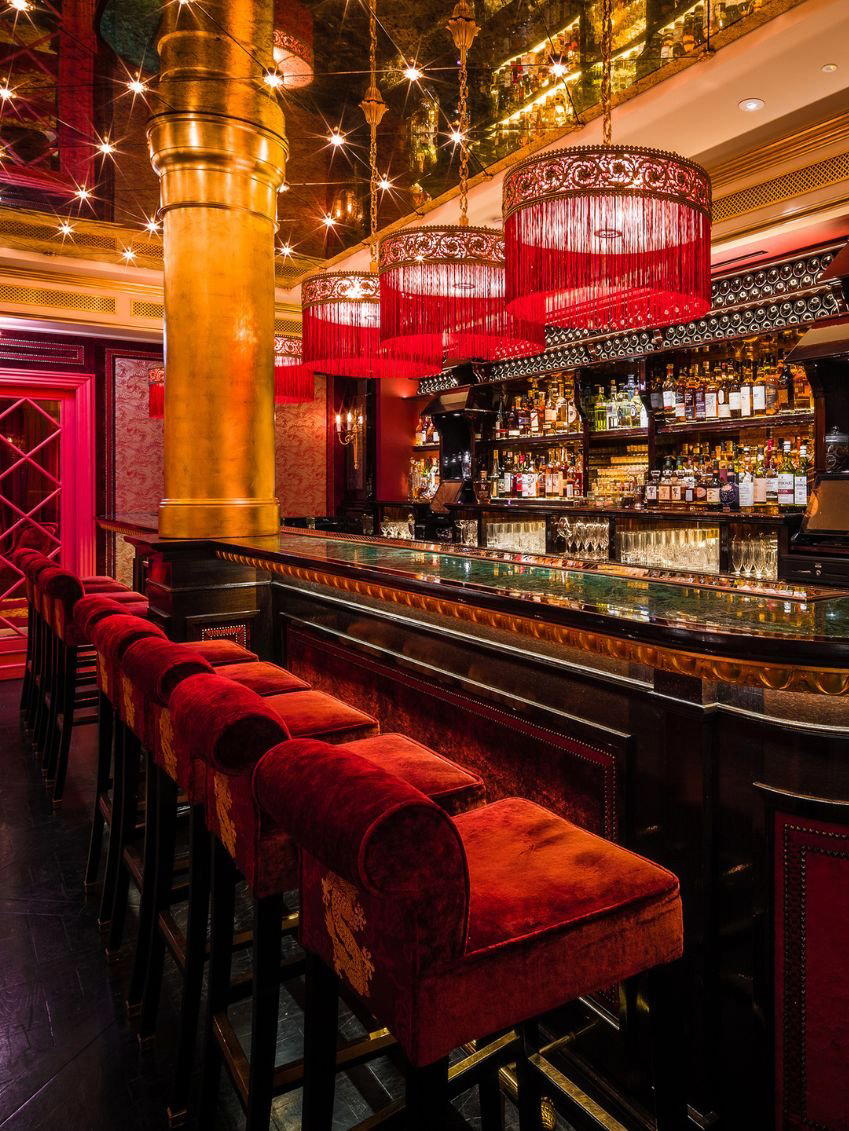
Upscale and contemporary, with a polished Michelin-star dining atmosphere.