Bérêche et Fils

Bérêche et Fils operates from the Montagne de Reims village of Ludes, where Raphaël and Vincent Bérêche have built one of Champagne's most soil-focused houses since the family's first vintage in 1979. Awarded Pearl 4 Star Prestige in 2025, the domaine produces wines that read as direct arguments about what chalk, clay, and slope actually taste like when the winemaker steps aside and lets the land speak.
 Discover on Pearl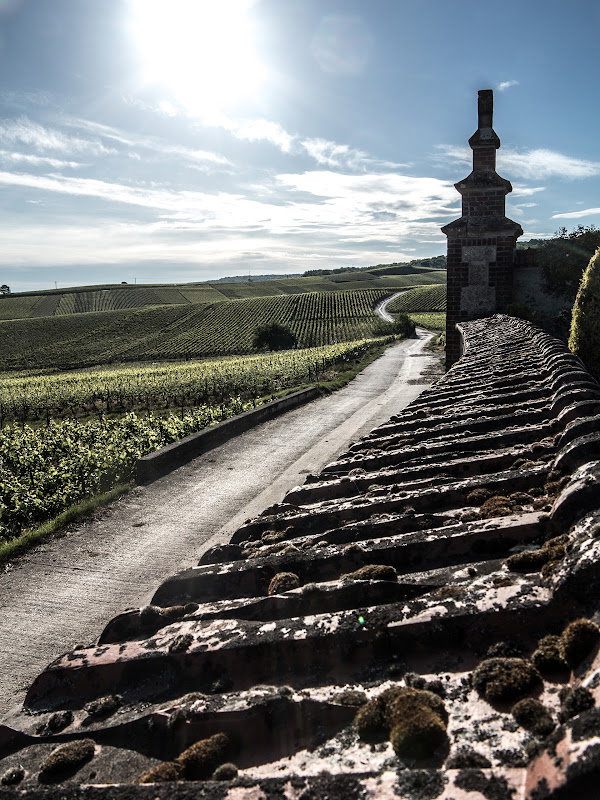
Chalk Country: What the Montagne de Reims Tastes Like at Ground Level
The Montagne de Reims sits between Reims and Épernay as a forested ridge whose northern and southern flanks carry some of Champagne's most geologically varied soils. Most large négociant houses blend across this territory to achieve consistency; a smaller cohort of grower producers does the opposite, treating each parcel as a distinct argument. Bérêche et Fils, working from Route de Louvois at Le Craon de Ludes in the village of Ludes, belongs firmly to the second group. The domaine has been producing since 1979, and the current generation — Raphaël and Vincent Bérêche — has sharpened a model built on reading the land rather than correcting it. In 2025, EP Club awarded the house a Pearl 4 Star Prestige rating, placing it among a small tier of producers where terroir expression is not a marketing position but a measurable winemaking discipline.
Ludes sits on the northern slope of the Montagne de Reims, an area where the chalk belt is closer to the surface than on the Côte des Blancs but sits beneath a more complex mix of clay and sandy loam. That geological layering matters because it shifts the character of Pinot Noir grown here: the wines carry more structural tension than those from the warmer southern flank, with an acidity that reads less as correction and more as natural architecture. Understanding this is essential context for any visit to Bérêche et Fils, because the wines make considerably more sense once you have stood on that slope and felt the temperature differential between the exposed upper parcels and the sheltered lower ground. For broader orientation around the region's producers, our full Vaudemange wineries guide maps the area's key addresses.
How Grower Champagne Split into Two Distinct Tiers
The grower Champagne category has fragmented significantly over the past two decades. An early wave of récoltant-manipulants gained attention primarily for being small and non-négociant; a more recent cohort has moved the argument onto harder ground, competing on vineyard specificity, low-intervention cellar work, and release discipline. Bérêche et Fils sits in that second tier, which is a more demanding place to operate. Consumers in this segment are comparing parcel-specific cuvées against peers from producers like Ulysse Collin, Jacques Lassaigne, and Laherte Frères , houses where the conversation is almost entirely about chalk expression, harvest timing, and dosage philosophy. The Pearl 4 Star Prestige recognition in 2025 signals that Bérêche holds its position credibly within that competitive set.
For comparison, consider how similar discipline plays out in other French wine regions. Albert Boxler in Niedermorschwihr applies comparable parcel-level rigour to Alsace's Grand Cru sites, and the results carry the same kind of geological specificity that characterises Bérêche's work. Further south, Château Bastor-Lamontagne in Preignac and Château Branaire Ducru in St-Julien occupy analogous positions in Bordeaux: houses with clear site identities, operating within a category defined by strict typicity rather than stylistic flexibility. The common thread is winemakers who treat the appellation's constraints as material rather than limitation.
Terroir Expression as Method, Not Philosophy
At Bérêche et Fils, the emphasis on terroir is practical before it is theoretical. The northern Montagne parcels around Ludes and Ormes deliver Pinot Noir with a different textural density than the Pinot Meunier-dominant plots further west toward Rilly-la-Montagne. The house works these differences into its range rather than blending them away, which produces wines that are sometimes less immediately generous than large-house Champagnes but considerably more specific in what they communicate about place and vintage. The 1979 first vintage gives the domaine a long enough record to track how those expressions have developed over time, a temporal depth that matters when evaluating whether a producer's terroir claims are consistent or opportunistic.
Raphaël and Vincent Bérêche have continued this lineage with a cellar approach that keeps intervention minimal: longer lees ageing, careful disgorgement timing, and dosage levels calibrated to let the wine's acidity read cleanly rather than be softened into approachability. The results have drawn sustained attention from the specialist press precisely because the approach is legible in the glass. You can taste the decision to prioritise structure over immediate approachability, and that legibility is what separates this tier of grower Champagne from the category as a whole.
Visiting the Domaine: What to Expect on the Ground
The domaine's address on Route de Louvois places it in working agricultural territory, not a polished wine tourism corridor. Ludes is a small Champagne village, and the approach to the property reflects that: the landscape here is vineyard and cellar, not visitor centre and tasting pavilion. That is consistent with how the wines are made and how the house positions itself. Visitors who come expecting the hospitality infrastructure of a major Reims négociant house will find something more stripped back and more focused. For those planning a wider stay in the area, our full Vaudemange hotels guide covers accommodation options, and our full Vaudemange restaurants guide lists dining in the surrounding villages. The bars guide and experiences guide round out the picture for a multi-day itinerary across the Montagne de Reims.
Visits to grower houses at this level typically require advance contact, and Bérêche et Fils is no exception. The domaine does not operate on a walk-in basis; allocations for certain cuvées are managed through a mailing list structure that mirrors how Bordeaux châteaux handle release. For context on how allocation and access work at comparable prestige-tier properties, Château Batailley in Pauillac, Château Bélair-Monange in Saint-Emilion, and Château Cantemerle in Haut-Médoc all operate with similar release discipline. The pattern across these houses is consistent: access rewards forward planning rather than spontaneity.
For visitors building a broader French wine itinerary, Chartreuse in Voiron offers a contrasting format, and producers like Château Boyd-Cantenac in Cantenac and Abadía Retuerta in Sardón de Duero demonstrate how different European wine regions approach the relationship between estate identity and visitor experience. Aberlour in Aberlour shows a completely different category of production heritage for those whose itinerary extends beyond wine.
Why the 2025 Rating Places Bérêche in a Specific Peer Set
EP Club's Pearl 4 Star Prestige rating in 2025 positions Bérêche et Fils within a tier of producers where the evaluation criteria lean heavily on consistency, site specificity, and the ability to hold editorial position across multiple vintages. At this level, a single impressive release is insufficient; the rating reflects a pattern of performance that confirms the house's approach is repeatable rather than vintage-dependent. For Champagne, that consistency argument is particularly demanding given the appellation's climatic variability. The fact that the domaine has maintained its approach since 1979 and earned recognition at this level in 2025 suggests the model is structurally sound, not circumstantially successful.
Frequently Asked Questions
Peer Set Snapshot
These are the closest comparables we have in our database for quick context.
| Venue | Awards | Notes |
|---|---|---|
| Bérêche et Fils | Pearl 4 Star Prestige | This venue |
| A. Margaine | Pearl 2 Star Prestige | |
| Agrapart & Fils | Pearl 4 Star Prestige | Pascal Agrapart, Est. 1986 |
| Albert Boxler | Pearl 3 Star Prestige | |
| Alfred Gratien | Pearl 4 Star Prestige | Nicolas Jaeger, Est. 1864 |
| Augier | Pearl 2 Star Prestige |
Access the Cellar?
Our members enjoy exclusive access to private tastings and priority allocations from the world's most sought-after producers.
Get Exclusive Access