Zum Dorfschmied
Our verdict
In the Gurk Valley village of Klein Sankt Paul, Zum Dorfschmied occupies a position that says something about where serious Austrian regional cooking is heading: away from city centres and toward the source. The address alone signals intent. For travellers willing to drive into Carinthia's quieter interior, it represents a particular strand of Austrian hospitality grounded in place rather than prestige.

Pearl is the En Primeur Club membership app, where members save venues, book tables and use the concierge.
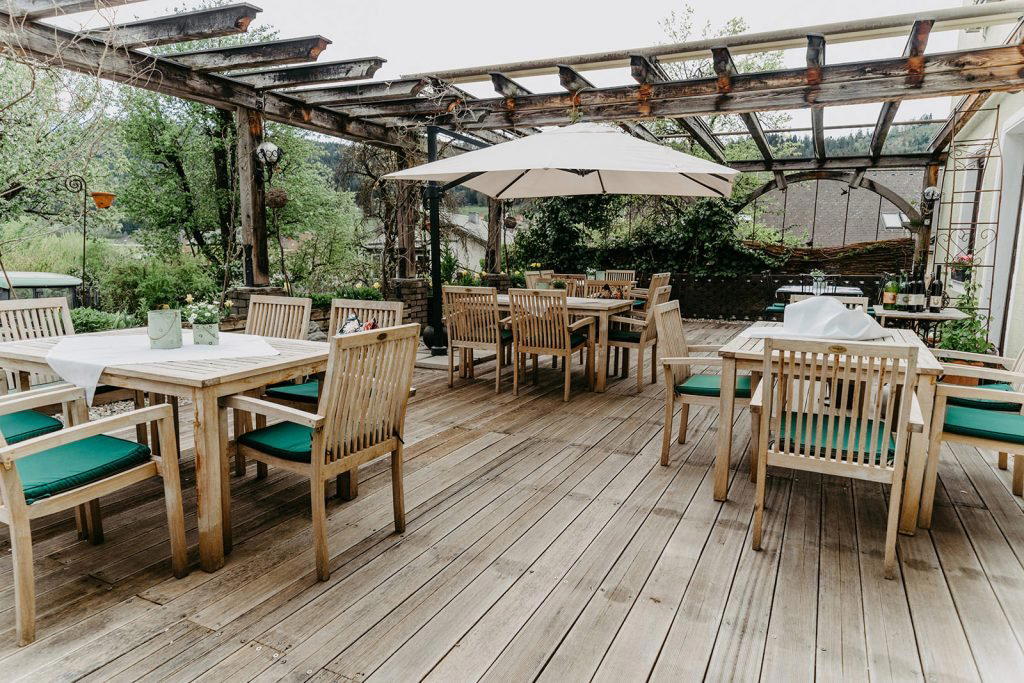
Where Carinthia's Quiet Interior Does the Talking
The approach to Klein Sankt Paul sets expectations before you arrive. The Gurk Valley rolls through one of Carinthia's less-trafficked corridors, where the pace of landscape, pasture giving way to orchard, orchard to forest, does something to the appetite that no urban preamble can replicate. Zum Dorfschmied sits on Marktstraße in the village centre, in a setting that reads as agricultural community first and dining destination second. That ordering matters. Across Austria, a particular category of serious regional cooking has consolidated around exactly this kind of address: not a converted aristocratic estate, not a ski-resort annexe, but a working village building where the relationship between kitchen and surrounding land is short and legible.
This pattern has precedent throughout the Austrian countryside. Obauer in Werfen built its reputation in a similarly unhurried market-town setting. Landhaus Bacher in Mautern an der Donau operates along the Danube with the same logic: proximity to the source as both practical advantage and editorial statement. Zum Dorfschmied occupies a comparable position in Carinthia's interior, where the sourcing geography, alpine meadows, glacial lakes, forested hillsides, is among the most distinctive in the country.
Carinthia's Ingredient Map
Carinthia's culinary identity has always been shaped by its geography more than its politics. The province sits at the intersection of Austrian, Slovenian, and Italian influence, which has produced a larder with unusual range: freshwater fish from the Wörthersee and surrounding lakes, game from managed forest estates, dairy from high-altitude summer pastures, and a vegetable-growing tradition that follows the valley microclimates rather than any single regional template. What grows here, and when it grows, determines what ends up on tables in villages like Klein Sankt Paul with a directness that larger-city restaurants spend considerable effort simulating.
The broader Austrian dining conversation has moved firmly in the direction of this sourcing logic. Steirereck im Stadtpark in Vienna has made hyper-local Austrian produce central to its identity for years, to the point where its sourcing network is as documented as its technique. Kräuterreich by Vitus Winkler in Sankt Veit im Pongau has pushed the herb and alpine-plant argument further still. In each case, the restaurant's credibility rests on the quality and specificity of what comes in through the back door, not only on what leaves the pass. Zum Dorfschmied sits within this tradition, in a village where that relationship is structural rather than curated.
The Village Restaurant in the Austrian Context
Austria's most interesting food moment is not happening exclusively in Michelin-mapped cities. A quieter dispersal of serious cooking across provincial towns and rural communities has been underway for more than a decade, driven partly by the economics of city operation and partly by a genuine re-evaluation of what regional identity means on a plate. The Tyrol has contributed Gourmetrestaurant Tannenhof in Sankt Anton am Arlberg and Griggeler Stuba in Lech. Salzburg's hinterland has Döllerer in Golling an der Salzach. Upper Austria has Ois in Neufelden. Each of these represents a deliberate choice to operate where the ingredients originate rather than where the restaurant critics concentrate.
Carinthia has been slower than some provinces to build an internationally visible dining profile, which makes venues like Zum Dorfschmied more significant as markers of where the region's culinary confidence is travelling. The village-inn format, when taken seriously, carries an argument that no tasting-menu restaurant in a capital city can replicate: this is food of this place, in this place, served to people who live here and people who drove a considerable distance to eat it.
That said, the village-inn category in Austria ranges considerably. At the lower end, it means schnitzel and house wine with no particular sourcing ambition. At the upper end, it means cooking that draws on the same principles as the country's recognised fine-dining operations but delivers them through a more grounded, less ceremonial format. The distinction between these tiers is usually found in procurement decisions: who supplies the meat, how far the fish has travelled, whether the kitchen grows or forages anything itself. For travellers making a specific trip to Klein Sankt Paul, understanding which end of that spectrum Zum Dorfschmied occupies requires direct engagement with the venue.
Getting There and Planning Your Visit
Klein Sankt Paul sits in the Gurk Valley roughly between Friesach and Sankt Veit an der Glan, in central Carinthia. The village is not served by frequent public transport, and the practical reality for most visitors is a car journey from Klagenfurt (approximately 40 kilometres south) or from Graz via the A2 motorway corridor. Travellers combining this with broader Carinthian dining and cultural itineraries might include time at Artis in Graz as a city counterpoint. The address at Marktstraße 16 places Zum Dorfschmied in the village's central strip, accessible without difficulty once you have arrived in Klein Sankt Paul itself. Given the absence of published booking information in circulation, contact through direct inquiry on arrival or via local tourism channels is the most reliable approach. Seasonal operating patterns are common across this category of Austrian rural restaurant, so confirming opening days before travel is worth the effort. For a broader orientation to what the area offers, our full Klein Sankt Paul restaurants guide maps the local context in more detail.
For comparison across Austrian regions and formats, the range at Ikarus in Salzburg, Schwarzer Adler in Hall in Tirol, Stüva in Ischgl, Taubenkobel in Schützen am Gebirge, Restaurant 141 by Joachim Jaud in Mieming, and Atelier Fischer in Sankt Gilgen illustrates how differently Austria's serious regional cooking expresses itself across geography and format. International points of reference, whether the ingredient-led rigour of Le Bernardin in New York City or the produce-to-technique precision of Atomix in New York City, underscore how the sourcing-first argument travels across very different culinary cultures.
Frequently asked questions
Is Zum Dorfschmied suitable for children?
Village restaurants in the Austrian Gurk Valley corridor generally operate as family-friendly spaces, and Zum Dorfschmied's setting in Klein Sankt Paul, a quiet rural community rather than an urban dining destination, supports that expectation. The pace and scale of a village Gasthaus format typically accommodates families without issue. Confirming directly with the restaurant ahead of your visit is advisable, particularly for younger children at dinner service.
Is Zum Dorfschmied formal or casual?
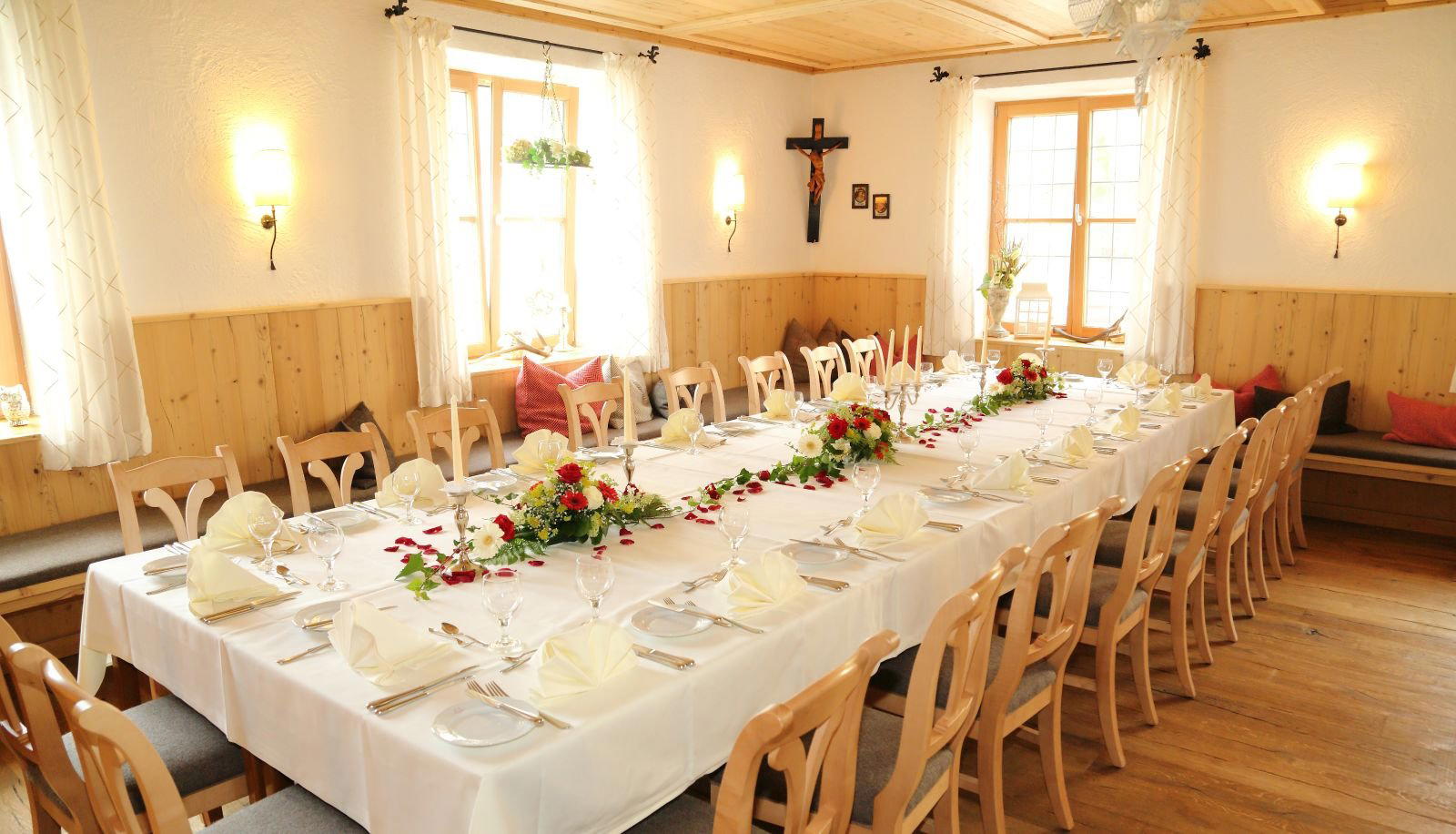
The address at Marktstraße 16 in Klein Sankt Paul places this squarely within the Austrian Dorfgasthaus tradition, a format that runs on comfort and community rather than ceremony. Dress codes and formal service rituals are not a feature of this type of venue. Expect a relaxed register that reflects the Gurk Valley's rural character.
Is Zum Dorfschmied worth the drive from Klagenfurt or Graz for a meal?
Klein Sankt Paul sits in the Gurk Valley between Friesach and Sankt Veit an der Glan, roughly an hour from Klagenfurt and around two hours from Graz. The village is not a passing-through stop, a visit to Zum Dorfschmied requires deliberate planning. That kind of destination commitment is characteristic of Austria's growing provincial dining scene, where serious regional cooking has dispersed well beyond the Michelin-mapped cities.
What's the signature dish at Zum Dorfschmied?
Carinthian cooking in this part of Austria typically draws on cross-border influences from Slovenia and Italy, with staples like Kasnudeln (cheese-filled pasta) and freshwater fish from regional lakes appearing across the provincial table. Contacting the restaurant directly will give the most accurate picture of what is on the menu.
A Quick Peer Check
| Venue | Cuisine | Price | Awards | Notes |
|---|---|---|---|---|
| Zum DorfschmiedThis venue (the venue you are viewing) | Traditional Austrian Gasthof | Not listed | Not listed | Not listed |
| Steirereck im Stadtpark | Modern Austrian Fine Dining | $200–300 | 3 Michelin Stars · World's 50 Best #30 | Creative |
| Döllerer | Modern Alpine Cuisine | $100–150 | 2 Michelin Stars · La Liste Top Restaurants | Contemporary Austrian, Innovative |
| Ikarus | Guest Chef Fine Dining | $200–300 | 2 Michelin Stars · La Liste Top Restaurants | Modern European, Creative |
| Konstantin Filippou | Modern Fish-Led Fine Dining | $200–300 | 2 Michelin Stars · La Liste Top Restaurants | Modern European, Modern Cuisine |
| Landhaus Bacher | Classic Austrian Fine Dining | $100–150 | 2 Michelin Stars · La Liste Top Restaurants | Austrian, Classic Cuisine |
Continue exploring
More in Klein Sankt Paul
Restaurants in Klein Sankt Paul
All restaurants in Klein Sankt Paul →
Bars in Klein Sankt Paul
Browse all →
Hotels in Klein Sankt Paul
Browse all →

Details
- Cozy
- Rustic
- Family
- Casual Hangout
- Wine Cellar
- Local Sourcing
- A La Carte
Cozy and informal with warm, welcoming lighting.