Zandunga

Michelin Plate
Our verdict
A Mexican kitchen in Busan's Busanjin-gu district that makes everything from scratch, including fresh tortillas pressed each morning from multiple corn varieties. The industrial-meets-relaxed interior and attentive service set it apart from the city's dining mainstream. The pork taco is the dish most regulars return for.

Pearl is the En Primeur Club membership app, where members save venues, book tables and use the concierge.
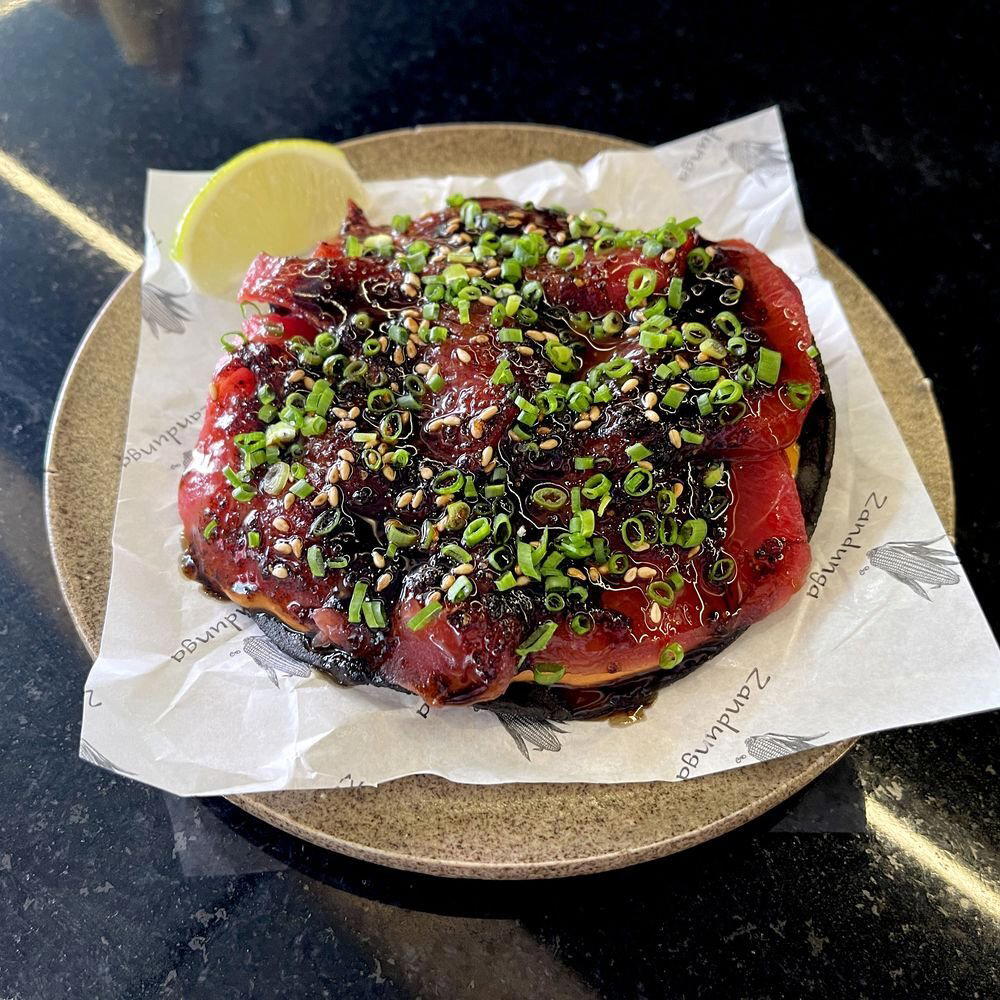
The menu
What to order
- Pork Taco
- Tuna and Scallop Tostada
A Quiet Alley, a Loud Tradition
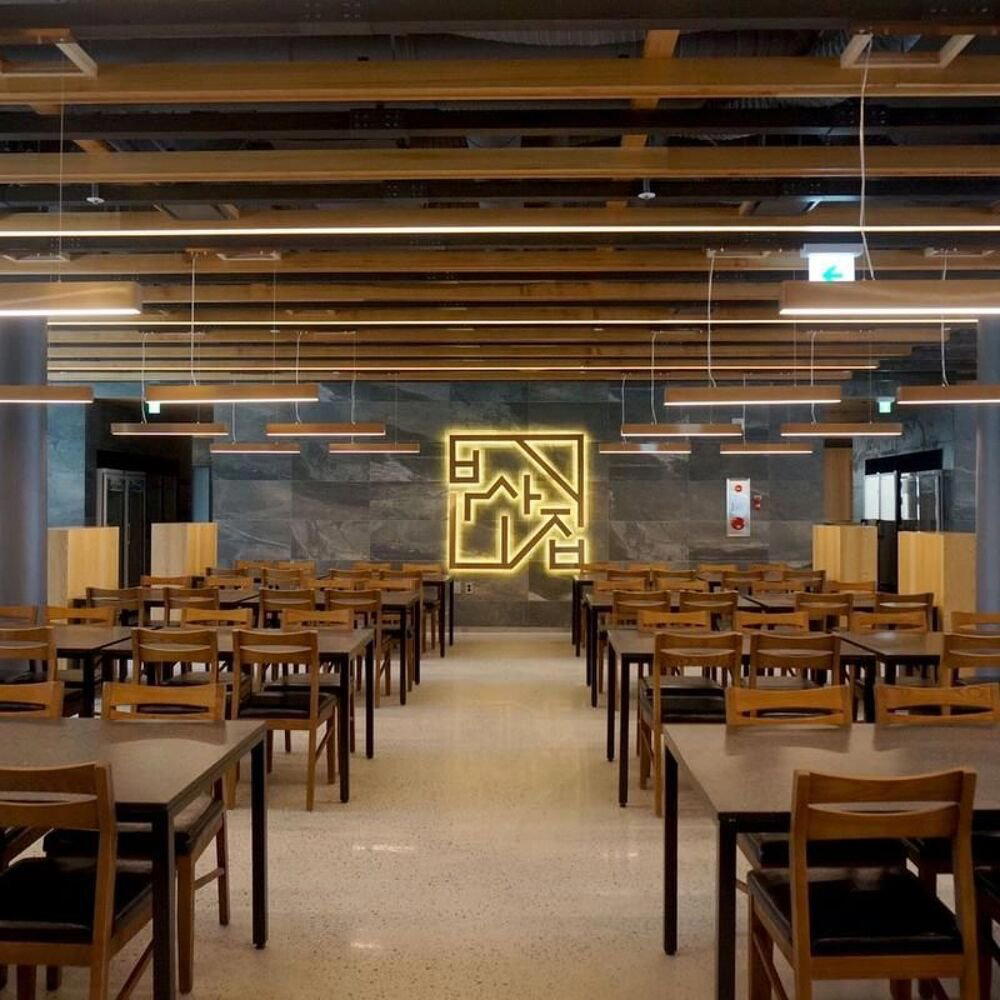
The approach to Zandunga gives little away. Tucked into a quiet alley off Dongcheon-ro in Busanjin-gu, the address sits outside Busan's more trafficked dining corridors, where venues like Palate (Contemporary) or Mori (Japanese) occupy more visible real estate. Inside, the register shifts: an industrial interior with exposed materials runs against the warmth of the music, which keeps the room from feeling cold or performative. It is the kind of space where the environment does editorial work on the diner before the food arrives, signalling that this is not a Korean-Mexican fusion concept built on novelty, but a kitchen genuinely committed to the source tradition.
That commitment shows up most clearly in the production method. In a city where Korean staples drive the dining conversation, from the 1969 Buwondong Kalguksu end of the spectrum through to the premium end occupied by Born and Bred (Steakhouse), Zandunga occupies a different lane entirely: a kitchen that imports technique rather than shortcut, producing its own tortillas, fillings, and sauces in-house on a daily basis.
The Case for Making It Yourself
The global spread of Mexican cuisine has produced two broad outcomes. In major food cities, it has generated both serious taco programs with deep nixtamal practice and fast-casual formats that lean on premade components and convenience. Across Asia, the latter has dominated. The handful of kitchens taking the former route, where masa is treated with the same discipline that ramen or dim sum receives in their respective traditions, are a smaller and more interesting cohort.
Zandunga positions itself clearly in that group. Fresh tortillas are made every morning, and the kitchen works with different corn varieties to produce colour variations, a practice that signals knowledge of Mexican corn culture rather than a purely aesthetic decision. This matters because colour in corn-based cooking is a function of variety and origin: blue corn, yellow corn, and red corn each carry different starch profiles and flavour signatures. The decision to work across varieties rather than default to a single base reflects a seriousness that most cross-cultural Mexican kitchens, even in larger cities, sidestep.
For further reference on how kitchens outside Mexico's borders handle indigenous technique at scale, the approaches taken by places like Emeril's in New Orleans or the seafood precision at Le Bernardin in New York City illustrate how imported discipline applied to local and imported ingredients can define a kitchen's identity independent of geography. Zandunga applies a comparable logic at a smaller, more neighbourhood scale.
What the Pork Taco Demonstrates
The pork taco has been flagged as the dish that earns repeated visits. In the context of a kitchen making everything in-house, a single well-executed pork taco functions as a diagnostic: it tests the tortilla, the protein preparation, the sauce balance, and the structural integrity of the assembly. A taco that collapses under its own filling signals shortcuts somewhere in the chain. One that holds together and tastes coherent across its components signals the opposite.
Within Busan's broader dining map, this kind of focused, produce-driven cooking finds parallels in the city's obsession with sourcing in other cuisines. Korean dining culture has always placed emphasis on ingredient provenance, from the pork-bone broth specificity of dwaeji-gukbap to the cold noodle precision of operations like 100.1. Pyeongnaeng (Naengmyeon). What Zandunga introduces into that environment is a Mexican production ethic that runs on similar logic: daily freshness, variety-specific ingredients, and scratch preparation as the non-negotiable baseline.
Where Zandunga Sits in the City
Busan's dining scene has diversified considerably over the past decade. Fine dining has arrived through Korean-inflected contemporary menus, and the international category has expanded beyond the expected Japanese and Western formats. Venues such as Palate represent the contemporary Korean end of that shift. Zandunga represents something different: a non-Korean cuisine executed with enough technical commitment to earn credibility among a dining public that applies high standards to its own food traditions.
For readers planning a broader trip, the full Busan restaurants guide maps the scene by cuisine and price tier. The Busan hotels guide, bars guide, wineries guide, and experiences guide cover the rest of the city's offer in comparable depth.
Elsewhere in Korea, the same question of how global cuisine adapts to a Korean dining public is being worked through at very different price points and scales: Mingles in Seoul operates at the fine-dining register with Korean ingredients and French-informed technique; 권숙수 - Kwon Sook Soo in Gangnam-gu applies precision to Korean tradition itself. Baegyangsa Temple in Jangseong-gun, 더 플라잉 호그 - The Flying Hog in Seogwipo, Double T Dining in Gangneung, and Pool House in Incheon each represent distinct regional takes on the same broader question of how international food cultures find their footing in Korea.
Planning Your Visit
Zandunga is located at 41 Dongcheon-ro 108 beon-gil, Busanjin-gu, Busan. The alley setting means the entrance requires a moment of navigation on first visit; arriving on foot from the nearest metro station is direct, and the quieter surroundings make the location feel deliberate rather than accidental. Given the kitchen's daily fresh production and the size of the space, arriving early in a service period is advisable: the tortillas are made each morning, which means the selection is at its most complete earlier rather than later. The service style is warm and attentive, which makes the room accessible for first-time visitors unfamiliar with the menu.
Frequently asked questions
Where exactly is Zandunga?
Zandunga is located at 41 Dongcheon-ro 108 beon-gil, Busanjin-gu, Busan.
What's Zandunga known for in terms of accolades?
Zandunga has received recognition including: Tucked away in a quiet alley, this spot combines an industrial, chic interior with lively music for a relaxed, inviting atmosphere. Inspired by his passion for Mexican cuisine, the chef started this restaurant. Everything from tortillas to ….
What should I eat at Zandunga?
The pork taco is the dish most associated with repeat visits, and it demonstrates the logic of the kitchen: tortillas pressed fresh each morning from multiple corn varieties, with fillings and sauces made entirely in-house. Starting there gives you a clear read on what separates Zandunga from shortcut-heavy competitors in the city.
Can I walk in to Zandunga?
No booking or contact information is publicly listed for Zandunga, which makes the walk-in question genuinely open. The alley address at 41 Dongcheon-ro 108 beon-gil means first-time visitors should allow a moment to locate the entrance; arriving early or at off-peak hours is a reasonable hedge given the kitchen's reputation for drawing regulars.
What's the standout thing about Zandunga?
The full in-house production model is what sets this kitchen apart in Busan's Mexican food context: tortillas, fillings, and sauces are all made on-site, with colourful corn-variety tortillas pressed every morning. That level of process discipline is rare outside dedicated taqueria scenes in Mexico City or Los Angeles, let alone in South Korea.
Can Zandunga accommodate dietary restrictions?
No dietary or allergen information is listed for Zandunga. Given that the kitchen builds its menu around pork preparations and corn-based tortillas made in-house, guests with specific requirements should confirm directly before visiting. The in-house production model does mean the kitchen has direct control over ingredients, which can work in favour of customisation requests.
How It Stacks Up
Comparable venues nearby, for context on price, style, and recognition.
| Venue | Cuisine | Price | Awards | Notes |
|---|---|---|---|---|
| ZandungaThis venue (the venue you are viewing) | Modern Mexican Taqueria | $20–30 | Michelin Plate | Not listed |
| Good morning Hongkong | Hong Kong Cha Chaan Teng | Not listed | Michelin Plate | Jeonpo 2(i)-dong |
| Moemiljip | Korean Buckwheat Noodles (Memil-guksu) | $20–30 | Michelin Bib Gourmand | U 3-dong |
| Pyeongsanok | Traditional Korean Boiled Pork and Noodles | $10–20 | Michelin Plate | Choryang 1(il)-dong |
| Haeundae Rib Barbecue Restaurant | Traditional Korean Galbi BBQ | $30–50 | Michelin Plate | Jung 1(il)-dong |
| Ultra bite | Contemporary | Not listed | Michelin Plate | Millak-dong |
Recognition history
Dated appearances from independent guides and award organizations, with the underlying list record or original source where available.
Michelin Plate
Michelin
Continue exploring
More in Busan
Restaurants in Busan
All restaurants in Busan →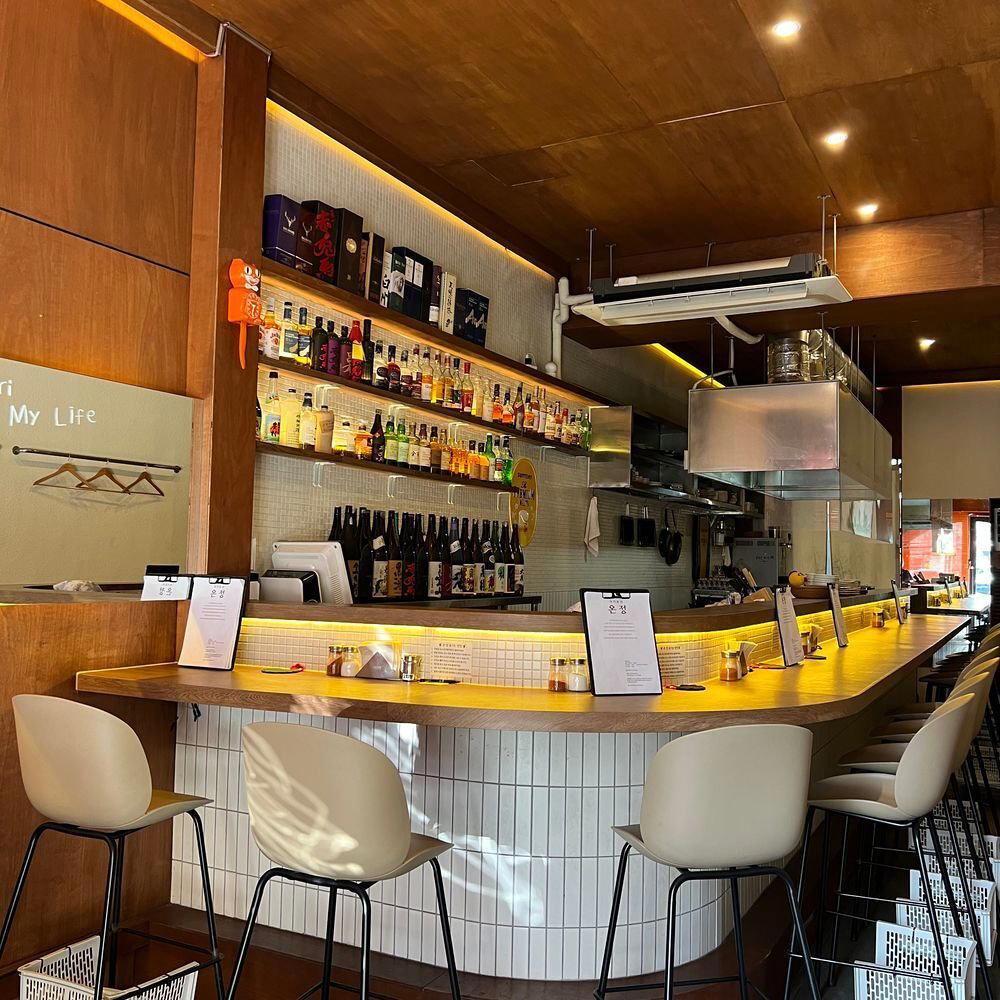
Bars in Busan
All bars in Busan →
Details
- Industrial
- Trendy
- Lively
- Solo
- Casual Hangout
- A La Carte
Current opening hours
- Monday
- Closed
- Tuesday
- Closed
- Wednesday
- 12–9 PM
- Thursday
- 12–9 PM
- Friday
- 12–9 PM
- Saturday
- 12–9 PM
- Sunday
- 12–9 PM
Hours can change for holidays and private events. Hours as of .
Industrial chic interior with Mexican accents and lively music creating a relaxed, inviting vibe.