
Yusuke is a compact Osaka udon counter in Nishinakajima, selected for Tabelog 100 Udon WEST 2024 and built around wheat noodles and curry udon rather than ceremony. Its nine counter seats place it in the city’s everyday-specialist tier: affordable, focused, and better understood through Osaka’s noodle culture than through luxury dining language.
Pearl is the En Primeur Club membership app — saves, bookings, and concierge access live there. Same editors, same standards.
- Address
- 3 Chome-15-3 Nishinakajima, Yodogawa Ward, Osaka, 532-0011, Japan
- Website
- x.com
 Saves & bookings on Pearl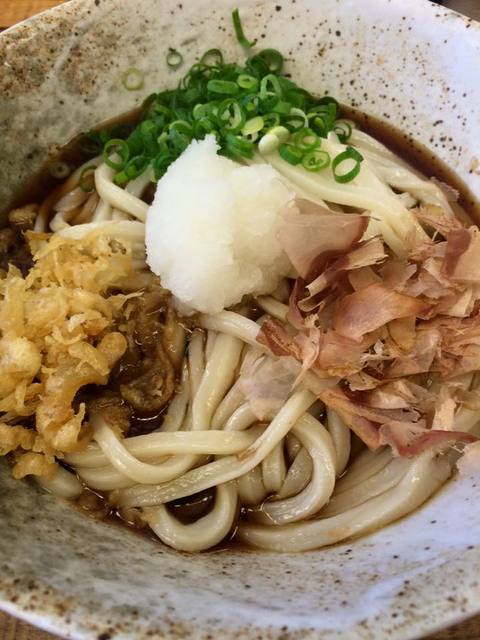
Approaching a small udon counter in Osaka is not the same ritual as entering a tasting-menu dining room. The cues are tighter and quicker: a short frontage, counter seats, steam, the rhythm of bowls moving across a narrow room. In Nishinakajima, just north of central Osaka’s heavier tourist corridors, Yusuke belongs to that practical strand of Kansai eating where craft is measured in repetition, speed, and the texture of wheat noodles rather than in theatrical presentation.
Osaka has always been unusually good at food that refuses to behave like a luxury object. Udon fits that temperament. Compared with soba’s austere reputation or ramen’s modern cult of specialization, udon in Kansai leans toward comfort, broth clarity, and everyday frequency. The serious shops are not casual because they lack discipline; they are casual because the form was built for regular use. A Tabelog 100 Udon WEST 2024 selection places this counter inside a regional conversation about noodle craft, not simply inside a neighbourhood lunch map.
A nine-seat counter in Osaka's everyday noodle culture
The room’s format matters because udon is a timing-sensitive cuisine. Counter seating compresses the distance between kitchen rhythm and diner, which suits a dish category where texture changes quickly once noodles meet hot broth or curry sauce. Yusuke has nine counter seats, a scale that pushes the meal toward directness: no private rooms, no long service arc, no attempt to convert a bowl of noodles into a fine-dining performance. That restraint is the point.
The categories listed here are udon and curry udon, a pairing that says a great deal about Osaka’s range. Plain udon depends on noodle chew, broth balance, and restraint. Curry udon belongs to the city’s appetite for comfort with weight: thicker, warmer, more emphatic, and less delicate in its pleasures. In Kansai, where dashi culture is central to everyday cooking, curry udon can read as a bridge between noodle shop and yoshoku-adjacent comfort food. It is not a side note; it is part of the region’s vocabulary.
That vocabulary also explains why price alone can mislead. Osaka has serious restaurants at nearly every spend level, from station-adjacent counters to reservation-led dining rooms. In the same broad city ecosystem, Jinrui Mina Menrui keeps ramen in the low-cost bracket, OSORACAFE and Toki Ya sit in the casual daytime range, Spice Curry Shunka To represents another inexpensive specialist lane, and Unagiya Unagi moves into a much higher eel-restaurant spend. Against that spread, an udon counter selected for a regional Tabelog list reads as a high-conviction, low-ceremony choice rather than a luxury signal.
Why the Tabelog 100 Udon WEST selection matters
Japan’s crowd-review dining culture rewards consistency at scale, but category lists such as Tabelog 100 are more useful when read as maps of specialist depth. Udon is not a cuisine where recognition usually comes from imported ingredients or design budgets. It comes from repeat diners noticing whether the same bowl holds its shape across ordinary meals. Selection for the 2024 WEST udon list gives Yusuke a clear trust marker in a field where international visitors often know ramen far better than udon.
That distinction is worth making in Osaka. The city’s global food image often runs through takoyaki, okonomiyaki, kushikatsu, and late-night ramen, but udon carries a quieter form of regional fluency. It is tied to wheat, broth, speed, and the working rhythm of neighbourhoods around rail lines. Nishinakajima is not a postcard district; it is a practical area of offices, transit, and local eating. A compact noodle counter makes sense there because the audience is not built only around destination dining. It is built around people who return when the fundamentals hold.
The opening date, 2014, also gives useful context. A decade-plus of operation in Osaka’s casual dining tier is not a decorative fact. Low-priced specialist restaurants face a different pressure from luxury rooms: tight margins, repeat local scrutiny, and little tolerance for inconsistency. Longevity in that environment suggests a place embedded in routine, which is often where Japanese noodle culture is strongest.
How to place it within an Osaka itinerary
For travellers building an Osaka food day, this is the kind of stop that works better as a category correction than as a spectacle. Use it to understand how the city treats noodles outside the ramen frame, then compare that everyday precision with other formats across the city. EP Club’s full Osaka restaurants guide is the natural place to widen the map; nearby and citywide listings such as .cafe, 52CHO-ME BAKERY, 551 Horai (551蓬莱), 99 Pizza Napoletana Gourmet, and a canto (Italian) show how broad the city’s casual-to-specialist spectrum becomes.
The smarter comparison is not with haute cuisine, but with other compact Japanese formats that narrow the brief and execute within it. Across the wider guide network, that might mean beef sukiyaki at -Grilled beef Sukiyaki- KAMAKURA TANUKIAN 鎌倉 たぬき庵 in Kamakura, charcoal-led seafood at. 鮪と炭火焼き うお炭 秋葉原店 in Tokyo, contemporary regional cooking at.know in Kumamoto, Vietnamese cooking at (Shoku) Vietnam in Kawasaki, curry specialization at [Curry Senmon Ten] Maruyama Kyoju. in Sapporo, Kyoto minimalism at [ki:] in Kyoto, sake-bar dining at Jōdo Saké Bar in Los Angeles, and rice-ball culture at Onigiri Time in Pasadena. For the rest of the trip architecture, EP Club also maintains Osaka hotels, Osaka bars, Osaka wineries, and Osaka experiences guides.
The critical read is simple: Yusuke is valuable because it keeps the scale small and the category narrow. For visitors who already understand Osaka through snacks and nightlife, a focused udon counter adds another register: everyday food treated with enough seriousness to earn regional recognition, but not stripped of its practical character.
Cuisine and Awards Snapshot
Comparable venues to calibrate price, style, and recognition.
| Venue | Cuisine | Price | Notes |
|---|---|---|---|
| YusukeThis venue — the venue you are viewing | Handmade Udon | $ | Not listed |
| GARuRu KO-RI | Kakigori (Japanese shaved ice) specialty shop | $ | Kita |
| Spice and Curry Ougon no Kaze | Japanese spice curry | $ | Kita |
| Chuka Soba Kazura | Modern chicken shoyu ramen counter | $ | Nishi |
| yobareya | Japanese Curry | $ | Nishi |
| Mensho Shisei | Ramen | $ | Nishi |
Recognition history
Dated appearances from independent guides and award organizations, with the underlying list record or original source where available.
Tabelog 100 #88 · No. 88
Tabelog · Tabelog 100 - Udon - WEST - 2024
Continue exploring
More in Osaka
Restaurants in Osaka
Browse all →



Bars in Osaka
Browse all →


Hotels in Osaka
Browse all →



Wineries in Osaka
Browse all →
At a Glance
- Cozy
- Classic
- Solo
- Family
- Casual Hangout
- After Work
- Group Dining
- Standalone
Current opening hours
- Monday
- Closed
- Tuesday
- 11:30 AM–2:30 PM, 6–9 PM
- Wednesday
- 11:30 AM–2:30 PM, 6–9 PM
- Thursday
- 11:30 AM–2:30 PM, 6–9 PM
- Friday
- 11:30 AM–2:30 PM, 6–9 PM
- Saturday
- 11:30 AM–2:30 PM, 6–9 PM
- Sunday
- Closed
Hours can change for holidays and private events. Last verified .
Unpretentious, classic udon-ya atmosphere with a compact, functional interior that feels like a local favorite rather than a destination restaurant.