
Chuka Soba Kazura belongs to Osaka’s compact, queue-driven ramen culture, where a small counter and repeat Tabelog Ramen 100 selection matter more than ceremony. The appeal is less about long tasting-menu pacing than precision under constraint: a short-format meal, a serious local following, and a Hommachi location that rewards planning.
Pearl is the En Primeur Club membership app — saves, bookings, and concierge access live there. Same editors, same standards.
- Address
- 大阪府大阪市西区阿波座1-12-21 喜多ビル 1F
- Website
- tabelog.com
 Saves & bookings on Pearl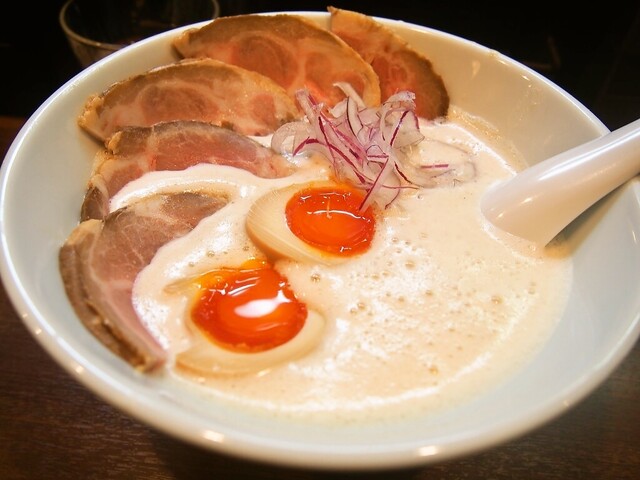
Approaching a serious Osaka ramen counter is a read of pavement, doorway, line, and seat turnover, not a grand entrance ritual. Around Hommachi and Awaza, office blocks and small restaurants set a midday rhythm where ramen must be efficient without feeling careless. Chuka Soba Kazura fits: compact, counter-led, and for diners who know the experience starts before the bowl arrives.
Osaka ramen needs no Tokyo-style mythology. The city excels at compression: short menus, tight rooms, fast turnover, and bowls competing for repeat local custom rather than destination theatrics. Here, selection for Tabelog Ramen OSAKA “Tabelog 100” in 2025, with earlier selections across the Osaka and West lists, matters. The signal is consistency, not luxury, in a category where the margin between a good bowl and a serious address is thin.
A nine-seat counter in Osaka's queue economy
Ramen in Japan rewards patience, but not the patience of kaiseki, sushi, or French dégustation. The discipline is logistical. A nine-seat counter shapes the meal before ordering: small groups slow the line, solo diners move naturally, and hesitation at the entrance matters. In dense commercial districts, ramen counters can feel closer to transport systems than restaurants; the rules are social as much as operational.
Chuka Soba Kazura belongs to that tradition. The room is counter seating, not lounge dining, with no private rooms or private use. For travellers, the choice is clear: a focused stop, not an extended lunch built around courses, wine service, or table conversation. It works when the day is planned around movement through central Osaka, especially for diners comparing casual local institutions with more formal meals.
The wider Osaka map frames the choice. A visitor might use Our full Osaka restaurants guide to balance ramen with bakery stops such as 52CHO-ME BAKERY, casual snack culture at 551 Horai (551蓬莱), or a different casual rhythm at .cafe. For a deliberate restaurant evening, Osaka also has Italian-leaning options such as a canto (Italian) and 99 Pizza Napoletana Gourmet. The point is tempo, not hierarchy: ramen occupies the sharp, efficient end of the city’s dining spectrum.
Recognition without tasting-menu inflation
The useful detail is price discipline. Osaka has many restaurants where dinner budgets move into several-thousand-yen territory; comparison venues such as Los Sitios and DENDA sit in the JPY 6,000 to JPY 7,999 range. Chuka Soba Kazura operates far lower, with the listed average price under JPY 999 and review-based spend also indicating casual-meal economics. The value is not cheapness alone, but the rare overlap of low-ticket dining and sustained specialist recognition.
Tabelog’s Ramen 100 lists filter a crowded field by category and region. A 2025 OSAKA selection, plus earlier Ramen WEST and OSAKA selections, indicates endurance rather than one spike of attention. In a city where diners can eat well without planning weeks ahead, repeat recognition beats social-media noise and makes the counter a credible, evidence-backed ramen stop.
The food idea should be read through the name and category before unsupported dish mythology. “Chuka soba” points to older Japanese ramen vocabulary: Chinese-style noodles adapted into a Japanese everyday form. It needs no theatrical toppings or chef biography. The lineage is broth, noodles, tare, fat, heat, and pace. For travellers used to ramen abroad, the lesson is restraint: in Osaka, a serious bowl need not announce itself with excess.
That restraint separates this stop from broader Japan itineraries. Regional contrasts help: [Curry Senmon Ten] Maruyama Kyoju. in Sapporo frames another casual Japanese specialty through curry, [ki:] in Kyoto points to Kyoto’s different dining grammar, and.know in Kumamoto shows how regional restaurants work outside the Osaka-Tokyo corridor. Osaka ramen shares the national habit of specialization, but its advantage is speed and accessibility.
How to fit it into an Osaka day
Treat a counter this size as the anchor of a tight neighbourhood window, not a flexible afterthought. Hommachi is practical for travellers moving between business districts, shopping areas, and transit lines, so the meal can sit between hotel check-in, galleries, shopping, or a later bar plan. For wider planning, Our full Osaka hotels guide, Our full Osaka bars guide, and Our full Osaka experiences guide help build the day around the stop rather than treating ramen as an isolated detour.
The operational cues matter. Reservations are not the model, and line etiquette counts: groups should gather before joining, rather than sending one person ahead. Payment is old-school, so plan cash because cards, electronic money, and QR payments are not accepted. None of this is unusual for a serious small ramen counter in Japan, but it catches travellers expecting every acclaimed address to behave like an international restaurant.
Osaka rewards cross-category eating, and contrast sharpens the ramen experience. A day might move from compact noodle counter to bakery, then a more formal dinner, or from ramen to a bar without making the meal carry the evening. Travellers building a broader Japan route can compare that rhythm with casual addresses such as (Shoku) Vietnam in Kawasaki, seafood-and-grill formats like. 鮪と炭火焼き うお炭 秋葉原店 in Tokyo, or regional meat dining at -Grilled beef Sukiyaki- KAMAKURA TANUKIAN 鎌倉 たぬき庵 in Kamakura. Outside Japan, the comparison becomes cultural rather than culinary: Jōdo Saké Bar in Los Angeles and Onigiri Time in Pasadena show how Japanese formats travel, while Osaka’s ramen counters show why the original context still matters.
The verdict is simple: the restaurant is for diners who value format as much as fame. Its small counter, repeat Tabelog Ramen 100 recognition, and casual price bracket make it a precise Osaka ramen target, especially for solo diners or pairs willing to work with the line. It is not a leisurely room, and that is the point. The pleasure lies in submitting to the city’s ramen mechanics: arrive prepared, move with the counter, eat with attention, and let Osaka continue around it.
For travellers extending the route beyond restaurants, Our full Osaka wineries guide helps map the city’s wider drinking and hospitality options, even when the ramen stop remains firmly in the no-frills counter tradition.
What It’s Closest To
Comparable venues for context, by category and price tier.
| Venue | Cuisine | Price | Notes |
|---|---|---|---|
| Chuka Soba KazuraThis venue — the venue you are viewing | Modern chicken shoyu ramen counter | $ | Not listed |
| Naniwa Menjiro | Modern ramen counter inside Osaka Namba Station | $ | Chūō |
| Chitose Honten | Traditional Osaka udon & soba specializing in nikusui | $ | Chūō |
| Dahl | Japanese curry house | $ | Chūō |
| Chuka Soba Ibuki | Ramen & Tsukemen | $ | Kita |
| Honneri Kwashi Suiren isshin | Japanese traditional sweets (wagashi) & cafe | $ | Chūō |
Recognition history
Dated appearances from independent guides and award organizations, with the underlying list record or original source where available.
Tabelog 100 #41 · No. 41
Tabelog · Tabelog 100 - Ramen - OSAKA - 2025
Continue exploring
More in Osaka
Restaurants in Osaka
Browse all →




Bars in Osaka
Browse all →

Hotels in Osaka
Browse all →




Wineries in Osaka
Browse all →
At a Glance
- Cozy
- Minimalist
- Solo
- After Work
- Casual Hangout
- Family
- Chefs Counter
- Standalone
A compact, completely non-smoking space with just a single counter, simple and stylish but no-frills in design, busy with solo diners and a casual, queue-up ramen-shop energy.