

1 Michelin Star
Our verdict
A Michelin-starred address on Rue Grégoire de Tours where Japanese-trained precision meets French seasonal produce, Yoshinori Paris sits at a compelling intersection in the Left Bank's dining scene.

Pearl is the En Primeur Club membership app, where members save venues, book tables and use the concierge.
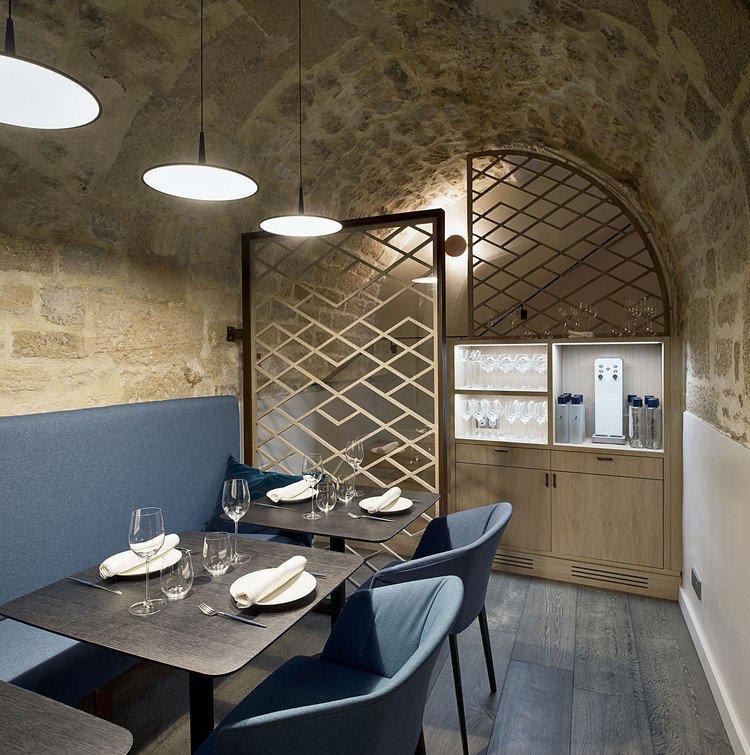
Where Japanese Discipline Meets French Terroir on the Left Bank
Paris has accumulated a distinct category of kitchen over the past two decades: Japanese-trained chefs working with French seasonal produce, applying precision-oriented technique to ingredients that have been the raw material of classical French cooking for centuries. The results sit apart from both straight French gastronomy and the kaiseki-in-Paris format. Yoshinori Paris, on Rue Grégoire de Tours in the 6th arrondissement, operates squarely within that tradition. Chef Yoshinori Morie holds a Michelin star as of 2025 and has appeared in the Opinionated About Dining European rankings in three consecutive cycles, entering at Highly Recommended in 2023, reaching #303 in 2024, and settling at #334 in 2025.
The Sourcing Logic Behind the Menu
The cuisine at Yoshinori is framed as modern, but the more instructive lens is ingredient-first. Paris kitchens in this register tend to organise their menus around what is available rather than what a format demands, and the cross-cultural grammar of the cooking here follows that discipline closely. Japanese culinary tradition places sourcing at the structural centre of the meal: the fish is from a specific fishery, the vegetable is at a specific moment in its season, the rice is from a specific prefecture. Transposing that logic onto French produce, Morie's kitchen applies the same granularity to ingredients that classical French cooking has long celebrated but often subordinated to sauce and technique.
The result is a menu where the provenance of a scallop or a spring vegetable carries the same narrative weight that a preparation method would in a more classically French kitchen. Paris has a deep infrastructure for this kind of sourcing: Rungis, the wholesale market supplying the city's restaurants, handles volume from producers across France and from specialist importers covering Japan and the broader Pacific. Restaurants working at this level of ingredient specificity draw on both, and the discipline required to maintain that supply relationship without a large brigade or a corporate group behind the operation is itself a credential.
For comparison, Kei on Rue Coq Héron operates in adjacent territory, pairing Japanese technique with classical French structure at the same price tier. The difference in approach is one of emphasis: the modern cuisine designation at Yoshinori signals a less codified frame, allowing the sourcing logic to drive composition rather than fitting into an established French or Japanese architecture. Elsewhere in Paris's €€€€ tier, addresses like Amâlia and Anona also work with seasonal French produce through non-classical lenses, though from different culinary reference points.
Saint-Germain-des-Prés as a Dining Address
Rue Grégoire de Tours runs between the Boulevard Saint-Germain and the Place de l'Odéon, placing Yoshinori in one of the denser concentrations of serious restaurants in Paris. The 6th arrondissement has historically carried a reputation for literary cafés and brasserie culture, but the restaurant scene around Odéon and Saint-Germain has shifted considerably toward precision-led kitchens over the past decade. The neighbourhood draws a mix of local regulars, international visitors oriented by Michelin and OAD lists, and guests whose primary reason to be in the area is often the density of options rather than a single destination.
For a broader orientation to eating and drinking in the city, our full Paris restaurants guide maps the scene by neighbourhood and price tier. Those planning a longer stay can also consult our full Paris hotels guide, our full Paris bars guide, and our full Paris experiences guide for a complete picture.
Reading the Awards Trajectory
The OAD ranking system draws on a global pool of frequent restaurant-goers, weighting reviewers by their assessed expertise and dining volume. Appearing in the European rankings at all requires a meaningful number of qualified reviewers to have visited and scored the restaurant, which means the 2023 Highly Recommended entry represents genuine traction with that critical community relatively early in the restaurant's life. The subsequent appearances in 2024 and 2025 confirm a stable position rather than a single-year anomaly, and the retention of the Michelin star through 2025 confirms that the kitchen is consistent enough to pass inspector scrutiny in consecutive years.
At this price point and format, a high volume of four- and five-star reviews from a general audience indicates that the kitchen is not only satisfying technically demanding critics but also communicating clearly to guests who may not arrive with deep context for the cuisine type. That crossover is harder than it sounds for highly technique-forward kitchens.
Context in the French Dining Spectrum
France's most documented kitchens tend to cluster at a different register from where Yoshinori operates. The grand houses, institutions like Paul Bocuse's L'Auberge du Pont de Collonges, Auberge de l'Ill, and Troisgros in Ouches, carry the weight of classical French tradition and multi-generational identity. Mountain addresses like Flocons de Sel in Megève and coastal ones like Mirazur in Menton operate from a place-specific sourcing logic that their geography makes explicit. Bras in Laguiole has built a vocabulary of Aubrac terroir that functions as a singular culinary language.
What distinguishes the Paris modern cuisine tier, where Yoshinori competes, is the absence of a single dominant terroir narrative. Paris kitchens source from across France and beyond, and the coherence of their menus comes from technique and philosophy rather than geography. That places higher demand on the sourcing relationships themselves: without a home region to anchor the ingredient story, every supply decision is visible. Yoshinori's recognition across multiple critical systems suggests the kitchen handles that visibility well.
At the top of the Paris modern tier, addresses like 114, Faubourg and Accents Table Bourse approach the same price bracket from different angles. Internationally, the modern cuisine format that combines Japanese technique with local produce has found significant expression at Frantzén in Stockholm and its Dubai extension FZN by Björn Frantzén, though the cultural and sourcing context differs substantially from a Left Bank kitchen working with the French supply chain.
Planning Your Visit
Yoshinori is located at 18 Rue Grégoire de Tours, 75006 Paris, a short walk from the Odéon metro station (lines 4 and 10). The restaurant operates at the €€€€ price tier, consistent with other Michelin-starred modern cuisine addresses in Paris. Booking should be treated as essential, particularly for dinner service; at this recognition level, tables are taken well in advance, and the restaurant's OAD profile means it draws an informed international audience alongside local diners. A dinner here fits naturally into an itinerary built around the Left Bank's restaurant cluster, and Auberge de Montfleury is worth noting for those exploring the wider Paris dining scene beyond the city's central arrondissements. Those wanting a complete picture of the city's drinking culture alongside their dining plans will find our full Paris wineries guide a useful complement.
What do regulars order at Yoshinori?
The menu at Yoshinori is structured around seasonal French produce interpreted through Japanese technique, which means the composition of the menu shifts with the supply rather than holding to fixed signature dishes. That said, regulars drawn from the OAD community and Michelin-aware diners tend to orient around the tasting menu format, where the kitchen's sourcing logic is expressed across multiple courses and the sequencing reflects the discipline of the cuisine type. Dishes that anchor the meal in a protein from a specific French producer, treated with the temperature control and textural attention characteristic of Japanese technique, tend to be the reference points that repeat visitors note.
Comparable Spots
| Venue | Cuisine | Price | Awards | Notes |
|---|---|---|---|---|
| YoshinoriThis venue (the venue you are viewing) | Modern Japanese-French Fine Dining | Not listed | 1 Michelin Star | Not listed |
| Alléno Paris au Pavillon Ledoyen | Modern French Fine Dining | $150–200 | 3 Michelin Stars · World's 50 Best #79 | Creative |
| Kei | Modern French with Japanese Influences | $300–500 | 3 Michelin Stars · World's 50 Best #93 | Contemporary French, Modern Cuisine |
| L'Ambroisie | Classic French Haute Cuisine | $300–500 | 2 Michelin Stars · World's 50 Best #23 | French, Classic Cuisine |
| Le Cinq - Four Seasons Hôtel George V | Modern French Fine Dining | $300–500 | 3 Michelin Stars · World's 50 Best #24 | French, Modern Cuisine |
| Plénitude | Modern French Sauce-Led Fine Dining | $300–500 | 3 Michelin Stars · World's 50 Best #14 | Contemporary French |
Recognition history
Dated appearances from independent guides and award organizations, with the underlying list record or original source where available.
Michelin 1 Star
Michelin
Opinionated About Dining Top Restaurants in Europe Recommended
Opinionated About Dining
Full recognition history (6 entries)
Michelin 1 Star
Michelin
Opinionated About Dining Top Restaurants in Europe Ranked #334
Opinionated About Dining
Opinionated About Dining Top Restaurants in Europe Ranked #303
Opinionated About Dining
Opinionated About Dining Top New Restaurants in Europe Highly Recommended
Opinionated About Dining
Continue exploring
More in Paris
Restaurants in Paris
All restaurants in Paris →
Bars in Paris
All bars in Paris →



Details
- Intimate
- Elegant
- Sophisticated
- Quiet
- Date Night
- Business Dinner
- Special Occasion
- Celebration
- Standalone
- Extensive Wine List
- A La Carte
- Set Menu
- Wine
Current opening hours
- Monday
- 12:30–1:30 PM, 8:15–8:30 PM
- Tuesday
- 12:30–1:30 PM, 8:15–8:30 PM
- Wednesday
- 12:30–1:30 PM, 8:15–8:30 PM
- Thursday
- 12:30–1:30 PM, 8:15–8:30 PM
- Friday
- 12:30–1:30 PM, 8:15–8:30 PM
- Saturday
- Closed
- Sunday
- Closed
Hours can change for holidays and private events. Hours as of .
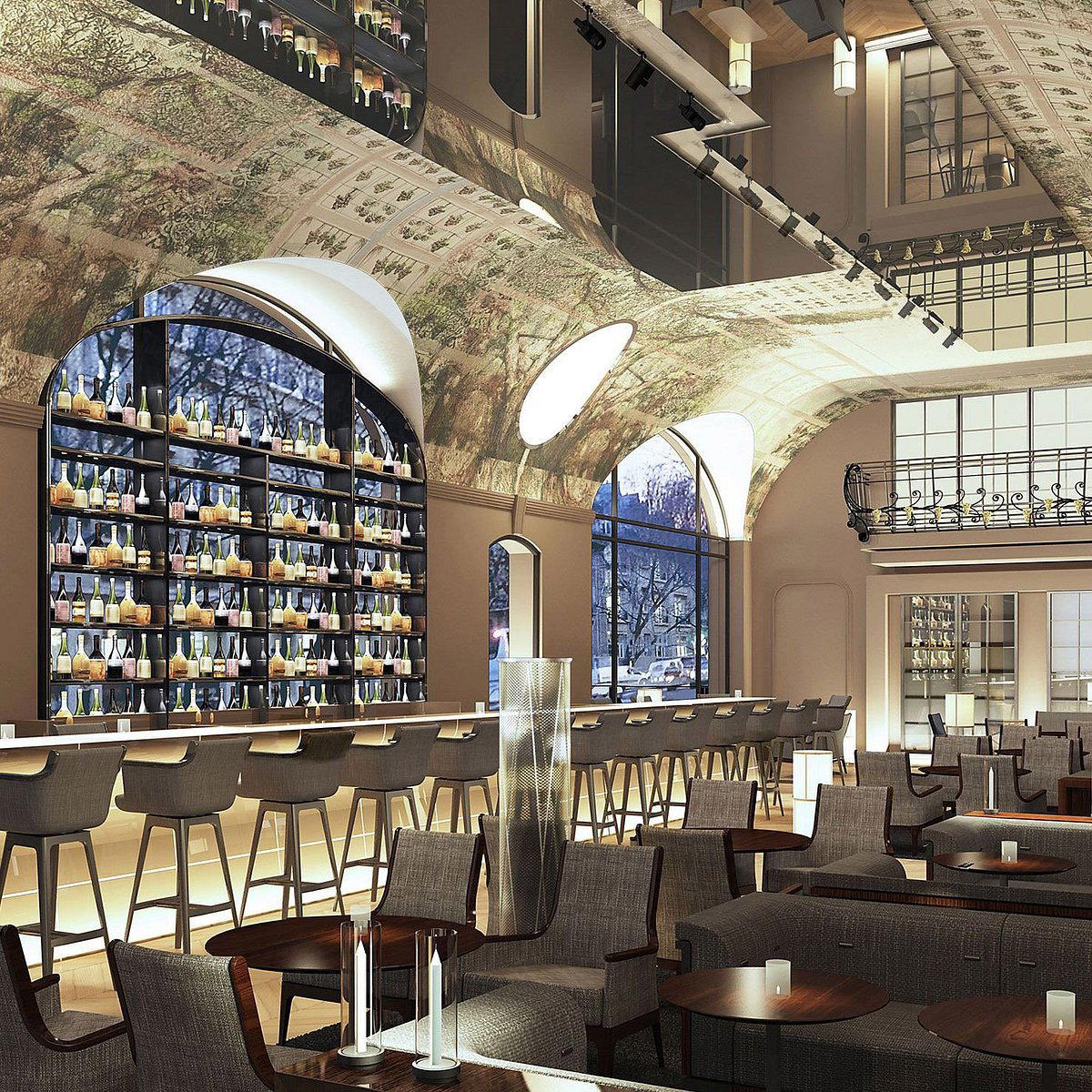
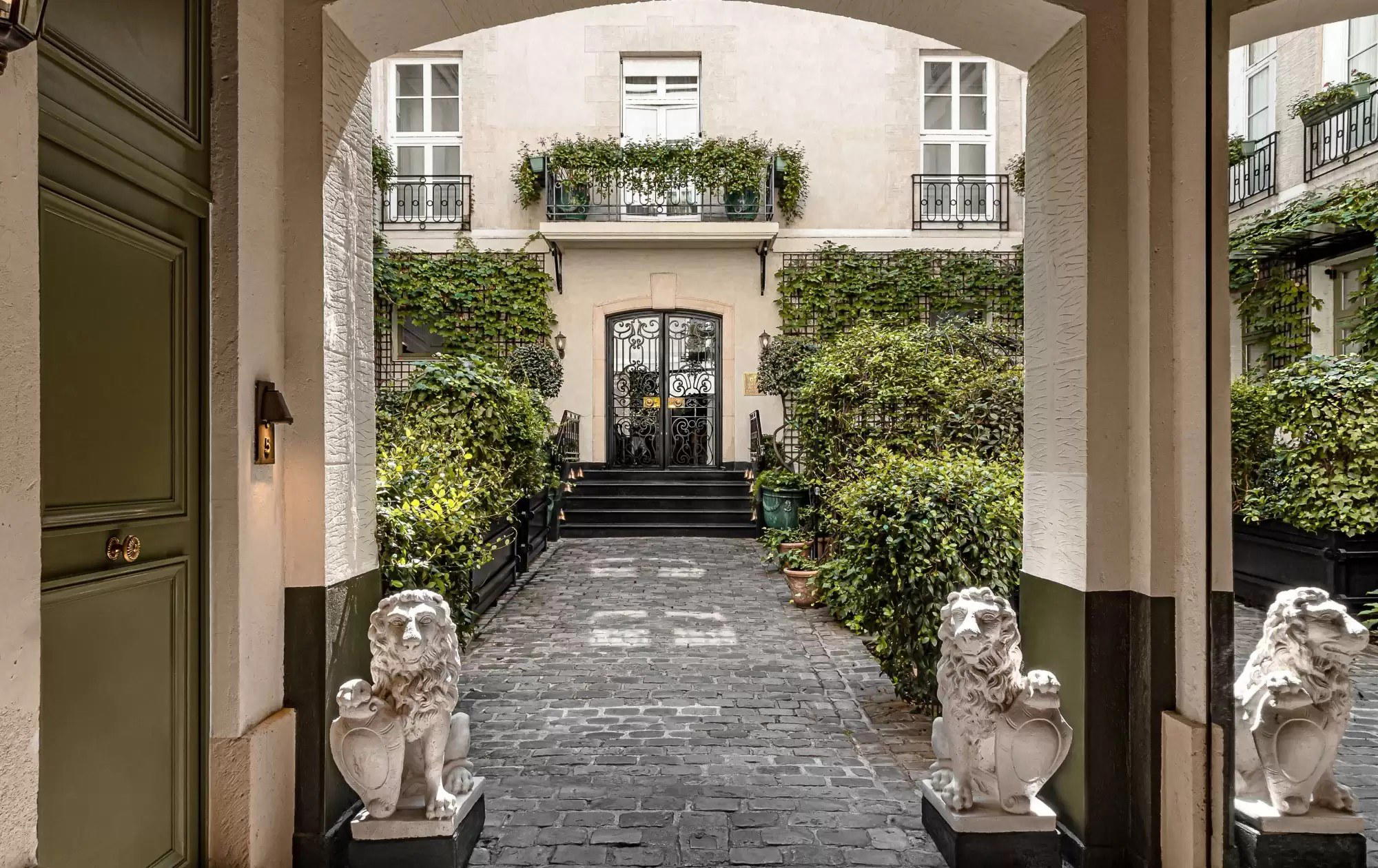
Intimate and polished, with a refined high-end atmosphere suited to quiet, attentive dining.