
Yoshikami Asakusa ten belongs to Tokyo’s yoshoku tradition: Japanese interpretations of Western cooking that prize familiarity, speed, and craft over ceremony. Its Tabelog 100 Yoshoku EAST 2025 selection, Asakusa location, counter seating, and take-out service place it in the practical, everyday end of Tokyo’s award-recognised dining culture rather than the reservation-only tasting-menu tier.
Pearl is the En Primeur Club membership app — saves, bookings, and concierge access live there. Same editors, same standards.
- Address
- 1 Chome-41-4 Asakusa, Taito City, Tokyo 111-0032, Japan
- Phone
- +81 3-3841-1802
- Website
- yoshikami.co.jp
 Saves & bookings on Pearl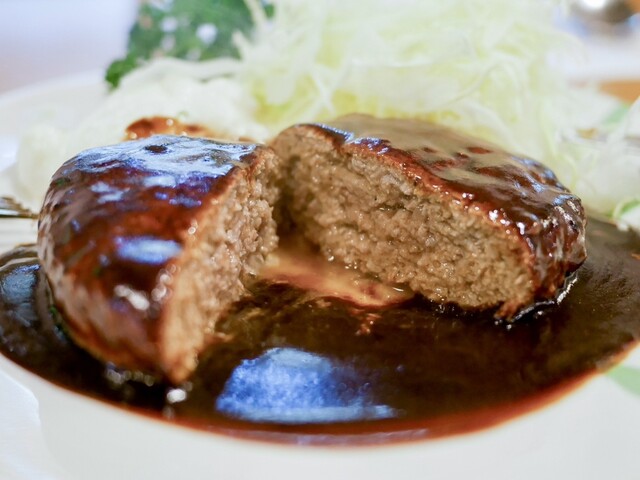
Asakusa’s restaurant streets move at a different tempo from Ginza counters and Aoyama tasting rooms. The approach is visual before culinary: shopfronts, queues, plastic food displays, temple-bound foot traffic, and locals overlapping with visitors seeking older Tokyo rather than new Tokyo. Here, yoshoku makes sense: Western-derived cooking filtered through Japanese portioning, service, rice, sauce, and repetition, built less on novelty than on dishes that can be cooked repeatedly without losing identity.
Yoshikami Asakusa ten sits inside that tradition rather than modernising it into chef-led performance. The useful comparison is not Tokyo’s luxury French rooms or omakase counters, but durable everyday specialists: curry shops, tonkatsu houses, kissaten, and steak-focused yoshoku rooms where value lies in consistency and throughput. Its Tabelog 100 Yoshoku EAST 2025 selection is a clear recognition signal, but the format stays grounded: Japanese-style Western cuisine and steak, counter and table seating, non-smoking policy, and take-out. That combination says much about how Tokyo preserves culinary memory without freezing it as museum culture.
Yoshoku as Tokyo's low-waste comfort language
Environmental consciousness in restaurants is often framed through tasting-menu sourcing, farm names, and luxury kitchens with visible sustainability programmes. Yoshoku offers a quieter, less branded version. The format depends on stable pantry systems, repeatable mise en place, and service rhythms that reduce theatrical excess. It is practical rather than ascetic. Sauces, rice, frying, grilling, and composed plates carry the work, and take-out extends that practicality beyond the dining room.
That matters in Asakusa, where food businesses face fluctuating visitor flows around Senso-ji, weekends, public holidays, and station traffic. A restaurant built around recognised categories such as yoshoku and steak can serve many occasions without imposing a long, resource-heavy format on every diner. Compared with a higher-priced Western room such as Larousse, or a narrower fried-specialist model such as Tonkatsu Yutaka, this style occupies a middle lane: structured enough to be judged by repeatability, casual enough for a mixed day in eastern Tokyo.
The sustainability point should not be overstated. There is no need to invent a sourcing manifesto when public facts support something concrete: non-smoking dining, take-out, accepted electronic payments, counter seating, and a compact urban format near rail access. In Tokyo, those operational choices are not glamorous, but they help dense-city restaurants reduce friction. Less ceremony can mean less waste in the experience itself: fewer courses, fewer gestures, fewer barriers between a meal and the neighbourhood sustaining it.
Asakusa rewards restaurants that can handle both memory and volume
Asakusa is one of Tokyo’s sharper tests for legacy food. The district must satisfy residents, domestic day-trippers, and international visitors without turning every dining room into a souvenir. Yoshoku suits that pressure because it already carries translation inside the cuisine. It borrows from Western forms but speaks in Japanese dining grammar, making it accessible without being generic.
The Tabelog score of 3.73 and repeated Tabelog 100 Yoshoku selections in 2020, 2022, and 2025 point to durable recognition rather than one burst of attention. The category is narrower than sushi, ramen, or tempura in the global imagination, so inclusion on a yoshoku list signals performance inside a specific Japanese comfort-food canon. For travellers mapping Tokyo through categories, that makes the stop more instructive than another prestige counter, explaining a strand of the city often overshadowed by luxury dining coverage.
There is useful contrast with nearby or comparable casual formats. Royal Coffee Ten Honten sits in the low-spend kissaten register, while Asakusa Sanboa occupies a different price and drinking-dining bracket. Misojyu points toward soup-and-rice modern casual dining. Yoshikami Asakusa ten belongs to the old yoshoku-and-steak lane, where the question is not whether the room feels fashionable, but whether the cooking culture still has enough force to draw repeat attention in 2026.
For a broader Tokyo plan, pair this meal with category-led exploration rather than a single neighbourhood checklist. EP Club’s Our full Tokyo restaurants guide is the natural starting point, with detours toward Our full Tokyo bars guide, Our full Tokyo hotels guide, Our full Tokyo experiences guide, and Our full Tokyo wineries guide for the rest of the trip architecture.
How it fits into a Tokyo eating itinerary
The smart use case is lunch or early dinner in eastern Tokyo when the goal is to understand a local genre, not stage a long evening. Reservations are unavailable, so timing matters more than planning bravado. The room’s scale, split between counter and table seating, supports different speeds: solo diners and pairs can treat it as a focused stop, while small groups can use it as a casual Asakusa anchor.
Within Tokyo, the closest editorial relatives are category specialists, not identical restaurants. For seafood and charcoal cooking. 鮪と炭火焼き うお炭 秋葉原店 moves the meal toward fish and grill culture. 12/10 Shinjuku ten and 124. KAGURAZAKA (Yakitori) point to other urban formats where specificity matters more than broad luxury signalling. For Tokyo’s casual visual culture, 2D Cafe operates in another register, while 3 Chome no Curry Ya San keeps the conversation close to Japanese adaptations of imported food forms.
Travellers building a wider Japan food route can use yoshoku as a reference point against other regional specialisations: beef-led dining at -Grilled beef Sukiyaki- KAMAKURA TANUKIAN 鎌倉 たぬき庵 in Kamakura, cafe culture at.cafe in Osaka, contemporary dining at.know in Kumamoto, Vietnamese cooking at (Shoku) Vietnam in Kawasaki, curry in the north at [Curry Senmon Ten] Maruyama Kyoju. in Sapporo, and Kyoto’s quieter contemporary register at [ki:] in Kyoto. Even outside Japan, the comparison travels: Jōdo Saké Bar in Los Angeles and Onigiri Time in Pasadena show how Japanese formats shift when transplanted abroad.
The editorial verdict is simple: this is a useful Asakusa address for understanding yoshoku as living urban infrastructure. Its award recognition gives credibility, but the appeal is the category itself: familiar Western outlines disciplined by Japanese repetition, price sensitivity, and service efficiency. In a city often reduced to sushi counters and ramen queues, that is a sharper lesson than it first appears.
Comparison Snapshot
Comparable venues at the same tier for side-by-side context.
| Venue | Cuisine | Price | Notes |
|---|---|---|---|
| Yoshikami Asakusa tenThis venue — the venue you are viewing | Yoshoku (Japanese-Style Western) | $$ | Not listed |
| 餃子歩兵 | Kyoto-style Gyoza | $$ | Ginza |
| Ogura (おぐ羅) | Traditional Oden and Yakitori Izakaya | $$ | Nihonbashi |
| Namiki Yabu Soba | Traditional Japanese Soba | $$ | Taitō |
| Tonkatsu Yamaichi | Classic Japanese Tonkatsu | $$ | Chiyoda |
| Shodai Yoshida | Yakiniku & Horumon Izakaya | $$ | Kōtō |
Recognition history
Dated appearances from independent guides and award organizations, with the underlying list record or original source where available.
Tabelog 100 #57 · No. 57
Tabelog · Tabelog 100 - Yoshoku - EAST - 2025








At a Glance
- Classic
- Cozy
- Well Known
- Casual Hangout
- Family
- Solo
- Group Dining
- Historic Building
- Standalone
- Beer Program
Current opening hours
- Monday
- 11:30 AM–9 PM
- Tuesday
- 11:30 AM–9 PM
- Wednesday
- 11:30 AM–9 PM
- Thursday
- Closed
- Friday
- 11:30 AM–9 PM
- Saturday
- 11:30 AM–9 PM
- Sunday
- 11:30 AM–9 PM
Hours can change for holidays and private events. Last verified .
Old-school, cozy, and nostalgic, with a classic Japanese Western diner feel and counter-style origins.