
Kameido’s yakiniku culture is less about polished tasting-menu theater than table-level control: smoke, pace, offal, lean beef and drinks built for repeat local use. Shodai Yoshida belongs to that lane, with Tabelog 100 Yakiniku Tokyo selections from 2022 through 2025 and a compact 32-seat format that keeps the experience closer to izakaya energy than luxury beef ceremony.
Pearl is the En Primeur Club membership app — saves, bookings, and concierge access live there. Same editors, same standards.
- Address
- 東京都江東区亀戸5-13-6 東栄ビル 1F・2F
- Phone
- +81336375966
- Website
- tabelog.com
 Saves & bookings on Pearl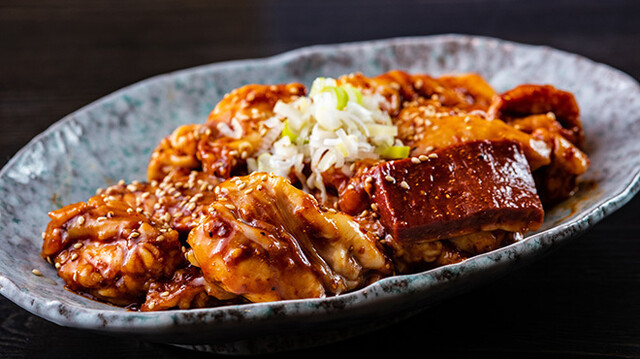
Approaching a serious Kameido yakiniku room, the first signal is not marble or ceremony but the working rhythm of a neighbourhood built around appetite: station-side streets, compact rooms, purposeful groups and grills that make the meal happen at the table, not behind a closed kitchen door. In Tokyo, that matters. Ginza and Roppongi have pushed wagyu into polished omakase formats; eastern Tokyo keeps a tougher, more social beef culture alive, where offal, shochu and counter seating can matter as much as brand-name cattle.
Shodai Yoshida sits in that second tradition. Its category mix, tripe, yakiniku and izakaya, says more than a cuisine label usually does. This is not a beef-only luxury script. The architecture points to a broader horumon grammar: cuts that reward heat control, side dishes that support drinking, noodles that extend the meal, and lean A5 beef placed alongside offal rather than replacing it. That structure makes the restaurant read as part of Kameido’s dining identity, not an importable high-end concept.
Offal, lean beef and the democratic logic of Kameido yakiniku
Tokyo’s yakiniku scene splits into clear tribes: polished wagyu counters where the kitchen dictates sequence, family grill rooms led by volume and comfort, and horumon-leaning places where the menu rewards diners who order across textures. Shodai Yoshida belongs to the last group, and its repeated selection for Tabelog 100 Yakiniku Tokyo from 2022 through 2025 places it in a documented citywide competitive set, not merely among neighbourhood favourites.
The menu carries the argument. A restaurant placing tripe and Japanese BBQ under one roof asks diners to think beyond sirloin-and-rice shorthand. Offal-led yakiniku in Tokyo has an urban pragmatism: freshness, grilling confidence and appetite over luxury coding. Lean beef matters, but it is not the whole identity. The better meal moves through categories rather than chasing one prestige cut.
The drink program is therefore more than background. Shochu, wine and cocktails are listed, with particular attention to shochu. In a horumon context, shochu is not decorative pairing; it is part of the format’s social mechanics, suiting grilled fat, salt, sauce and pacing across multiple plates. The izakaya side of the listing becomes useful evidence: the room is organizing an evening around smoke, drinking and repeatable spending, not only selling beef.
Kameido also shapes the meal. The area has a strong casual dining identity, with comparison venues such as Kameido Gyoza Honten in a lower-price, high-turnover lane and Coffee Dojo Samurai offering another local ritual. Against that backdrop, Shodai Yoshida occupies a middle position: more specialist than an everyday snack stop, less formal than Tokyo’s luxury yakiniku counters, and useful for diners who want the city’s offal culture without turning dinner into a trophy reservation.
A compact grill room, not a choreographed beef salon
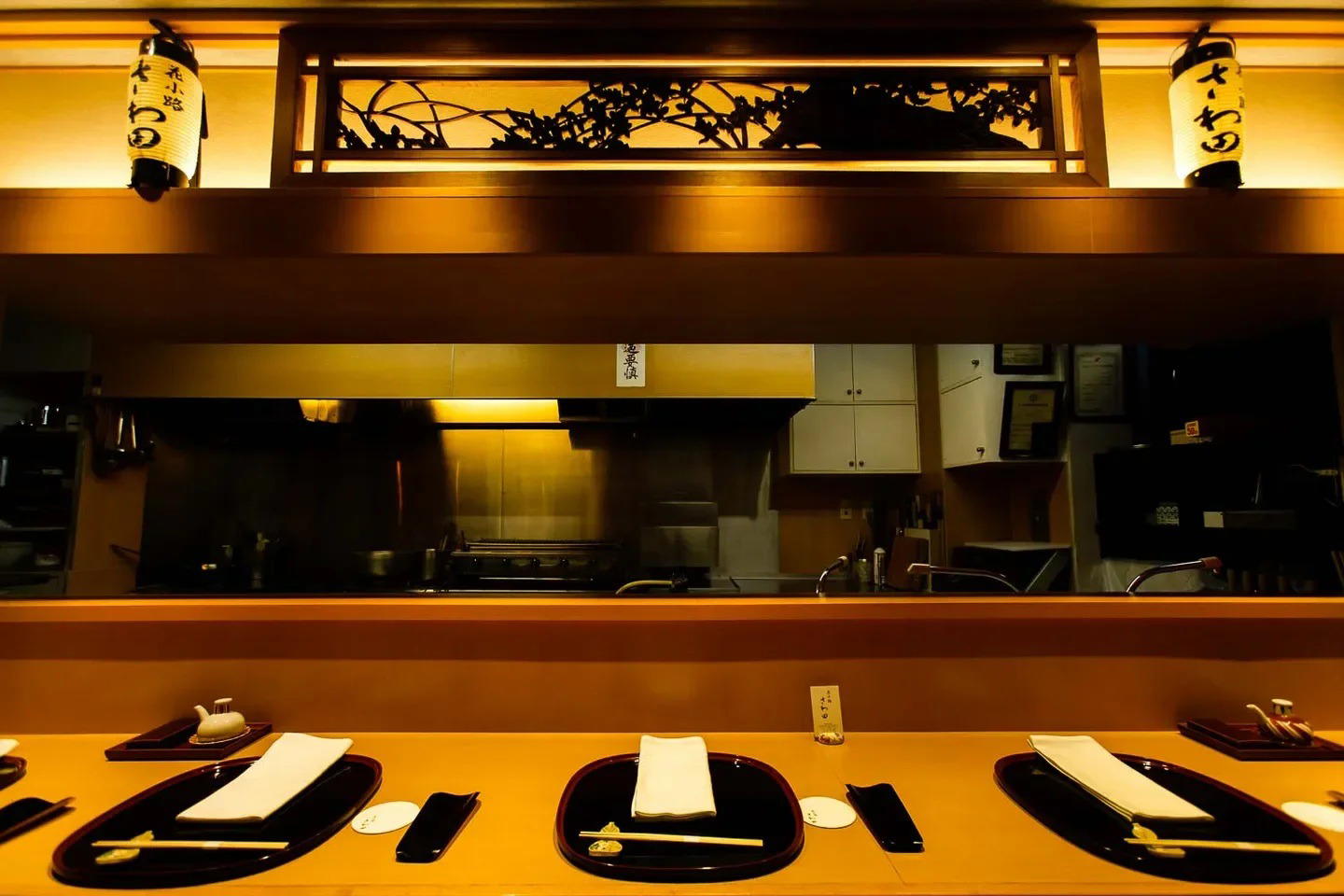
The 32-seat scale matters. Small yakiniku rooms offer a different bargain from grand dining rooms: less insulation, more immediate smoke-and-service tempo, and a shorter distance between table, staff and grill. Counter seating reinforces that informality. For solo diners or pairs, it can be more compelling than a private-room beef restaurant because the cooking stays visible and the meal flexible.
The recognition needs reading correctly. Tabelog’s Hyakumeiten lists are not Michelin stars or a universal hierarchy. They are meaningful within Japan’s user-review ecosystem because they identify category-specific strength. A 2025 Tabelog 100 Yakiniku Tokyo selection, plus selections in 2022, 2023 and 2024, signals consistency in a crowded category ranging from chain comfort to rarefied wagyu service.
Format has a practical edge without turning the article into logistics. Credit cards are not accepted, while electronic money and PayPay are listed, aligning with a no-frills local setup rather than international hotel-restaurant expectations. Private rooms and private use are unavailable, so the experience belongs in the open-room yakiniku category. Smoking is allowed, a detail that can change suitability depending on the party.
Absence of service charges fits the same pattern. Tokyo beef dining can acquire ceremony, private rooms and premium billing logic. Here, value is built through category depth, not theatrical service. Diners seeking a chef-led tasting sequence should look elsewhere; those interested in how Tokyo’s east-side grill culture treats offal and lean beef together will understand the appeal faster.
Where it fits in a Tokyo eating itinerary
For visitors mapping Tokyo by neighbourhood rather than prestige alone, Kameido rewards different planning. It sits outside the usual west-side and central luxury circuits, and its dining character is workaday, direct and local. That is the reason to go. Pair it with a wider Tokyo itinerary if sushi, tempura or kaiseki are already covered and you want a beef format speaking in a less polished dialect.
Within the comparison set, the contrasts are clear. Men Fujisaki represents a lower-priced noodle lane, Tandoor Bar Kamal 2 Go a casual Indian direction, and Mesebaba an Italian register. None explains the restaurant directly, but together they show why Kameido should not be reduced to one signature food. The neighbourhood’s strength is range at human scale, with specialist rooms beside casual staples.
The recommendation is specific: choose this for a Tokyo meal where the grill is the engine, offal is part of the point, and informality is an asset. It is less suited to diners needing a smoke-free room, private seating or a luxury beef narrative. Read it as a category lesson in how yakiniku functions when it stays close to izakaya habits and neighbourhood appetite.
For broader planning, see Our full Tokyo restaurants guide, plus Our full Tokyo hotels guide, Our full Tokyo bars guide, Our full Tokyo wineries guide and Our full Tokyo experiences guide. Nearby and comparative restaurant reading includes. 鮪と炭火焼き うお炭 秋葉原店, 12/10 Shinjuku ten, 124. KAGURAZAKA (Yakitori), 2D Cafe and 3 Chome no Curry Ya San. For Japan and beyond, compare -Grilled beef Sukiyaki- KAMAKURA TANUKIAN 鎌倉 たぬき庵 in Kamakura.cafe in Osaka.know in Kumamoto, (Shoku) Vietnam in Kawasaki, [Curry Senmon Ten] Maruyama Kyoju. in Sapporo, [ki:] in Kyoto, Jōdo Saké Bar in Los Angeles and Onigiri Time in Pasadena.
Quick Comparison
Comparable venues at a glance for context.
| Venue | Cuisine | Price | Notes |
|---|---|---|---|
| Shodai YoshidaThis venue — the venue you are viewing | Yakiniku & Horumon Izakaya | $$ | Not listed |
| Toyama Shiroebitei (富山白えび亭) | Toyama White Shrimp Tempura Bowls | $$ | Marunouchi |
| Tonkatsu Maruichi (とんかつ丸一) | Tonkatsu Specialist | $$ | Fukagawa |
| Daitoryo | Traditional Izakaya - Grilled Offal & Yakitori | $$ | Taitō |
| Nihonbashi | Traditional Japanese | $$ | Chūō |
| 虎白 | Traditional Japanese Kaiseki | Not listed | Shinjuku |
Recognition history
Dated appearances from independent guides and award organizations, with the underlying list record or original source where available.
Tabelog 100 #20 · No. 20
Tabelog · Tabelog 100 - Yakiniku - TOKYO - 2025



At a Glance
- Lively
- Cozy
- Energetic
- Casual Hangout
- After Work
- Group Dining
- Solo
- Celebration
- Late Night
- Standalone
- Open Kitchen
- Beer Program
- Local Sourcing