Yipin China
Yipin China on Liverpool Road has anchored Islington's Chinese dining scene for years, occupying a tier distinct from the West End's more familiar Chinese restaurant corridor. The kitchen draws on Sichuan and broader regional Chinese traditions, positioning itself against the neighbourhood's shifting food culture rather than against central London's tourist-facing operations.
Pearl is the En Primeur Club membership app — saves, bookings, and concierge access live there. Same editors, same standards.
- Address
- 70-72 Liverpool Rd, London N1 0QD, United Kingdom
- Phone
- +442073543388
- Website
- yipinchina.co.uk
- Directions
- Get directions
 Saves & bookings on Pearl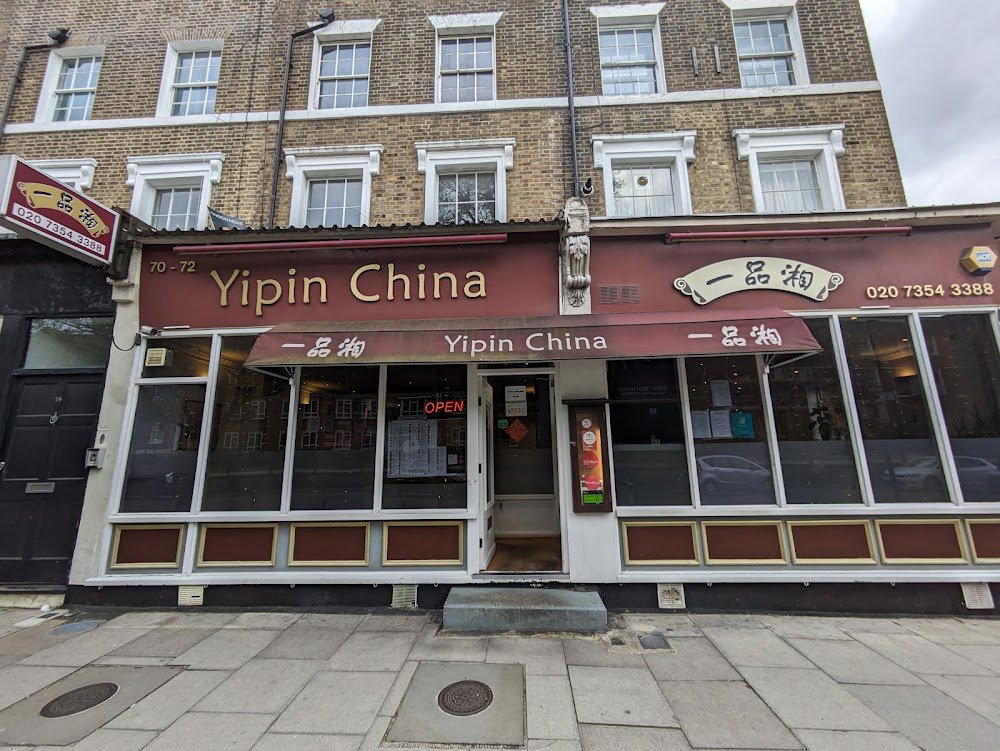
Islington's Chinese Table in Context
North London's relationship with regional Chinese cooking has always been quieter than the West End's, and more interesting for it. The stretch of Liverpool Road running through Islington sits well outside the gravitational pull of Chinatown's Gerrard Street, which means the Chinese restaurants that establish themselves here do so on neighbourhood terms: repeat custom, word of mouth, and a local dining culture that skews toward residents rather than visitors. Yipin China, at 70-72 Liverpool Rd, serves authentic Hunanese and Sichuan cooking in Islington.
That positioning matters because Islington's dining scene has, over the past decade, tilted heavily toward European and pan-Asian formats. Islington, better known for European dining, is not where many diners expect to find a Chinese kitchen with regional specificity. Which is precisely why Yipin China occupies an interesting gap.
Regional Chinese Cooking and the London Divide
London's Chinese restaurant scene has long operated across two largely separate registers. The first is the Cantonese-dominant, dim sum-anchored model that shaped British perceptions of Chinese food for decades. The second is the wave of Sichuan and Hunanese kitchens that arrived with the post-2000 shift in Chinese immigration patterns and the broader Western appetite for the numbing heat of mala seasoning. Yipin China belongs to this second tradition, drawing on the bold, fermented, and chile-driven flavour profiles of southwest and central China rather than the delicate balance of Cantonese technique.
That distinction carries real consequences on the plate. Where Cantonese cooking prizes clarity and freshness, Sichuan and broader northwestern Chinese cuisines build flavour through preserved vegetables, fermented black beans, doubanjiang, and the particular aromatic compound of Sichuan peppercorn. They are ancient preservation and flavour-layering methods that have their own internal logic, one that took London restaurants some time to translate accurately rather than approximate for local palates.
The more interesting editorial question, relevant across the category, is how Chinese restaurants in London have negotiated the tension between authenticity and accessibility. The West End has often resolved that tension through luxury-product positioning, while neighbourhood restaurants take a different route. The neighbourhood approach, which the restaurant represents, resolves it differently: through fidelity to regional technique and a room that makes no concessions to the conventions of Western fine dining.
Local Ingredients, Global Technique: The Islington Case
The editorial angle that defines the restaurant is the intersection of imported culinary method and locally sourced or locally adapted product. Chinese regional kitchens in Britain operate in a supply environment that is fundamentally different from their source cuisines. Doubanjiang from Pixian, dried chilies from specific Chinese growing regions, the precise grade of Sichuan peppercorn that produces the distinctive mala numbing effect: these are imported ingredients, and their availability in London has improved markedly over the past decade as specialist Chinese wholesale suppliers expanded.
At the same time, protein and vegetable sourcing has necessarily localised. British pork, British duck, and seasonal British vegetables pass through cooking techniques developed in Chengdu or Chongqing kitchens. The result is a category of cooking that is genuinely bicultural at the ingredient level, not in the fusion sense, but in the more practical sense of a kitchen that uses the leading available local product processed through a rigorous imported technique. This is the same dynamic that plays out, in different registers, at Atomix in New York City, where Korean technique meets American product, and at restaurants like Opheem in Birmingham, where South Asian culinary tradition operates in a British context.
For diners who have followed the trajectory of London's regional Chinese kitchens, this tension is not a problem to be solved but a creative condition. The leading of these restaurants do not try to exactly replicate a dish as it would exist in Sichuan. They work with what they have and build from there. The question worth asking at any such kitchen is whether the technique is intact even when the supply chain is partially different.
The Broader London Scene
Placing the restaurant in the wider context of London dining requires acknowledging the distance between its market position and the city's Michelin-weighted fine dining tier. London's upper-end restaurants operate in a competitive set that includes Sketch, The Lecture Room and Library, The Ledbury, and Dinner by Heston Blumenthal, all operating at the highest price brackets and with formal tasting-menu structures. The restaurant is not in that conversation, and should not be measured against it.
Its comparable set is the cluster of neighbourhood-specific Chinese restaurants across London that prioritise cooking over room design and technique over ceremony. In that set, the ability to source correctly, cook regionally specific dishes with accuracy, and maintain consistency is the relevant measure of quality. For those travelling further, Waterside Inn in Bray, Gidleigh Park in Chagford, Hand and Flowers in Marlow, hide and fox in Saltwood, Midsummer House in Cambridge, and Restaurant Andrew Fairlie in Auchterarder represent the breadth of serious cooking across the British Isles.
Standing Among Peers
Comparable venues nearby, for context on price, style, and recognition.
| Venue | Cuisine | Price | Notes |
|---|---|---|---|
| Yipin ChinaThis venue — the venue you are viewing | Authentic Hunanese & Sichuan | $$ | Not listed |
| Pearl Liang | Cantonese Dim Sum | $$ | Paddington |
| Royal China Baker Street | Cantonese Dim Sum | $$ | Marylebone |
| Jia | Cantonese Dim Sum | $$ | Earl's Court |
| Honeymoon | Traditional Chinese | $$ | Southgate |
| Tofu Vegan Islington | Vegan Chinese | $$ | Islington |
Continue exploring
More in London
Restaurants in London
Browse all →
Bars in London
Browse all →
Hotels in London
Browse all →



At a Glance
- Lively
- Group Dining
- Casual Hangout
Current opening hours
- Monday
- Closed
- Tuesday
- 5–10 PM
- Wednesday
- 12–10 PM
- Thursday
- 12–10 PM
- Friday
- 12–10:30 PM
- Saturday
- 12–10:30 PM
- Sunday
- 12–10 PM
Hours can change for holidays and private events. Last verified .
Bustling and pleasant with a downbeat, plain, spartan interior and good atmosphere as per guest reviews.