Yank Sing (Stevenson St.)
Our verdict
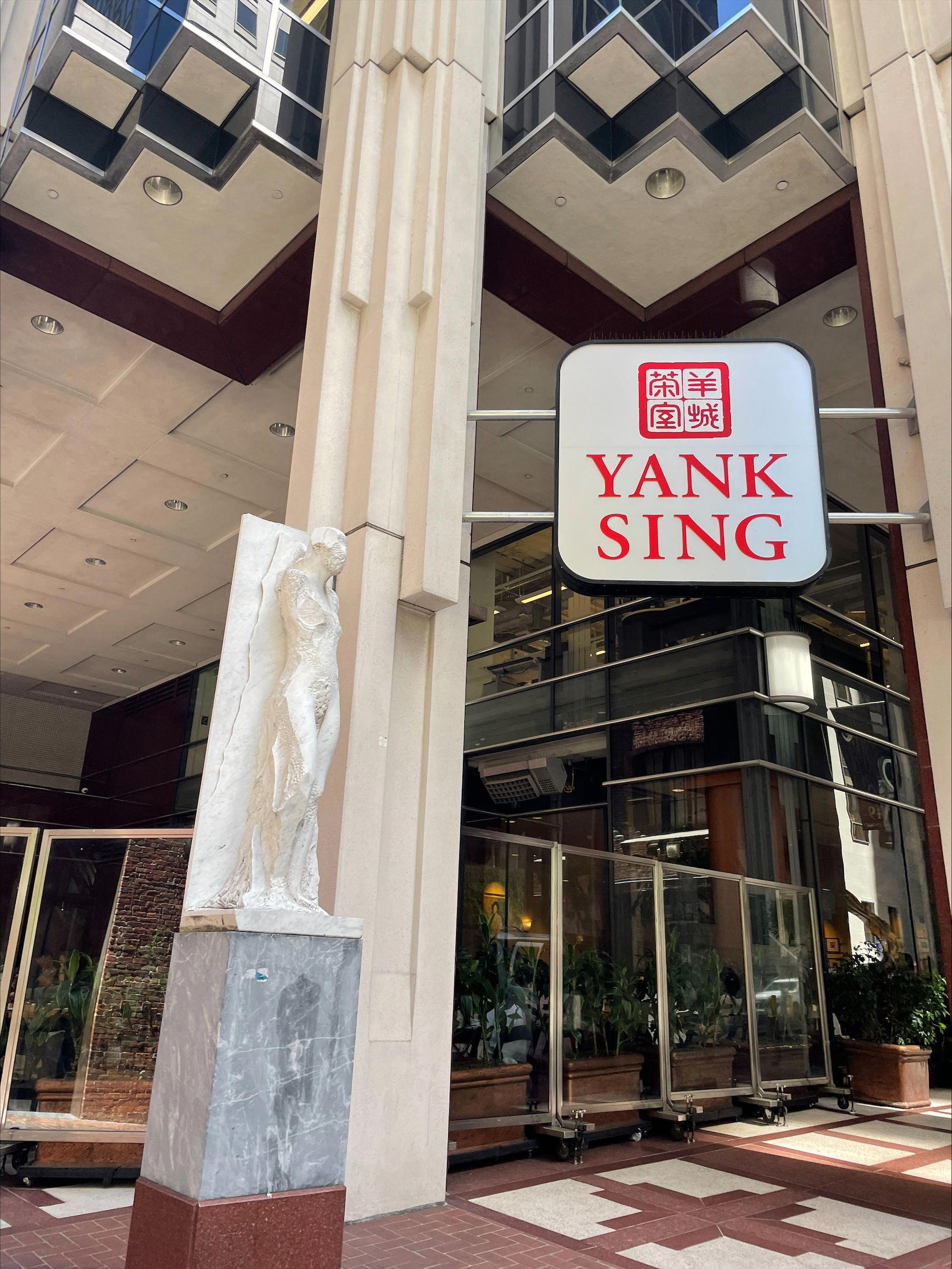
Yank Sing's Stevenson Street location sits at the center of San Francisco's most enduring dim sum tradition, drawing a Financial District crowd that ranges from deal-closing power lunches to multi-generational family tables. The restaurant has operated for decades as a reference point in the city's Cantonese dining conversation, offering a trolley-and-cart format that most of its downtown peers abandoned long ago.

Pearl is the En Primeur Club membership app — saves, bookings, and concierge access live there. Same editors, same standards.
- Address
- 49 Stevenson St, San Francisco, CA 94105
- Phone
- (415) 541-4949
- Hours
- Mon ClosedTue–Fri 11 AM–3 PMSat–Sun 10 AM–3 PM
- Website
- yanksing.com
- Directions
- Get directions
- Booking
- Book on OpenTable
The menu
What to order
- Shanghai Dumpling
- Peking Duck
- Pork Siu Mai
- Har Gow
- Dan Tat
San Francisco's Dim Sum Benchmark, Measured Over Decades
In most American cities, dim sum has split into two distinct tiers: the large suburban banquet hall serving enormous tables at volume, and the newer urban parlor reworking the format into a plated, reservation-only affair. San Francisco, with its deep Cantonese heritage, sustains a third category — the downtown institution that has outlasted both trends by holding to a traditional cart service model in a commercial district context. Yank Sing on Stevenson Street sits inside that category, and its staying power in the Financial District is itself an editorial subject worth examining.
The restaurant's address, steps from the towers of the SoMa-FiDi boundary, tells you something about its customer base and its durability. Downtown lunch trade is among the most competitive and unforgiving in any American city: expense accounts have shifted, office populations have fluctuated, and delivery platforms have rewired midday eating habits. That Yank Sing has remained a reference destination through multiple cycles of commercial real estate disruption and shifting dining habits is a logistical and operational achievement most restaurateurs would not attempt.
The Format That Refuses to Modernize — Deliberately
The trolley-and-cart format is not nostalgia at Yank Sing. It is a structural position. Across the broader dim sum category in American cities, the cart service model has been abandoned gradually in favor of order-sheet systems that improve kitchen efficiency and reduce waste. The argument for order sheets is rational: items arrive hot, quantities are controlled, and the kitchen can pace output. The argument for carts is experiential: the parade of bamboo steamers, the negotiation of the table surface, the ability to make decisions by sight rather than description.
Yank Sing has maintained the cart format at the Stevenson Street location through a period when peer establishments across Chinatown and the Richmond District moved away from it. That decision frames the restaurant in a specific comparison set, not against the city's contemporary Cantonese operators like the modern parlors that have opened in Hayes Valley and the Mission, but against the older institutional dim sum houses that defined the city's Cantonese dining reputation through the 1980s and 1990s. Within that peer group, Yank Sing operates at the higher-service, higher-price end, a positioning it has held for long enough that it has become the benchmark rather than the challenger.
San Francisco's dining conversation tends to focus on its tasting-menu tier: Benu, which bridges French and Chinese technique in a three-Michelin-star format; Atelier Crenn, with its poetic modernist approach; Lazy Bear, operating a prix-fixe supper-club structure; and Quince, holding a formal Italian-inflected position in Jackson Square. Against those addresses, Yank Sing is something different: a daytime-only, communal-format anchor that competes not on tasting menus but on institutional longevity and the specific pleasures of shared-plate Cantonese service. It belongs to a different conversation than Saison's wood-fire progression, and understanding that distinction is how you place it correctly in the city's dining map.
Evolution Over Decades: What Changes and What Doesn't
Yank Sing's arc is, in broad terms, the arc of institutional Chinese-American dining in major U.S. cities. The restaurant opened in 1958, which places it in the generation of Cantonese establishments that served the post-war Chinese-American community and gradually expanded their reach to non-Chinese clientele. That expansion happened in San Francisco earlier than in most American cities, because the city's relationship with its Chinatown is older, more embedded, and more commercially integrated than the Chinatowns of other major metros.
The Stevenson Street location represents the restaurant's positioning for the Financial District specifically, a calculated move toward the professional lunch market that has defined much of its modern reputation. Where the original location served neighborhood and family trade, Stevenson Street was built for the weekday power-lunch circuit. That dual identity, neighborhood institution and corporate dining destination, is a tension that Chinese-American restaurants of this generation navigated with varying degrees of success. Yank Sing navigated it by investing in service standards and ingredient quality rather than by diluting its Cantonese core. The evolution has been one of customer base and operational scale, not of culinary identity.
Institutions of comparable age and ambition elsewhere in American fine dining, Le Bernardin in New York City, Emeril's in New Orleans, The French Laundry in Napa, have all undergone visible reinventions: renovations, chef changes, format pivots. Yank Sing's evolution has been quieter and, in its way, more deliberate. It has not chased the credential arms race of Michelin recognition that defines establishments like Smyth in Chicago or Single Thread Farm in Healdsburg. Its authority is built differently: on operational consistency across a format that demands both physical logistics and institutional knowledge to execute well.
That consistency has earned it a different kind of recognition than a Michelin star or a spot on the 50 Best list. It has become a point of reference in conversations about what San Francisco's Chinese dining heritage actually looks like at a high standard, and what it means to hold a format steady through decades of pressure to modernize. Places like Providence in Los Angeles, Blue Hill at Stone Barns in Tarrytown, Addison in San Diego, and The Inn at Little Washington each hold their respective markets through a combination of critical recognition and operational longevity. Yank Sing's version of that authority is less decorated and more earned by repetition.
Where It Sits in the Broader Picture
For travelers with deep interest in American fine dining, Yank Sing represents a category of establishment that is increasingly rare: the multi-decade Chinese-American institution operating at a service and quality tier that places it above commodity dim sum without converting itself into a modernist or fusion format. Restaurants pursuing the fusion path, like Atomix in New York City, or international institutions in entirely different idioms, like Atelier Moessmer Norbert Niederkofler in Brunico or Frasca Food and Wine in Boulder, are operating in a different register entirely. Yank Sing's register is tradition held under commercial pressure, which is its own form of discipline.
For anyone building a San Francisco itinerary around the full spectrum of the city's dining, Yank Sing earns a slot not because it competes with the tasting-menu addresses but because it represents a category those addresses cannot replicate. Our full San Francisco restaurants guide maps the city's dining across all tiers and neighborhoods.
Know Before You Go
Address: 49 Stevenson St, San Francisco, CA 94105
Neighborhood: Financial District / SoMa border
Service format: Traditional dim sum trolley and cart service
Timing note: Peak service runs weekend midday; weekday lunch draws the Financial District professional crowd and moves faster
Planning note: Weekend tables fill significantly in advance; weekday lunch allows more flexibility, though prime times still fill during the midday window
Price tier: Above commodity dim sum; positioned as the higher-service end of the San Francisco Cantonese category
Frequently asked questions
What part of town is Yank Sing (Stevenson St.) in?
Yank Sing (Stevenson St.) is located at 49 Stevenson St, San Francisco, CA 94105, San Francisco.
How does Yank Sing's Stevenson Street location compare to dining in San Francisco's broader Cantonese scene?
Yank Sing at 49 Stevenson St. sits in the Financial District rather than the Richmond or Sunset neighborhoods where San Francisco's Cantonese restaurant concentration is highest. That positioning means it draws a different midweek crowd than neighborhood dim sum houses while competing on the same technical standards. Operating continuously since 1958 places it among the longest-running Cantonese operations in the city, which carries weight in a market with significant institutional memory.
What's the must-try dish at Yank Sing (Stevenson St.)?
Har gow and siu mai are the two dishes against which San Francisco's Cantonese dining community tends to measure Yank Sing's kitchen. Both arrive by cart, which means timing and table position affect what you see first. If those two pass muster on a given visit, the rest of the trolley earns proportionally more trust.
How far ahead should I plan for Yank Sing (Stevenson St.)?
Weekend midday service at the Stevenson Street location fills well in advance, and walk-in waits during peak Saturday and Sunday hours are substantial. The Financial District address means weekday lunch draws a dense professional crowd on its own schedule. Booking ahead for weekend visits is advisable; weekday timing gives more flexibility.
What's the signature at Yank Sing (Stevenson St.)?
The cart format is the signature. While comparable dim sum operations across American cities have shifted to order-sheet or app-based service over the past two decades, Yank Sing at Stevenson Street has held the trolley system as a deliberate structural choice rather than a holdover. That continuity, at a restaurant operating since 1958, is the defining characteristic of the experience.
At-a-Glance Comparison
Comparable venues nearby, for context on price, style, and recognition.
| Venue | Cuisine | Price | Notes |
|---|---|---|---|
| Yank Sing (Stevenson St.)This venue — the venue you are viewing | Traditional Cantonese Dim Sum | $30–50 | Not listed |
| China Live | Modern Chinese with Dim Sum | $50–100 | Chinatown |
| Hải Ký Mì Gia | Traditional Teochew Noodles | $10–20 | Tenderloin |
| Dumpling Time Design District | Modern Cal-Asian Dumplings | $30–50 | Mission Bay |
| Henry's Hunan Restaurant | Authentic Hunan Chinese | $20–30 | Financial District/South Beach |
| Taishan Cuisine | Authentic Taishanese Cantonese | $20–30 | Chinatown |