Our verdict
Yamamori North City sits on the north bank of the Liffey at Ormond Quay, positioning it within Dublin's expanding casual-dining corridor rather than the fine-dining cluster south of the river. The Yamamori group has operated Japanese restaurants in Dublin for decades, making it one of the city's longer-running commitments to Japanese cooking. The North City address draws a neighbourhood crowd alongside city-centre visitors crossing from Temple Bar and the Quays.

Pearl is the En Primeur Club membership app — saves, bookings, and concierge access live there. Same editors, same standards.
- Address
- 38 Ormond Quay Lower, North City, Dublin 1, D01 A593, Ireland
- Phone
- +353 1 872 0003
- Hours
- Mon ClosedTue–Thu 12–9 PMFri–Sat 12–10 PMSun 12–9 PM
- Website
- yamamori.ie
- Directions
- Get directions
The menu
What to order
- Katsu Curry
- Ramen
- Sushi Rolls
- Tatsutaage
- Yakitori
Japanese Dining on the North Quays: Reading the Room
Dublin's restaurant geography has historically tilted south of the Liffey, with the city's most decorated tables concentrated around St Stephen's Green, Merrion Square, and the Georgian streets feeding into them. Places like Patrick Guilbaud, Glovers Alley, and Chapter One by Mickael Viljanen operate within that established gravitational pull. The northside quays tell a different story: a stretch of former merchant buildings along the Liffey that has, over the past decade, absorbed a more varied and less formal dining scene. Yamamori North City at 38 Ormond Quay Lower sits precisely in that shift, occupying a building that faces the river and the bridges linking the two halves of the city.
Ormond Quay's streetscape is wide and exposed, the Liffey pulling grey light across the facades on overcast days. Arriving from the south side over O'Donovan Rossa Bridge or the Ha'penny Bridge, the quays feel more open than the lanes around Temple Bar, and the dining in this corridor tends to match that character: less ceremony, more volume, broader menus. Yamamori fits that register, which is consistent with how the broader Yamamori group has positioned itself across its Dublin locations over the years.
The Yamamori Group in Context
Japanese food in Dublin has evolved substantially since the early 2000s. The city now supports a range of formats, from fast ramen counters to kaiseki-adjacent tasting menus, and the Yamamori brand occupies the middle ground that made Japanese cuisine accessible to a wider Irish audience before the current wave of specialist operators arrived. That history matters when reading what the North City address offers. This is not the same competitive tier as, say, a Michelin-listed Japanese table, nor is it trying to be. Across Ireland, the appetite for Japanese cooking has grown to the point where venues like Aniar in Galway and Liath in Blackrock draw on Japanese technique as one reference point among many. Yamamori operates differently: as a restaurant where the cuisine itself is the draw, rather than a fusion or technique-led interpretation of it.
Across Ireland's broader dining scene, the restaurants that attract the most sustained critical attention tend to be rooted in ethical sourcing and provenance-led menus. Bastible and D'Olier Street in Dublin, dede in Baltimore, and Chestnut in Ballydehob each frame their menus around sourcing relationships and seasonal constraint. Japanese cuisine, particularly at the casual end, operates differently: core ingredients often travel long supply chains from Japan, which creates an inherent tension with the sustainability frameworks that dominate Irish food conversation. How an established group like Yamamori deals with that tension over time is a live question for the category, not just for this address.
Sustainability in the Japanese Casual Format
The sustainability conversation in Dublin's restaurants has largely been shaped by venues committed to Irish produce and short supply chains. Campagne in Kilkenny, Bastion in Kinsale, and Homestead Cottage in Doolin are among the restaurants in Ireland where provenance is a structural part of the menu, not a footnote. Japanese restaurants operating at scale face different pressures: imported proteins, specialist ingredients, and packaging requirements for goods shipped from Japan create a footprint that locally-sourced menus avoid by design.
The more productive frame for assessing sustainability in a Japanese casual context is waste reduction and energy practice, rather than supply chain localisation. Kitchens processing high volumes of fish, tofu, and rice-based products can reduce their environmental load significantly through portioning discipline, composting, and energy-efficient kitchen infrastructure. These are operational choices that a group with multiple Dublin locations and decades of operation has the scale to implement meaningfully, even where ingredient localisation is structurally limited. The question for any restaurant in this category is whether those operational practices are visible and verifiable, or simply assumed.
Internationally, Japanese restaurants have led some of the most serious waste-reduction conversations in the industry. At the higher end of the format, venues comparable in approach to Le Bernardin in New York City or community-driven formats like Lazy Bear in San Francisco have demonstrated that rigorous environmental practice is compatible with both fine dining and mid-market casual formats. For a group restaurant in Dublin, the challenge is applying similar discipline at commercial scale without the boutique margins that smaller operators can use to absorb the cost of sustainable sourcing.
Where Yamamori North City Sits in the Dublin Dining Order
Dublin's casual Japanese tier is less densely populated than London or Amsterdam, which means Yamamori North City faces limited direct competition in its specific format and price range. The city's fine-dining circuit, represented by The Oak Room in Adare and The Morrison Room in Maynooth at the hotel-dining end, operates at a different register entirely. The comparison set for Yamamori North City is more usefully framed as: other group operators in Dublin serving accessible cuisine at mid-market prices, where the test is consistency rather than ambition.
The North City address specifically serves a catchment that includes the Digital Hub workers and creative-industry offices that have expanded along the north quays over the past decade, as well as visitors to the nearby cultural institutions. That demographic tends to favour venues with clear menus, reliable execution, and environments that don't require advance planning. Yamamori's established brand recognition in Dublin means the North City site benefits from pre-existing familiarity, which reduces the friction of discovery that newer operators in the area face. For context on the full range of Dublin dining across both north and south, our full Dublin restaurants guide maps the scene in more detail.
For those comparing Japanese options in Ireland more broadly, Terre in Castlemartyr offers a reference point at the fine-dining end, while Bastible in Dublin represents what the city's produce-led casual dining looks like when sustainability is the organising principle rather than a supporting consideration.
Planning Your Visit
Yamamori North City is located at 38 Ormond Quay Lower, Dublin 1, on the north bank of the Liffey within easy walking distance of the city centre. The address is accessible from multiple bus routes along the quays and is a short walk from the Four Courts Luas stop. For current booking availability, hours, and menu details, the Yamamori group's main channels are the most reliable reference point, as operational details at specific locations can shift seasonally.
Frequently asked questions
Where is Yamamori North City located?
Yamamori North City is located at 38 Ormond Quay Lower, North City, Dublin 1, D01 A593, Ireland, Dublin.
How does Yamamori North City differ from other Yamamori locations in Dublin?
Yamamori North City at 38 Ormond Quay Lower, Dublin 1, is the group's northside presence, separating it geographically from other Yamamori sites that anchor the south city. Dublin's restaurant density has historically concentrated south of the Liffey, which gives the North City location a distinct role within the group: serving a part of the city where Japanese casual dining options are thinner on the ground. For the Yamamori group, it represents an extension of a Japanese dining format that has been part of Dublin's food scene since the early 2000s.
What should I order at Yamamori North City?
Specific menu details for the current Yamamori North City offering at 38 Ormond Quay Lower are best confirmed directly with the venue, as the menu composition can shift seasonally. The Yamamori group has built its Dublin presence across formats that span ramen, sushi, and broader Japanese kitchen staples, so expect range rather than a narrow focus. Arriving with an appetite for the kitchen's core Japanese casual repertoire is a reasonable starting point.
Is Yamamori North City reservation-only?
Given the venue's position on the north bank of the Liffey in Dublin 1, it draws footfall from the surrounding city centre, so contacting the venue directly before visiting on a weekend or busy evening is advisable. Walk-in availability will depend on the day and time.
Compact Comparison
Comparable venues nearby, for context on price, style, and recognition.
| Venue | Cuisine | Price | Notes |
|---|---|---|---|
| Yamamori North CityThis venue — the venue you are viewing | Authentic Japanese Sushi & Izakaya | $30–50 | Not listed |
| Yamamori Sushi | Authentic Japanese Sushi & Izakaya | $30–50 | North City, Authentic Japanese Sushi and Ramen |
| Ichiwa Sushi & Izakaya | Japanese Sushi & Izakaya | $20–30 | North Dock C, Japanese Sushi & Izakaya |
| Musashi Parnell Street | Japanese Sushi and Ramen | $20–30 | Rotunda B, Japanese Sushi and Ramen |
| Cornucopia | Vegan Wholefood | $20–30 | Royal Exchange A, Vegan Wholefood |
| Café 1920 | Modern Irish Gastropub | $20–30 | Royal Exchange A, Modern Irish Gastropub |
Continue exploring
More in Dublin
Restaurants in Dublin
Browse all →
Bars in Dublin
Browse all →
Hotels in Dublin
Browse all →
Wineries in Dublin
Browse all →
Details
- Elegant
- Cozy
- Modern
- Well Known
- Date Night
- Group Dining
- Casual Hangout
- Celebration
- After Work
- Historic Building
- Garden
- Terrace
- Open Kitchen
- Sake Program
- Craft Cocktails
- Beer Program
- Local Sourcing
- Waterfront
- A La Carte
- Small Plates
- Family Style
- Sake
- Japanese Beer
- Cocktails
- Vegetarian Friendly
- Vegan Options
- Gluten Free Options
- Allergy Accommodating
Current opening hours
- Monday
- Closed
- Tuesday
- 12–9 PM
- Wednesday
- 12–9 PM
- Thursday
- 12–9 PM
- Friday
- 12–10 PM
- Saturday
- 12–10 PM
- Sunday
- 12–9 PM
Hours can change for holidays and private events. Last verified .
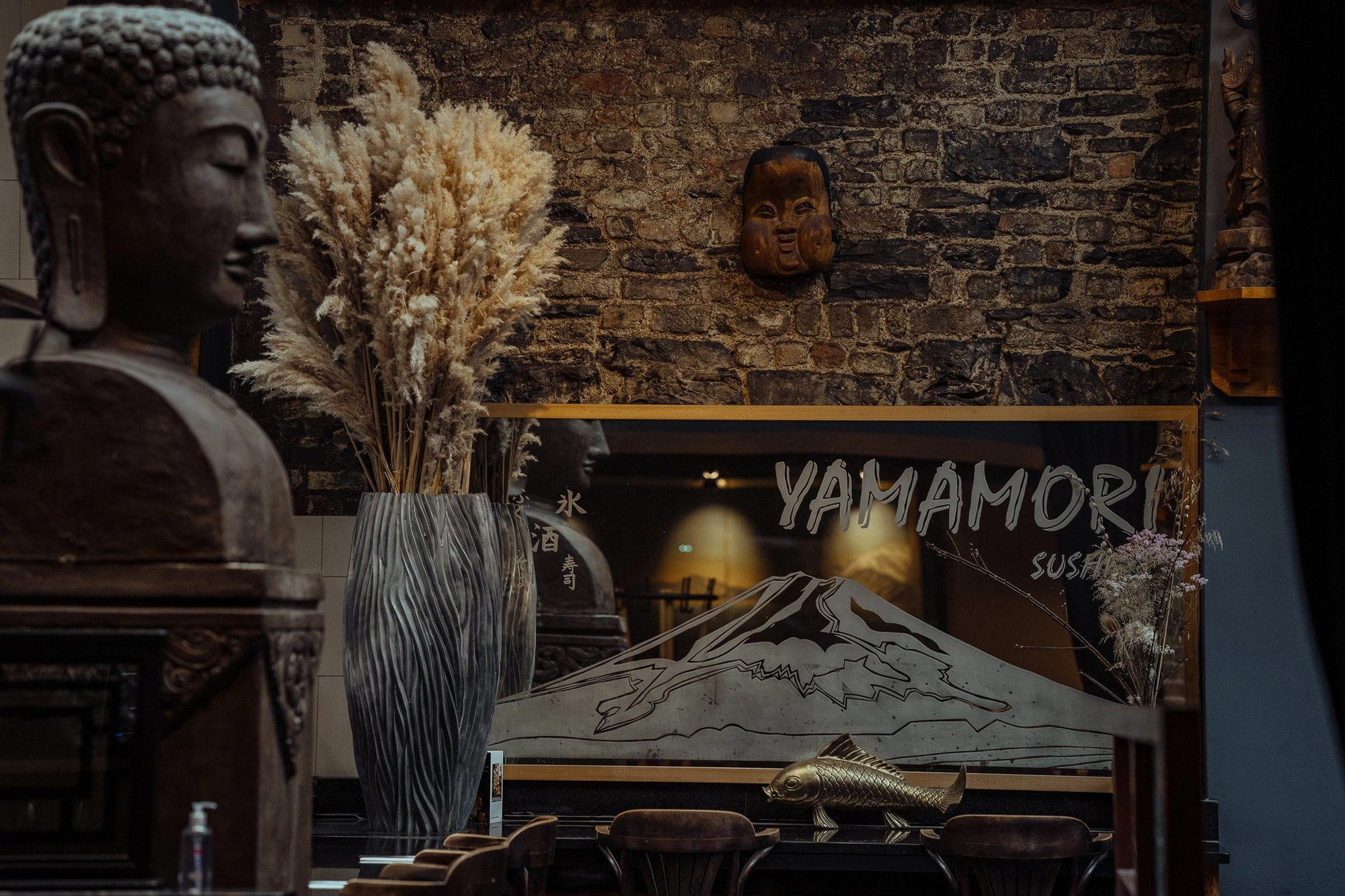
Warm and inviting with cozy but stylish spaces, featuring beautiful 19th-century Japanese artwork, samurai artifacts, and a decorated outdoor bamboo garden; described as welcoming and intimate yet lively.