Tabelog 100 #47
Our verdict
Yakitori Miyagawa is a Kayabacho yakitori institution with roots dating to 1969 and repeated selection in Tabelog’s Yakitori 100, including the EAST 2025 list. Its appeal sits in the Tokyo regulars’ register: chicken skewers, chicken dishes, izakaya drinking, counter seats, and a weekday rhythm shaped as much by office-area loyalty as by destination dining.

Pearl is the En Primeur Club membership app, where members save venues, book tables and use the concierge.
The menu
What to order
- Yakitori rice bowl (liver, gizzard, negima)
- Kashiwa rice bowl (negima)
- Motsu rice bowl
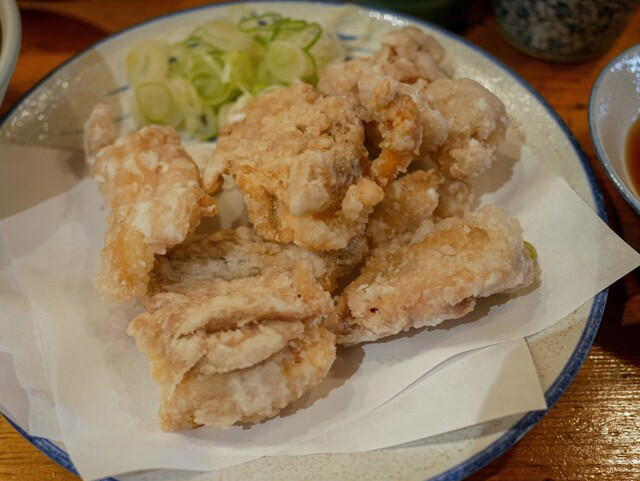
- Fried chicken (kara‑age)
- Chicken wings
- Liver and gizzard skewers
Tokyo is not only a city of grand entrances. Across the city, dining often works in narrower registers: office workers moving between meetings, small dining rooms opening for lunch, smoke from the grill tucked into practical streets rather than theatre. In that setting, yakitori has a different authority. It is not built only around ceremony, nor around the tasting-menu escalation now common across Tokyo’s reservation economy. It rewards repetition, recognition, timing, and knowing what kind of room suits the night.
Yakitori Miyagawa belongs to that older urban pattern. It carries the kind of everyday authority that matters in Tokyo’s grilled-chicken culture, where regulars often treat a house less as a special-occasion address than as part of a working week. Its Tabelog Hyakumeiten recognition in 2025 places it inside a competitive field where consistency counts more than novelty. The format is yakitori, chicken dishes, and izakaya drinking, a category that Tokyo diners understand through habit as much as critique.
Tokyo yakitori runs on repetition, not spectacle
Tokyo’s yakitori scene has split into several lanes. At one end are small counters built around course-driven grilling, careful pacing, and reservation scarcity. At another are izakaya-leaning houses where chicken is the anchor but the experience is more social, more repeatable, and less precious. Yakitori Miyagawa is best read through that wider city context: a Tokyo restaurant where the appeal lies in category confidence rather than theatrical reinvention.
That context explains the appeal better than a chef biography would. The point is not a single auteur narrative; it is a room that fits a precise civic need. Regulars return because the category is dependable: yakitori, chicken dishes, and the informal rhythm of an izakaya. The unwritten menu here is not a secret list; it is the knowledge that different times of day and different dining moods produce different uses. Lunch and dinner sit in distinct budget ranges, while the broader grammar remains rooted in chicken and casual Tokyo drinking culture.
The appeal is also social. In Tokyo, that matters. Many serious yakitori counters ask guests to surrender to a tightly paced sequence; this kind of address is closer to the older city logic, where the grill is central but the customer’s rhythm has more room to breathe. It is a meal shaped less by spectacle than by familiarity, pace, and the comfort of a format that Tokyo knows well.
A Tabelog 100 signal in a city crowded with grill counters
Tabelog’s specialist recognition is a useful filter for Tokyo because the category is unusually dense. A high-profile Michelin-style marker does not define many of the city’s yakitori choices; local reputation, repeat custom, and category-specific rankings often carry more weight. A 2025 selection signals that Yakitori Miyagawa is being read within that specialist field rather than simply as another casual stop in a crowded city.
That continuity puts Yakitori Miyagawa in a different conversation from Tokyo restaurants whose appeal is mainly format novelty. Comparison in this city is often less about cuisine than about use case. Menya Shichisai, Cuit Bonne, てんぷら 小野, オステリア・ウネット, and マチュリテ may each answer different Tokyo dining questions; the sharper comparison is between restaurants that fit naturally into a weekday and those that demand planning as an event.
For visitors, the lesson is simple: Tokyo’s restaurant culture is not only omakase counters and hotel dining rooms. Some of its more revealing meals happen in places that locals use with low drama. A yakitori house in Tokyo teaches how the city eats when it is not performing for a guidebook. The grill may be the draw, but the broader subject is routine: how budget, category recognition, and repeat use create a durable address.
How to read the room before choosing the night
This is best approached as a practical, category-led style of dining, and that texture is part of the appeal. Private ceremony is not the point, and neither is a dressed-up room built for occasion dining. The smarter reading is to treat it as a Tokyo chicken house with an izakaya cadence. Diners looking for a chef-narrated tasting menu should choose a different lane; diners interested in yakitori as lived Tokyo culture will understand why a Tabelog-recognised address keeps its audience.
The listed budget also clarifies the place in the city: dinner is JPY 3,000 - JPY 3,999, while lunch is JPY 1,000 - JPY 1,999. That range keeps the restaurant legible as an everyday Tokyo option rather than a luxury set piece. Its categories, yakitori, chicken dishes, and izakaya, explain the core promise without turning it into a tourist script. That dual function is common in Tokyo, but not every house in the category carries enough recognition to appear on a specialist selection list.
Readers building a wider Tokyo itinerary can place this stop beside other Tokyo meals rather than forcing it into a luxury hierarchy. For nearby dining research, see Our full Tokyo restaurants guide, or compare different city moods through Our full Tokyo bars guide, Our full Tokyo hotels guide, Our full Tokyo wineries guide, and Our full Tokyo experiences guide. Within the restaurant map, useful contrasts include other Tokyo yakitori rooms, casual counters, and everyday dining rooms. For a broader Japan-and-beyond scan, compare it generically with other regional restaurants, cafés, bars, and casual specialists rather than treating it as part of a single luxury hierarchy.
Frequently asked questions
Is Yakitori Miyagawa expensive?
Pricing at Yakitori Miyagawa is listed as Dinner: JPY 3,000 - JPY 3,999; Lunch: JPY 1,000 - JPY 1,999.
What part of town is Yakitori Miyagawa in?
Tokyo.
What time does Yakitori Miyagawa open and close?
Specific opening hours are not provided here; check directly with Yakitori Miyagawa before visiting.
What is Yakitori Miyagawa known for?
Yakitori Miyagawa is known for yakitori, chicken dishes, and izakaya-style dining in Tokyo, with Tabelog Hyakumeiten recognition in 2025.
Nearby-ish Comparables
Comparable venues at the same tier.
| Venue | Cuisine | Price | Awards | Notes |
|---|---|---|---|---|
| Yakitori MiyagawaThis venue (the venue you are viewing) | Traditional Yakitori Izakaya | $30–50 | Tabelog 100 #47 | Not listed |
| オステリア・ウネット | Florentine Tripperia (Offal-Focused Italian) | $50–100 | Not listed | Not listed |
| てんぷら 小野 | Seasonal Tempura Omakase | $200–300 | Not listed | Not listed |
| マチュリテ | Modern French Bistro | $50–100 | Not listed | Not listed |
| Menya Shichisai | Kitakata-Style Ramen | $10–20 | Tabelog 100 #38 | Ramen |
| Cuit Bonne | Japanese European-style curry & dining bar | $10–20 | Tabelog 100 #7 | JPY 1,000 - JPY 1,999 JPY 1,000 - JPY 1,999 View spending breakdown |
Recognition history
Dated appearances from independent guides and award organizations, with the underlying list record or original source where available.
Tabelog 100 #47 · No. 47
Tabelog · Tabelog 100 - Yakitori - EAST - 2025