Yaki-The-Emon
A yakitori and Japanese grill address on Klosterstraße in Düsseldorf's 40211 district, Yaki-The-Emon sits within a city that hosts one of Europe's most established Japanese dining communities. The format follows the open-fire, skewer-driven tradition that has grown steadily across Germany's major cities, placing it in a category where smoke, precision, and sourcing matter more than white-tablecloth formality.
Pearl is the En Primeur Club membership app — saves, bookings, and concierge access live there. Same editors, same standards.
- Address
- Klosterstraße 72, 40211 Düsseldorf, Germany
- Phone
- +4921186040193
- Website
- yaki-the-emon.de
- Directions
- Get directions
 Saves & bookings on Pearl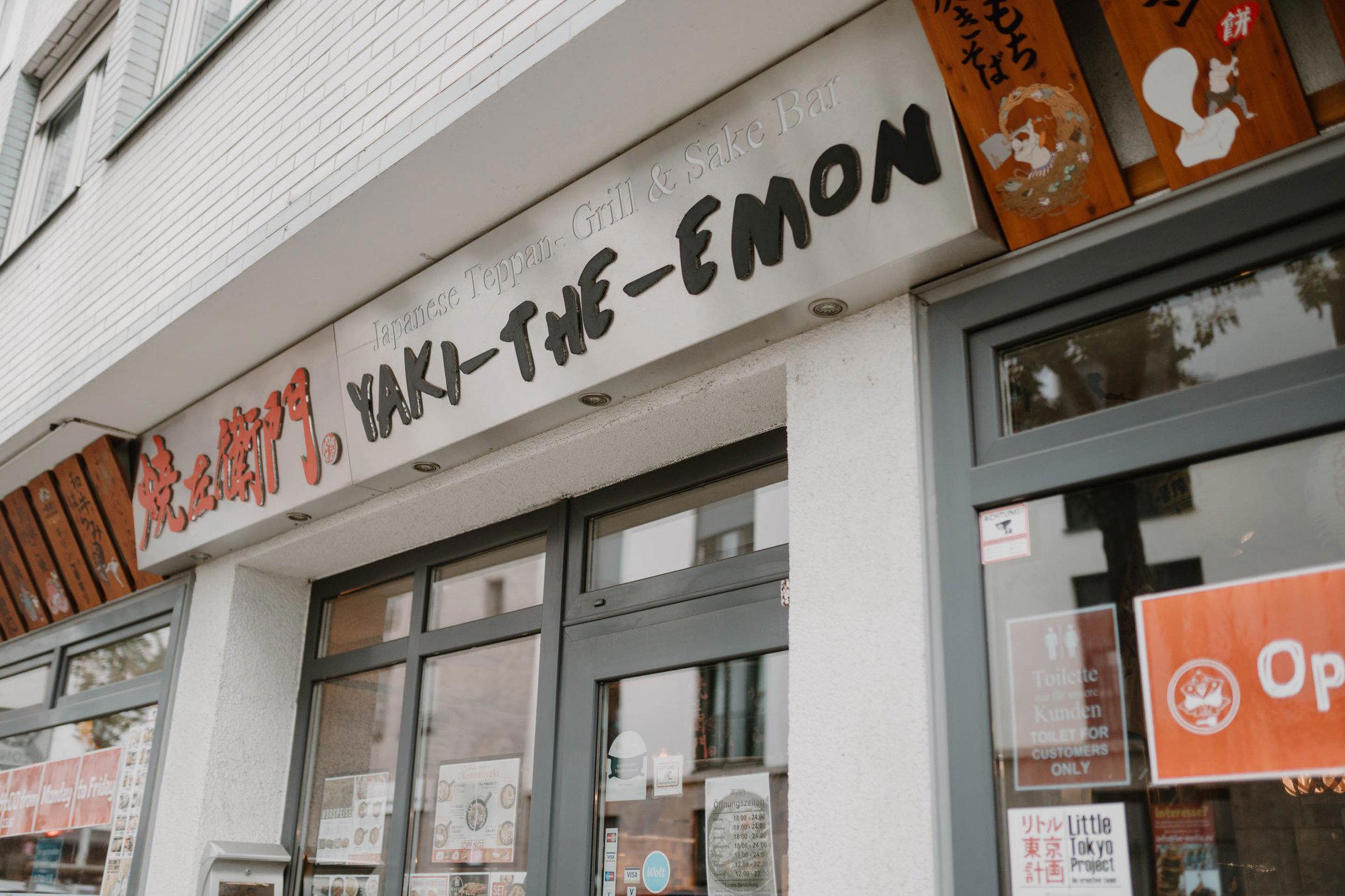
Düsseldorf's Japanese Dining Scene and Where Yakitori Fits
Düsseldorf carries a credential that few European cities can match in Japanese dining: the Immermannstraße corridor and its surrounding blocks constitute one of the continent's densest concentrations of Japanese restaurants, grocery suppliers, and food culture. That foundation was built over decades by Japan's corporate expatriate community, which arrived in the Rhine city from the 1960s onward and sustained a level of culinary seriousness that tourist-facing Japanese restaurants elsewhere in Europe rarely had to meet. The result is a local dining public that knows the difference between a kitchen cooking for curiosity and one cooking for people who eat this food regularly.
Within that context, yakitori occupies a specific and somewhat underrepresented tier. The format — proteins and vegetables threaded on bamboo or metal skewers and grilled over binchōtan charcoal — is technically demanding in ways that differ from sushi or ramen. Temperature control, fat rendering, and the timing of tare (the basting sauce built up over repeated use) are skills that take years to calibrate. In Tokyo, yakitori-ya range from standing-room counters under train tracks to multi-course specialist restaurants with serious drink programs. Germany's versions of that range have been slower to develop, which makes any serious entry into the category worth attention.
Yaki-The-Emon operates from Klosterstraße 72, in the 40211 postcode, a district that sits between the old town and the city's more residential northern quarters. The address is not on the Immermannstraße strip itself, which places it slightly outside the default gravitational pull of Düsseldorf's Japanese dining cluster. That separation tends to filter out the casual pass-trade and concentrate a more deliberate clientele.
The Grill Tradition Behind the Format
Yakitori as a category has followed a recognisable arc in European cities over the past decade. Early versions were often adjuncts to larger izakaya menus, where skewers appeared as bar snacks rather than as a considered program. The more recent wave has moved toward specialist positioning: dedicated grill counters, focused menus, and drink lists built to complement smoke and char rather than simply to accompany it. That shift mirrors what happened in London, Paris, and Berlin, where the format graduated from a footnote to a standalone genre.
The drink pairing question is where yakitori specialists most visibly distinguish themselves. Sake is the default association, but the format actually tolerates a wider range than that assumption suggests. Light-bodied whites with some textural grip, certain Alsatian Pinot Gris, lower-intervention Burgundy, or dry German Riesling from the Mosel, perform well against skewers with higher fat content. Highball programs built on single-malt whisky have become a standard pairing option in Japanese grill formats globally. Any yakitori address serious about its drink offering will have considered these pairings explicitly, rather than defaulting to a generic wine list that happens to sit alongside the grill.
For comparable drink-led ambition in German fine dining more broadly, the cellars at Aqua in Wolfsburg and Schwarzwaldstube in Baiersbronn represent the upper tier of sommelier-driven programs in the country. At the other end of the format spectrum, CODA Dessert Dining in Berlin demonstrates how a hyper-specialist format can command serious drink curation on a small menu.
Düsseldorf's Broader Restaurant Map
The city's dining options spread across formats and price points with enough variety that a visitor can build a coherent itinerary without repeating a category. Klosterstraße and its surrounding streets host a mix of neighbourhood-level addresses that don't depend on destination-dining status. Amuni Wein- und Käsebar represents the wine-bar format that has grown across German cities as an alternative to full-service dining. Anfora and Arca Alacati cover Mediterranean ground. For fast-format eating, Alanya Döner and 3h's burger & chicken anchor the more casual end of the city's offer.
Germany's Michelin-starred tier remains concentrated outside Düsseldorf itself, with addresses like Vendôme in Bergisch Gladbach, JAN in Munich, Victor's Fine Dining by Christian Bau in Perl, Waldhotel Sonnora in Dreis, Restaurant Haerlin in Hamburg, Schanz in Piesport, and ES:SENZ in Grassau representing the country's spread of serious kitchen ambition. Internationally, the yakitori category connects to a wider Japanese dining conversation that includes counter-led formats like Atomix in New York City, where the tasting-menu and beverage pairing relationship is taken to its furthest point. Le Bernardin in New York City offers a useful reference for how a single-protein focus (in that case, fish) can sustain a wine program of genuine depth.
The full scope of what Düsseldorf's restaurant scene offers across neighbourhoods and price tiers is mapped in our full Dusseldorf restaurants guide.
What the Yakitori Format Signals for Visitors
Choosing a yakitori specialist over a broader izakaya or a sushi counter involves a specific trade-off. The menu range is narrower by design, and the experience is built around repetition and variation within a single technique rather than across multiple preparations. That concentration suits drinkers as much as eaters: fewer competing flavour registers mean that a considered sake or whisky highball pairing can run coherently through a whole meal rather than being disrupted by a menu jumping between raw, fried, and simmered dishes.
The smoke itself is part of the environment. Yakitori counters that use binchōtan produce less visible smoke than gas alternatives, but the low-volatile heat still leaves a trace in the room. That atmospheric quality, which can feel oppressive in a poorly ventilated space and quietly compelling in a well-designed one, is part of what distinguishes the format from other Japanese categories that European cities have adopted more completely.
Know Before You Go
- Address: Klosterstraße 72, 40211 Düsseldorf, Germany
- Neighbourhood: Between the Altstadt and the city's northern residential districts, outside the Immermannstraße Japanese dining cluster
- Format: Yakitori and Japanese grill
- Phone: Not publicly listed
- Website: Not publicly listed
- Booking: Contact details not available at time of publication; walk-in or direct venue enquiry advised
- Awards: No awards data available at time of publication
How Yaki-The-Emon Düsseldorf compares with similar nearby venues.
| Venue | Cuisine | Price |
|---|---|---|
| Yabase | Japanese | €€€ |
Continue exploring
More in Düsseldorf
Restaurants in Düsseldorf
Browse all →
Bars in Düsseldorf
Browse all →
Hotels in Düsseldorf
Browse all →
Wineries in Düsseldorf
Browse all →
At a Glance
- Cozy
- Trendy
- Intimate
- Casual Hangout
- Date Night
- Group Dining
- Open Kitchen
- Sake Program
Current opening hours
- Monday
- 12–3 PM, 5–11 PM
- Tuesday
- 12–3 PM, 5–11 PM
- Wednesday
- 12–3 PM, 5–11 PM
- Thursday
- 12–3 PM, 5–11 PM
- Friday
- 12–3 PM, 5–11 PM
- Saturday
- 12–10:30 PM
- Sunday
- 12–10:30 PM
Hours can change for holidays and private events. Last verified .
Cheerful and colorful Japanese izakaya atmosphere that transports diners to Tokyo streets, with warm lighting and lively yet cozy decor.
Know Before You Go
- Getting there
- Klosterstraße 72, 40211 Düsseldorf, Germany