Our verdict
Wirt an der Mahr serves Schlutzkrapfen, Knödel, and Beef Tatar in a historic building in Brixen, with local sourcing and a conversational room.

Pearl is the En Primeur Club membership app, where members save venues, book tables and use the concierge.

Where the Eisack Valley Eats Without Ceremony
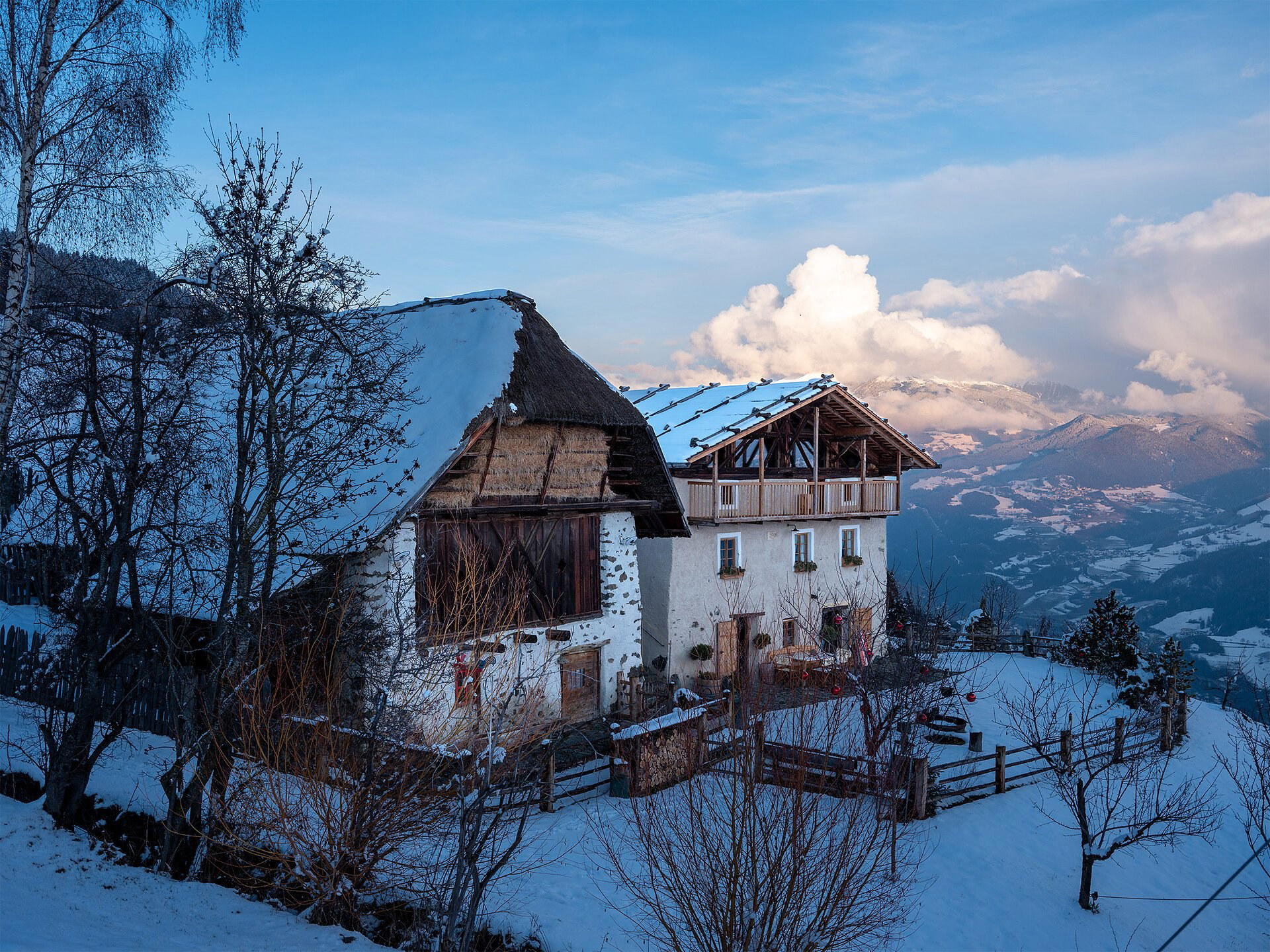
The road out toward La Mara fraction sits east of Brixen's old town, past the cathedral spires and the pedestrian lanes that funnel tourists between souvenir shops and wine bars. Out here, the architecture shifts from baroque civic grandeur to working farmhouse vernacular: stone lintels, stacked wood, a yard that has seen seasons rather than renovation cycles. The Wirt an der Mahr occupies this register. It is a Wirtshaus in the South Tyrolean sense of the word, a category that has outlasted every hospitality trend to pass through the Dolomites because it answers a need that never went away: a place to eat and drink without performance.
South Tyrol's Wirtshaus Tradition and Why It Matters
Understanding where Wirt an der Mahr sits in Brixen's dining picture requires a short detour into regional culinary history. South Tyrol exists at one of Europe's more contested food crossroads, a province that was Austrian until 1919 and has carried both identities in its cooking ever since. The Wirtshaus format, which translates loosely as inn or tavern, predates the modern restaurant category entirely. These establishments were provisioning stops on Alpine trade routes, places where merchants and farmers ate the same food at the same table. The tradition was never precious about its ingredients because those ingredients, speck from local curing houses, barley and rye grown at altitude, dairy from valley farms, were simply what was available. That constraint produced a cuisine of genuine regional logic rather than invented regional identity.
In a province where three-Michelin-starred kitchens like Atelier Moessmer Norbert Niederkofler in Brunico have built global reputations partly by reinterpreting exactly this pantry, the source material has never been more valued. But the Wirtshaus is not the reinterpretation. It is the source. That distinction matters when thinking about what a place like Wirt an der Mahr actually offers inside a broader dining scene that also includes the creative register of Apostelstube, the regional positioning of Alpenrose, and the more urban formats at Brix 0.1 and Agorà21.
The Food as Cultural Document
South Tyrolean tavern cooking is not a simplified version of something more sophisticated. It is its own system, with internal logic and local authority. Dishes that read as peasant food on a menu description, a knödel soup, a plate of cured pork fat with rye bread, a portion of goulash with polenta, carry the accumulated refinement of alpine economies that wasted nothing and preserved everything. The smoked and cured traditions here developed out of necessity and became technique. The bread culture, dense and long-fermented, reflects grain varieties selected for altitude rather than yield.
What the Wirtshaus format does is keep those preparations legible. The cooking is not reimagined or referenced from a distance; it is simply made, often by families who have been making it long enough that the recipes exist as muscle memory rather than written instruction. Compared against the broader Italian fine-dining circuit, where restaurants like Osteria Francescana in Modena, Piazza Duomo in Alba, or Le Calandre in Rubano operate at the level of conceptual cuisine, the Wirtshaus occupies the opposite pole: low concept, high fidelity. That is its editorial proposition.
Brixen's Dining Tiers and Where This Fits
Brixen, known in German as Bressanone and the region's oldest city by ecclesiastical record, punches above its size in restaurant density. The town holds a cathedral complex that drew bishops and traders for centuries, and that traffic shaped a hospitality culture denser than the population alone would generate. Today the city's dining divides roughly into three tiers: the formal dining rooms attached to historic hotels, the creative chef-led restaurants that have emerged in the past two decades, and the traditional inn and tavern category. Wirt an der Mahr sits firmly in the third, in a fraction just outside the city center where the tourist circuits thin out and the clientele shifts toward locals and regional visitors who know the route.
The Burgerhof reference point is useful here: Burgerhof represents another form of traditional Tyrolean hospitality in the area. But La Mara's edge-of-city position gives Wirt an der Mahr a different character, less a destination stop on a tourist itinerary and more a neighborhood institution that happens to be accessible to visitors willing to leave the cathedral square.
Reading the Room Against Italy's Broader Dining Map
Italy's most celebrated restaurants operate in entirely different registers. The seafood authority at Uliassi in Senigallia or the precision tasting format at Quattro Passi in Marina del Cantone represent the country's fine-dining ambition. Even internationally, places like Le Bernardin in New York City or Atomix in New York City define what a certain kind of serious restaurant looks like. The Wirtshaus does not compete in that category and does not try to. Its authority comes from a different source: continuity and place-specificity that no amount of technique can manufacture.
For the EP Club reader who has tracked through formal tasting menus at Enoteca Pinchiorri in Florence or Enrico Bartolini in Milan, the Wirt an der Mahr represents a calibrated contrast rather than a compromise. The value of the meal is not in its innovation. It is in the compression of regional culture into a format that has stayed honest under considerable pressure to modernize.
Planning a Visit
Fraction La Mara sits at address 14, just outside Brixen's city core in the 39042 postal district of Bressanone. The drive from central Brixen takes under ten minutes; the approach by foot or bicycle along valley paths is feasible in good weather. Given the tavern format and local clientele, dining earlier in the evening or at midday tends to align better with the kitchen's rhythm at places of this type in South Tyrol. Contacting the venue directly to confirm hours and reservation requirements is advisable before making the trip out from central Brixen. Our full Brixen restaurants guide covers the broader dining picture and helps calibrate where this kind of tavern visit fits within a wider itinerary. The venue's fraction address in La Mara also places it closer to the valley floor's agricultural character, which gives the approach a context that central-city dining does not provide.
Frequently asked questions
Where do I go for Wirt an der Mahr?
Wirt an der Mahr is located at Frazione La Mara, 14, 39042 Bressanone BZ, Italy, Brixen.
How does Wirt an der Mahr compare to Brixen's other dining options for visitors seeking authentic South Tyrolean cooking?
Wirt an der Mahr sits outside Brixen's tourist-facing restaurant circuit by virtue of its location in the La Mara fraction, east of the old town's cathedral district at address 14 in the 39042 postal area of Bressanone. Where central Brixen restaurants often adjust to visitor expectations, a Wirtshaus in a rural fraction tends to operate for a local clientele, which means the cooking answers to regional habit rather than tourist appetite. That positioning places it in a different category from hotel dining or the town's more visible trattorias, making it a point of reference for South Tyrolean tavern cooking as it functions day-to-day rather than as a performance for outsiders.
What's the must-try dish at Wirt an der Mahr?
Wirt an der Mahr operates within South Tyrol's Wirtshaus tradition, where the kitchen draws on a defined regional canon: cured meats, dumplings, and hearty preparations rooted in Alpine larder logic. Given no current menu is documented, the honest approach is to ask staff on arrival what's running that day from the local repertoire. South Tyrolean tavern kitchens in the Brixen area typically rotate dishes with the season, so the available options at Fraction La Mara will shift across the year.
Is Wirt an der Mahr reservation-only?
No booking policy is publicly documented for Wirt an der Mahr at Fraction La Mara 14, Bressanone. Traditional South Tyrolean Wirtshaus venues vary considerably: some operate on a walk-in basis, others hold tables for regulars or require advance contact during peak periods. Arriving earlier in a meal service or contacting the venue directly before a special trip is advisable, particularly on weekends when Brixen draws visitors from across the Eisack Valley.
Price and Positioning
Comparable venues nearby, for context on price, style, and recognition.
| Venue | Cuisine | Price | Awards | Notes |
|---|---|---|---|---|
| Wirt an der MahrThis venue (the venue you are viewing) | Traditional South Tyrolean with Italian and German influences | $30–50 | Not listed | Not listed |
| Forestis Dolomites | Forest Cuisine | Not listed | Not listed | Bressanone, Forest Cuisine |
| Oste Scuro - Finsterwirt | Traditional South Tyrolean Regional | $50–100 | Michelin Plate | city centre, Traditional South Tyrolean Regional |
| Elephant | Classic South Tyrolean with Modern Twist | Not listed | Michelin Plate | central Brixen, Classic South Tyrolean with Modern Twist |
| Gattererhof | South Tyrolean Buschenschank | Not listed | Not listed | Brixen, South Tyrolean Buschenschank |
| Huberhof | South Tyrolean Italian Buschenschank | Not listed | Not listed | Brixen, South Tyrolean Italian Buschenschank |
Continue exploring
More in Brixen
Restaurants in Brixen
All restaurants in Brixen →
Bars in Brixen
Browse all →

Details
- Rustic
- Cozy
- Classic
- Historic
- Family
- Casual Hangout
- Historic Building
- Local Sourcing
- A La Carte
- Vegetarian Friendly
- Vegan Options
- Gluten Free Options
Current opening hours
- Monday
- 9 AM–10:30 PM
- Tuesday
- 9 AM–10:30 PM
- Wednesday
- 9 AM–3 PM
- Thursday
- Closed
- Friday
- 9 AM–10:30 PM
- Saturday
- 9 AM–10:30 PM
- Sunday
- 9 AM–10:30 PM
Hours can change for holidays and private events. Hours as of .
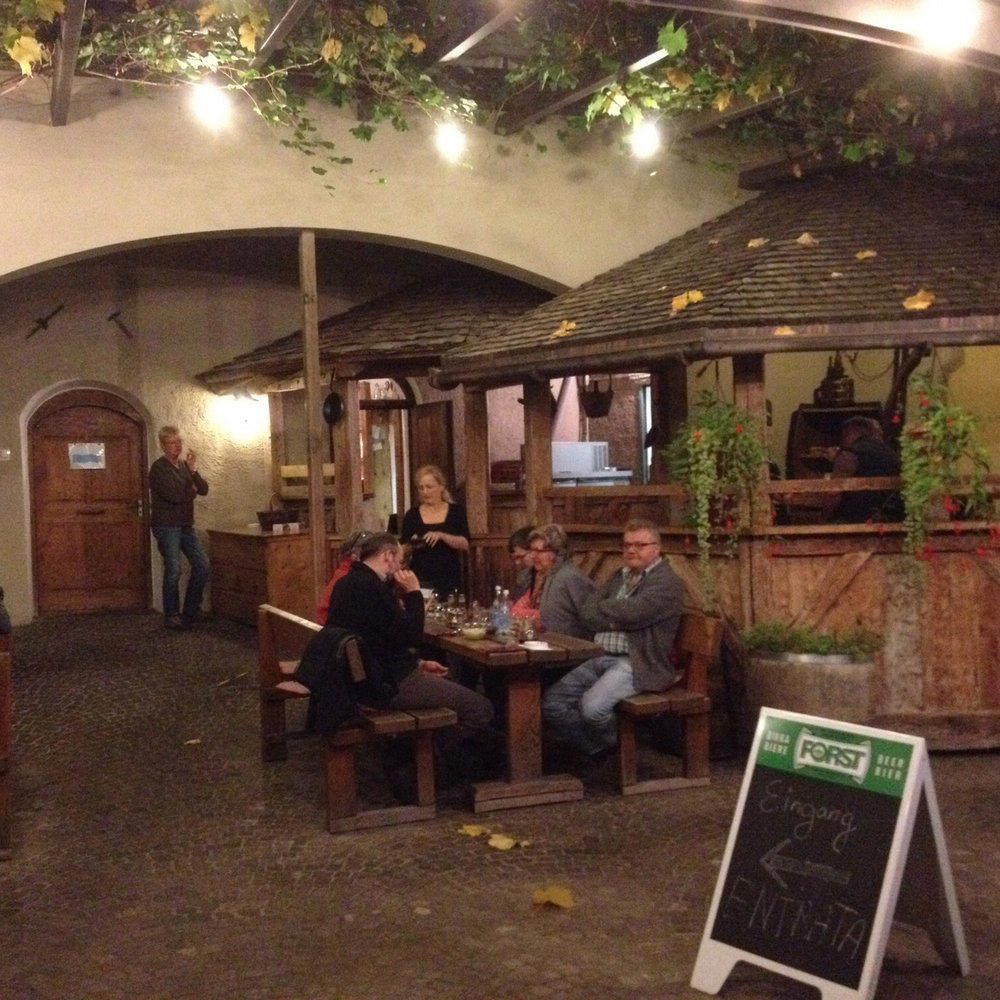
Cozy, rustic atmosphere in traditional wood-paneled stube rooms evoking authentic Tyrolean charm.