


Star Wine List · Wine Spectator Grand Award · World's Best Wine Lists Awards WBWL 3-Star
Our verdict
Wickens at Royal Mail Hotel operates in a category almost entirely its own: a serious fine-dining destination in rural Victoria, three hours from Melbourne, built around Australian produce and a wine list of 4,450 selections that earned Star Wine List's number-one ranking in Australia for 2025. Lunch and dinner service runs at the $$$ price point, and the cellar's depth across Burgundy, Bordeaux, and domestic regions gives the room a credibility that competes well beyond its postcode.

Pearl is the En Primeur Club membership app, where members save venues, book tables and use the concierge.
Dunkeld's Position on Australia's Fine-Dining Map
Australia's serious restaurant culture has historically concentrated in Sydney and Melbourne, with destination dining outside those cities remaining the exception. The exceptions tend to share a common logic: a producer-rich region, a chef willing to commit to rural infrastructure, and a hotel or hospitality group capable of sustaining the operation across seasons. Brae in Birregurra occupies that position in the Otways. Wickens at Royal Mail Hotel holds the equivalent position in the Grampians, anchoring Dunkeld, a town of fewer than 500 residents at the foot of Mount Sturgeon, as a genuine reason to drive three hours from Melbourne.
That drive matters as context. Visitors to Wickens are not passing through. They have planned, booked accommodation (the Royal Mail Hotel sits at 98 Parker St, Dunkeld VIC 3294), and organised their travel around the table. The audience self-selects in a way that shapes everything about the room's atmosphere: quieter, more deliberate, and less performative than a city dining room filling tables between theatre and late transport. For an overview of what else the town offers, see our full Dunkeld restaurants guide, our full Dunkeld hotels guide, our full Dunkeld bars guide, our full Dunkeld wineries guide, and our full Dunkeld experiences guide.
Where the Produce Comes From, and Why It Shapes the Menu
Fine dining that frames itself through ingredient sourcing lives or dies by proximity and commitment. In a city restaurant, provenance is often a sourcing story told in the menu text. At a rural property like Wickens, the land itself is visible from the table. The Grampians and the Western District of Victoria sit inside one of Australia's most productive agricultural corridors: cool-climate growing conditions, access to grassfed protein, and a horticultural culture that has supplied Melbourne's better kitchens for decades.
Chef Robin Wickens operates within that geography rather than importing against it. The cuisine type is listed as Australian, which at the $$$ price tier means something more specific than broad national identity: it means a tasting format built around produce with a demonstrable origin story, where the kitchen's role is to clarify and concentrate flavour rather than mask or globalise it. This is the same logic that drives Amaru in Armadale and, at greater scale, Botanic in Adelaide, Australian fine dining that reads the continent's ingredients as a competitive advantage rather than a limitation.
The practical implication for diners: the menu at Wickens will shift with the seasons in a way that city restaurants can approximate but rarely match with the same fidelity. A lunch reservation in autumn and a dinner reservation in spring are meaningfully different experiences, not because the kitchen is being creative, but because the paddocks and gardens supplying the kitchen are in different states.
The Wine Program: A National Benchmark
Star Wine List awarded Wickens the number-one ranking in Australia for 2025, and the architecture of the list explains that recognition. The cellar holds 4,450 selections across 28,575 bottles, with declared strengths across Australia, Burgundy, Bordeaux, the Rhône, Italy, Spain, and Germany. At the $$$ pricing tier, the list carries significant depth in the $100-plus bracket, which aligns with a tasting menu format where wine pairing becomes part of the evening's structure rather than an optional add-on.
Wine Director John Myers and Sommelier Leonardo Lupattelli manage a program that sits comfortably in the company of city-based wine destinations. For comparison, the kind of Burgundy and Bordeaux depth signalled here is more commonly associated with rooms like Cutler & Co. in Fitzroy or Carlton Wine Rooms in Carlton, both of which operate in high-density urban markets. Building and maintaining a list of this scale in a small regional town requires different logistics: storage, rotation, and procurement all operate without the footfall that city venues use to justify inventory. The Star Wine List White Star designation, awarded on publication in December 2021 and sustained through the 2025 number-one ranking, suggests that the program has been built with long-term intent rather than accumulated over time without curation.
For guests accustomed to the cellar depth at Rockpool in Sydney or Flower Drum in Melbourne, the list at Wickens operates in recognisable territory. For those arriving from a less wine-focused context, the sommelier team's role becomes more active: directing the table through a cellar of this size requires staff who can read a guest's reference points quickly and work within or beyond them accordingly.
The Room and the Format
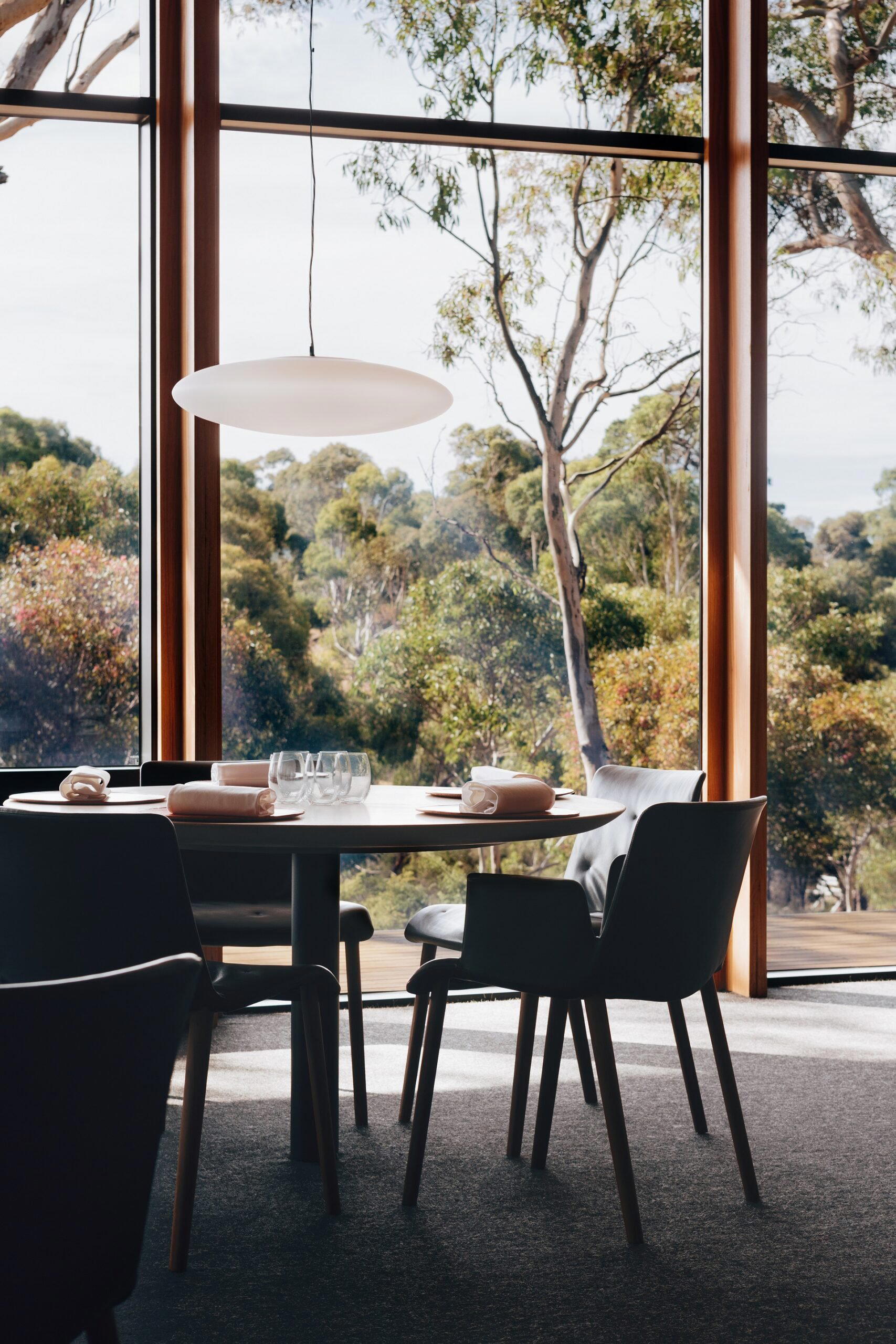
Destination restaurant experiences in rural Australia occupy a different register from the quick-turn urban dining room. The Royal Mail Hotel's setting at the base of the Grampians means the approach to the property already shifts the frame before guests reach the table. Mount Sturgeon in the background, wide pastoral landscape on the drive in, a property that functions as a hotel first and a restaurant within that hospitality ecosystem, the physical context informs the pace of service in a way that supports longer, more deliberate meals.
Wickens serves lunch and dinner, which at the $$$ price point and with a wine list of this scale typically means a structured multi-course format. General Manager Peter Dillon oversees the hospitality operation, and in a property of this type the alignment between front-of-house and kitchen rhythm matters more than in a city venue where guests arrive with their own urban pace already set. The leading comparison within Australian fine dining in terms of rural-destination format and producer-led philosophy remains Brae, though Wickens's wine program operates at a different scale entirely, and the Grampians terroir is distinct from the Otways in character and produce profile.
Internationally, the rural destination model Wickens represents has parallels at operations like Le Bernardin in New York City in terms of sustained critical seriousness, or the ingredient-forward precision of Atomix in New York City in terms of how tightly the menu concept is held, though both those references are urban and the rural context remains Wickens's defining structural difference.
Planning the Visit
Given the $$$ cuisine pricing (meals over $66 per person before beverages) and a wine list priced firmly in the $100-plus bracket, a meal for two with wine pairing sits at the upper end of Australian fine-dining spend. Dunkeld is a three-hour drive from Melbourne, making a same-day return feasible but the more logical approach is to stay at the Royal Mail Hotel itself, which turns dinner into the centrepiece of a two-day itinerary. Lunch service offers an alternative for those who want the full experience with daylight and an afternoon departure.
Reservations at this price point and with this level of national recognition should be treated as essential well in advance of any travel dates. The property's rural location and the destination nature of the visit mean last-minute availability is structurally unlikely. Contact and booking details are best confirmed directly through the Royal Mail Hotel.
Frequently asked questions
Is Wickens at Royal Mail Hotel a family-friendly restaurant?
Wickens operates at the $$$ price tier, with meals above $66 per person before beverages and a wine list weighted toward $100-plus bottles. That price point and the destination-dining format at 98 Parker St, Dunkeld make it better suited to adult occasions than casual family meals. Families with older children who engage with serious food and wine may find it appropriate, but it is not positioned as a family dining venue.
What's the overall feel of Wickens at Royal Mail Hotel?
Wickens sits within the Royal Mail Hotel in rural Dunkeld, roughly three hours from Melbourne, which sets a pace and register distinct from city fine dining. The wine program, awarded Star Wine List's number-one ranking in Australia for 2025 across a 4,450-selection, 28,575-bottle inventory, signals a room where the list is treated as seriously as the food. The combination of remote location, Australian cuisine, and a sommelier team led by Wine Director John Myers and Leonardo Lupattelli points to a considered, unhurried format.
Has Wickens at Royal Mail Hotel won any awards?
Wickens at Royal Mail Hotel has received recognition including: Wickens at Royal Mail Hotel is a hotel venue.without_translation_and restaurant in Dunkeld, Australia. It was published on Star Wine List on December 2, 2021 and is a White Star.; Star Wine List #1 (2025); WINE: Wine Strengths: Australia, B….
What do regulars order at Wickens at Royal Mail Hotel?
Regulars making the trip to Dunkeld are likely pairing the tasting format with selections from those cellar strengths.
Where do I go for Wickens at Royal Mail Hotel?
Wickens at Royal Mail Hotel is located at 98 Parker St, Dunkeld VIC 3294, Australia, Dunkeld.
Do I need a reservation for Wickens at Royal Mail Hotel?
Given the $$$ price tier, the destination location in Dunkeld, and a wine list that earned Star Wine List's number-one Australia ranking for 2025, Wickens draws visitors who travel specifically to dine there. Booking ahead is strongly advisable; arriving without a reservation at a venue of this standing and remoteness carries real risk of missing a table.
How It Stacks Up
| Venue | Cuisine | Price | Awards | Notes |
|---|---|---|---|---|
| Wickens at Royal Mail HotelThis venue (the venue you are viewing) | Modern Australian Fine Dining | $100–150 | Star Wine List · Wine Spectator Grand Award | Not listed |
| Rockpool | Modern Australian Steakhouse | $150–200 | World's 50 Best #49 · La Liste Top Restaurants | Australian Cuisine |
| Saint Peter | Modern Australian Seafood | $150–200 | World's 50 Best #66 · La Liste Top Restaurants | Australian Seafood |
| Flower Drum | Fine Dining Cantonese | $50–100 | World's 50 Best #33 · Star Wine List | Cantonese |
| Attica | Modern Australian Indigenous Fine Dining | $300–500 | World's 50 Best #20 · La Liste Top Restaurants | Australian Modern |
| Brae | Modern Australian Seasonal Tasting Menu | $200–300 | World's 50 Best #44 · La Liste Top Restaurants | Modern Australian |
Recognition history
Dated appearances from independent guides and award organizations, with the underlying list record or original source where available.
Star Wine List
Star Wine List
Wine Spectator Grand Award
Wine Spectator
World's Best Wine Lists Awards WBWL 3-Star
World's Best Wine Lists Awards
Full recognition history (6 entries)
Wine Spectator Grand Award
Wine Spectator
World's Best Wine Lists Awards WBWL Category Winner
World's Best Wine Lists Awards
World's Best Wine Lists Awards WBWL 3-Star
World's Best Wine Lists Awards
Continue exploring
More in Dunkeld
Hotels in Dunkeld
All hotels in Dunkeld →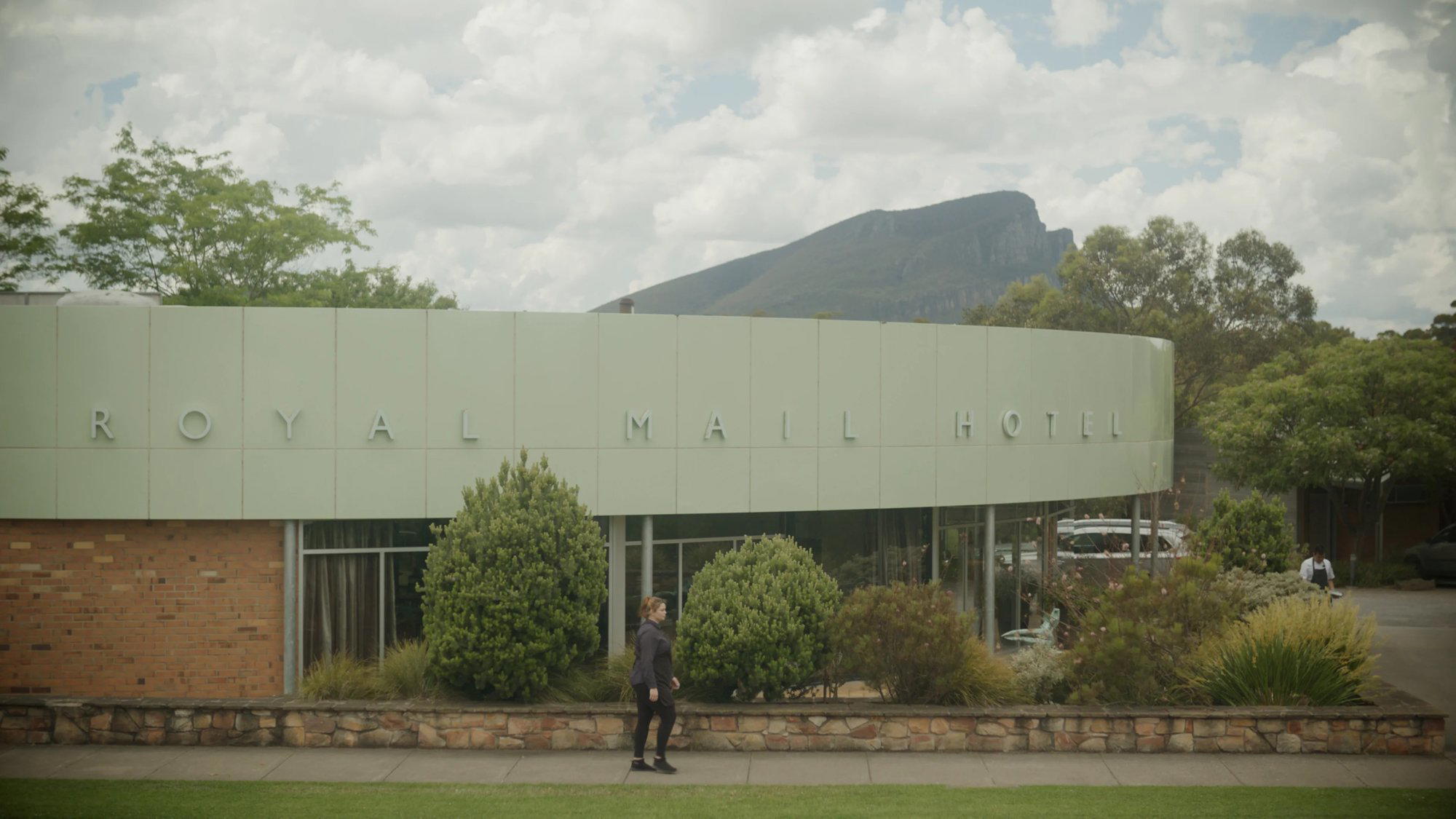
Wickens at Royal Mail Hotel
The wine
Wickens at Royal Mail Hotel holds the Wine Spectator Grand Award, which Wine Spectator gives to lists of usually 1,000 or more selections.
- Wine Spectator
- Wine Spectator Grand Award
- Extensive wine list
- Sommelier-led
Details
- Elegant
- Sophisticated
- Intimate
- Scenic
- Date Night
- Celebration
- Special Occasion
- Hotel Restaurant
- Historic Building
- Sommelier Led
- Extensive Wine List
- Mountain
- Tasting Menu
- Prix Fixe
- Wine Pairings
- Chef's Tasting Menu Pairings
Current opening hours
- Monday
- Closed
- Tuesday
- Closed
- Wednesday
- Closed
- Thursday
- 6–11 PM
- Friday
- 6–11 PM
- Saturday
- 12–11 PM
- Sunday
- Closed
Hours can change for holidays and private events. Hours as of .
Refined and intimate, with a polished fine-dining atmosphere that feels quiet and carefully composed.