WEBERSTUBE

Inside Hotel BEI SCHUMANN in Schirgiswalde-Kirschau, WEBERSTUBE earns its 2025 Michelin Bib Gourmand through seasonal, regionally grounded cooking by Chef Jean-Luc Voegele. Wood panelling, a tiled stove, and dishes like spicy beef consommé and Saxony pancakes place this squarely in Upper Lusatia's farm-to-table tradition, at a price point that makes it one of the region's most accessible Michelin-recognised addresses.
Pearl is the En Primeur Club membership app — saves, bookings, and concierge access live there. Same editors, same standards.
- Address
- Hotel BEI SCHUMANN, Bautzener Str. 74, 02681 Schirgiswalde-Kirschau, Germany
- Phone
- +49 3592 5200
- Website
- bei-schumann.de
- Directions
- Get directions
 Saves & bookings on Pearl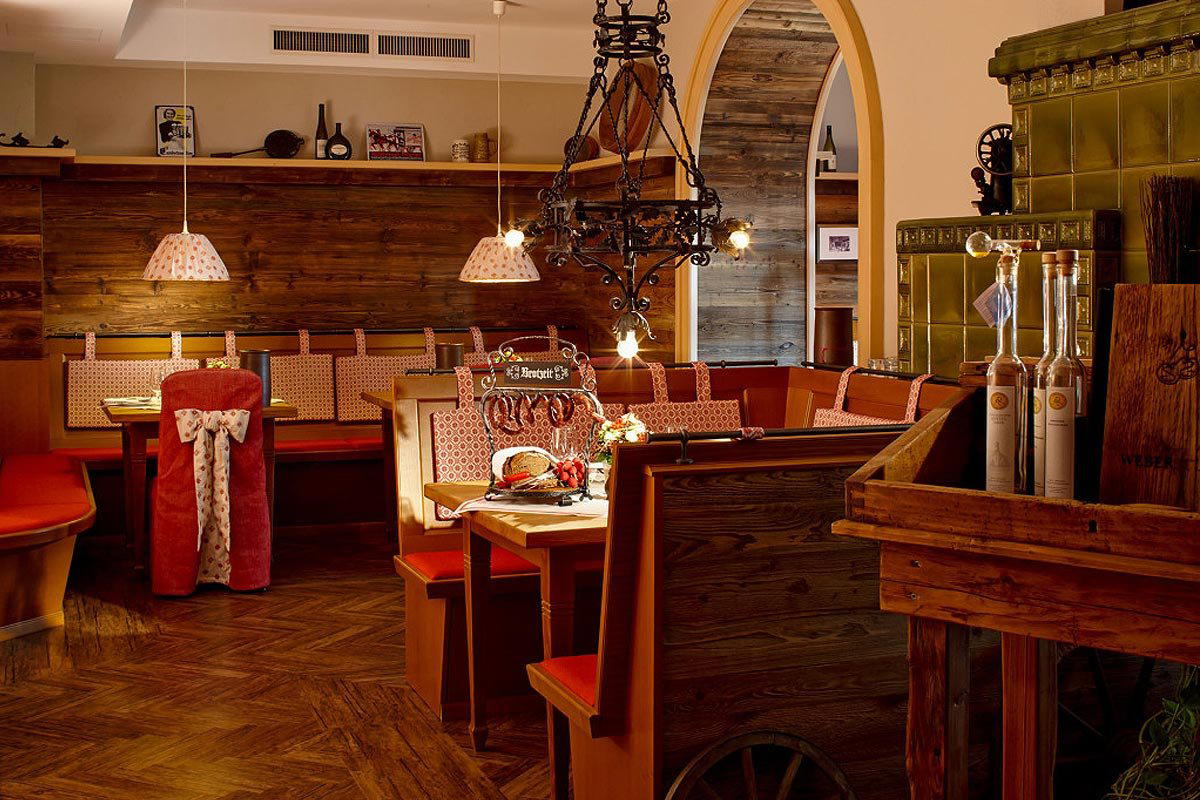
Wood, Warmth, and the Weight of Regional Cooking
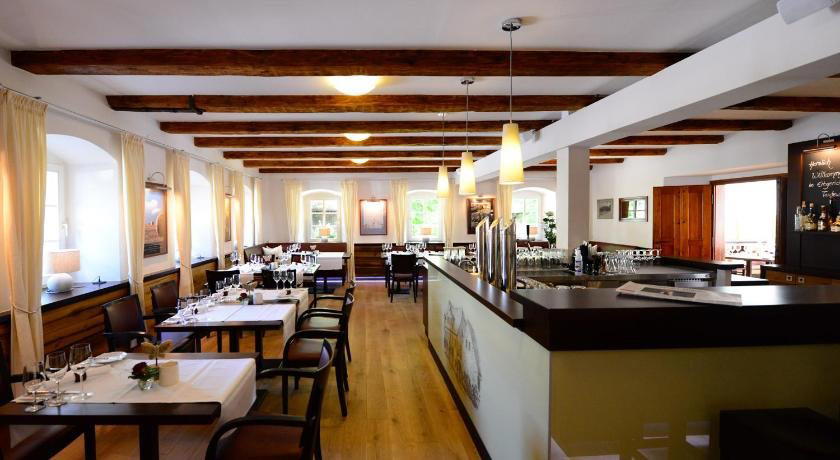
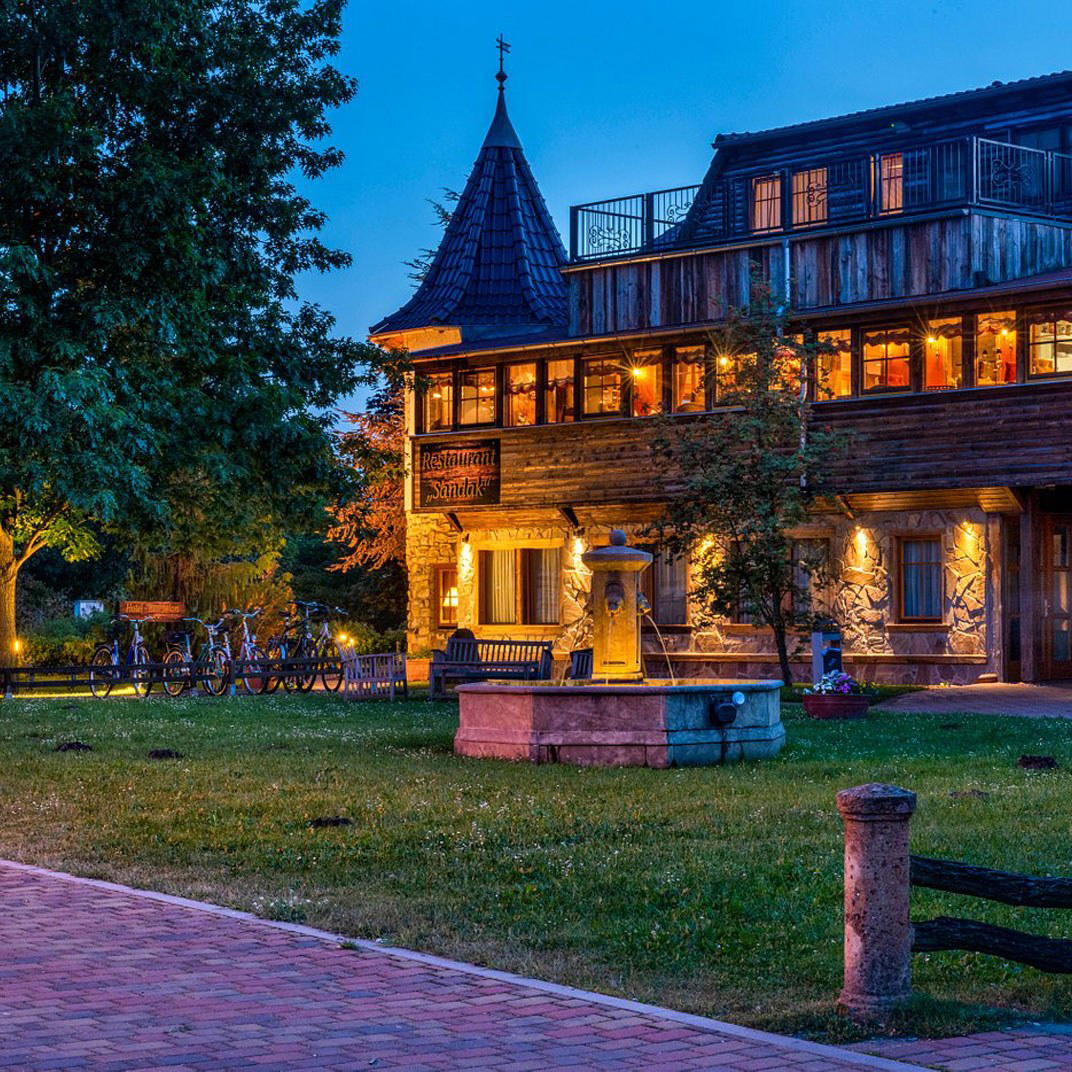
Walk through the entrance of Hotel BEI SCHUMANN on Bautzener Strasse and the dining room asserts itself immediately: wood panelling that has absorbed years of warmth, a tiled stove anchoring the space, and the kind of composed rusticity that is earned rather than installed. WEBERSTUBE does not perform coziness for effect. The room's character is the product of materials and proportion, the physical expression of Upper Lusatia's tradition of hearty, land-connected hospitality. In a region where many kitchens have drifted toward generic Central European comfort food, this is a dining room that still has a clear point of view about where it is and what that means.
Farm-to-Table in Saxony: A Tradition With Teeth
Germany's farm-to-table movement often gets discussed as a metropolitan phenomenon, associated with Berlin's ingredient-obsessed bistros or the Bavarian Biodynamic producers feeding kitchens like JAN in Munich. But the tradition runs deeper and older in Saxony, where proximity to agricultural land and a historical culture of thrift and preservation shaped kitchen practice long before the phrase existed. The Upper Lusatia plateau, with its mix of arable land and smallholder farming, has always supplied its own tables. What has changed is the framing: what was once simply local habit is now a deliberate editorial position, and kitchens holding that position with discipline are the ones earning recognition.
WEBERSTUBE sits inside that regional tradition without romanticising it. Chef Jean-Luc Voegele works with seasonal produce and local sourcing as a structural principle, not a garnish on the menu copy. The Michelin Bib Gourmand awarded in 2025 confirms what the format already implies: this is a kitchen producing food of genuine quality at the €€ tier. For comparison, the Bib Gourmand's defining criterion is cooking worth a detour at a moderate price, a threshold that German kitchens at the €€€€ tier, among them Schwarzwaldstube in Baiersbronn, Aqua in Wolfsburg, and Vendôme in Bergisch Gladbach, operate well above. The Bib category is its own category, and WEBERSTUBE holds it in a region where Michelin attention is sparse.
What the Menu Says About the Place
The dishes Michelin cites in its 2025 assessment trace the contours of Upper Lusatian cooking with some precision. Spicy beef consommé speaks to the Saxon tradition of clear, deeply reduced stocks, a technique requiring time and good bones rather than complex method. Fried skrei with asparagus ragout places the kitchen squarely in seasonal rhythm, skrei being the post-spawning Atlantic cod available in the first months of the year, a product that demands little intervention when the sourcing is right. Saxony pancakes with apple sauce anchor the menu in local identity, a dish that appears across the region's domestic cooking in dozens of variations and that a kitchen either handles with respect or reduces to a nostalgic prop.
Then there is the dish that functions as signature: Schuhmann's Currywurst, served in multiple degrees of spiciness. Currywurst carries significant cultural freight in Germany, a post-war Berlin invention that spread across the country and became, improbably, a subject of serious culinary attention. A kitchen in rural Saxony making its own version, named and tiered by heat, is staking a position, connecting the local and the national through a dish that most fine-casual kitchens would consider beneath them. That WEBERSTUBE makes it a centrepiece rather than a concession is the kind of editorial confidence that tends to produce lasting reputations.
For other farm-to-table kitchens operating in Germany's smaller cities and towns, BOK Restaurant Brust oder Keule in Münster and Clostermanns Le Gourmet in Niederkassel represent a comparable tier of regionally committed cooking at accessible price points.
The Room Beyond the Dining Room
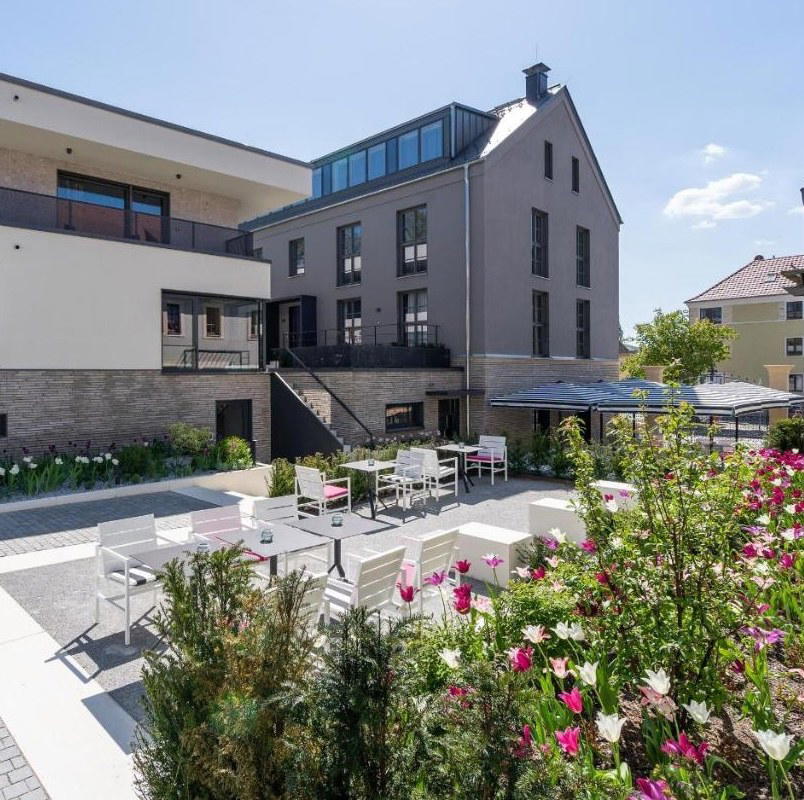
German hospitality at this level frequently involves the building doing as much work as the kitchen. BEI SCHUMANN operates as a hotel, which means WEBERSTUBE is embedded in an infrastructure designed for longer stays. The adjacency matters: guests arriving from outside the region, pairing a meal here with a visit to Bautzen or the broader Upper Lusatia area, can treat the restaurant as a destination within a destination rather than a standalone detour. The front terrace extends the room outward in warmer months, shifting the atmosphere from the close warmth of the tiled-stove interior to something more open. Next door, the BEI CHURCHILL smoking lounge provides a transition space that German hotel dining rooms of this type have historically understood well, a place to extend the evening without dissolving the meal's formal close.
The fondue evenings mentioned in Michelin's notes are worth attention as a format. Communal table cooking is a different social contract from standard à la carte service, and a kitchen choosing to offer it is signalling something about how it reads its audience. In Alpine contexts, fondue is infrastructure. In Saxony, it functions more as occasion, a deliberate choice that transforms a Tuesday dinner into something with a slightly different register.
Service and the Michelin Assessment
The Bib Gourmand designation explicitly notes cordial and professional service as part of the assessment, a detail that matters more than it might appear. At the €€€€ end of German fine dining, service is expected to be technically precise, as it is at Restaurant Haerlin in Hamburg, Schanz in Piesport, or Waldhotel Sonnora in Dreis. At the Bib level, the standard is warmth without sloppiness, attentiveness without theatre, and a front-of-house culture that matches the food's register. When Michelin flags it specifically, it is registering something that distinguishes this room from peers at the same price tier.2 from early reviewers points in the same direction, though the sample is still small.
Planning a Visit
WEBERSTUBE is located within Hotel BEI SCHUMANN at Bautzener Strasse 74, Schirgiswalde-Kirschau, accessible from Bautzen roughly 10 kilometres to the west. Given its hotel-restaurant format, advance booking is advisable, particularly for weekend evenings or the fondue evenings that require separate arrangement. The €€ price positioning means this is a kitchen where the value-to-quality ratio is part of the point, and the seasonal menu means repeat visits in different months will produce a materially different experience.
Style and Standing
Comparable venues nearby, for context on price, style, and recognition.
| Venue | Cuisine | Price | Awards | Notes |
|---|---|---|---|---|
| WEBERSTUBEThis venue — the venue you are viewing | German | $$ | Bib Gourmand | Not listed |
| AL FORNO | Authentic Italian Pizza and Pasta | $$ | Michelin Plate | Kirschau |
| JUWEL | Modern French Creative | $$$$ | Michelin 1 Star | Kirschau |
| Jäger & Lustig | Traditional German Heimatküche | $$ | Bib Gourmand | Friedrichshain |
| Landhaus Gräfenthal | Contemporary German with Mediterranean influences | $$ | Bib Gourmand | Bindlach |
| Zum Vaas | Modern Bavarian Alpine Cuisine | $$ | Bib Gourmand | Forstinning |
Recognition history
Dated appearances from independent guides and award organizations, with the underlying list record or original source where available.
Michelin Plate
Michelin · 2026 Michelin Plate
Michelin Bib Gourmand
Michelin
Michelin Plate
Michelin
Continue exploring
More in Schirgiswalde-Kirschau
Restaurants in Schirgiswalde-Kirschau
Browse all →
Bars in Schirgiswalde-Kirschau
Browse all →
Hotels in Schirgiswalde-Kirschau
Browse all →
At a Glance
- Cozy
- Rustic
- Classic
- Casual Hangout
- Date Night
- Family
- Celebration
- Hotel Restaurant
- Terrace
- Standalone
- Extensive Wine List
- Farm To Table
- Local Sourcing
Current opening hours
- Monday
- Closed
- Tuesday
- 5:30–10 PM
- Wednesday
- 5:30–10 PM
- Thursday
- 5:30–10 PM
- Friday
- 5:30–10 PM
- Saturday
- 5:30–10 PM
- Sunday
- Closed
Hours can change for holidays and private events. Last verified .
Relaxed and cozy, with warm wood, a homely regional feel, and an informal atmosphere suited to leisurely evening dining.