
World's 50 Best #15
Our verdict
Vong reached the World's 50 Best Restaurants list at number 15 in 2002, placing it among a small group of New York kitchens redefining what French technique could absorb from Southeast Asian cooking. The menu architecture, French structure carrying Thai and Vietnamese inflections, shaped a template that later generations of fusion kitchens still reference.

Pearl is the En Primeur Club membership app, where members save venues, book tables and use the concierge.
French Fusion at a Turning Point: What Vong's Menu Revealed About New York Dining
At the turn of the millennium, the more revealing measure of a New York fine dining kitchen wasn't how faithfully it executed classical French cuisine but how inventively it departed from it. A narrow cohort of restaurants in the early 2000s were stress-testing the boundaries of French technique by running Southeast Asian flavors through it, lemongrass, galangal, fish sauce, tamarind, and asking whether the architecture of a French tasting menu could hold those ingredients without collapsing into novelty. Vong was among the most visible of those experiments, and in 2002 it reached number 15 on the World's 50 Best Restaurants list, a placement that confirmed it wasn't just a trend piece but a kitchen making a serious argument about what French cooking could become in an American context.
That argument was always primarily a structural one. The interest in Vong's menu was never simply about unusual flavor combinations, plenty of restaurants were doing that, but about how the menu was organized: how many courses it moved through, which components anchored each dish to the French tradition, and where the Southeast Asian material arrived, whether as a modifier, a sauce, a protein treatment, or an entire conceptual framing for a course. French Fusion as a category had a short window before it became either absorbed into the mainstream or dismissed as dated, and what distinguished the kitchens that lasted from those that didn't was usually the coherence of the menu's internal logic. For a comparison: Le Bernardin achieved longevity through absolute commitment to a single protein category; Eleven Madison Park pivoted its menu philosophy entirely more than once. Vong's approach was less about committing to a single ingredient family and more about holding a particular tension, French precision, Asian aromatics, as the menu's governing principle.
Menu Architecture: How the Courses Were Built
In the early 2000s New York fine dining context, menus at Vong's level typically ran in formats that mirrored the French tasting structure: amuse-bouche, multiple composed courses with increasing protein weight, a cheese interval, and a dessert sequence. What French Fusion kitchens of that generation added was an ingredient translation layer, classical sauces rerouted through coconut milk or nam pla reductions, proteins marinated in Southeast Asian aromatics before being handled with French butchering precision, and garnishes that replaced the standard French herb palette with cilantro, Thai basil, kaffir lime leaf, and fresh chili.
This was menu design as a thesis statement. The fact that the kitchen maintained enough discipline to earn a place on the World's 50 Best list, a list that at that moment included kitchens like The French Laundry in Napa and would later feature places like Alinea in Chicago and Per Se in New York, indicates that the fusion was functioning at a technical level that serious critics found credible, not merely interesting as a cultural proposition.
The distinction matters because French Fusion carried real risks in that period. Done without structural discipline, it produced menus where the French and Asian elements coexisted without integrating, a beurre blanc next to a mango salsa, with neither transforming the other. The kitchens that worked were the ones where the fusion was happening at the level of technique, not just ingredient selection: French emulsion methods applied to ingredients that had never been emulsified in a Western kitchen, French roasting temperatures recalibrated for proteins that had traditionally been prepared very differently. At number 15 globally, Vong was clearly in the first category.
Positioning in New York's Fine Dining Tier
New York's top-tier restaurant market in the early 2000s was structured around a small number of multi-Michelin-starred French establishments and a growing set of kitchens experimenting with Asian integration. That ranking put it alongside Emeril's in New Orleans, which was making a comparable argument about Creole-French integration, and West Coast kitchens like Providence in Los Angeles and Lazy Bear in San Francisco, which were pursuing their own versions of cuisine defined by technique meeting strong local or cultural identity.
It suggests a restaurant that generates a high volume of engagement, most serious fine dining kitchens at this price tier accumulate far fewer reviews, and maintains a rating consistent with quality-forward expectations rather than casual dining tolerance. Reviews at this volume tend to flatten out at the mean over time, which makes sustained high scores more credible than a small sample of enthusiastic early visitors. For the full context of New York dining at this tier, see our full New York City restaurants guide.
The Broader French Fusion Tradition
French Fusion as a culinary category has always been less about geography than about which non-French tradition the French framework is absorbing. The 1980s and 1990s Californian version integrated Pacific Rim and Mexican ingredients into French-trained cooking, producing a template that eventually became California cuisine proper. The version that Vong represented was more specifically Southeast Asian in orientation, Thailand, Vietnam, and to some extent Laos and Cambodia providing the aromatic and flavor vocabulary, and it arrived in New York during a period when the city was expanding its fine dining range rapidly.
That tradition has continued in different forms. French Fusion kitchens now operate across multiple price tiers and in cities far from the American coasts, L'Atelier de Ben in Saint-Denis and STUP in Simon are examples of the format operating in contexts where the French culinary tradition meets very different local ingredients and cultural reference points. What connects these kitchens to Vong's moment is the underlying structural question: when you run a non-French flavor tradition through French technique, what survives, what transforms, and what simply disappears? The leading kitchens in this category have always been the ones with a clear answer.
For travelers building an itinerary around New York's dining scene, the city's hotels, bars, and experiences all orbit a restaurant culture that rewards planning. See our full New York City hotels guide, our full New York City bars guide, our full New York City wineries guide, and our full New York City experiences guide for a complete picture of what the city offers at this level. For kitchens with comparable ambitions around technique-led menus, Single Thread Farm in Healdsburg offers a useful West Coast counterpoint where Japanese kaiseki structure absorbs Northern California ingredient logic in a way that parallels what Vong was doing with French and Southeast Asian material two decades earlier.
Planning a Visit
Frequently asked questions
What's Vong's location?
Vong is located at Menakhem Begin Rd 150, Tel Aviv-Yafo, Israel, New York City.
Has Vong won any awards?
Vong has received recognition including: World's 50 Best Best Restaurants #15 (2002).
What do people recommend at Vong?
Vong built its reputation on courses that applied classical French technique to Southeast Asian aromatics, lemongrass, galangal, and tamarind in contexts that French kitchens had historically ignored. The dishes most discussed within that framework tend to be those where the aromatic contrast between the two traditions is clearest. Vong's 2002 placement at number 15 on the World's 50 Best Restaurants list reflects the consistency with which that approach landed at the highest level of New York fine dining.
Do I need a reservation for Vong?
At the level where Vong operated, number 15 on the World's 50 Best Restaurants list in 2002, reservations were a practical requirement rather than a courtesy. Walk-in availability at that tier of New York fine dining has historically been limited to last-minute cancellations. Booking in advance is the reliable approach for any restaurant holding that kind of placement.
What has Vong built its reputation on?
Vong's reputation is anchored directly to its number 15 placement on the World's 50 Best Restaurants list in 2002, which placed it among a small group of New York restaurants recognised at that level internationally. The kitchen's approach, French tasting structure applied to Southeast Asian flavour profiles, gave the restaurant a clear identity at a moment when French fusion was being taken seriously as a fine dining category rather than dismissed as a novelty.
How does Vong's French-Southeast Asian approach compare to other French fusion restaurants of its era?
Vong's 2002 ranking at number 15 on the World's 50 Best Restaurants list made it one of the most credentialled examples of French-Southeast Asian cuisine at that time, placing it well above most contemporaries working in the same category. Where many French fusion restaurants of the early 2000s treated Southeast Asian ingredients as accents, Vong structured its menu around the contrast as a central organising principle. That distinction is part of what separated it from the broader French fusion tier in New York's competitive fine dining market.
Cuisine Context
Comparable venues nearby, for context on price, style, and recognition.
| Venue | Cuisine | Price | Awards | Notes |
|---|---|---|---|---|
| VongThis venue (the venue you are viewing) | Thai-French Fusion | Not listed | World's 50 Best #15 | Not listed |
| Ali Karawan Abu Hassan (עלי קרואן אבו חסן) | Traditional Middle Eastern Hummus | $10–20 | Not listed | Jaffa |
| Santa Katarina | Modern Mediterranean Fusion | $30–50 | Not listed | near Great Synagogue |
| Backyard 51 | Italian-Japanese garden restaurant | $30–50 | Not listed | Nahalat Binyamin |
| Thai House | Authentic Thai Isan | $20–30 | Not listed | Tel Aviv City Center |
| Ha'Achim | Modern Israeli Mediterranean | $30–50 | Not listed | HaQirya |
Recognition history
Dated appearances from independent guides and award organizations, with the underlying list record or original source where available.
World's 50 Best Restaurants #15
World's 50 Best
Continue exploring
More in Tel Aviv
Restaurants in Tel Aviv
All restaurants in Tel Aviv →
Bars in Tel Aviv
All bars in Tel Aviv →

Details
- Elegant
- Sophisticated
- Date Night
- Business Dinner
- Special Occasion
- Design Destination
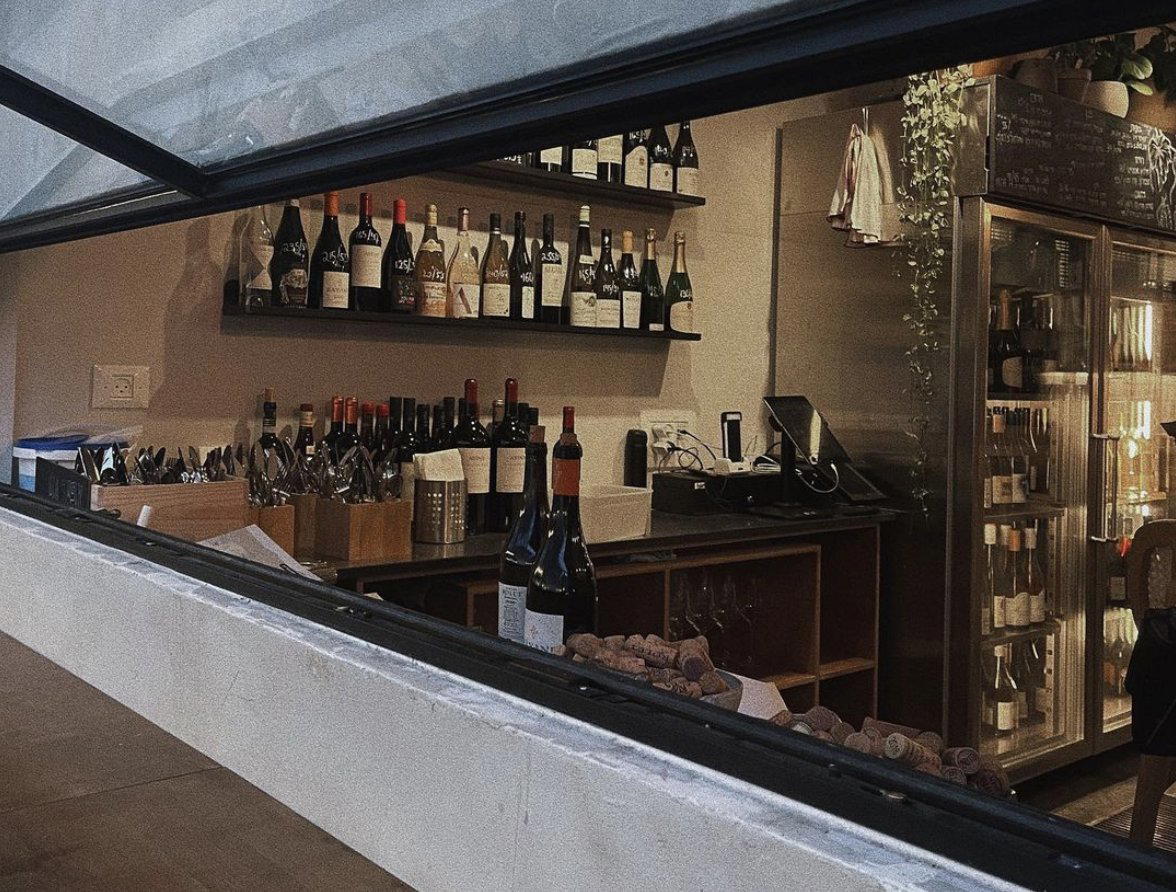
- Extensive Wine List
- A La Carte
- Vegetarian Friendly
- Vegan Options
- Gluten Free Options
Current opening hours
- Monday
- 11 AM–11 PM
- Tuesday
- 11 AM–11 PM
- Wednesday
- 11 AM–11 PM
- Thursday
- 11 AM–11 PM
- Friday
- 4–11 PM
- Saturday
- 11:30 AM–11 PM
- Sunday
- 11 AM–11 PM
Hours can change for holidays and private events. Hours as of .
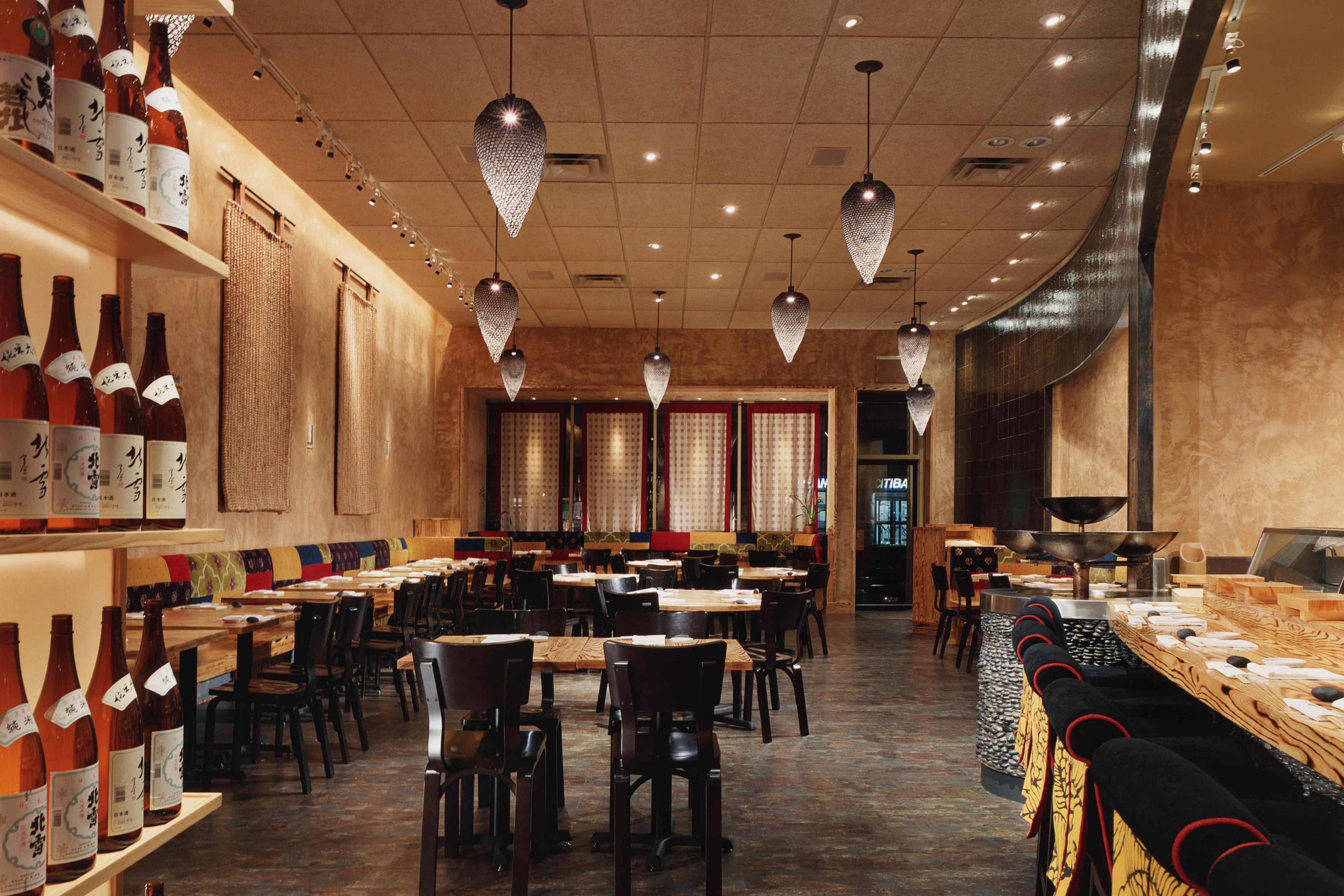
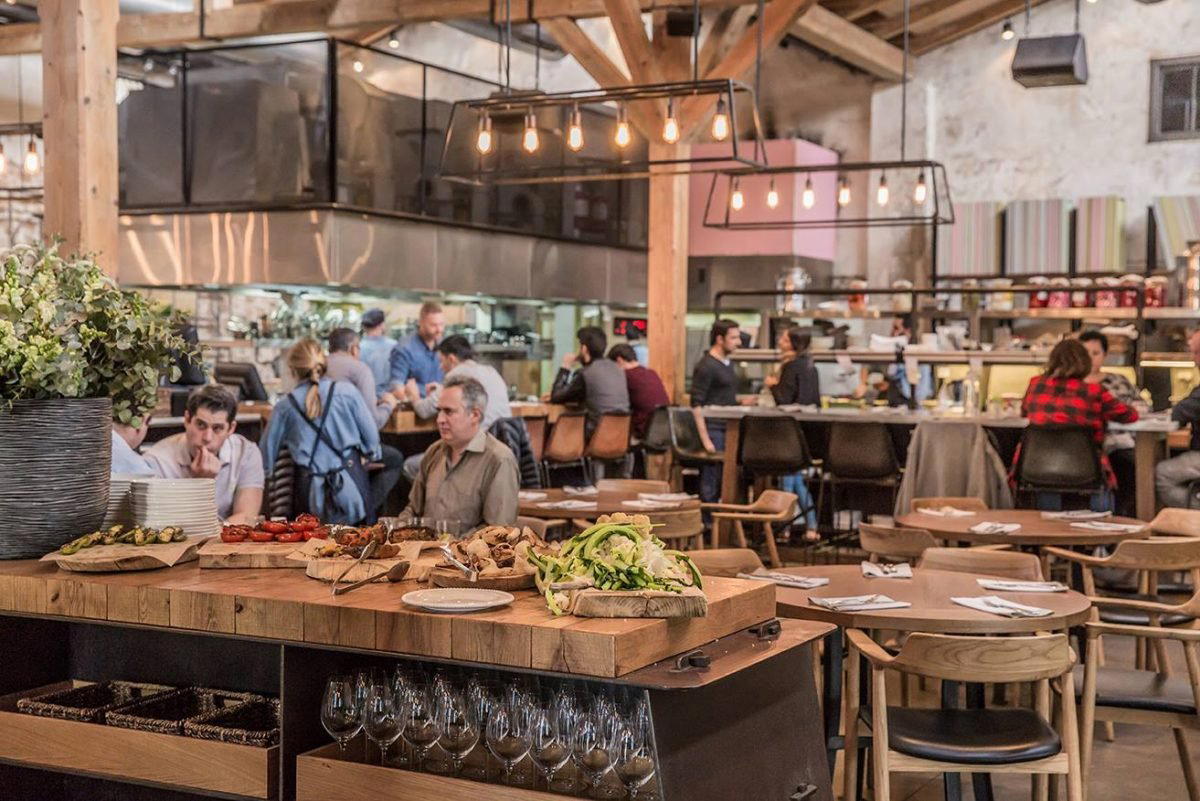
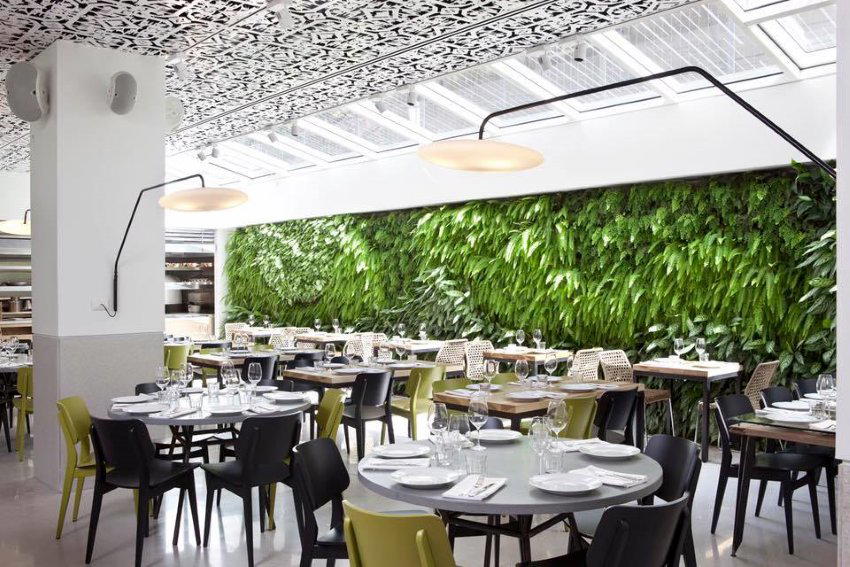
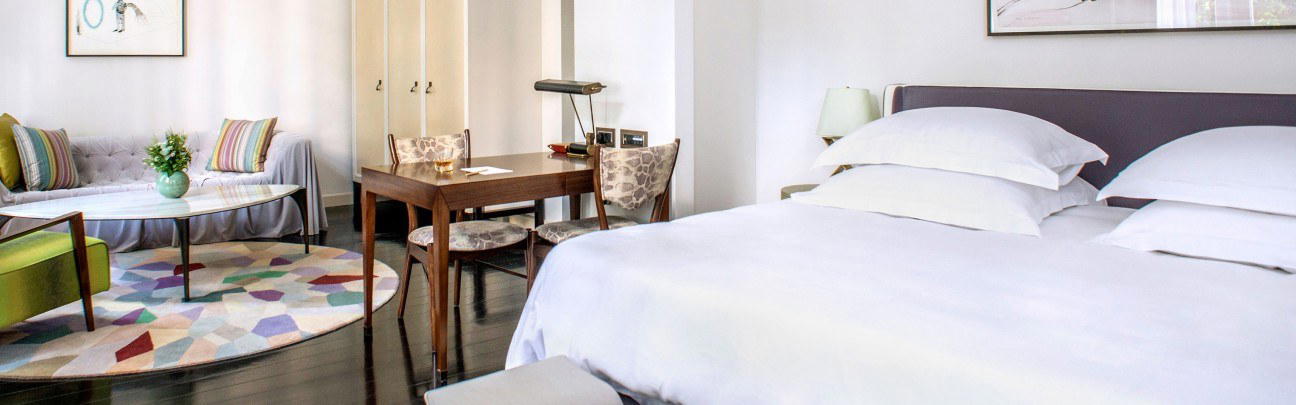
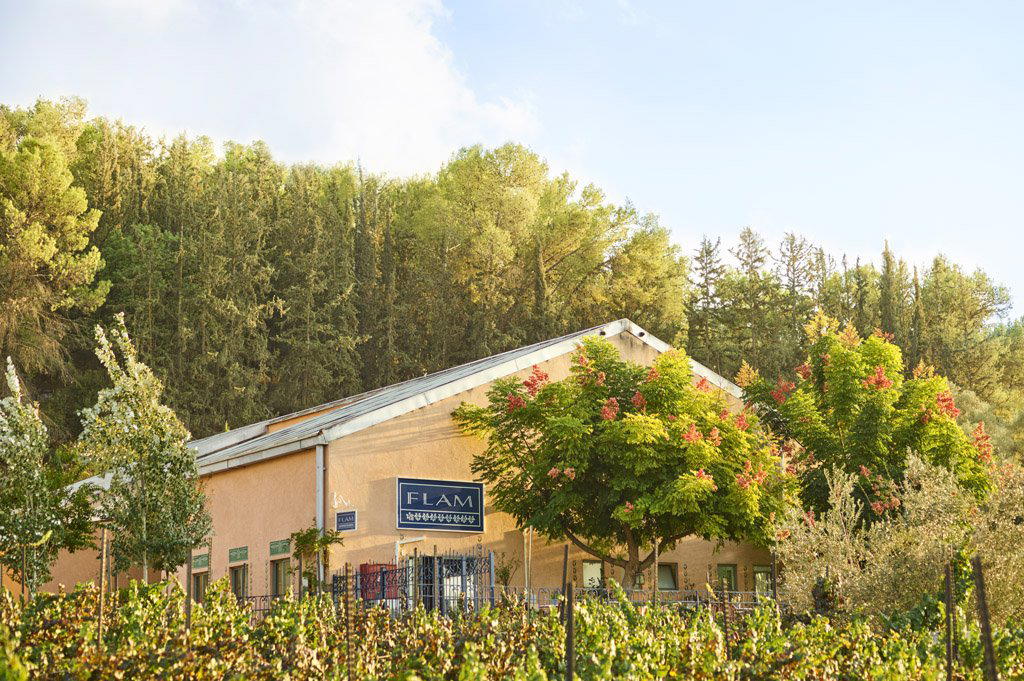
Glittering atmosphere with burnt orange and salmon colors, collage-covered walls, recessed booths, and sleek chic design.