
Falstaff Winery - Listed
Flam Winery is a Judean Hills estate in Eshtaol where the tasting experience is shaped by vineyards, forest and Jerusalem mountain views rather than cellar theatrics. The point is terroir: family-run production, fruit from Eshtaol, Givat Yeshayahu and Even Sapir, and a serious red-blend reputation reinforced by White Label 2021’s Wine Spectator Top 100 Wines of 2024 placement.

Pearl is the En Primeur Club membership app — saves, bookings, and concierge access live there. Same editors, same standards.
- Address
- יער הקדושים, יער, הקדושים, Eshtaol, Israel
- Phone
- +972 54-213-3102
- Hours
- Mon–Tue 10 am–4 pmWed–Thu 10 am–10 pmFri 10 am–4 pmSat ClosedSun 10 am–4 pm
- Website
- flamwinery.com
- Directions
- Get directions
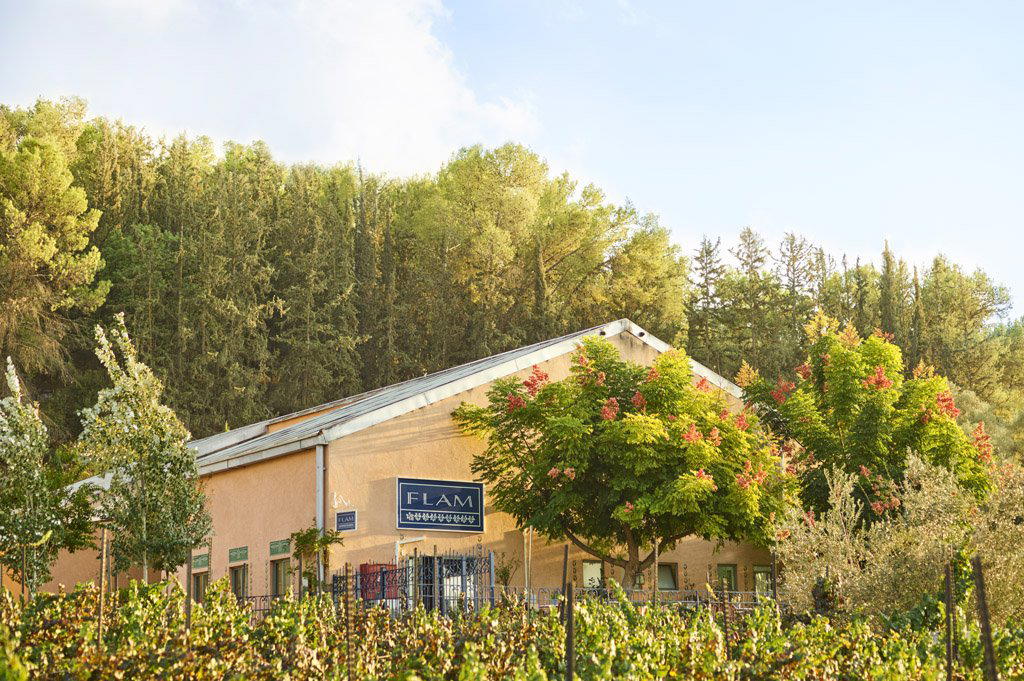
Approaching wine in the Judean Hills means reading the terrain before reading the label. Around Eshtaol, vineyard rows meet forest, and the Jerusalem mountains give the region a physical drama that is not incidental to the glass. Flam Winery belongs to this hill-country argument: Israeli wine is strongest when it stops imitating a generic international red and starts making sense of altitude, exposure, warm growing conditions and Mediterranean restraint.
The estate’s setting, in the Forest of Eshtaol within the Judean Hills, gives the hospitality format a clear point of view. Tastings here are not built around nightclub-style energy or decorative luxury; they are structured around the view, the vineyards and a guided explanation of region, family and terroir. That matters in Israel, where premium wine tourism can easily slide into either technical cellar talk or scenery without substance. Flam’s better case is the combination: a polished visitor experience that keeps returning to the land behind the wine.
For wider trip planning around the city, EP Club’s Eshtaol coverage sits across categories: Our full Eshtaol wineries guide, Our full Eshtaol restaurants guide, Our full Eshtaol hotels guide, Our full Eshtaol bars guide and Our full Eshtaol experiences guide.
Judean Hills fruit, read through a family-estate lens
The Judean Hills have become a serious counterweight to the old idea that Israeli wine is defined only by heat and power. The region’s appeal lies in hillside viticulture, varied exposures and a wine culture increasingly comfortable with structure over weight. Flam Winery, founded in 1998, fits that shift because its identity is not built on volume or spectacle. Its stated frame is local expression, with vineyards in Eshtaol, Givat Yeshayahu and Even Sapir supplying the basis for a portfolio that covers red and white still wines.
The family-estate model is not just biographical decoration here. Golan Flam’s training in northern Italy, experience in Tuscany and later work in South Australia provide a useful explanation for the house style: European structure filtered through warm-climate competence. That background is relevant because the Judean Hills reward producers who understand ripeness without letting fruit lose definition. The portfolio’s listed varieties, including Syrah, Cabernet Sauvignon, Petit Verdot, Merlot and Sauvignon Blanc, point to a cellar comfortable with both Bordeaux-influenced structure and Mediterranean red-blend logic.
White Label 2021 gives the clearest public benchmark. The wine, a blend of Syrah, Cabernet Sauvignon and Petit Verdot, received 92 points and was included in Wine Spectator’s Top 100 Wines of 2024. In a region still fighting for broader international shelf recognition, that placement carries weight: it gives a specific bottle, not just a general reputation, as evidence that Judean Hills reds can compete in a global critical context.
The tasting format favors context over performance
The visitor experience follows the same hierarchy as the wines: place first, then technique. The core format includes an explanation of the winery, the family, the vineyards, the wine-growing region and local terroir, followed by a guided tasting. That sequence is important. It asks guests to understand why Eshtaol and the wider Judean Hills matter before turning the tasting into a simple preference exercise.
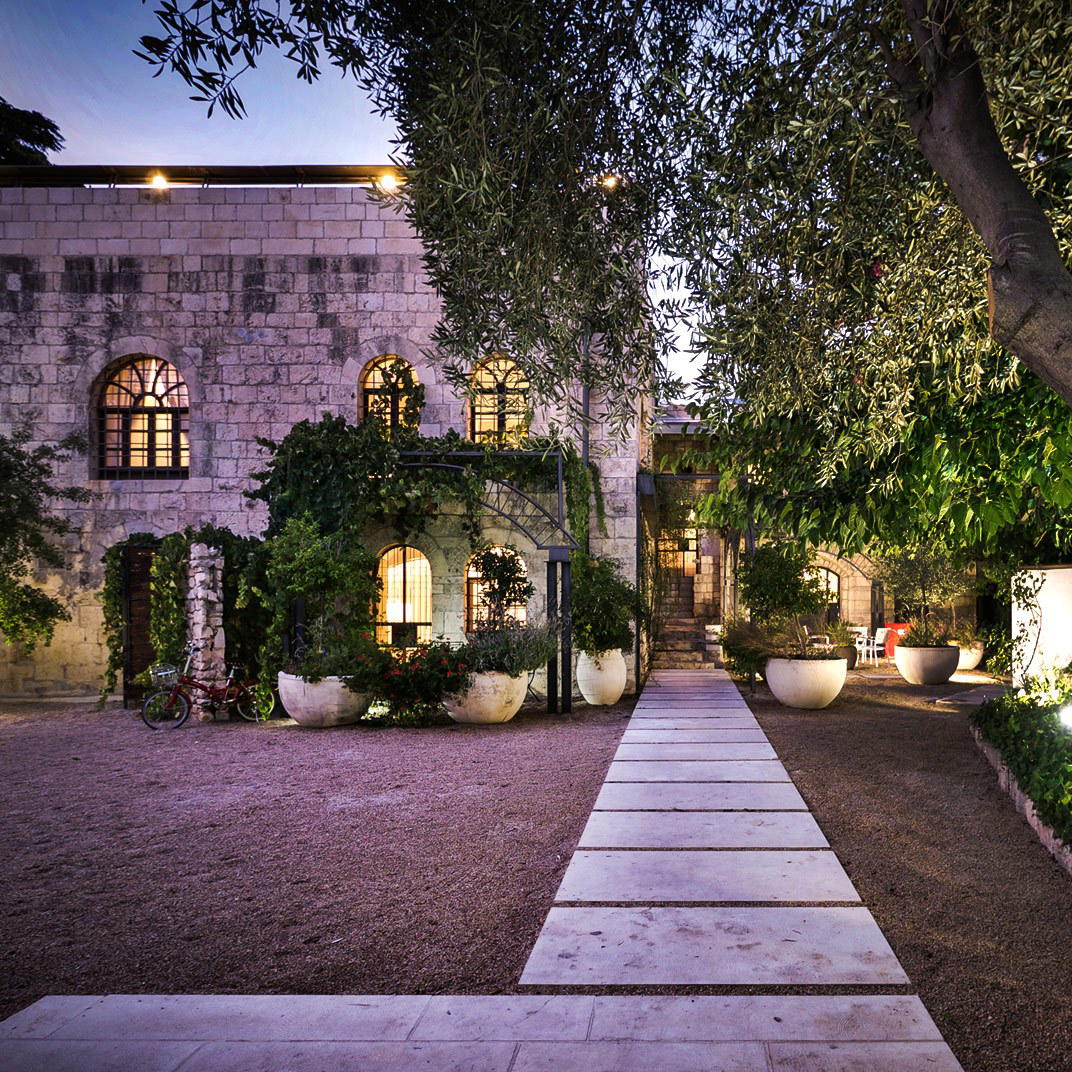
The estate’s balcony and terrace setting overlooking vineyards and the Jerusalem mountains gives the tasting a slower rhythm than urban wine bars or high-volume cellar doors. The tone is conversational, suited to visitors who want wine education without a formal classroom feel. Workshops, private tastings, group formats and estate grounds broaden the use case, but the strongest reason to come remains the direct link between glass and hillside. Picnic baskets and outdoor areas make the visit feel tied to the surrounding forest rather than sealed off from it.
This is also where Flam Winery separates itself from the larger national wine conversation. Israel’s wine map stretches from northern mountain country to coastal and central zones, and each has a different hospitality grammar. Readers building a broader wine itinerary can compare regional mood and scale through producers such as Adir Winery in Hatsafon, Domaine du Castel in Yad Hashmona, Galil Mountain Winery in M P Merom Hagalil, Golan Heights Winery in Katzrin, Recanati Winery in Emek Hefer, Sphera Winery in Givat Yeshayahu and Tabor Winery in Kfar Tavor. For a different drinks lens, Milk & Honey in Tel Aviv-Yafo shows how Israel’s premium beverage scene extends beyond vineyard culture.
Who should put it on an Eshtaol itinerary
Flam Winery makes sense for travelers who treat wine as a regional document, not merely a souvenir. The estate is especially well suited to visitors interested in Judean Hills terroir, structured reds, guided tastings, vineyard views and a quieter rural format. It is less suited to anyone chasing a high-volume party atmosphere or a casual drop-in bar mood.
The editorial case is strongest for wine-focused travelers moving between Jerusalem and central Israel who want a producer with both a defined place identity and a specific international credential. The White Label 2021 recognition gives the visit a concrete anchor, while the estate’s broader emphasis on Eshtaol, Givat Yeshayahu and Even Sapir keeps the story from becoming a single-bottle trophy.
For readers mapping wine travel beyond Israel, EP Club also tracks small and mid-scale producers across Europe, including »der Steiner« Hans Steiner in Podersdorf am See and & Handwein in Mannheim. The useful comparison is not style-for-style; it is how serious regional producers turn locality into a disciplined tasting experience.
Recognition history
Dated appearances from independent guides and award organizations, with the underlying list record or original source where available.
Falstaff Winery - Listed
Falstaff
Continue exploring
More in Eshtaol
Wineries in Eshtaol
Browse all →
Bars in Eshtaol
Browse all →
Restaurants in Eshtaol
Browse all →
Details
- Scenic
- Elegant
- Classic
- Romantic
- Intimate
- Group Outing
- Wine Education
- Romantic Getaway
- Special Occasion
- Corporate Event
- Solo Exploration
- Vineyard Tour
- Estate Grounds
- Picnic Area
- Terrace
- Panoramic View
- Private Tasting
- Sustainable
- Vineyard
- Mountain
- Garden
- Syrah
- Cabernet Sauvignon
- Petit Verdot
- Merlot
- Sauvignon Blanc
- Still Red
- Still White
- Flight Tasting
- Guided Tasting
- Private Tasting
- Workshop/class
- Tour And Tasting
- English
- Hebrew
Current opening hours
- Monday
- 10 am–4 pm
- Tuesday
- 10 am–4 pm
- Wednesday
- 10 am–10 pm
- Thursday
- 10 am–10 pm
- Friday
- 10 am–4 pm
- Saturday
- Closed
- Sunday
- 10 am–4 pm
Hours can change for holidays and private events. Last verified .
Family-run Judean Hills estate with a serene, scenic atmosphere: tastings on a balcony and terrace overlooking vineyards and the Jerusalem mountains, surrounded by the Forest of Eshtaol, offering a relaxed yet polished setting focused on wine and terroir.